@EliLillyandCo@al_workforce@AlVetAffairs@iamrodneysmith@POTUS@ALEAprotects The Alabama Resilience Council evaluates our state’s ability to prepare for both natural and manmade disasters.
Rep. Chip Brown and Sen. Steve Livingston will carry legislation to ensure we have a statewide resilience plan.
Every Alabamian is worthy of a resilient community.
Katrina wasn’t just a storm. It was a $140B test of whether America can recover from a disaster. We failed. And unless we learn, every city facing fire, flood or storm will repeat New Orleans’ fate.
My @nytopinion essay with @MathewDSanders: The $140 Billion Failure We Don’t Talk About
https://t.co/mLvVqfAihh
From wildfires to floods, extreme weather is hitting harder than ever. Lawmakers across the country are working to:
🏛️ Strengthen infrastructure.
🦺 Develop resilience plans.
💵 Invest in mitigation projects to help communities reduce disaster risk.
https://t.co/CrtgwmpmsY
When intense rain follows wildfires, burnt soil often fails to absorb the rainfall, causing intense runoff and flooding.
This is just one way climate disasters are interrelated—and understanding these links can help break the vicious cycle. https://t.co/nKWvSyVFVi
Land use matters.
"The report identified increasing population in the areas most vulnerable to natural disasters as a key factor..."
https://t.co/5SuYsTQbcW
Missed this when it first came out a couple of weeks ago, but here's a cautionary tale.
“If FEMA funding doesn’t grow at the same rate of disasters, something is going to give.”
https://t.co/KceH3tSETX
More than two-thirds of Americans were subject to a heat alert at some point in 2023—and @NOAA predicts 2024 will be the hottest year since global records began in 1850.
Have you already experienced a heat alert in 2024? https://t.co/jjFUqSOxH9
Communities across the U.S. are experiencing hotter, longer, and more frequent heat waves.
Fortunately, the federal government and many state governments are taking action. https://t.co/jjFUqSOxH9
Here comes @SouthwestAir claiming this 3+ hour delay was due to weather after already telling us it was because of maintenance, crew problems, and already switching planes twice. 🤦🏼♂️ @USDOT
In today's paper:
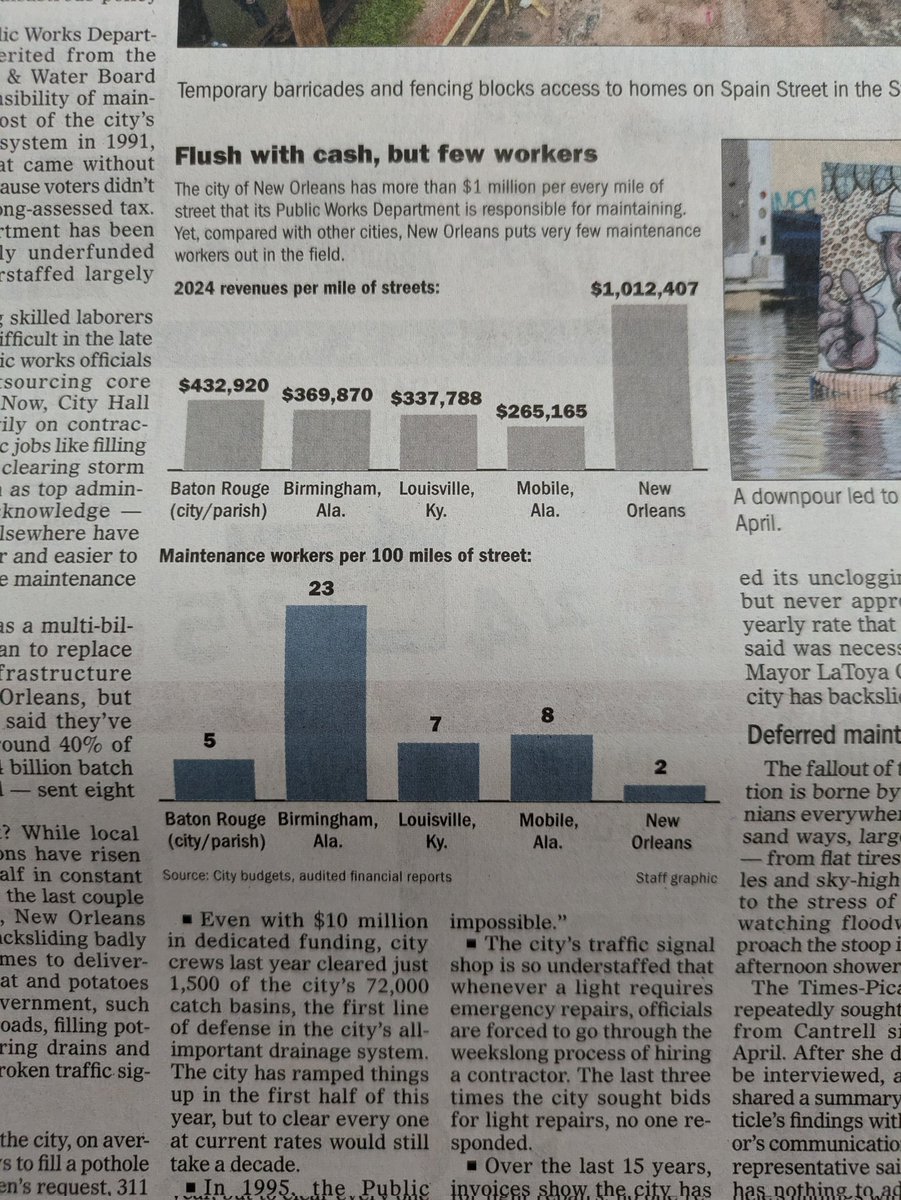
The dysfunction in New Orleans is often blamed on the city's swampy terrain or a lack of money.
It's not true.
Part one of a series, Broken City:
https://t.co/65P0AoMM1O
Here's a stat: New study finds 2.2-fold increase in the frequency of extreme wildfires and 2.3-fold increase in the intensity of the top 20 annual wildfire events over a two-decade study period. 🔥🔥🔥
https://t.co/mZQRR0hLwS
I don't think I can say it any better than the headline: The link between extreme weather and climate change has never been more clear.
https://t.co/T1yShIdjg0
Here's a good illustration for why it is imperative we use projections and modeling to plan for future conditions, as opposed to historical precedent.
https://t.co/ucF5z9jSx1
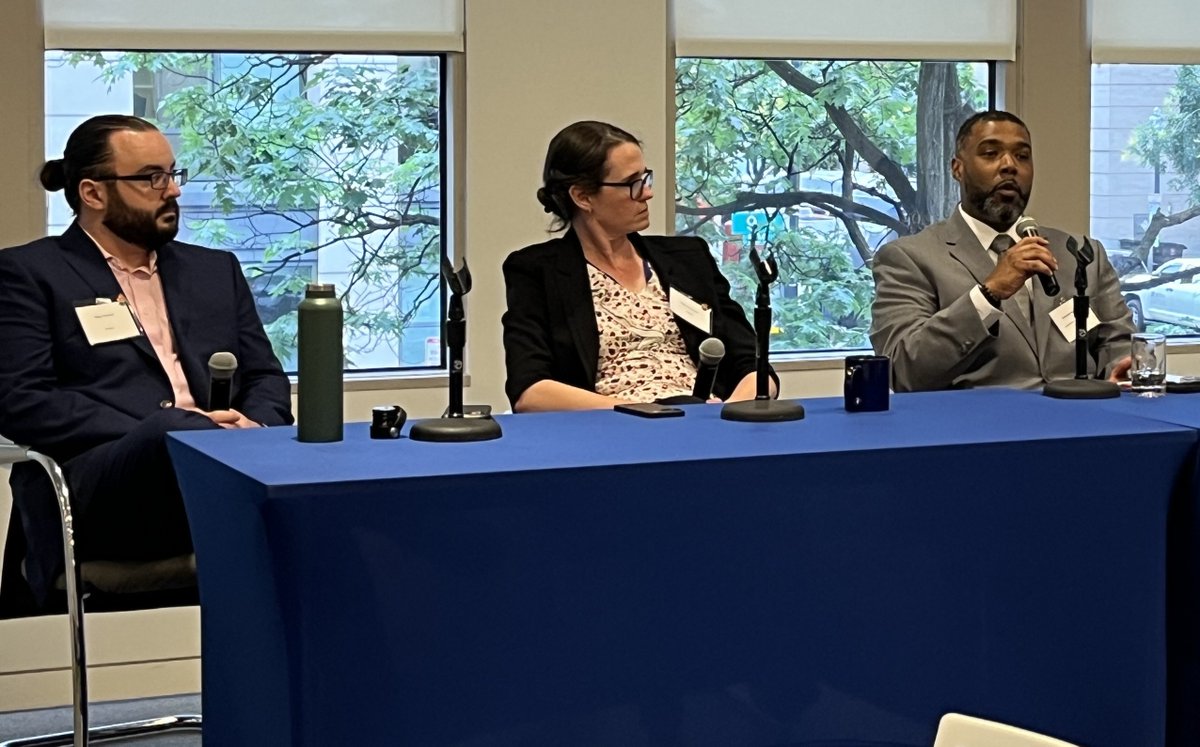
Had a great opportunity this morning to team up with storytelling experts Peter Herrick & Gena Robinson with @FEMA & Abdullah Rahaman with @DHSgov to share tips and strategy for communicating resilience efforts with @pewtrusts State Resilience Planning Group. 🙌
Some really important work from Texas, where the state's draft flood plan estimates 5 million residents are living in high risk areas. Oh, and they think it will cost $49 billion to reduce that risk.
https://t.co/M8aUqbDMAd
Here's a really interesting, real-world example of the connections between extreme heat, drought, and wildfire risk. This is why addressing root causes is so important.
https://t.co/FFkSX6g3D0
New Jersey's latest initiative to incorporate future flood conditions into new development projects is groundbreaking. The 'REAL' approach sets a precedent for states across the nation. Congratulations to @NewJerseyDEP@shawnlatur
https://t.co/IhPtOuf4ie