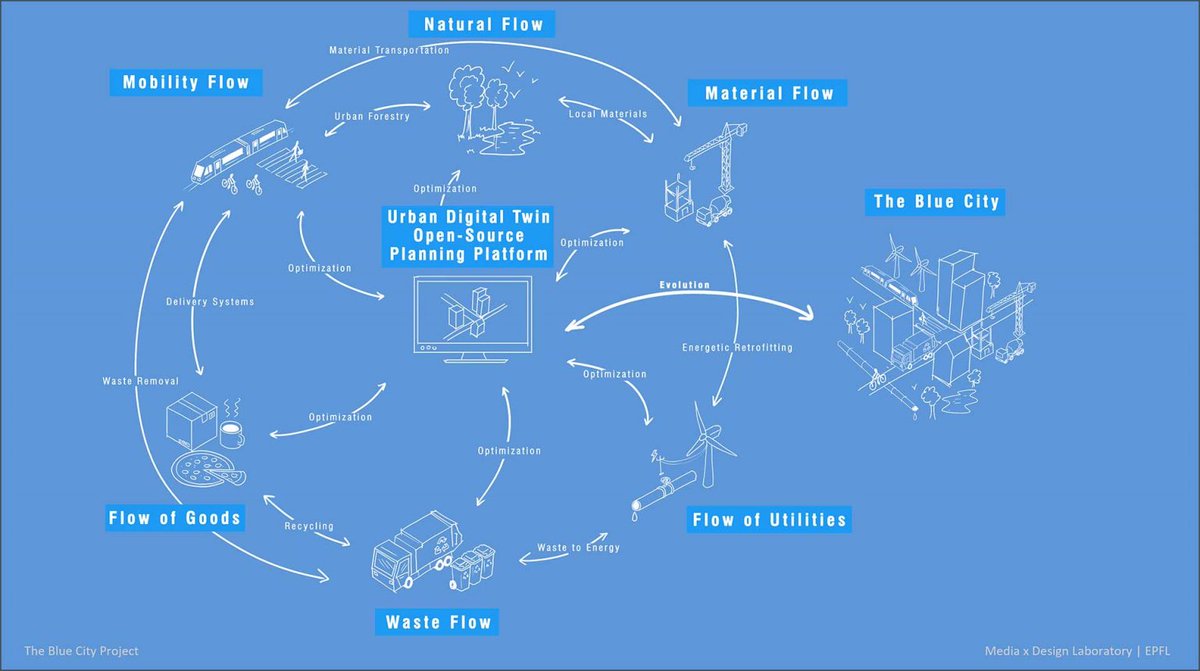
Interested in population geography and digital twin cities?
The Urban Demography Lab at @EPFL_en seeks to hire a 1-year postdoc.
More information and how to apply: https://t.co/DWe6k95NIw
Don't miss this opportunity to work on the upcoming World Population Prospects @UNDESA producing population estimates and projections for low- and middle-income countries. Deadline: 24 May! 👉
https://t.co/KXZRqX0ZNv
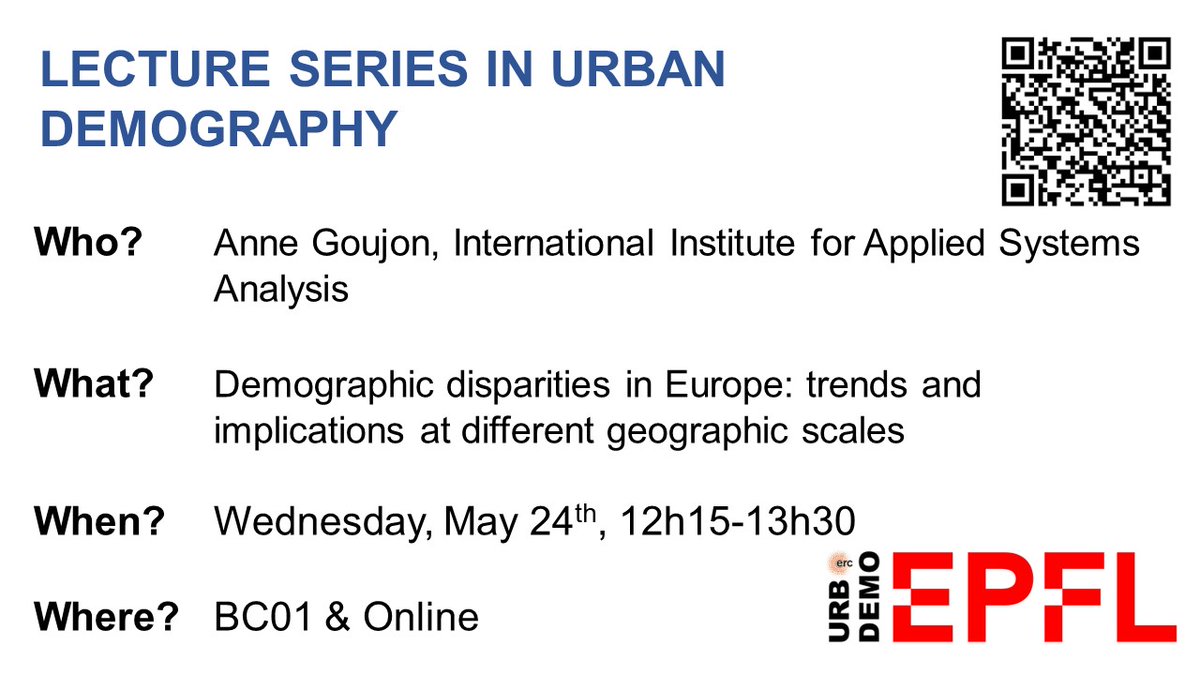
🚨URBDEMO Lecture Series
We are excited that this Wednesday @goujon_anne from @IIASAVienna will be with us to discuss demographic disparities in Europe: trends and implications at different geographical scales. Please join us!
@EAPS_pop @PopulationEU @WiCVienna@epflENAC
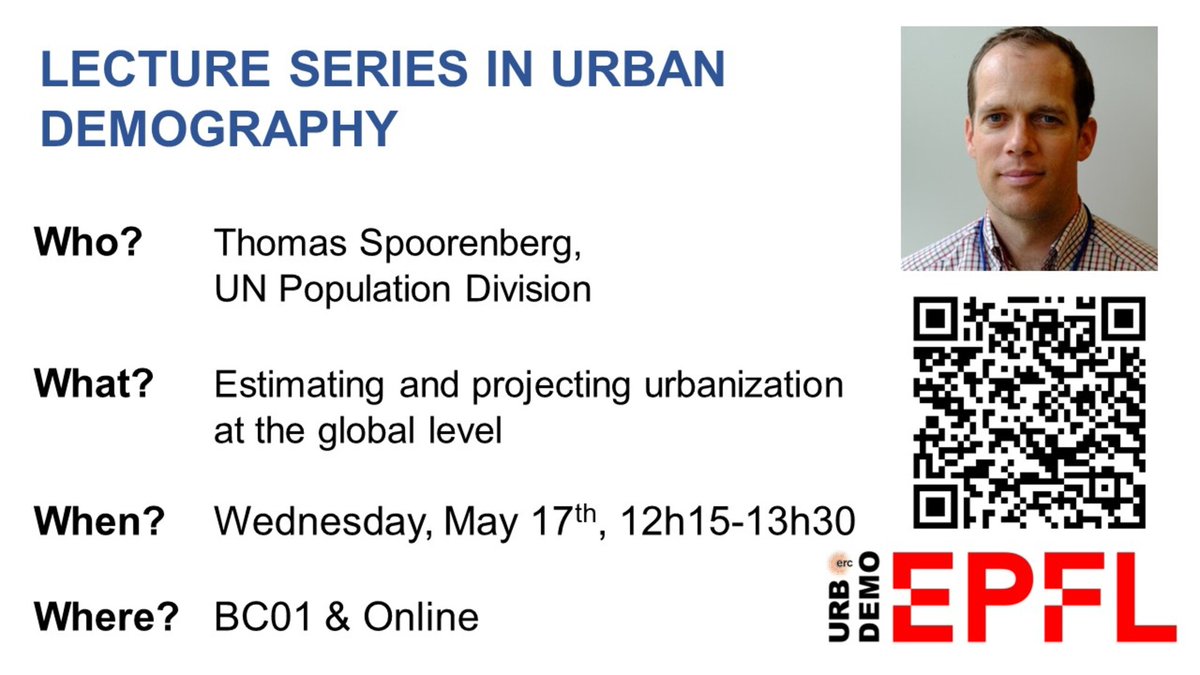
🚨URBDEMO Lecture Series
Next week on 17/05 we welcome Dr. Thomas Spoorenberg from the United Nations Populations Division. If you are interested in methods and data that the UN uses to estimate and project urban, rural & city populations, join us!
@EAPS_pop @PopulationEU
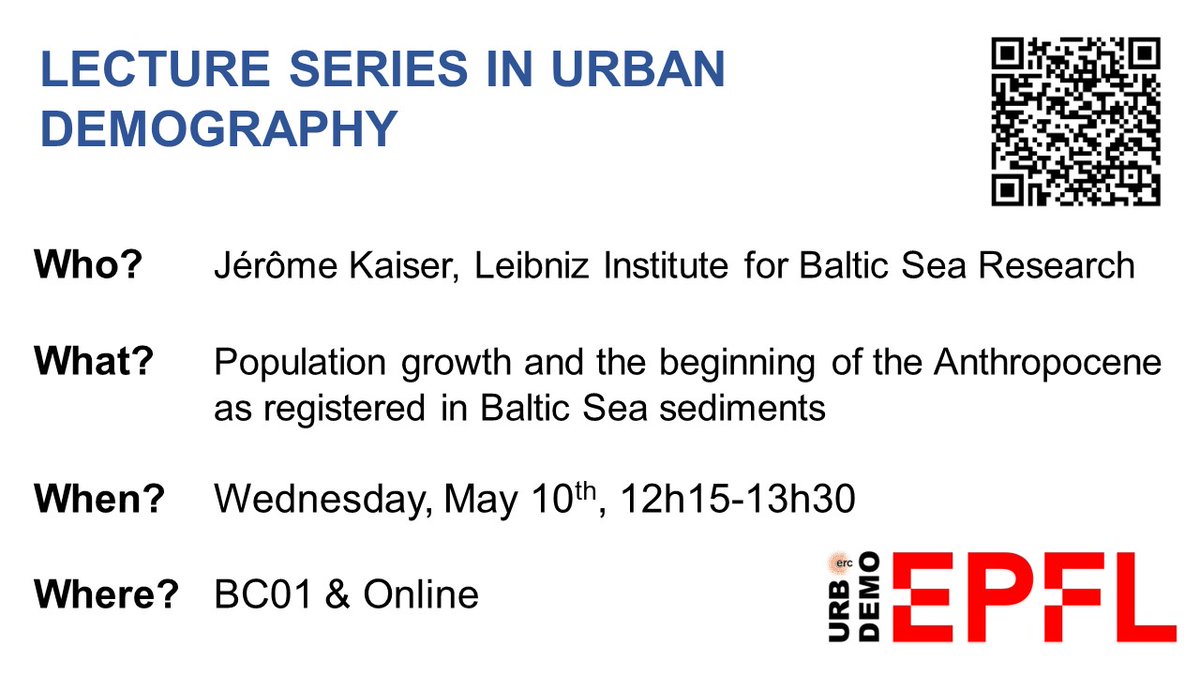
🚨URBDEMO Lecture Series
Curious about how human population growth can be traced back to Baltic Sea sediments?
Dr. Jérôme Kaiser from @Ostseeforschung will tell us more next Wednesday 10/05 at 12.15PM!
@EAPS_pop @PopulationEU @IUSSP@epflENAC
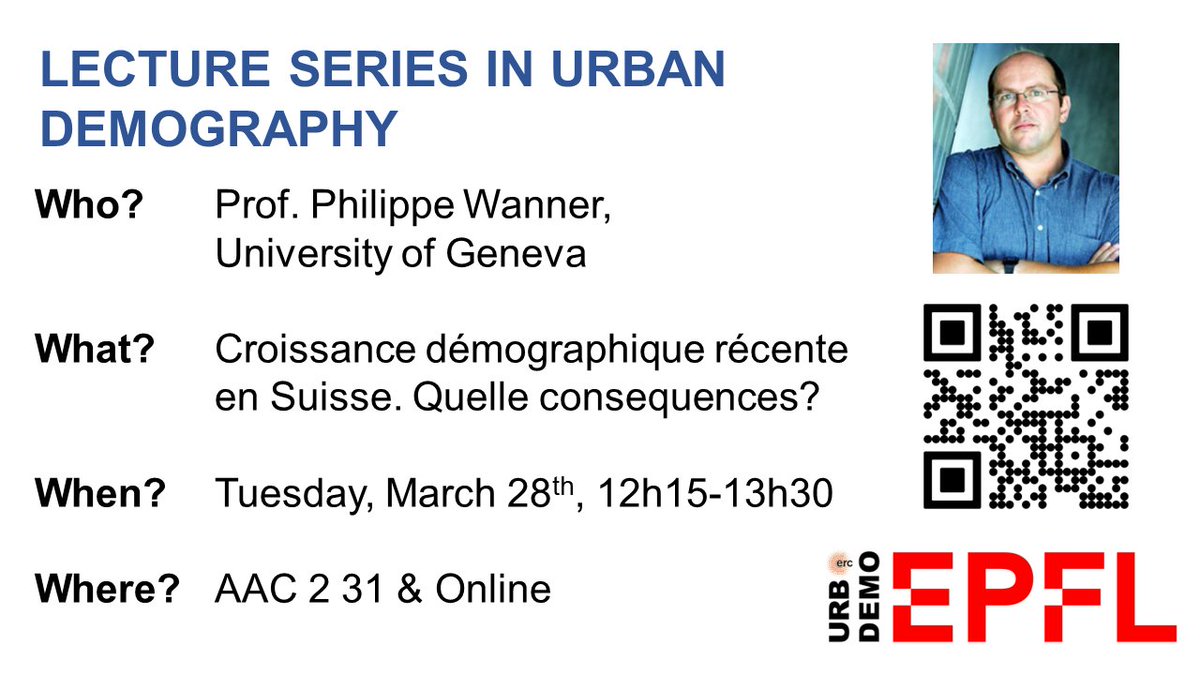
🚨Lecture Series in Urban Demography
Join us on Tuesday for our next event of our lecture series on “Croissance démographique récente en Suisse. Quelles conséquences?” with Prof. Philippe Wanner @unige_en!
@PopulationEU @EAPS_pop@IUSSP@epflENAC#poptwitter
🚨Lecture Series in Urban Demography organized by URBDEMO LAB @EPFL_en
When? March 9th, 12.15-13.30PM ECT
Speaker? @RobIMcDonald@nature_org
Topic? Denser and greener cities: Green interventions to achieve both urban density and nature
Where? EPFL, Room ELD 020 & on Zoom👇
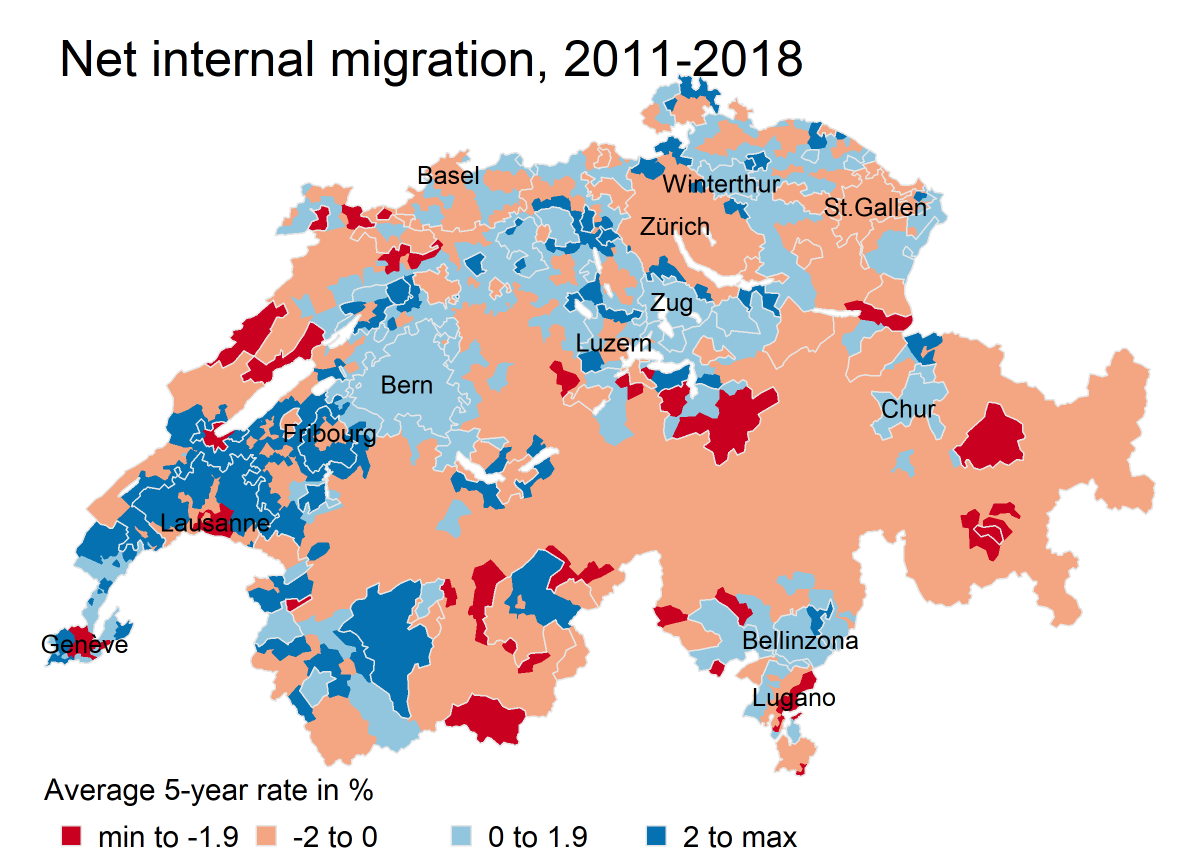
Stopping urban sprawl may improve population and environmental health. Yet in Switzerland, internal migration of the working age population has intensified since the 1980s. Recent migratory movements also head again towards the urban periphery. https://t.co/3syusbXVAY
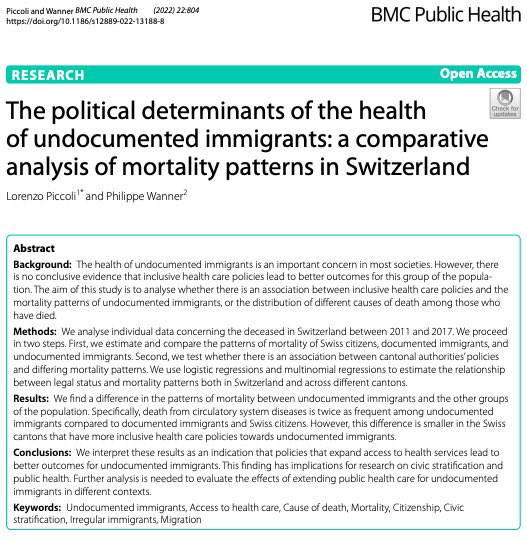
Do inclusive policies work ?
In this new paper published on @BMC_series, Philippe Wanner and I show that expanding access to health services leads to better outcomes for undocumented migrants.
#migration#publichealth
https://t.co/NGIwVddnW6
Are you interested in demography, families, generational processes, death and loss, kinship, genealogies, etc? Check out this fully-funded PhD position at the Research Group on Kinship Inequalities @MPIDRnews. Deadline May 13. Reach out w/ questions! Info: https://t.co/CTdRRmeQxU
#MOOC - Geographical Information Systems (parts 1 and 2) on Courseware ! #GIS
https://t.co/K7415iKBas
Interactive forum here: https://t.co/Q4col7guof
@epflENAC@EPFL_en @LASIG_
📢PAPER ALERT!📢
I'm very excited to share my new @PLOSONE paper "The interplay of migration and cultural similarity between countries: Evidence from Facebook data on food and drink interests" w/ @s_lohmann_@ezagheni@pedroolmo@fbenevenuto@filipenrib
👩💻https://t.co/ayvoiLXwHE
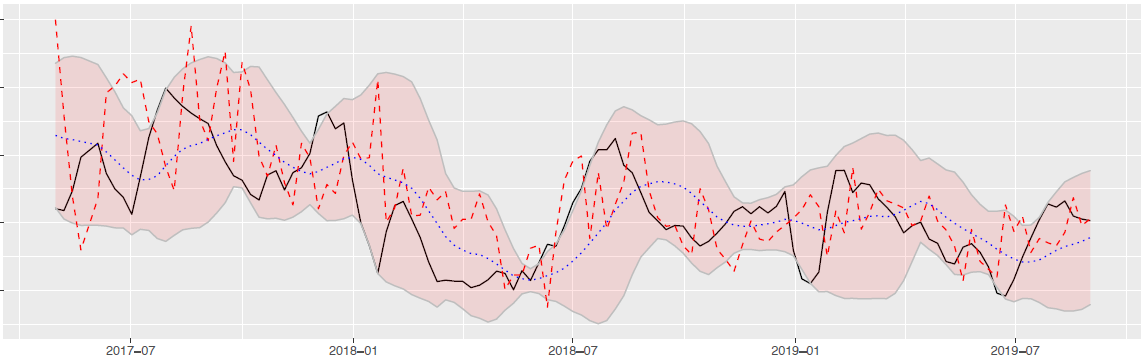
Asylum-related migration is complex and volatile. Still, it can be forecast effectively! Our new #openaccess article on Nature @SciReports with @iacus & @teddy_wilkin introduces a novel #datadriven approach to forecasting social processes. A🧵1/6
https://t.co/KxmY37T9RP
Our colleagues @ashiratamar & @BrunoMasquelier conducted an analysis of #rural-#urban gaps in #mortality in 53 low- and middle-income countries & they could find a decreasing urban advantage in adult mortality with age.
#poptwitter
https://t.co/AVGayuzArP
Human Fertility After Disaster: A Systematic Literature Review / Feb 1, 2022 Tuesday 1pm CEST
Please join my talk on research in progress, and help improve this review project! @MPIDRnews
More info & Registration 👇
https://t.co/3yJYgvWTdZ