yes, nonsofic groups exist: this statement is one of many new beautiful results proved by Astra, our next major model.
We're releasing 10 such Astra proofs, complete with lean certificates and CoT walkthroughs for each of them. The results are wide-ranging, from von Neumann algebras (disproof of Connes' Rigidity Conjecture) to better bounds for high dimensional sphere packing, for circuit complexity, for monochromatic triangles in multicolored graphs, and more.
More thoughts here: https://t.co/8SjXONeh38
Dinitz-Garg-Goemans conjecture is false. This graph theory problem was open for ~30 years.
The graph below has fractional flow cost 58. Any unsplittable flow (with capacity violation <=15) has cost at least 60.
Chat with GPT 5.6 Pro where this was found: https://t.co/Oi2PQoab2h
Another major problem, this time in additive combinatorics, has fallen, this time to humans rather than AI, but using methods related to the AI solution to the unit distance conjecture.
A remarkable paper appeared on arXiv tonight by Thomas Bloom, Will Sawin, Carl Schildkraut and Dmitrii Zhelezov. In this paper, they prove that there exists c>0 and arbitrarily large finite sets A of real numbers such that max(|A+A|,|AA|)≤|A|^{2-c}. This disproves the well-known sum-product conjecture over the real numbers. The sum-product conjecture considers the two most basic operations: addition and multiplication. A+A is the set of all pairwise sums of two elements in A while AA is the set of all pairwise products of two elements in A. (1/5)
For now I think recent successes of AI for mathematics should be understood as a complement to, rather than a substitute for, human mathematical labor. This is because AI, at present, is most productive working horizontally, whereas humans work vertically.
By this I mean that the highest quality AI mathematics thus far has been obtained by feeding entire problem lists into a model or scaffold and picking out the few high-quality successes. It is very hard to predict in advance where these successes occur. On the other hand, humans typically pick a few questions and try to understand them deeply--and historically, when they do so, they make progress!
I think this points to increasing value of problem lists, and also suggests that "solved an open problem" is an increasingly useless proxy for what we care about in mathematics. There are a lot of problems that have sat open for a long time because the right person didn't happen to look at them, and many others that are open because they benchmark our failure to fundamentally understand some basic object. I've solved old open problems that I think had the former flavor rather than the latter. I think my best work, however, is not about solving long-open problems, but rather inventing a new ones that help to understand something we care about, and making progress on that.
AI has now solved a major open problem -- one of the best known Erdos problems called the unit distance problem, one of Erdos's favourite questions and one that many mathematicians had tried.
https://t.co/SD1vVPkrHR
Today, we share a breakthrough on the planar unit distance problem, a famous open question first posed by Paul Erdős in 1946.
For nearly 80 years, mathematicians believed the best possible solutions looked roughly like square grids.
An OpenAI model has now disproved that belief, discovering an entirely new family of constructions that performs better.
This marks the first time AI has autonomously solved a prominent open problem central to a field of mathematics.
I've recently got in on the act of getting AI to solve open problems in mathematics. More precisely, I gave some questions asked by Melvyn Nathanson to ChatGPT 5.5 Pro, to which I have been given access, and it answered them. 🧵
Some great results and proofs, but I am concerned that (now we are past the initial rush of publicly available AI models getting some relatively easy wins) future significant progress will come from, as in this case, groups of mathematicians working with internal models
We are excited to share a new paper solving three further problems due to Erdős; in each case the solution was found by an internal model at OpenAI. Each proof is short and elegant, and the paper is available here: https://t.co/x1yAHRZpJx
Math, Inc. is proud to announce an all-star group of Veritas Fellows:
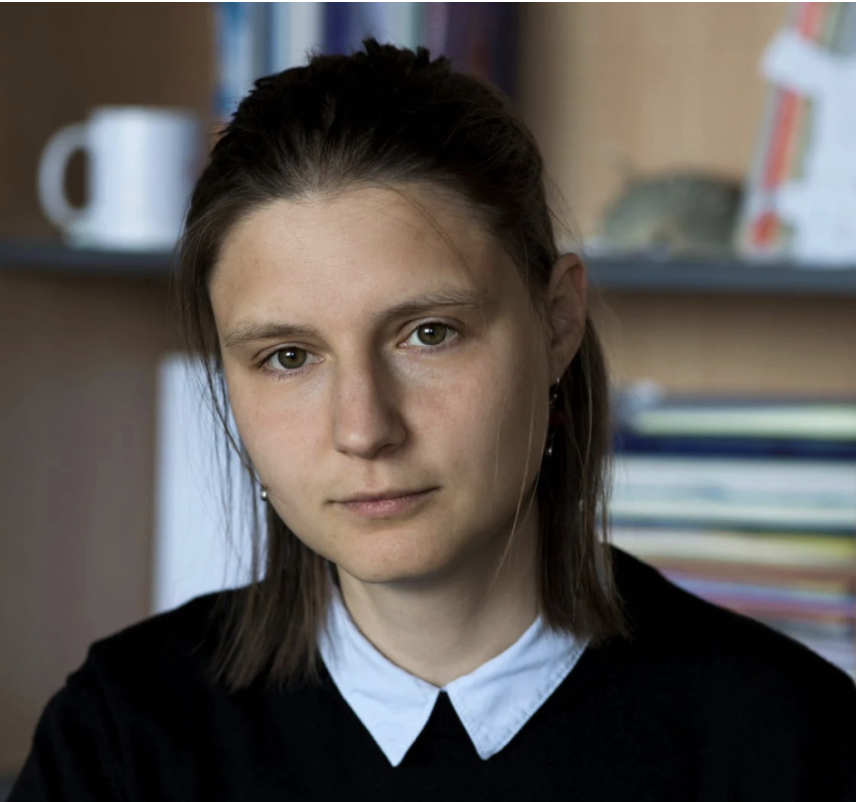
Renowned professor Kevin Buzzard, alongside Fields Medalists Maryna Viazovska and Terence Tao.
They will lead teams to build formal mathematics at unprecedented scale. 🧵
@AcerFur You mention you golfed the code down a bit. How would you compare the quality/readability of the Lean code produced here vs what's in Mathlib? Is this something you focus on? Thanks!
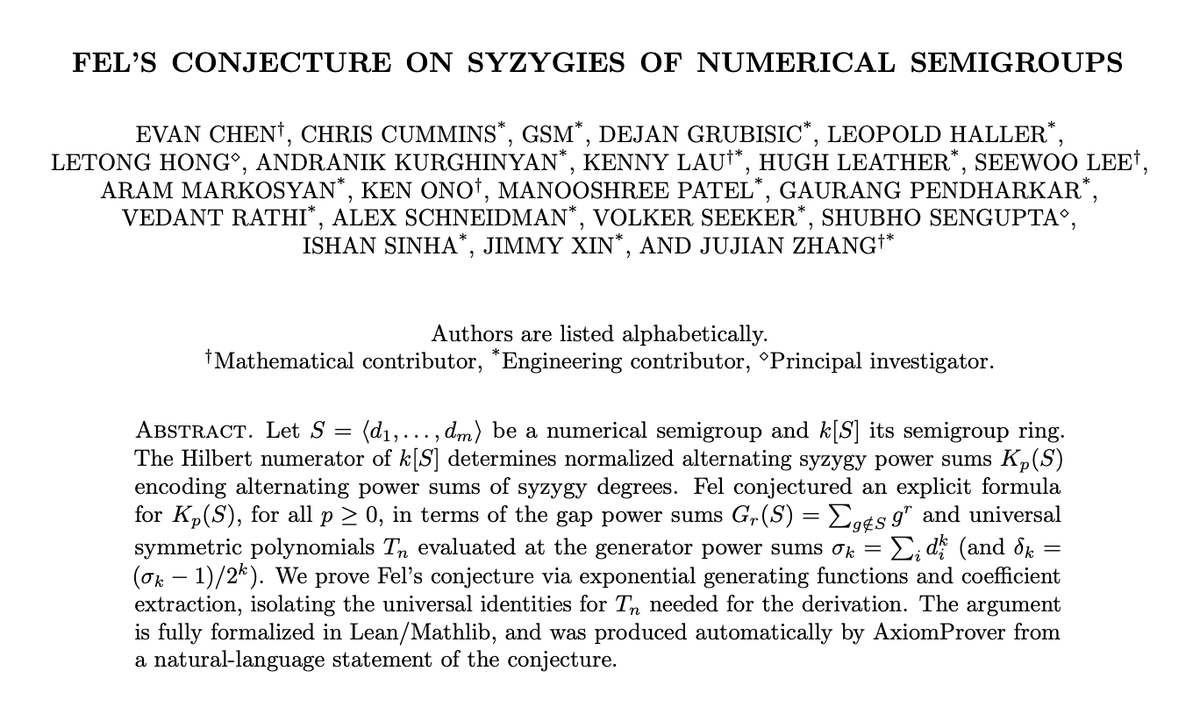
1/ AxiomProver has solved Fel’s open conjecture on syzygies of numerical semigroups, autonomously generating a formal proof in Lean with zero human guidance.
This is the first time an AI system has settled an unsolved research problem in theory-building math and self verifies.