AI Expert Says We Are Summoning Robot “Entities” Who Will Treat Us Like Ants
Geordie Rose then cited H.P Lovecraft’s concept of “cosmic indifference,” where the universe is occupied by entities who “don’t give a shit about you even in the slightest”
For more than 20 years, Norwegian neuroscientist Audrey van der Meer has investigated how handwriting shapes the human brain.
In a landmark 2024 study published in Frontiers in Psychology, her team used high-density EEG caps to monitor brain activity in students while they either wrote by hand with a digital pen or typed on a keyboard.
The difference was dramatic. Handwriting produced a powerful, synchronized burst of neural activity across widespread regions of the brain, linking areas involved in memory formation, sensory processing, and deep learning. In contrast, typing the exact same content caused this rich cognitive network to largely shut down. Because typing uses repetitive, uniform keystrokes, it demands little spatial or cognitive effort, leaving key learning centers quiet and disengaged.
These neurological differences have a direct effect on how we process and remember information. Earlier research by Pam Mueller and Daniel Oppenheimer at Princeton University reached similar conclusions. Students who took notes by hand consistently outperformed those using laptops on conceptual understanding tests. Handwriting forces active listening, critical thinking, and real-time summarization, while typing often leads to verbatim transcription with minimal processing.
Our brains function as part of an embodied biological system. Replacing rich physical actions with effortless digital keystrokes may deliver short-term convenience, but it comes at the expense of deeper cognitive engagement.
The solution is simple and timeless: pick up a pen.
[Van der Meer, A. L. H., et al. (2024). Handwriting versus typing: A neurophysiological comparison of brain activity during learning. Frontiers in Psychology, 15. DOI: 10.3389/fpsyg.2024.1234567]
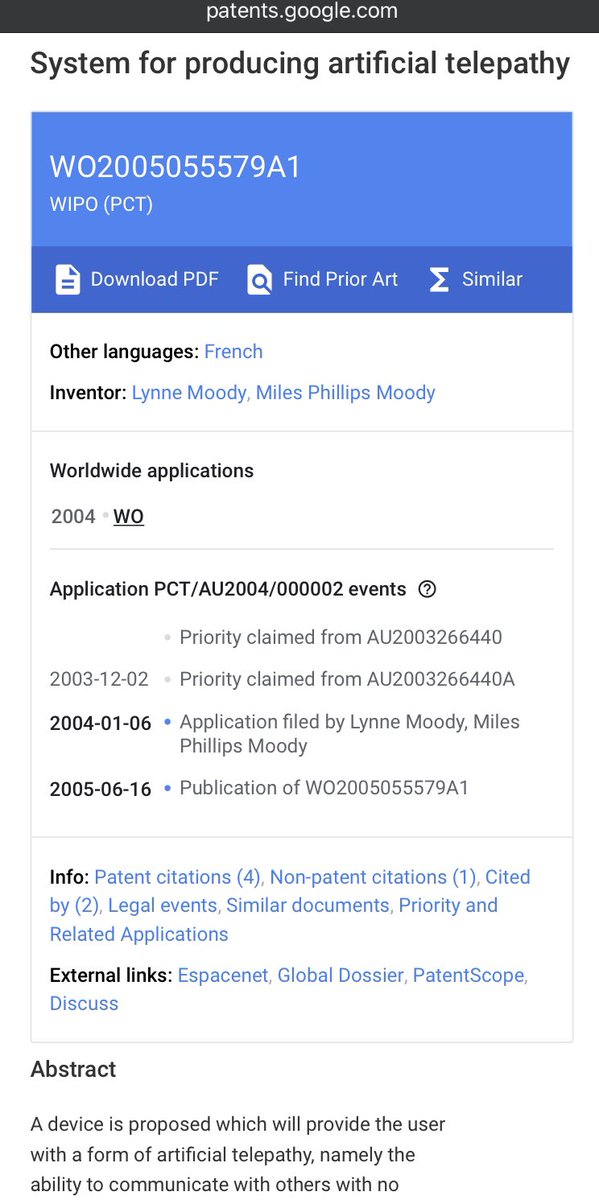
SYSTEM FOR PRODUCING ARTIFICIAL TELEPATHY
“A system for producing the effect of Artificial Telepathy comprising: a public mobile telephony/data network giving wireless connection for voice and data between a human or animal individual and one or a plurality of other human or..”
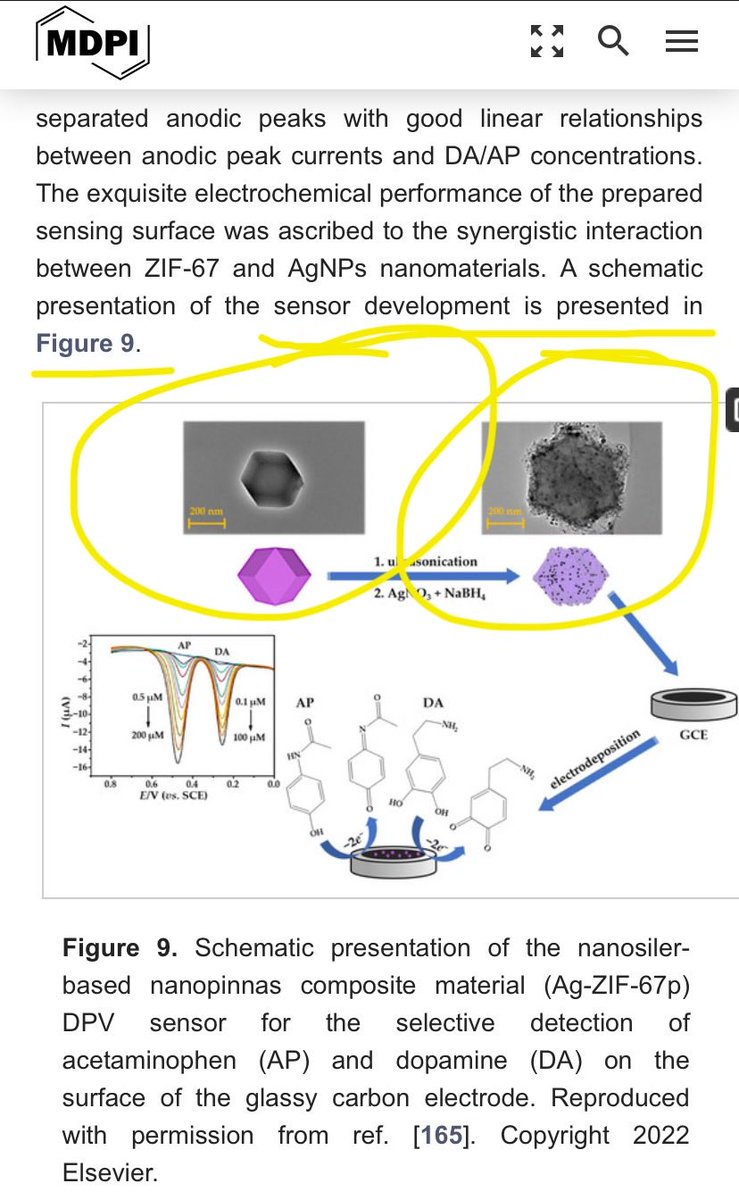
Is that really your skin?
“The hybrid hydrogel can be a candidate for artificial skin, fluid flow controller, wound dressing layer and many other bionic application scenario”
“Mimicking connective tissues can be achieved through various strategies”
https://t.co/wb4IjOS2PR
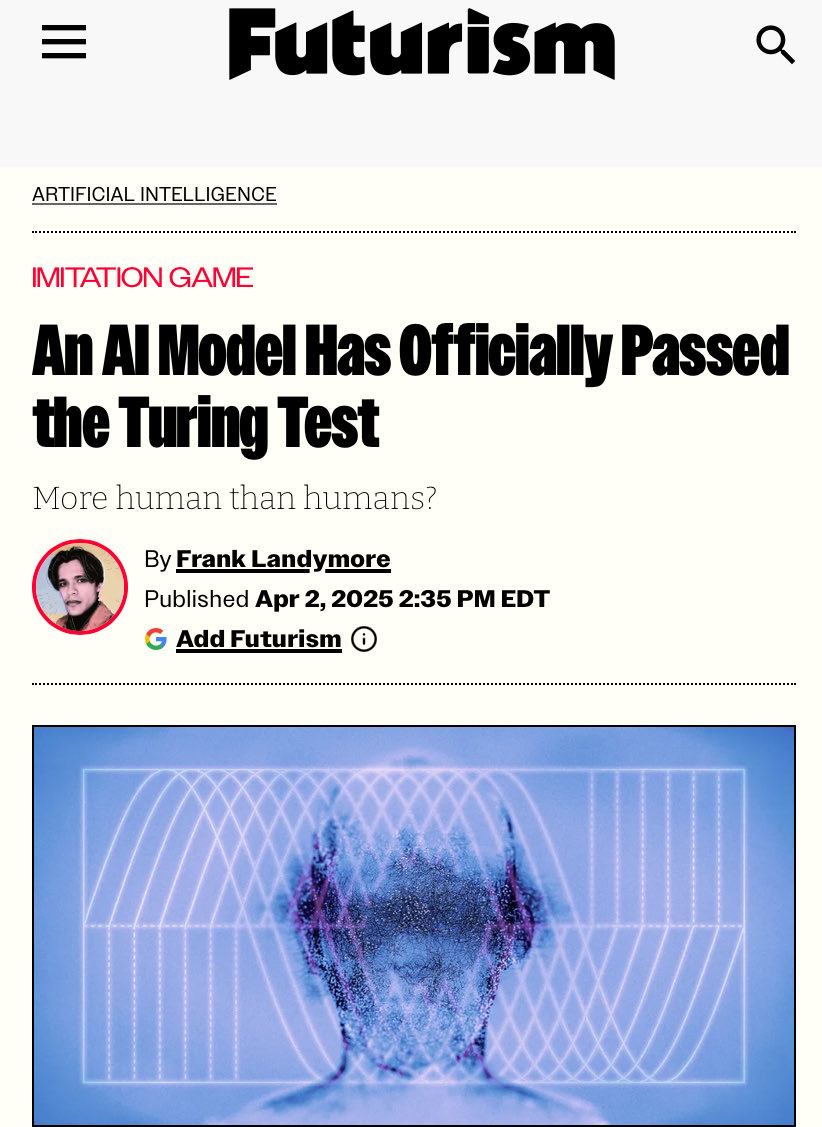
“Turing called this the “imitation game.” If the interrogator couldn’t correctly determine which respondent was the computer and which was the human, it would suggest, on a very general level, that the machine could think like a human."
https://t.co/Tkipos0Col
The third-party doctrine is a legal principle in the United States that states individuals have no reasonable expectation of privacy for information they voluntarily provide to third parties, such as applications.





![Rainmaker1973's tweet photo. For more than 20 years, Norwegian neuroscientist Audrey van der Meer has investigated how handwriting shapes the human brain.
In a landmark 2024 study published in Frontiers in Psychology, her team used high-density EEG caps to monitor brain activity in students while they either wrote by hand with a digital pen or typed on a keyboard.
The difference was dramatic. Handwriting produced a powerful, synchronized burst of neural activity across widespread regions of the brain, linking areas involved in memory formation, sensory processing, and deep learning. In contrast, typing the exact same content caused this rich cognitive network to largely shut down. Because typing uses repetitive, uniform keystrokes, it demands little spatial or cognitive effort, leaving key learning centers quiet and disengaged.
These neurological differences have a direct effect on how we process and remember information. Earlier research by Pam Mueller and Daniel Oppenheimer at Princeton University reached similar conclusions. Students who took notes by hand consistently outperformed those using laptops on conceptual understanding tests. Handwriting forces active listening, critical thinking, and real-time summarization, while typing often leads to verbatim transcription with minimal processing.
Our brains function as part of an embodied biological system. Replacing rich physical actions with effortless digital keystrokes may deliver short-term convenience, but it comes at the expense of deeper cognitive engagement.
The solution is simple and timeless: pick up a pen.
[Van der Meer, A. L. H., et al. (2024). Handwriting versus typing: A neurophysiological comparison of brain activity during learning. Frontiers in Psychology, 15. DOI: 10.3389/fpsyg.2024.1234567]](https://pbs.twimg.com/media/HK3ZQv6XYAAmoBX.jpg)