When most of your #crypto disputes work is confidential arbitration, it’s nice to share public results when they come.
I am therefore pleased to report our win for @Bybit in the London Circuit Commercial Court.
The court dismissed the entire claim against Bybit Technology Limited and set aside the prior September 2023 judgment and orders against it (following substitution as the relevant party).
The original Claimant agreed the terms of the order, there was no order as to costs, and the remainder of the file is sealed.
Great to work with colleagues Oliver Rawkins and Alston Wai securing this strong result for an important client.
Also a pleasure to work with Chloë Bell at 3 Verulam Buildings.
Proud that we continue to represent the biggest players in the space, with a team who has a genuine interest and understanding of this asset class.
https://t.co/FgoGIVRqR7
#cryptodisputes
Turkey sandwiches are great, but have you seen this cross-jurisdictional summary of challenges to arbitration awards? 📊
As the diagram shows:
🇫🇷 France has the highest application volume, but a low success rate (~17%), perhaps reflecting broader grounds for challenge and lower costs of doing so.
🏴 England & Wales have the second-highest volume and highest reported success rate (~38%), driven by appeals on points of law (Section 69 of the Arbitration Act 1996).
🇸🇬 🇭🇰 Singapore has triple the number of applications as Hong Kong, despite comparable institutional caseloads, possibly because of the deterrent effect of Hong Kong’s indemnity costs regime. Both jurisdictions enjoy low success rates (~22-23%).
🇺🇸 New York has a low volume of applications and one of the lowest success rates (~8%), with legal costs a strong deterrent.
🇦🇪 UAE (Dubai & Abu Dhabi onshore) had 92 cases (5th overall) and very low success rates. DIFC (UAE) has a low volume of applications and a 0% success rate so far.
Reed Smith LLP analysed 100s of set aside applications between 2018–2024.
The initiative was lead by Timothy Cooke with regional authors including Elizabeth Farrell , Trisha Mitra-Veber, Peter Rosher, Clément Fouchard, Vanessa Thieffry, Erwan ROBERT, Gabriel Wan, Antonia Birt, Matthew Harley, Avinash Poorooye, Noof Ajaji, Oliver Beiersdorf, Catherine Kiernan, Shamalla Semoy, Chan Min Jian, Michael Chee, Anand Tiwari, Melissa Lim and myself.
Find the full survey on the homepage of the Reed Smith website.
*Note: figures based on publicly reported cases only – unreported (mostly unsuccessful) applications likely mean true success rates are even lower.*
#InternationalArbitration #ArbitrationLaw
Is your crypto platform prepared for a dawn raid or regulatory investigation? 🤷🏻♂️
Our recent all star panel addressed:
➡️ The key Hong Kong and US regulators, their powers and priorities for crypto assets
➡️ War stories in helping crypto asset clients liaise with regulators
➡️ The do’s and don’ts when investigators arrive, and after they’ve left
➡️ Crypto platform-specific issues
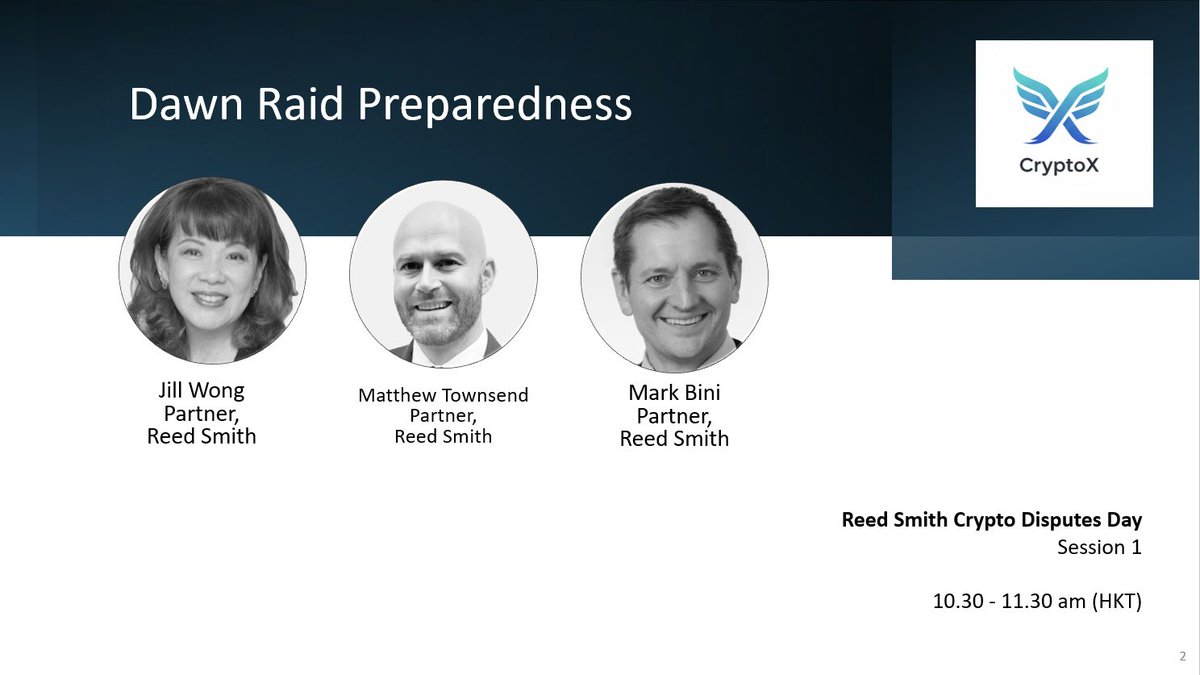
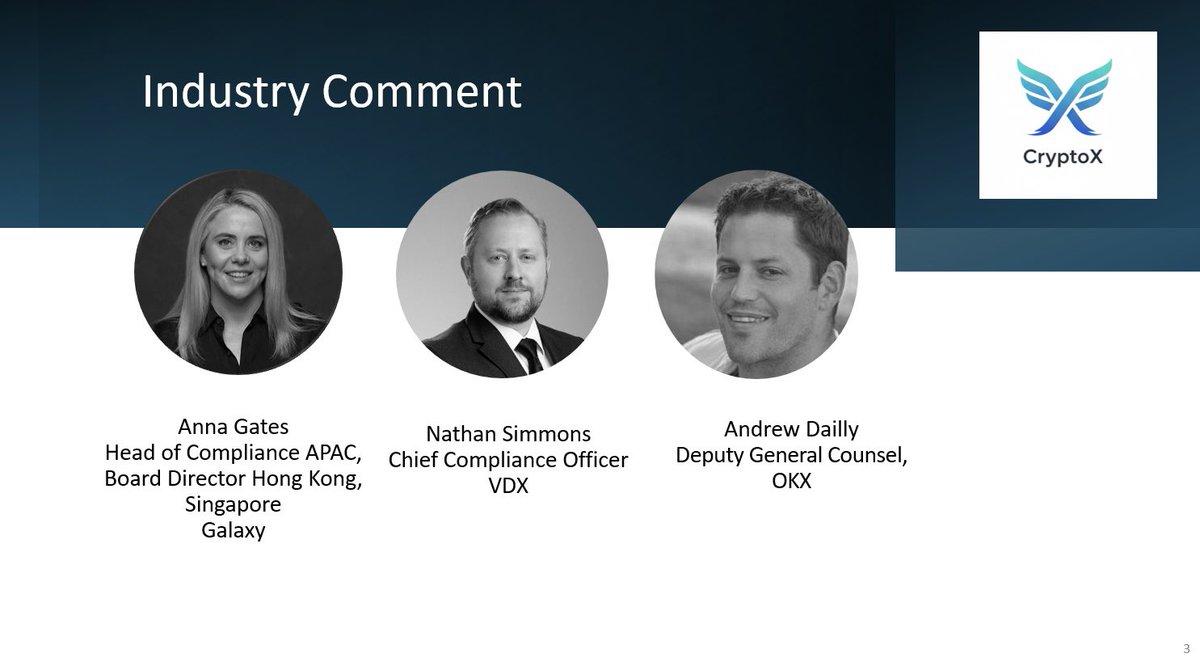
Reed Smith LLP Mark Bini, Jill Wong and I were fortunate to have industry insight from Galaxy ’s Anna Gates , OKX ’s Andrew Dailly and VDX ’s Nathan Simmons .
This session was part of Reed Smith’s 2025 Crypto Disputes Day. Thanks to the multiple exchanges, foundations, market makers and custodians who attended!
#ReedSmith #CryptoDisputesDay #Crypto #DigitalAssets #Enforcement #DawnRaids #HongKong #RegTech #Compliance
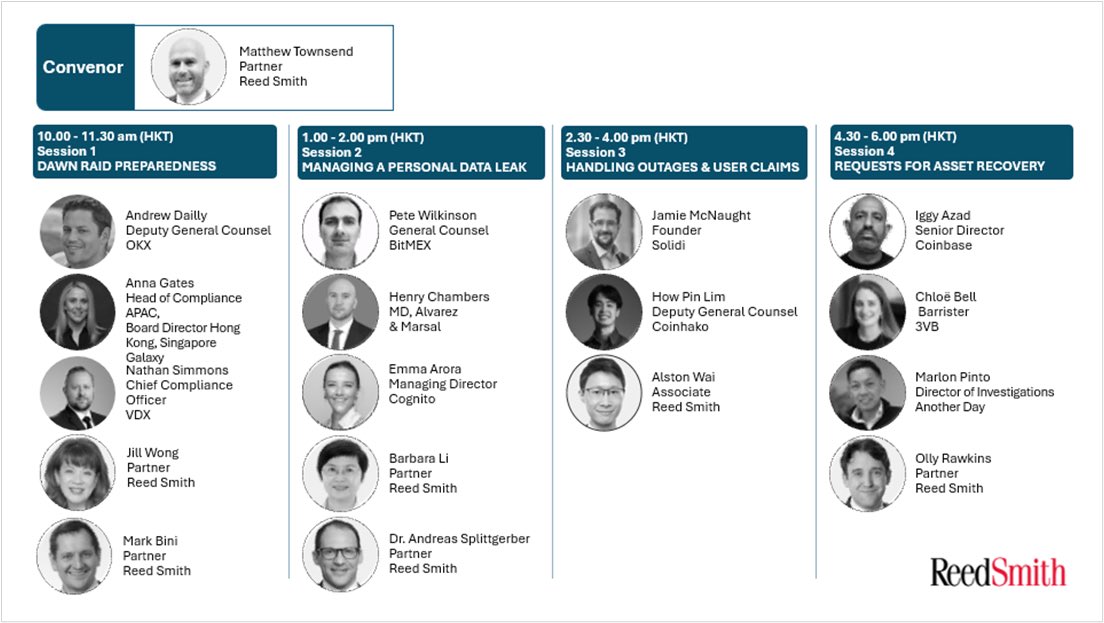
Earlier this week we hosted our 2025 Crypto Disputes Day 🚀
Reed Smith LLP lawyers were joined by in-housers from 12 leading crypto exchanges as well as custodians, market makers and others.
We had deep dives into strategies to deal with:
⏰ dawn raids
📊 data leaks
💀 user liquidation claims
🔍 asset recovery requests
Speakers included 7 Reed Smith lawyers from 5 jurisdictions, as well as in-house lawyers, barristers, and technical experts.
See you next year!
More lessons for cryptoasset exchanges: New York court refuses to uphold “change-of-terms” clause
Key takeaways
▪️Cryptoasset exchanges and other platforms often seek to rely on “change-of-terms” clauses to enforce updated terms against existing users.
▪️However, as a New York court decision shows, exchanges may be unable to do so if they do not take steps to alert users to amendments.
▪️ In Anderson v. Binance, the court found that the exchange had failed to give users sufficient notice to bind them to a Singapore arbitration clause inserted into its 2019 terms.
▪️This had a significant impact as it prevented Binance from resolving the dispute through its preferred dispute resolution mechanism – arbitration – rather than before the New York courts.
▪️ Exchanges seeking to improve their terms with new protections, limitations and disclaimers should put in place protocols to ensure users are alerted when amendments are made.
Pleased to co-author this with US colleagues Mark Bini Jonathan Ammons Ramsey Hanna Niyati Ahuja and my HK colleague Alston Wai.
Update on HK stablecoins!
💵New licensing regime begins on 1 August 2025
💵Proper management of reserves, clear redemption mechanisms, good stabilisation systems and robust AML controls are key https://t.co/GTMJVQBdIk
🇬🇧 New UK draft regulations on cryptoassets 🇬🇧
✅ The regs introduce 2 new types of specified (regulated) investment - ‘qualifying cryptoasset’ and ‘qualifying stablecoin’.
✅ they relate to stablecoin issuance: trading platforms: dealing as principal: dealing as agent: dealing in qualifying cryptoassets as agent, custody and staking.
✅ To fall within the UK regulatory perimeter, regulated activities must be carried on “in the UK”.
https://t.co/TLuypbGV9L