The most convincing dataset yet from Niras in Denmark showing the impact of sea spray aerosol transport of #PFAS on coastal regions. Look at those smooth exponential trend lines; exactly what you'd expect if the sea was a source. https://t.co/0uISkg51I6
I am recruiting a #PhD student in Environmental Science focusing on coastal sea spray #aerosol emissions: https://t.co/pAkSz5a1RU
I encouraged interested candidates to apply!
We are hiring! Currently we are looking for two Postdoctoral Fellows – one in biogeochemical modelling of the Baltic Sea and one with focus on greenhouse gas and aerosol fluxes. Read more: https://t.co/WdRZjMfTVn
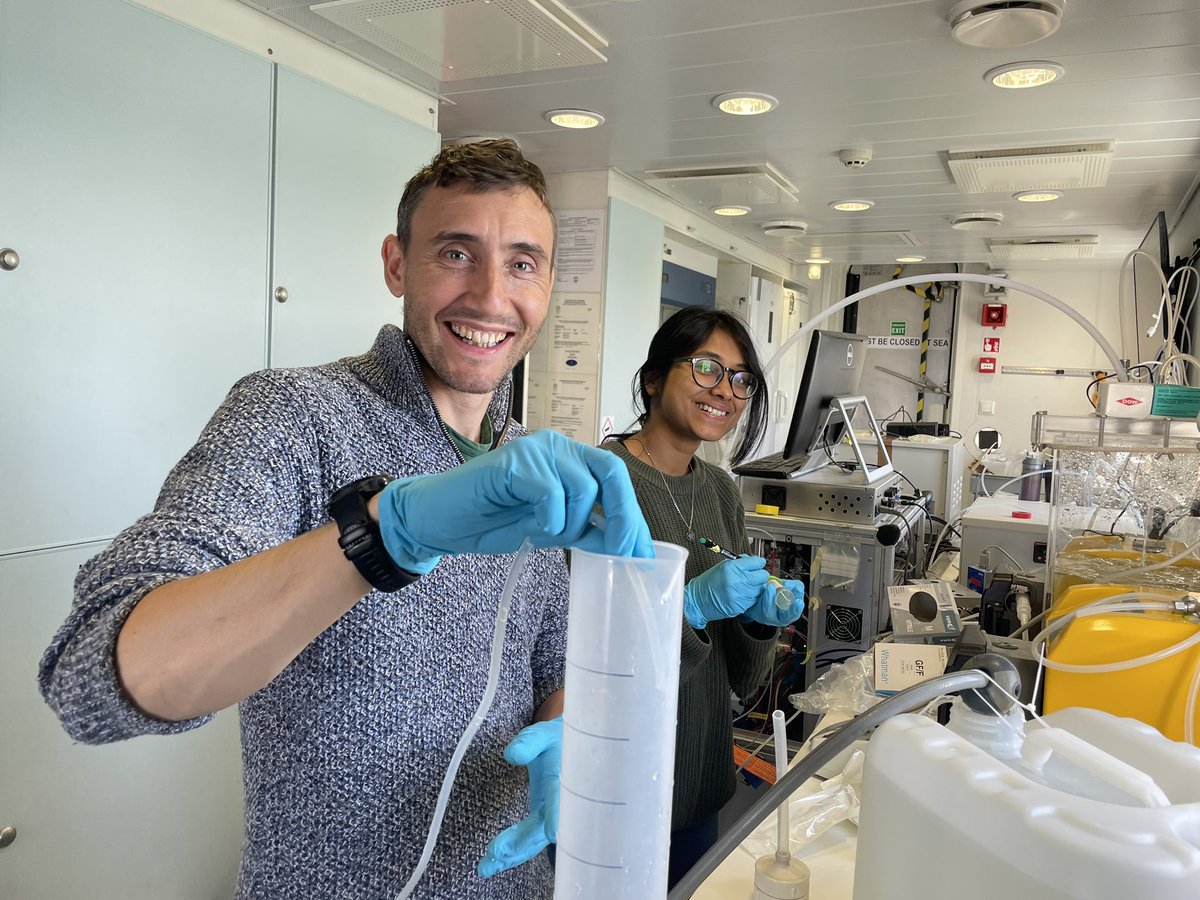
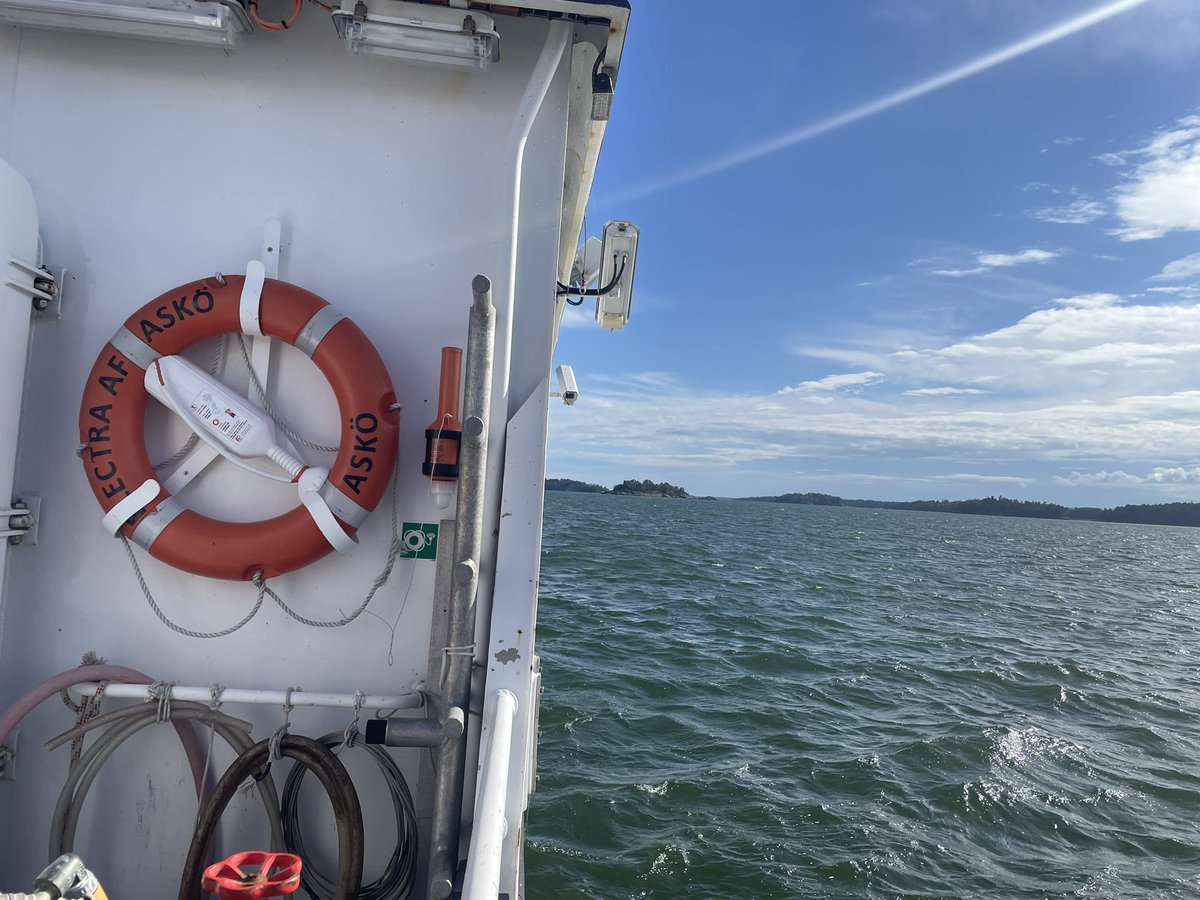
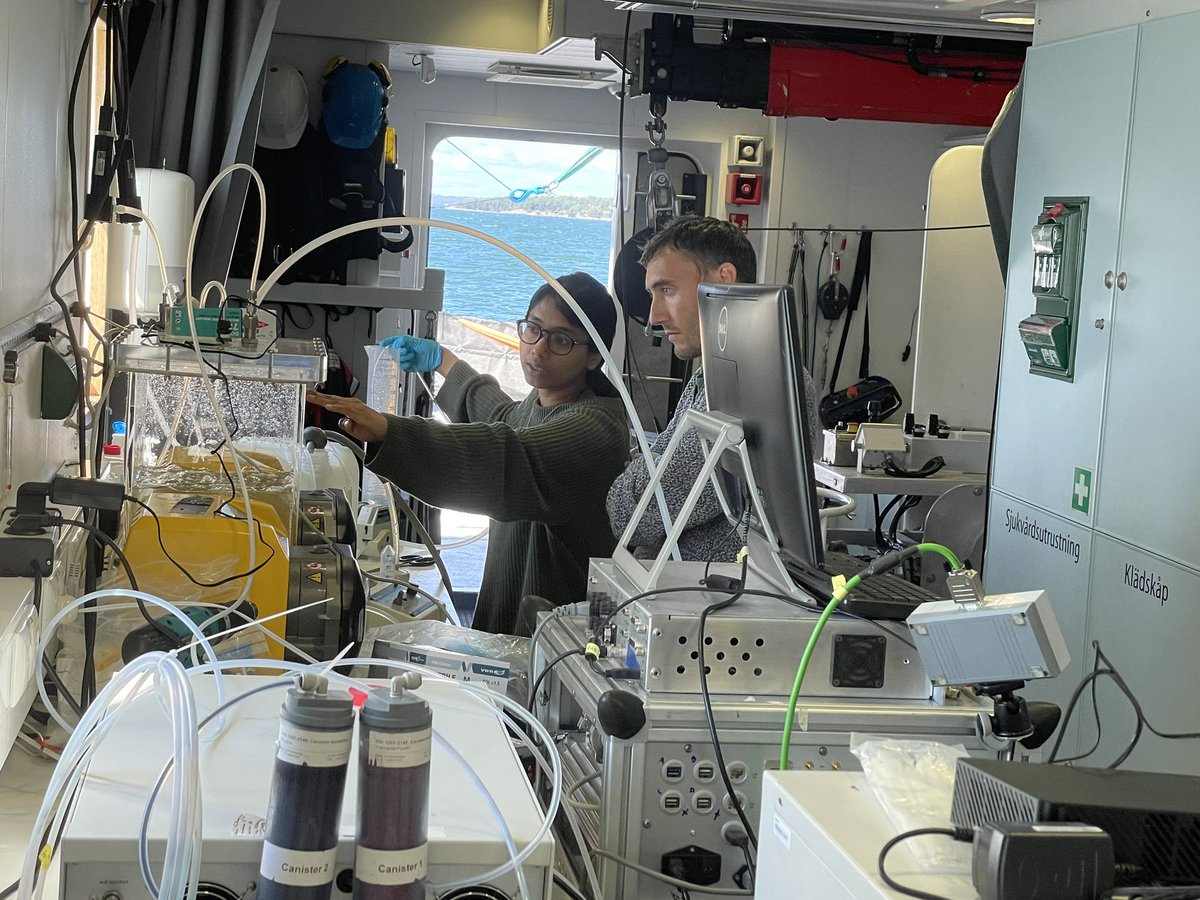
Can the smell of the sea impact the climate? Researchers @MattESalter and @Sneha_agg in @CoastClim project Cyano-VOC are currently searching answer to part of that question by measuring VOCs from cyanobacteria onboard R/V Electra.
We invite applications to an exciting #postdoc position at @ostersjocentrum@Stockholm_Uni focussed on studying aerosol and greenhouse gas fluxes in coastal environments. More details can be found here: https://t.co/LSkIG7sLYn
We invite applications to an exciting #postdoc position at @ostersjocentrum@Stockholm_Uni focussed on studying aerosol and greenhouse gas fluxes in coastal environments. More details can be found here: https://t.co/LSkIG7sLYn
We have put together a FAQ document (link at the bottom of this page) to clarify points that have not come across or have been distorted in some of the reporting on our recent viewpoint on a planetary boundary for PFAS.
https://t.co/cwPnsLu1HL
A great collaboration with @paul_zieger, @MattESalter and Prof. Björneholm's group from @UU_University. I hope the story will continue with brilliant lightsources 🙂
We spent a month in a village on the Faroe islands to study the effect of a phytoplankton bloom on sea spray composition. This is the first paper out from that campaign. With Nikola Radoman @sigurd88@MattESalter @MereBil @IanTCousins https://t.co/og4AbCQ8Un
Wow, just discovered that our Perspective on #PFAS in rainwater is the #1 most read paper in @EnvSciTech in the last 12 months with 150 000 reads (it's only been out 12 days). @AcesSthlmUni scientists coauthored 3 of the top 4, and 4 of the top 20. https://t.co/d1Zdaq2Rwj