📢New publication! AWMS members Sebastien Comte, Andrew Bengsen, Dave Forsyth and colleagues recently published a paper examining the effectiveness of professional culling for control of introduced rusa deer in eastern Aust. Read their paper: https://t.co/IC97ML4gMY
We're very proud to share that Trevor Meldrum, Chair of our Board, has been named as one of six Biosecurity Mates ambassadors for Queensland. The new ambassadors will raise community awareness of biosecurity threats to Queensland's unique and precious environment.
Very pleased to announce that the {mvgam} #rstats 📦, which fits State-Space dynamic GAMs to time series, has been released to CRAN. Here is a short blog post to describe current features and future plans: https://t.co/5mzctCSh5T
I've found it almost impossible to get an ecology paper through peer-review without comparing 50 different models using AIC. This paper is another nice example of why that's problematic.
https://t.co/Rvh7L6vU7M
The first paper from my PhD is now on bioRxiv! https://t.co/nF2j3dhQ0c. We incorporated temporal dynamics into the movement, selection and memory processes of an SSF, resulting in dynamic simulations that replicated behaviours of water buffalo #animalmovement
🚨Out now in @ESAApplications🚨
"Eradicating an invasive mammal requires local elimination and reduced reinvasion from an urban source population"
🔗https://t.co/0XOdmMyLDq 🧵
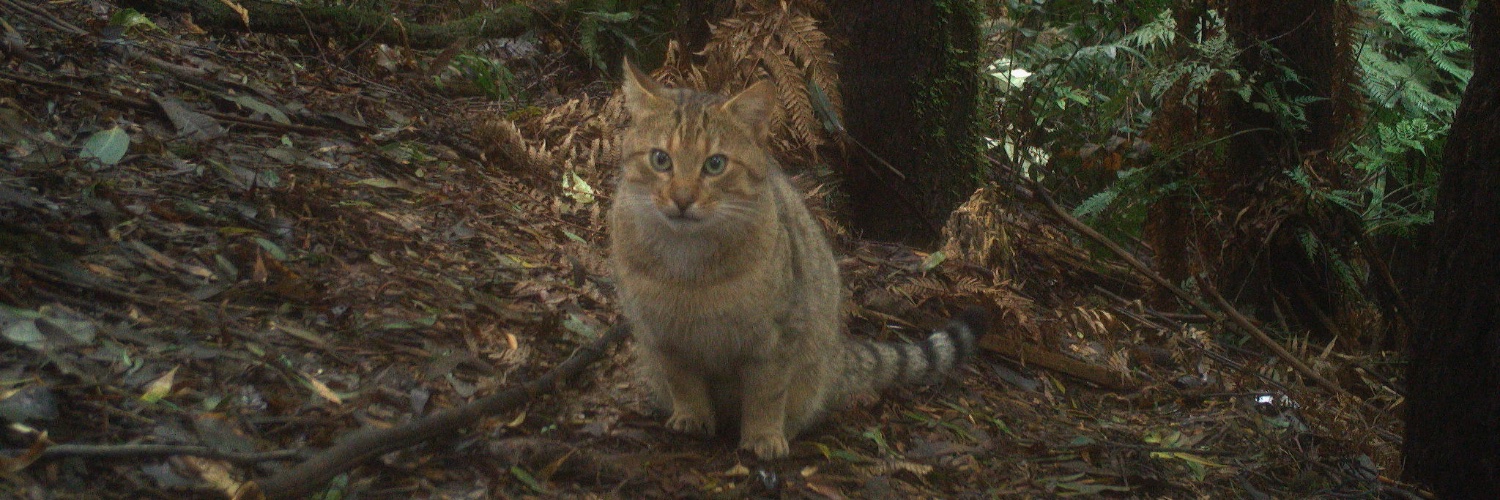
Controlling foxes? Keep an eye on those 'brazen' feral cats. 👀
After analysing photos from 3,667 camera traps in southwest Victoria, @matt_w_rees (@CSIRO) + Bronwyn Hradsky (@UniMelb) found feral cats were more abundant in areas where foxes were baited. https://t.co/rpmhssNzIo
Australia ranks fifth after Brazil, India, Indonesia and Tanzania for deforestation! On average, we destroy over 400,000 hectares of native forests each year. Surely we can protect what’s left.
I walked in this remnant Red Gum coastal forest on Darkinjung Country NSW today.
Now my PhD chapters are all published and the burnout has subdued, I wrote a summary of my findings in the @ConversationEDU with @bron_hradsky. Managing interacting invasive predators to protect wildlife is hard work.
Baiting foxes can make feral cats even more ‘brazen’, study of 1.5 million forest photos led by @matt_w_rees shows
https://t.co/Ve7bSyXCbd via @ConversationEDU
Ecological factors influencing invasive predator survival and movement: insights from a continental-scale study of feral cats in Australia - @vishnumenon94
https://t.co/MXR2WurFZu
Can we stop looking at histograms of animal diel activity and trusting our gut to classify species diel behavior (e.g., nocturnal)? Yes! Out today in @AnimalEcology we present a research methods guide for the Diel.Niche R package! #openaccess#rstats 1/7
https://t.co/dJh61JUoRw
New paper from my PhD out in @BioInvasions.
Lots of existing research on drivers of invasive predator and native prey occupancy in this neck of the woods, so here I brought some big datasets together to try a slightly different modelling approach.
https://t.co/JxYMbICBmI
Platypuses are hard to spot in the wild, but their DNA helps researchers track their presence and disappearance
Here, @EcoEmcg + @andrewrweeks (@UniMelb) sampled 118 rivers + creeks before and after the Black Summer bushfires, searching for platypus DNA. https://t.co/vV7ILJekMf