Meanwhile in the US, Micron still hasn't started construction on the Syracuse DRAM fab that was meant to break ground in 2022, and they're now getting sued by some NGO over nonsensical environmental bullshit lmao. COOKED.
@cara_catowner it's really good at keeping a codebase coherent over a long period, which i find other models really struggled on. thanks for your hard work, it's a great model!
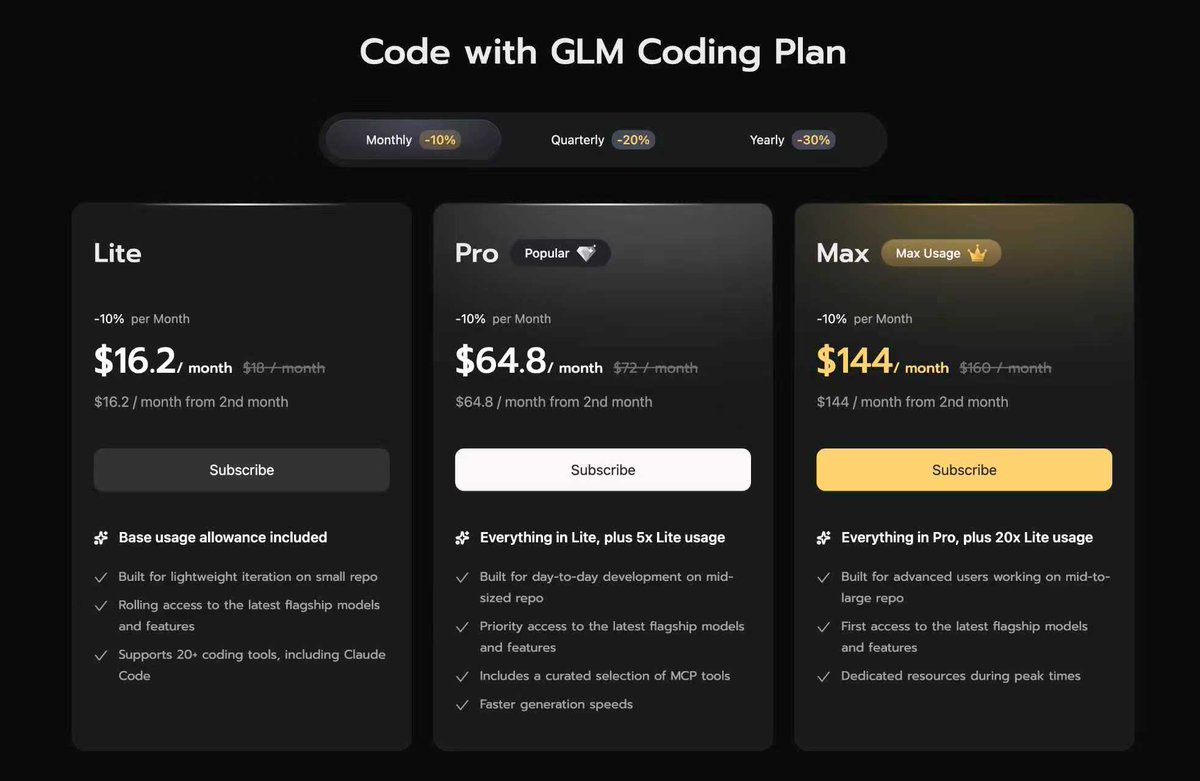
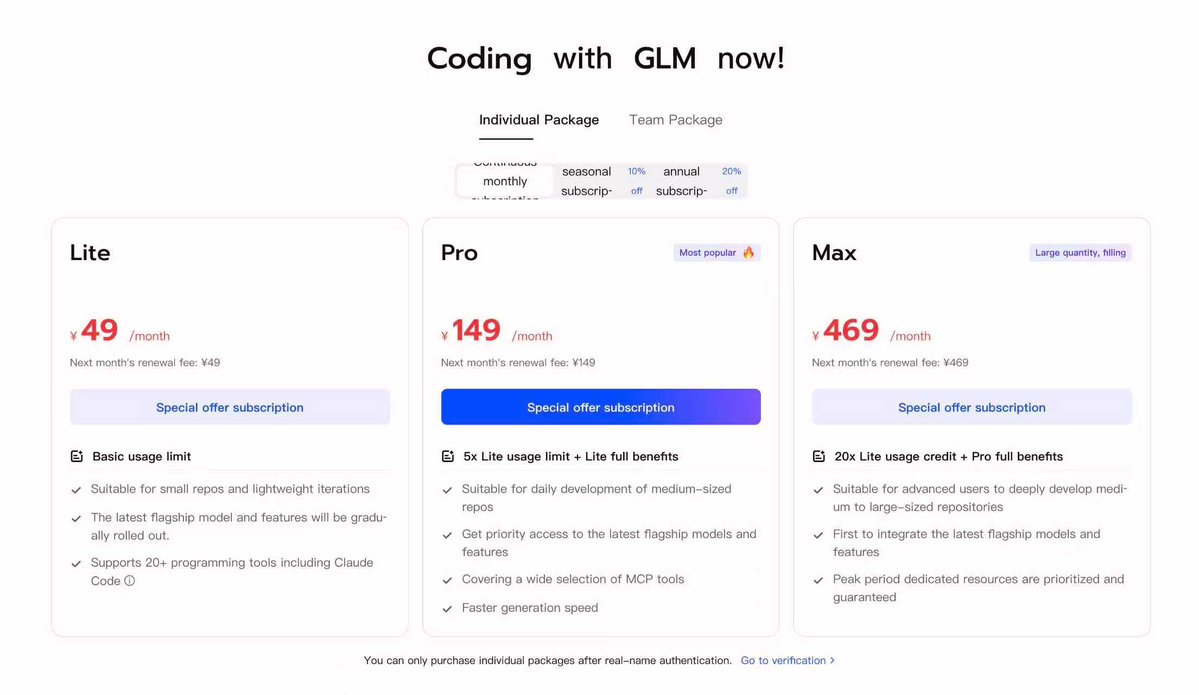
glm5.2 (max) is better than gpt5.5 (xhigh) at coding. it has better taste, I don't have to constantly redirect it away from nonsensically defensive slop coding the way i do with gpt5.5. it's much better at clean, minimalist code that understands the spirit of what i'm going for.
@alexbastian_ai it's not a problem for how i am using it atm, while it thinks for the next step i spend time reviewing all the code it just wrote. hopefully the providers will get faster over time though.
@JordanNanos@Zai_org the zai plan is based on tokens not prompts. i burned through 50% of the pro plan (5h) in one prompt asking it to review a 70k line codebase. codex pro plan has like >10x the allowance of the zai max one.
Another important thing: Chinese models are not strong because they distill US models. Distillation of models via API is *impossible*. If somebody tells you the contrary, they don't understand machine learning:
Together with UC Berkeley we are announcing the laser phase plate - a breakthrough in atomic resolution imaging. This is the brightest continuous wave laser in the world, 100 million times the intensity of the surface of the sun.
Phase contrast plays an important role in microscopy, but it was thought close to impossible for electron microscopy, where it would require interfering with an electron beam. Holger Mueller and Robert Glaeser proposed exactly this using a standing wave laser. It has taken over 15 years to make this a reality. Biohub partnered with UC Berkeley and Mueller to support this work and to engineer and build the technology.
Contrast has been the critical barrier to achieving atomic resolution imaging of the cell. In cryo-electron tomography, a cellular imaging technology that uses electron microscopy, the low contrast makes it impossible to resolve anything but the largest proteins within their cellular context. The laser phase plate removes that barrier.
With advances in AI this breakthrough in contrast will start to open up a new frontier in structural biology, that will allow us to see the molecular machines of the cell, and how they assemble into far more complex and dynamic systems, and understand how they work.
Can you believe it? The most successful venture capital organization in China over the past 10 years is... the Hefei municipal government.
China's memory chip giant, Changxin Memory Technologies, is about to go public. The company is expected to post around 150 billion yuan in profit for 2026, with a projected market valuation of 2–3 trillion yuan (or even 4 trillion). The Hefei government holds 36.79% of Changxin. Do the math yourself.
Hefei also holds 5.4% of BOE and 8% of NIO. On top of that, it has stakes in other tech companies like OFILM, Nexchip, and Sj Semiconductor. The total value of these equity holdings is already in the hundreds of billions of yuan.
What's truly impressive is that the Hefei government made these investments when those companies were still relatively small—inviting them to set up factories in the city, injecting public capital, and helping them grow. In return, Hefei hasn't just seen its equity appreciate; it has also gained massive employment and tax revenue, transforming itself from an unnoticed landlocked second-tier city into a true leader in China's tech innovation landscape. It's absolutely remarkable.