If your business stops when you take a vacation, you don't own a business—you own a job with overhead. Real scale begins when systems replace heroics and the company can operate without your constant involvement. #FounderLife#BusinessOwner#ScalingUp
Revenue gets the applause. Profit pays the bills. Too many founders chase top-line growth while ignoring margins. A smaller business with healthy cash flow beats a larger business that's one bad month away from disaster. #BusinessGrowth#Entrepreneur#Leadership
Most entrepreneurs don't fail because they're lazy. They fail because they spend too much time perfecting and not enough time selling. The market rewards action, not preparation. Start ugly. Learn fast. Improve as you go. #Entrepreneurship#StartupLife#SmallBusiness
The Most Expensive Mistake Entrepreneurs Make Isn't Failure—It's Waiting Too Long to Start
Most businesses don't fail because the idea was bad.
They fail because the founder spent too much time trying to make it perfect.
I've seen this pattern repeatedly. The entrepreneurs who struggle most are often smart, capable, and hardworking. Their problem isn't a lack of talent. It's hesitation disguised as preparation.
They're waiting for the website to be finished. Waiting for the logo to be perfect. Waiting until they know a little more. Waiting until they feel "ready." The problem is that readiness is often an illusion.
I once watched two entrepreneurs launch businesses in the same industry. One spent months perfecting branding, building a beautiful website, and refining every detail. The other launched with a simple offer and started talking to customers immediately.
On day one, the first entrepreneur looked more successful. Six months later, the second entrepreneur actually was.
Why?
Because one was polishing assumptions while the other was collecting evidence. The marketplace doesn't reward preparation. It rewards action.
Customers don't care how many hours you spent planning. They care whether you've solved a problem worth paying to fix. That's why I often say perfection is fear wearing a productivity costume.
It feels productive to keep tweaking your website. It feels productive to spend weeks researching. It feels productive to refine every detail. But most of the time, it's simply a way to avoid the uncomfortable part of entrepreneurship: putting your work in front of real people.
The truth is that customers are the best business consultants you'll ever have. Every objection teaches you something. Every rejection reveals an assumption. Every sales conversation provides information you could never learn in a planning session.
The founders who build lasting companies understand a critical lesson:
Confidence doesn't come before action.
Confidence comes from action.
It comes from making the call, launching the offer, hearing "no," adjusting, and trying again.
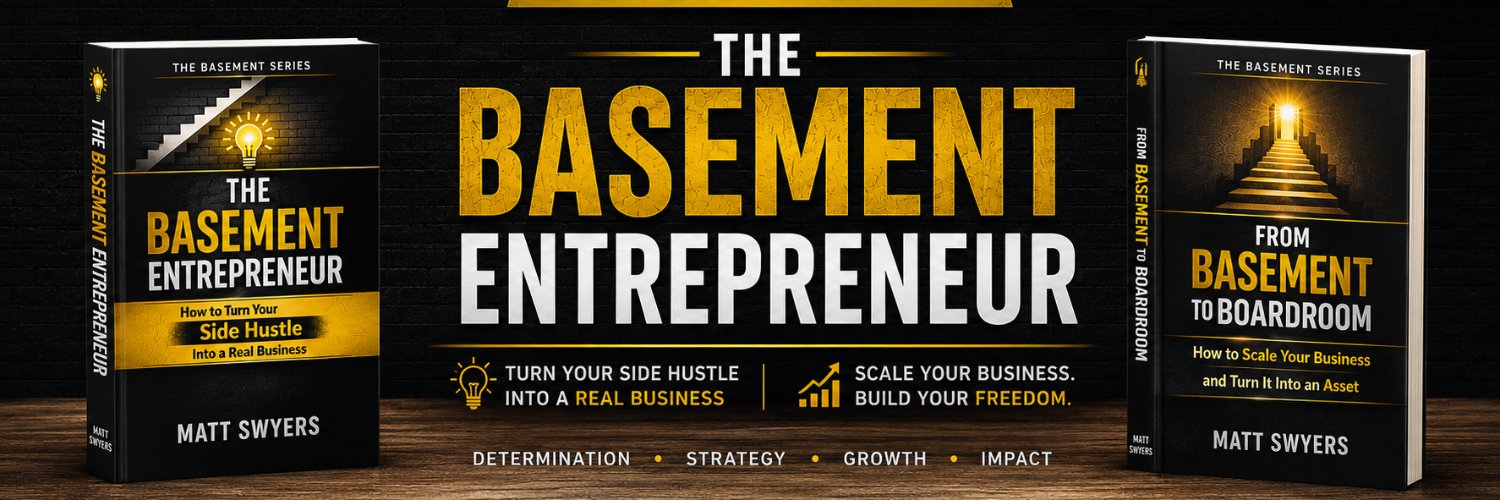
In From Basement to Boardroom, I call this principle "Start Ugly."
Not sloppy. Not careless. Not unethical. Just willing to begin before everything feels complete.
The businesses that eventually reach the boardroom rarely start there. They start in the basement. Messy. Imperfect. Uncertain.
But moving.
Because momentum creates clarity faster than planning ever will.
If you're waiting for the perfect moment to launch, hire, publish, or start your next venture, consider this. The perfect moment may never arrive. But progress begins the moment you move.
Start ugly. Learn fast. Improve relentlessly.
The market rewards movement far more than perfection.
What is something you launched before you felt ready, and what did it teach you?
#Entrepreneurship #SmallBusiness #Leadership #StartupLife #BusinessStrategy #FounderMindset #FromBasementToBoardroom #MattSwyers #StartUgly
@danmartell Amen. Leaders often measure the cost of letting someone go. The greater cost is rarely measured—the growth, trust, and excellence sacrificed by keeping the wrong person in the seat for too long.
@Codie_Sanchez A small mind chases money as the destination. A big mind sees money as a byproduct of creating value, solving problems, and thinking beyond itself. Wealth often follows the size of your vision long before it follows the size of your bank account.
A surprising number of entrepreneurs are trapped by businesses they built to create freedom. Revenue matters. But if every decision depends on you, you've created a job with overhead. #Entrepreneur#BusinessOwner#Startup
The longer I'm in business, the more convinced I become that speed is overrated. The founders who win aren't the fastest. They're the ones who stay in the game long enough for momentum to show up. #Founder#BusinessGrowth#Leadership
And consistency becomes even more powerful when it’s paired with purpose. Most people are capable of extraordinary things, but few stay committed long enough to see the results compound. The quiet discipline of showing up day after day often outperforms talent, luck, and even intelligence. Consistency isn’t flashy—but it’s where greatness is built.
The Most Expensive Mistake I Made as an Entrepreneur Had Nothing to Do with Money
One of the most important lessons I learned as an entrepreneur came much later than it should have. I learned that my family should never have to carry the weight of my bad business days.
For years, I thought being a committed business owner meant thinking about my company around the clock. If a client was unhappy, I took it home. If sales were down, I took it home. If an employee issue was keeping me awake at night, I brought that home too.
What I didn't realize was that while I was physically sitting at the dinner table, mentally I was still at the office. And the people who mattered most could feel it.
Entrepreneurship convinces you that every problem is urgent. When you've built something from the ground up, every setback feels personal, and every challenge follows you home.
But here's what I learned too late:
Your spouse didn't sign up for every business problem.
Your kids didn't sign up for every difficult client.
Your family didn't sign up to absorb the emotional impact of every bad day at work.
Several years ago, I spoke with a business owner whose company was growing rapidly. From the outside, he looked incredibly successful. But every evening he brought the stress of the business home with him. He wasn't angry or abusive. He was simply distracted, unavailable, and emotionally exhausted.
One evening during dinner, his daughter tried to tell him a story. He barely looked up from his thoughts. After a few moments, she quietly turned to her mother and said, "Dad's at work again."
That single sentence hit him harder than any business challenge he had ever faced. Because she was right. His body was home. His mind wasn't.
The older I get, the more I realize that one of the greatest skills an entrepreneur can develop is learning how to transition between work and home.
The business needs your leadership. Your family needs your presence. Those are two very different responsibilities.
Here are the lessons I wish I had learned sooner:
1. Not every business problem deserves a seat at your dinner table.
2. Most business challenges will still be there tomorrow morning.
3. Carrying stress home rarely solves the problem. It often creates a new one.
4. Success means very little if the people you love feel disconnected from you.
5. The best entrepreneurs know when to stop working, not just how to work harder.
Today, I try to leave my business problems at the door. Not because they aren't important, but because the people waiting for me inside are more important.
Building a successful business matters. But building a life worth coming home to matters even more.
What lesson did entrepreneurship teach you later than it should have?
#Entrepreneurship #SmallBusiness #BusinessOwner #Leadership #WorkLifeBalance #FounderLife #EntrepreneurMindset #SmallBusinessOwner #BusinessGrowth #FamilyFirst #SuccessMindset #LeadershipLessons
@thejustinwelsh Beautifully said. Success is rarely a single breakthrough moment—it’s the quiet discipline of showing up every day, especially when no one is watching. Consistency compounds, persistence separates, and over time the seemingly ordinary becomes extraordinary.
Most business owners think they have a marketing problem. What they actually have is a consistency problem. The market rewards repetition far more than brilliance. #Entrepreneurship#Marketing#SmallBusiness
The biggest difference between employees and founders isn't effort—it's responsibility. Entrepreneurs wake up every day knowing the outcome is theirs to own. #FounderMindset#Entrepreneurship#Leadership
Your first business teaches you how to build. Your second teaches you how to scale. Your third teaches you that protecting your time is the highest form of wealth. #Entrepreneur#BusinessGrowth#StartupLife
Value creates wealth, but meaning creates endurance.
A lot of people can grind for a season. Very few can keep showing up for years when nobody is clapping, buying, or noticing.
The people who ultimately win aren’t always the smartest or most talented. They’re the ones who find purpose in serving others, dignity in the work itself, and the courage to keep going when results lag effort.
Money is often the reward for creating value.
But fulfillment comes from becoming the kind of person capable of creating that value over and over again.
Most entrepreneurs spend years learning how to make money and almost no time learning how to handle uncertainty. The businesses that survive aren't always the smartest—they're the most resilient. #Entrepreneurship#SmallBusiness#FounderLife
@danmartell The real power move is asking AI to disagree with you.
Most people use it as a mirror.
The best users use it as a sparring partner.
Confidence without criticism feels great.
Competence comes from surviving the criticism.