💉💉💉 Ingenieur Агропаритек, pro-science, écolo car rural, pro no-till farming, OGM friend, classé par Foucart troll pro Monsanto , en attente du chèque...
🚨 To every young person in the West. 🚨
You're angry. You have every reason to be. You work harder than your parents did and own less. Rent eats half your paycheck. A house is a fantasy. You graduated into debt. And everyone keeps telling you who to blame: capitalism.
Here's something strange. In the US, only 43% of 18 to 34 year olds have a positive view of capitalism. But ask the same country about "free enterprise" and 81% like it. Ask about "small business" and it's 95%.
Read that again. You don't hate free markets. You love the bakery on your corner, the friend who launched a brand from her bedroom, the kid who shipped an app at 19. What you hate is something else, wearing capitalism's name.
Let me show you what it is.
You can't afford a home. Not because the market failed, but because in the cities that talk the most about housing justice, it takes years and a wall of permits to build anything. The people who already own vote to block the people who don't. That's not a market. That's a gate.
Your medicine costs a fortune. Not because the pill is expensive to make, but because a patent got stretched and extended until no competitor could touch it. Your neighbor needs a license and a thousand hours of training to braid hair. And now some of the most powerful companies on earth are asking governments for a license regime on AI, the one tool that could let you compete with them from your bedroom.
See the pattern? Every time, the rules protect whoever is already inside. Every time, the ladder gets pulled up right after the people at the top have climbed it.
This has a name. Two, actually. Crony capitalism. Regulatory capture.
Capture is simple. A big player can't beat you on product, so he stops trying. He goes to the people who write the rules. He funds the study, the think tank, the NGO, the campaign. He sits on the committee. He helps draft the "safety standard." The rule gets passed. And the rule happens to cost him a rounding error and cost you everything. No law broken. No one goes to jail. Just a door that quietly closes on you.
That is the cancer. And like a real cancer, it's dangerous precisely because it grows from inside the body. It uses the state's own organs. It wears the uniform of the regulator, the expert, the protector. The immune system doesn't recognize it as foreign. So it keeps growing.
Now let me tell you what real capitalism is. Because nobody ever did.
Real capitalism is the most moral economic idea humans have ever had. It says: you can only get rich by making someone else's life better, and only if that person chooses you freely. No one is forced to buy your product. No one is forced to work for you. Every dollar you earn is a vote someone cast for you, voluntarily. You don't get to take. You have to give first.
It's the immigrant who opens a shop and outworks everyone. The engineer who quits her job to build something nobody believes in. It's Elon Musk tearing down Tesla's patent wall and telling the world: copy me if you can. That's the spirit. Win by being better, or lose and learn. No permits. No favors. No protection.
That game is noble. It's hard. It's brutal sometimes. But it's fair, because anyone can play.
Crony capitalism is the opposite. It's what happens when the winners decide they'd rather stop playing.
And here's the part nobody wants you to see.
The best players of the capture game today are not the cartoon capitalists in top hats. They're the billionaires who speak your language. The ones who talk about inequality, fund the causes you march for, sign every pledge, sponsor every summit. Bill Gates wrote in 1991 that Microsoft should patent everything so future startups would have to pay the giants. Three decades later, his company was in Washington asking for a license to build AI. Same instinct, new costume.
They fund the foundations that fund the NGOs that write the reports that become the rules. And then they sell you the anger. "Capitalism is the problem." "We need more regulation." And you ask for more rules, more agencies, more licenses. Who writes them? They do.
That's the masterstroke. They made you hate the ladder and love the wall.
So here's my ask.
Don't burn the market. Burn the toll booths. Don't ask for a bigger state. Ask for a state that can't be bought. Every time someone proposes a new rule "to protect you," ask one question: who wrote it, and who does it protect from competition?
And then build. Because for the first time in generations, the tools are on your side. A 20-year-old with a laptop and AI can now compete with a company worth a trillion dollars. That's exactly why they want a license on it.
You were never anti-capitalist. You were anti-cheating.
Now you know who's cheating.
🇫🇷 Christian Estrosi, ancien maire macroniste de Nice, son épouse Laura Tenoudji, France Télévisions et le journal La Tribune ont été renvoyés devant le tribunal correctionnel, a annoncé le parquet de Marseille.
L'enquête porte sur l'organisation et le financement de deux événements à Nice en 2023 : l'Eurovision Junior, retransmis par France Télévisions, et le Nice Climate Summit, organisé par La Tribune.
À l'époque maire de Nice, Christian Estrosi avait participé à l'attribution de subventions municipales à ces événements, auxquels son épouse, salariée de France Télévisions et collaboratrice de La Tribune, devait participer.
L'ancien maire sera jugé pour prise illégale d'intérêts, son épouse pour complicité et recel de ce délit, tandis que France Télévisions et La Tribune devront répondre de recel de prise illégale d'intérêts.
Aucune date de procès n'a encore été fixée.
Non Monsieur Ajdari.
Il faut partir maintenant.
Les chaînes YouTube et les podcasts ne sont pas des programmes audiovisuels.
Vous n’avez aucun droit de leur imposer vos règles de pluralisme.
Un fonctionnaire n’a pas le droit d’inventer des obligations hors de tout cadre légal.
C’est quoi la prochaine étape ?
Les sujets de discussion à la machine à café ?
Martin Ajdari doit démissionner.
L’@Arcom_fr doit être dissoute.
Jensen n’était que le fusible.
Anthropic entre en Bourse cette semaine (ANT, environ 1 500 milliards, plus gros IPO de l’hsitoire).
En parallèle, Nvidia (et Google) injectent 10 milliards chacun dans le placement privé.
Et pendant ce temps, Anthropic recrute en cascade d’anciens de l’administration Obama :
• Kristina Schake (ex-assistante spéciale et responsable de la communication de Michelle Obama) pour les communications.
• Sarah Heck (ex-Conseil de sécurité nationale + Fondation Obama) à la tête de la politique publique.
• Christopher Fonzone (ex-adjoint du conseiller juridique d’Obama et conseiller juridique du Conseil de sécurité nationale) dans le conseil national security.
Ce n’est pas une coïncidence.
C’est un plan.
Jensen poussait les modèles ouverts et la concurrence. Ça menaçait directement le modèle fermé et cher d’Anthropic.
Il saute (scandale personnel et pression).
Le fusible grille.
Le chemin se dégage pour la cotation à valorisation stratosphérique et pour le positionnement « sécurité + régulation » qui arrange le camp démocrate.
Dario Amodei (donateur démocrate, proche d’Obama) et ses équipes Washington n’ont pas recruté ces profils par hasard.
Ils se préparent à parler régulation, sécurité nationale, « on ne peut pas se réguler tout seuls » exactement le discours qui plaît à une certaine gauche et qui justifie le contrôle.
Jensen a servi de fusible.
Les 10 milliards verrouillent l’alliance compute.
Les embauches Obama verrouillent le narratif politique.
Tout le reste est du storytelling.
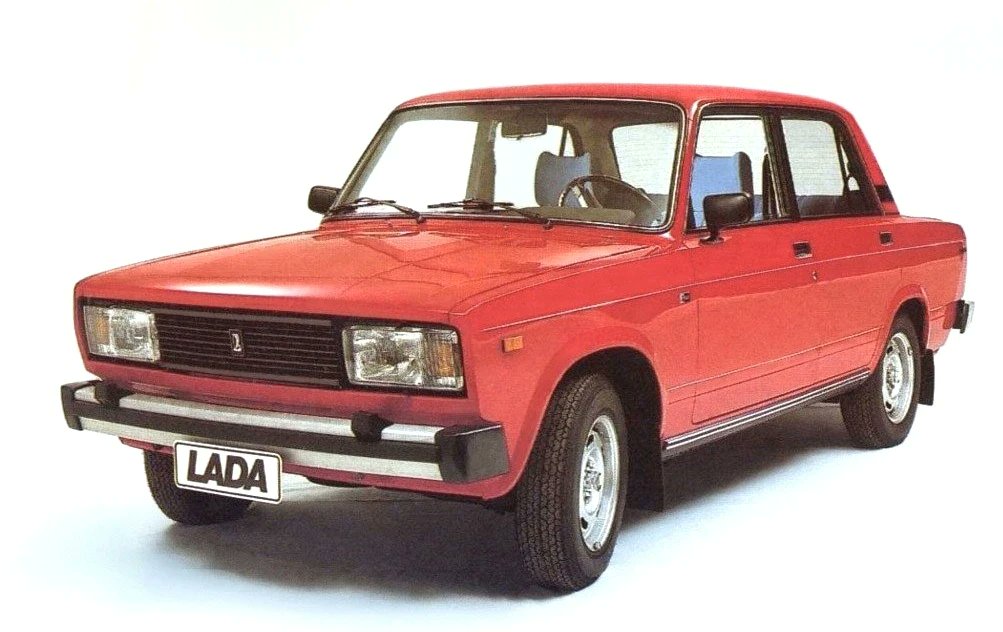
Ça, c'est la Lada. La dernière « voiture du peuple » organisée par un État.
Puisque Gabriel Attal veut organiser une voiture électrique française à 10 000 €, prenons cinq minutes pour regarder comment ça s'est passé la dernière fois.
En 1966, le Kremlin constate que l'URSS est à la traîne sur l'automobile. C'est écrit dans le plan quinquennal : il faut une grande usine. Problème, l'économie planifiée ne sait pas concevoir une voiture moderne. Alors on va chercher un capitaliste. Fiat. L'usine de Togliatti, sur la Volga, est une réplique de l'usine Fiat de Turin, et la voiture est une Fiat 124 renforcée.
Premier aveu : même pour fabriquer la voiture du peuple, le plan a dû acheter le savoir-faire du marché.
En 1970, les premières sortent de l'usine. Et le réel arrive.
Le prix est fixé par l'État : environ 5 500 roubles. Pour un ouvrier payé autour de 100 à 150 roubles par mois, ça représente plusieurs années de salaire. Pas de crédit. Tu paies tout, d'avance.
Et même avec l'argent, tu n'as pas la voiture. Tu t'inscris sur une liste. Tu attends. Des années. Un tiers de la production part à l'export pour ramener des devises, donc la file s'allonge encore.
Pendant ce temps, ceux qui gagnent une voiture à la loterie d'État la revendent au double du prix officiel. Et les diplomates étrangers payés en dollars repartent avec une Lada neuve, sans attendre.
Voilà l'égalité planifiée : le peuple fait la queue, ceux qui ont des dollars passent devant.
Et la qualité ? Une usine soviétique devait tenir un quota, pas satisfaire un client. Résultat : de la tôle trop fine, des pièces détachées si rares qu'elles devenaient des trésors, et des millions de propriétaires qui apprenaient la mécanique par obligation. La Lada n'avait pas de service après-vente. Elle avait ton week-end.
Le plus parlant, c'est la durée. La Lada classique, dérivée d'une Fiat de 1966, a été produite jusqu'en 2012. Plus de quarante ans sur la même base. Sans concurrence, personne n'a intérêt à innover. Le plan ne meurt jamais. Il vieillit.
Mises l'avait démontré dès 1920 : sans prix libres, sans profits et sans pertes, personne ne sait quoi produire, combien, ni à quel coût. L'État ne sait pas ce que veulent les gens. Alors il le décide à leur place.
Maintenant, Gabriel.
Tu promets une voiture électrique française à 10 000 €. Aujourd'hui, en Europe, aucune électrique neuve n'existe à ce prix. Si le marché ne la produit pas, c'est qu'à ce prix-là, elle ne couvre pas ses coûts. Pour qu'elle existe quand même, il n'y a que trois options : le contribuable paie la différence, on rogne sur la qualité, ou on n'en produit pas assez pour tout le monde.
Subvention, qualité dégradée, pénurie. En général, on a les trois. C'est exactement la Lada.
On sait comment ça finit. Une liste d'attente, un modèle qui ne bouge plus pendant vingt ans, et une facture que personne ne voit parce qu'elle est planquée dans la dette.
Là où on laisse les entrepreneurs se battre, les prix baissent tout seuls. Parce que celui qui ne baisse pas les siens disparaît.
La voiture du peuple, ce n'est pas celle que l'État organise. C'est celle que le peuple peut choisir.
On va adorer quand Karim Rissouli et Thomas Snégaroff vont être obligé d’indiquer que l’une de leur invitée favorite, Laurence de Nervaux (à la tête d’une association en charge de répartir les migrants en France) est la femme du… directeur général de l’ARCOM 😄
🎄 Préparez vos achats de Noël avec la Carte Moisson !
🎁 Profitez de réductions et de bons plans toute l'année pour faire plaisir tout en économisant.
👉 Plus d'infos sur https://t.co/Xwp4JLPTMj
#CarteMoisson#Noël#BonsPlans
🚨 Klaus Schwab, Emmanuel Macron, Gabriel Attal, Édouard Philippe, Ursula von der Leyen, George Soros, AOC, Bernie Sanders, Obama 🚨
I have a message for you.
You got one word wrong.
In 2016, the World Economic Forum released a little video of "predictions for 2030." The famous line: "You'll own nothing, and you'll be happy."
One word is wrong. The correct version is: "You'll own nothing, and we'll be happy."
We all know why you changed it.
Officially, it was a scenario. A piece of fiction to make people think. Fine. Then let's reread the Davos library and count how many "fictions" turned into roadmaps.
Our property: renting for life. No car, you share one. No house, you rent. No things, you subscribe. Everything becomes a service, and every service has an off switch.
Our plates: very serious articles explaining that insects finally deserve their place in our diet. The ribeye stays on the Davos buffet.
Our movement: the 15-minute city, and the "personal carbon allowance" that tracks what you consume, where you go, what you buy. For the planet, obviously.
Our identity: a single digital ID that follows you from the airport to your bank.
Our money: as early as January 2020, the Forum published a toolkit to help central banks launch their own digital currencies.
And to top it all off, in June 2020, in the middle of lockdown, Klaus published The Great Reset. It took a pandemic for anyone to dare put that title on a book cover. Klaus left the Forum in 2025. His work is doing just fine without him.
And that date, 2030. Does it ring a bell?
In 2015, the UN adopted Agenda 2030. 17 goals, 169 targets, to reorganize pretty much everything we produce, consume, eat and own. In June 2019, Klaus went to New York and signed a strategic partnership with the UN to accelerate its implementation.
The 2016 video. The 2020 Great Reset. The UN Agenda. Same horizon, same vocabulary, same method.
You call it sustainable development. Change the packaging as many times as you like. Everyone knows where you're trying to take us: a world where committees decide, in place of the people, what they produce, what they consume, and what they're allowed to own.
That has had a name for a hundred years. And it isn't the free market. It's communism.
But a plan doesn't implement itself. You need staff.
Enter the Young Global Leaders program. Officially, a network of "exceptional leaders" under 40. In reality, a cadre school. The Komsomol, with a Davos badge.
You join young. You learn the house language: governance, resilience, public-private partnership, transition. You come out with a global Rolodex and a loyalty that never goes through an election.
Emmanuel, class of 2016. Economy minister at the time. President the following year.
Gabriel, same house. Prime Minister at 34.
Édouard went through the other nursery, the French-American Foundation's Young Leaders. Same concept, different sponsor.
And Klaus never hid it. In 2017, at Harvard, he proudly explained that thanks to this young generation, the Forum was able to "penetrate the cabinets" of governments.
It's not a conspiracy. It's on their website. That's the craziest part.
An apparatchik is someone whose career depends on the apparatus rather than the voters. We didn't change the concept. We just changed the apparatus.
The Forum doesn't pass laws. It doesn't need to. It has its alumni. And it has the European Union.
Davos writes the scenarios. Brussels turns them into regulations.
Ursula, you're the good little soldier.
The European Digital Identity Wallet, which every member state must offer by the end of 2026.
An EU-wide cap on cash payments starting in 2027. In France, the limit is already €1,000.
Chat Control, the plan to scan private messages, which keeps coming back in new packaging.
A carbon tax on your heating and your gas tank starting in 2028.
And the centerpiece: the digital euro.
Ursula's Commission put the bill on the table in June 2023. On June 23, the European Parliament's economic affairs committee adopted its position, 43 votes to 14. Its chair, French MEP Aurore Lalucq, hailed "a historic day for Europe." In July, the full Parliament followed. Target: 2029.
And if you're worried, Aurore Lalucq already has an answer for you: the idea that the ECB would monitor your purchases is supposedly far-right fake news.
On one word, she's right. It is historic.
Because a currency issued by the central bank to every citizen, with a cap decided from above on how much you're allowed to hold, plugged into a digital ID, on a continent that limits cash and wants to read your messages, has a name in economics. Not the market. Central planning.
The Soviet Union had a single bank, the Gosbank. It dreamed of seeing everything, but all it had was paper. For the first time in history, the tool exists.
Hayek wrote it in 1944: economic control is not the control of one sector of life among others. It is control of the means for all our ends.
Control the money, and you control everything else. Where you go. What you eat. What you say.
I'm not saying they'll use it tomorrow morning. I'm saying they're building the cage bar by bar, each with an excellent reason: sovereignty, security, the planet, the children. And a cage never asks the opinion of whoever will hold the key twenty years from now.
Few regimes in history have had this level of control. None ever got it with the smiling consent of the people being locked in.
And since we're talking about wrong words, there's a second one. In your own name.
World Economic Forum.
"Economic" no longer matches the product. An economy is free people who own, trade and choose. You plan what they eat, how they move and how much they're allowed to hold.
So push the update. One word to change: replace "Economic" with "Communist."
World Communist Forum.
It'll be more honest. And at least people will know what you're dragging them into.
20th-century communism had tanks. The 21st-century version has an app.
You'll own nothing. And they'll be happy.
Je viens de regarder mon passage dans Quotidien. Évidemment, je suis qualifié d’« influenceur entrepreneur d’extrême droite ».
Déroulons.
Je ne sais pas si vous vous rendez compte à quel point le peuple français vous méprise.
Vous êtes tellement déconnectés du réel que, dans votre petit monde, vous êtes persuadés d’avoir le monopole du bon sens. Alors je vais vous dire ce que vous êtes vraiment. Mais avant, je vais vous dire d’où je parle.
Je suis breton. J’ai grandi dans un système scolaire profondément cassé. La majorité de mes profs étaient de gauche, et la plupart étaient déprimés. Pas méchants. Déprimés. Ils ne transmettaient qu’une chose : la conviction que le monde est injuste, que l’effort ne paie pas, et que demain sera pire qu’hier.
Ce qui m’a sauvé, c’est d’avoir appris seul. J’ai commencé à coder à 12 ans. À 15 ans, j’avais créé un jeu qui me rapportait plus que le salaire de mes profs. Personne ne m’a donné la permission. Personne ne m’a subventionné. J’ai construit, des gens ont joué, j’ai été payé. La leçon d’économie la plus honnête de ma vie.
Ensuite j’ai travaillé dans la tech, j’ai vécu dans la Silicon Valley, j’ai construit pas mal de choses. Et j’ai étudié l’économie par moi-même. Pas pour un diplôme. Pour comprendre comment le monde fonctionne vraiment.
Et surtout, j’ai eu une chance que vous n’aurez jamais. J’ai été connecté, et je le suis encore, aux deux extrémités de la société. D’un côté, les couches les plus modestes, celles que vous prétendez protéger et incarner sans jamais leur parler. De l’autre, les couches les plus hautes : des milliardaires, des bâtisseurs, Elon Musk. Je fais le grand écart tous les jours. Et je peux vous dire une chose : en bas comme en haut, le diagnostic est le même. Vous, vous êtes au milieu, dans le seul étage de l’immeuble qui n’a pas de fenêtre.
Ce que je vais dire maintenant, n’importe quelle personne saine d’esprit qui a un contact avec le réel le comprend.
Yann, tu incarnes un mouvement et des idées qui ne représentent quasiment plus que vous. Ceux qui croient encore Quotidien et ses mensonges répétés en boucle, ce sont deux populations. Les gamins endoctrinés par une école capturée par l’idéologie. Et une partie des Français issus de l’immigration, qu’on manipule en leur répétant que les Français sont racistes. Un récit construit de toutes pièces par cette gauche mortifère, qui a besoin de victimes pour exister et qui les enferme dans ce rôle pour garder leurs voix.
Les idées que vous défendez sont des idées de mort. Elles culpabilisent le travail. Elles humilient ceux qui construisent. Elles transforment chaque citoyen en assisté ou en suspect. Partout où elles ont été appliquées jusqu’au bout, elles ont produit la même chose : la pauvreté, la défiance, l’effondrement. Pas une exception. Pas une.
Je le dis souvent : dans votre camp, il y a les cyniques et les believers. Les cyniques savent que ça ne marche pas, mais ça leur rapporte de l’audience, du pouvoir, des subventions. Les believers, eux, y croient sincèrement.
Yann, je vais te laisser le bénéfice du doute. Je te range dans la case des believers. Alors un conseil : lis Hayek. La Route de la servitude. Ça se lit en un week-end, et ça t’expliquera pourquoi chaque bonne intention que tu défends à l’antenne pave exactement la route que tu prétends combattre.
Tu as sans doute l’impression d’être du bon côté de l’histoire. Ils l’avaient tous. Mais tout ce que tu représentes enverra la France dans le chaos total.
Les gens que tu appelles « extrême droite », ce sont des gens normaux. Des gens qui veulent vivre en sécurité, travailler, être payés dignement pour ce qu’ils font, et élever leur famille dans un pays qu’ils reconnaissent encore. C’est tout. Ce n’est pas une idéologie. C’est le bon sens que vous avez abandonné, puis insulté.
Et je ne sais pas si vous mesurez ce qui est en train de se passer. Les peuples, dans leur intégralité, et avec eux les entrepreneurs, les créateurs de valeur, tous ceux qui font tourner ce pays, commencent à vous détester. Pas à vous critiquer. À vous détester, profondément, viscéralement. Chaque leçon de morale, chaque étiquette, chaque sketch condescendant creuse un peu plus le fossé. Alors un conseil d’ami : calmez-vous. Vraiment.
Je viens d’un milieu très loin des salons feutrés parisiens et des dîners bobos où l’on décide entre soi qui a le droit de parler. Toi, tu vis dans une bulle. Une bulle confortable, chauffée, avec un public qui rit au signal.
Mais le réel ne rit pas au signal.
Plus personne ne vous croit. Et le réel vous jugera. Très sévèrement.
Le replay a 27mn :
@DemocraticWins This clown has just one objective: destroying France so that the country gets swallowed into a UE that he dreams to be the leader… he has just not understood that EU is lead by Germany
@Podgorny3 Les ukrainiens ont le même point de vue. Quand la paix sera faite (quand ?), elle me durera que le temps de se refaire une condition suffisante pour la reprendre. Point de vue de mes collègues ukrainiens.
A few hours ago, I wrote: "They're going to pull it off. Jensen Huang is going to be pushed out of Nvidia."
It's done.
Officially, Jensen Huang resigned. In reality, the board was getting ready to throw him out. Effective immediately. He's also leaving the board. The CFO is stepping in as interim CEO. The board is even considering bringing in an outside CEO.
Thirty-three years. A company born in a Denny's, saved from bankruptcy more than once, turned into the most important company of the AI era. Wiped away in a week.
Whatever you think of his private life, look at the mechanics.
A scandal breaks. Pressure builds in Washington. Columnists demand his head. The board, which never prepared a successor, panics. The founder is out. And the man who fought the restrictions, who defended open models, who stood up to Washington, is gone.
The playbook worked. And when a playbook works, it gets used again.
The next target is Elon.
Why him? Because he's now the last builder of that scale who holds the entire chain. Rockets, satellites, energy, robots, AI, and soon chips with Terafab. He's the only one who can build both the superintelligence and the rocket that carries it into space. And he just said publicly that hiring Jensen would be an honor.
For those who want to slow everything down, there's no bigger target.
But they have a problem. You don't fire Elon Musk the way you fire Jensen Huang. He holds voting control at SpaceX. No board can throw him out overnight.
So they'll come at him another way. Regulators. Courts. Investigative committees. Government contracts. Media campaigns. Every weakness will be exploited, every mistake amplified, every procedure dragged out. They don't need to fire him. They just need to wear him down, slow him down, make every project ten times more expensive.
Open your eyes, because this is going to move very fast.
What we're living through right now isn't news. It's History.
In twenty years, this week will be taught in schools. The day America, in the middle of the race to superintelligence against China, took the man who made the chips for the entire planet out of the race. And people will ask what happened next.
The answer depends on what happens to Elon. And on what Jensen decides to do with the rest of his life.
I'm standing by my prediction.
We are living through History with a capital H.
Réunion de crise, il y a deux semaines.
Le café a refroidi avant même qu’on ait choisi le nom. Dans le silence, quelqu’un a dit ce que tout le monde pensait depuis des mois : plus aucun des nôtres ne passe.
Attal, trop lisse, trop longtemps au pouvoir, plus personne n’y croit. Philippe, le « bon père » qui a déjà tout cassé une première fois. Glucksmann, le philosophe de plateau, zéro ancrage réel. Lagarde, qui parle de la France comme d’un produit financier à restructurer. Même Hollande est revenu sur la table… avant qu’on se rappelle que le pays a encore des souvenirs.
Ils sont brûlés. Tous. Le système a épuisé ses visages.
Il nous faut quelqu’un d’ailleurs. De la diversité, mais pas n’importe qui. Zidane ? Trop droit, trop intouchable, pas assez souple. Il faut un profil aimé des Français, qui sourit, qui dit « rassembler » sans jamais poser de question gênante, et qui suivra aveuglément toute la ligne.
On a trouvé. Teddy.
Champion, sourire, « ni de droite ni de gauche ». On le vend comme le messie du tatami, l’unificateur ultime, « La France qu’on veut ». Les gens sont fatigués. Ils vont adorer le packaging.
Ensuite on continue le plan. Et le jour où les Français de souche passent sous les 50 %, on bascule. Plus de demi-mesures. Communisme version 1984, mais avec des selfies et des drapeaux arc-en-ciel.
C’est ça ou on perd la main. Alors on lance.