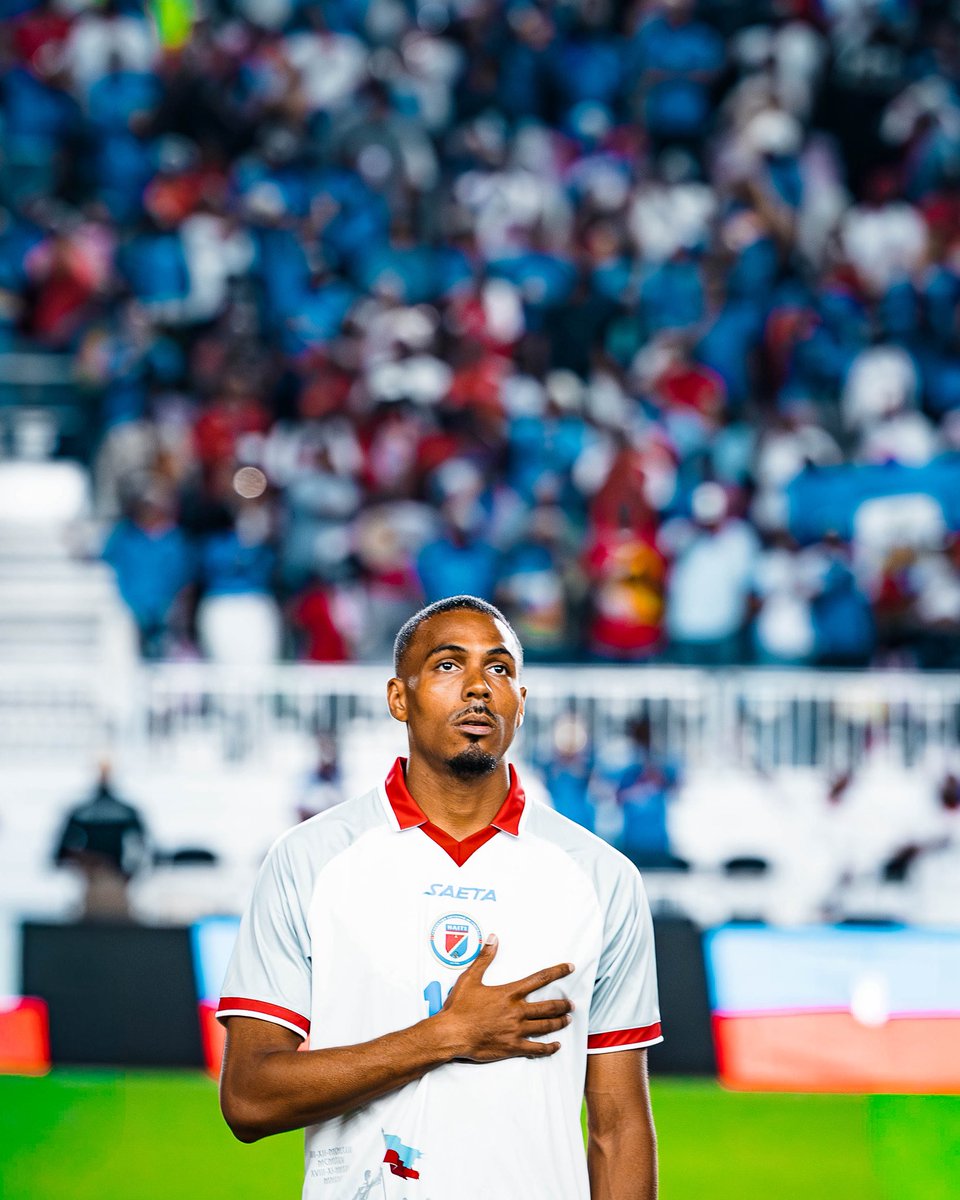
Représenter Haïti dépasse le football.
C’est porter une histoire, une identité, une culture et les espoirs de tout un peuple. C’est mesurer le privilège de défendre ses couleurs et la responsabilité qui l’accompagne.
Je porte ce maillot avec une immense fierté. Une fierté profonde, sincère, qui n’a besoin de s’opposer à personne pour exister.
Le football nous apprend justement cela : défendre passionnément ce qui nous appartient tout en respectant profondément ce que les autres défendent.
Pendant 90 minutes, il y a des couleurs, des rivalités, des émotions et cette volonté absolue de gagner.
Après, il reste l’essentiel : le respect que l’on se porte et ce que le sport est capable de créer entre les peuples.
Nos différences font la beauté du football.
Notre capacité à nous retrouver autour de lui en fait la grandeur.
Je suis fier d’Haïti.
Fier de notre peuple.
Fier de porter nos couleurs.
Et si le football peut nous opposer pendant 90 minutes sur le terrain, sa plus grande force est de nous rassembler en dehors.
🇭🇹🤝⚽
Wilson
J’ai rassemblé plus de 2000 voir 5000 livres en PDF maintenant dans un seul dossier Drive ...philosophie, histoire, féminisme, sociologie, littérature, religion, politique, économie, science
Un vrai trésor pour tous les curieux et passionnés de lecture !
https://t.co/8COIzU9rU3
Bonne lecture
Ou pa oblije kite Ayiti pou w travay ak mond lan.
Sa ou bezwen, se estrateji. Men etap yo:
Premye etap:
Chwazi yon konpetans ki mache sou entènèt.
Yon sèl bagay.
Tankou IT support, cybersecurity de baz, data, AI tools, project support, customer support.
Dezyèm etap:
Bati yon pwofil pwofesyonèl.
LinkedIn se pa opsyon, se obligasyon.
Foto pwofesyonèl.
Bio ki di sa ou KONN FÈ, pa sèlman sa ou ye.
Twazyèm etap (trè enpòtan):
Lè w ap chèche travay sou LinkedIn,
chwazi “LATAM”, ki vle di Latin America.
Anpil konpayi ap chèche moun nan rejyon sa a
pou travay remote,
e Ayiti tonbe ladan l.
Pa limite tèt ou ak “United States”.
Panse rejyonal. Panse global.
Men lòt sit kote ou ka jwenn travay remote,
menm si w ap viv Ayiti:
– https://t.co/HLUASlDEuZ
– https://t.co/lkobX3BO9K
– https://t.co/IMf61nB76T (AngelList)
– https://t.co/50FvQCxJaZ
– https://t.co/ic4jVFvdKD (kontra)
– https://t.co/qQ9heQtVSG (pou nivo avanse)
– https://t.co/VqP1ohAwZs (travay remote pou konpayi mondyal)
Sou platfòm sa yo,
sa yo gade se konpetans ou,
pa paspò ou.
Katriyèm etap:
Travay sou anglè fonksyonèl, pa anglè pafè.
Ou bezwen konprann, ekri, epi reponn klè.
Pa kite pè anglè a bloke w.
Senkyèm etap:
Rete konsistan.
Aplike chak jou.
Aprann chak jou.
Amelyore pwofil ou chak semèn.
Gen moun k ap viv Ayiti
epi k ap touche an dola, euro,
pa paske yo gen chans,
men paske yo konprann sistèm nan
epi yo suiv etap yo.
Pataje l ak yon lòt
#Travay #remotework #haitian #haiti
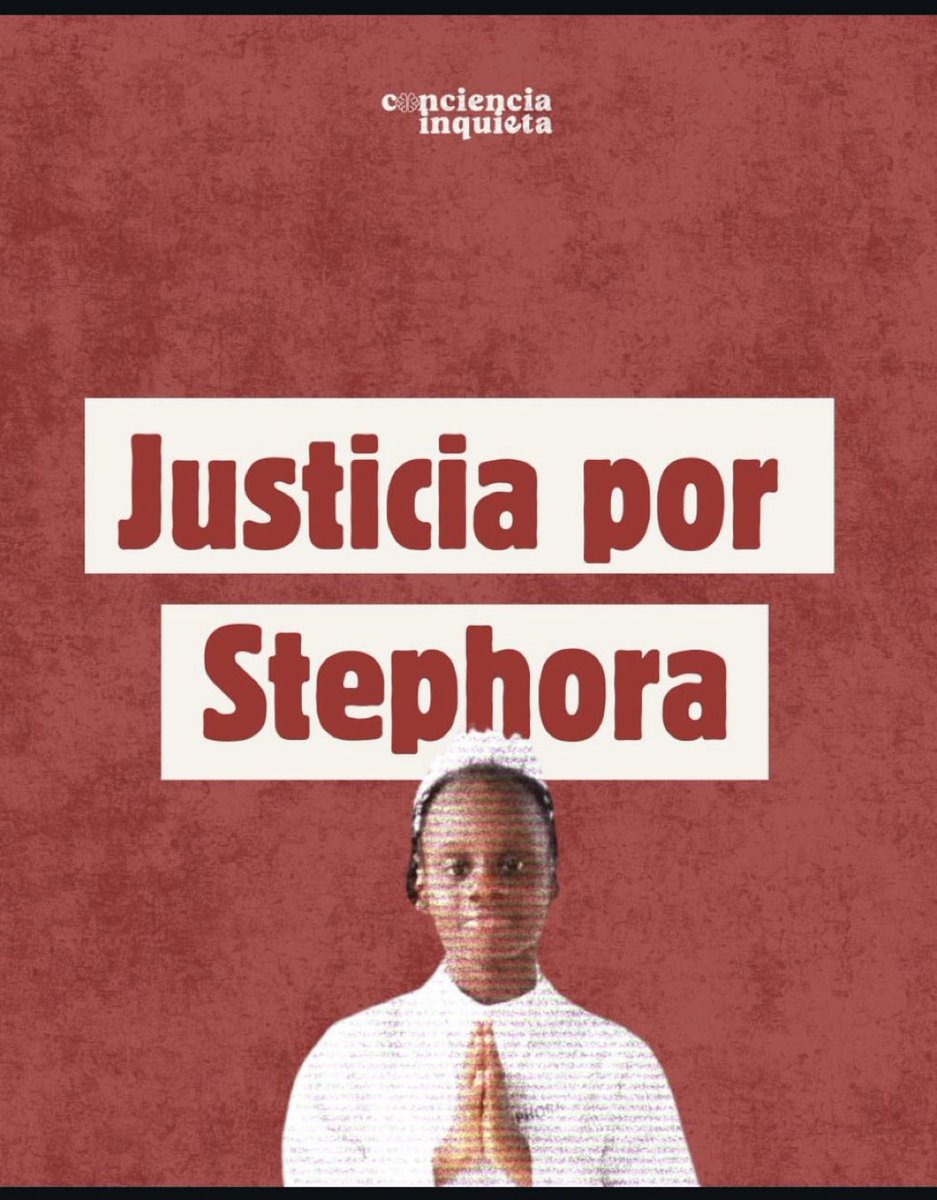
What happened to Stephora is not just a personal tragedy, it is the predictable outcome of an environment where a child’s identity can make her a target long before she even understands the world. An 11-year-old Haitian girl died under circumstances that demand clarity, accountability, and truth. Instead, what we have is silence. A silence that is loud. A silence that protects institutions instead of children.
The Dominican authorities’ refusal to confront this or even communicate transparently is not neutral. Silence, in a context like this, becomes complicity. If the allegations are indeed true, when a State consistently avoids naming hatred, denouncing it, or educating against it, it leaves space for the hatred to grow freely. And hatred, when normalized, becomes something children inherit. They don’t invent it, they absorb it. They repeat what society teaches them.
For years, anti-Haitian narratives have been allowed to flourish unchecked in the Dominican Republic. Politicians have used them. Media has amplified them. Schools and institutions have tolerated them. And when adults sow contempt, children learn cruelty. These ideas metastasize across generations until they finally take shape in tragedies like Stephora’s death, a moment where prejudice stops being abstract and becomes lethal.
No country that allows this ideology to fester can claim surprise when its most innocent citizens reenact what they’ve been taught. A child lost her life, and instead of answers, instead of responsibility, instead of empathy, we are met with silence. Respect to the Dominicans that are speaking up and are demanding justice, but silence from the authorities will never be enough to protect the next child unless it is broken now.
Justice for Stephora is not only about understanding how she died, it is about confronting why she died. And the “why” is written clearly in the attitudes, the rhetoric, and the policies that have long dehumanized Haitians. Until this is addressed openly and courageously, the cycle will continue, and another child will eventually pay the price for a hatred she did not create.
Stephora deserved safety. She deserved innocence. She deserved a future. The least we can demand now is truth.
#justiciaparastephora
These are the scenes as the Haiti players, staff and fans find out they’ve qualified for their first World Cup in 51 YEARS…
What an achievement for them all.👏❤️🇭�