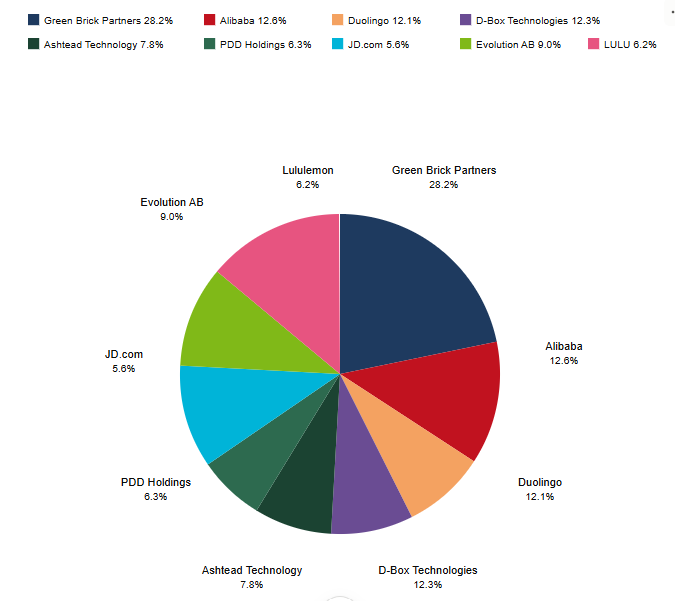
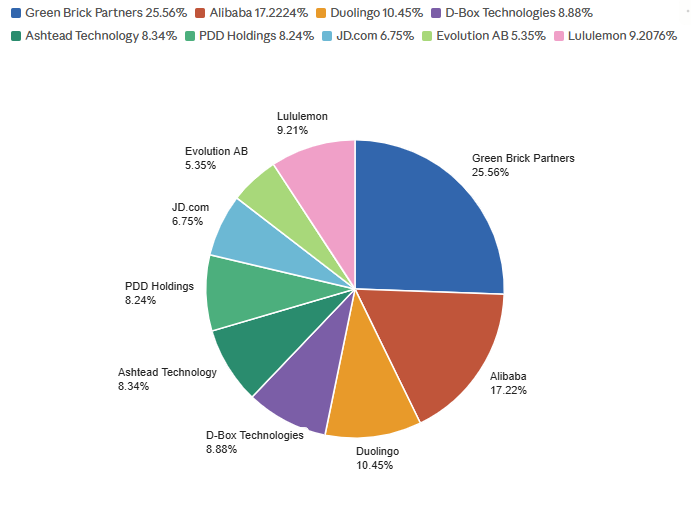
@nataninvesting What are the assumptions behind the 20% CAGR and why would you think a PE ratio of 40X is justified.
Your assumptions are very lofty, so I am wondering..?
🎬 D-BOX Technologies ($DBO): A Micro-Cap the Market Still Doesn't Understand
Most investors think D-BOX is a low-margin hardware company.
It isn't anymore.
Since an activist investment in 2023, management has fundamentally transformed the business model. The focus is no longer on selling hardware—it's on building a high-margin recurring royalty business.
💰 The Real Business: Royalties
D-BOX installs motion seating systems in cinemas.
The hardware sale is just the beginning.
Every installed seat generates recurring per-ticket royalty revenue, creating a business with:
✅ ~96.5% gross margins
✅ Highly recurring revenue
✅ Sticky customer relationships
✅ Significant operating leverage
Every new installation expands a royalty stream that can generate cash for years.
📈 The Turnaround Is Already Showing Up
The transformation isn't just a story—it's visible in the numbers.
🚀 Installed base grew ~20% in 2025 alone.
📊 Adjusted EBITDA margins expanded from 3% to 27% over the last eight quarters.
👤 In June 2025, industry veteran Naveen Prasad became CEO, bringing decades of cinema industry relationships to accelerate royalty expansion.
🛡️ Why Competition Isn't Easy
D-BOX has spent over 20 years building advantages that are difficult to replicate:
🎥 Thousands of encoded movies.
🤝 Deep relationships with cinema operators.
📜 A valuable patent portfolio.
Competition is minimal, with the only meaningful competitor focusing on premium full-theatre 4D experiences rather than D-BOX's scalable seat-based royalty model.
🤔 Why Is It Still So Cheap?
Because investors are pricing the old D-BOX.
For over two decades, management:
❌ Chased low-margin hardware sales.
❌ Ignored the royalty opportunity.
❌ Ran excessive overhead.
❌ Failed to generate consistent profits.
Today's company is fundamentally different.
Hardware is now simply a tool to expand the royalty network.
📉 Valuation
My model assumes:
• ~14% annual installed-base growth (declining over time)
• 100% of FCF allocated to share buybacks at CAD $1.25/share
This results in:
📈 FY2030 EPS of ~CAD $0.24 (based on the attached model)
At today's share price, that's only ~5.1x forward earnings.
🎯 Bottom Line
You're buying a company transitioning toward a recurring, software-like royalty model with:
✅ High-margin recurring revenue
✅ Strong barriers to entry
✅ Continued margin expansion
✅ Shareholder-friendly capital allocation
Yet the market still values it like the old hardware business.
That's where I think the opportunity lies.
$DBO #MicroCap #ValueInvesting
Portfolio Performance (FY26 Q1):
Return YTD: 0,6553%
Cumulative return since recording: 0,6553%
Changes:
Sold:
Kitwave (Got bought from a Private Equity)
Bought:
Duolingo ($DUOL)
D-Box Technologies ($DBO.TO)
Current thoughts: Thinking about reducing $BABA stake, since the position is I think to large considering, that the intrinsic FY28 fair value, is only away away 110% from the current price. An insufficient Margin of safety for possible mistakes or sentiment changes in the stock, in addition I think it is extremely hard having an knowledge edge through thorough research on stocks with as much analyst coverage as Alibaba. I think I can find my edge in micro caps, since those stocks more often deviate from the fair value, what are your thoughts?
I’m currently analyzing $DUOL, and I’m strongly convinced the company will NOT be substituted by AI in the coming years. Here’s why 👇
Fear 1: “People will stop learning languages because AI can translate for them.” 🤖🗣️
This completely ignores reality. Out of Duolingo’s 500M users, around 80% are learning English — mainly to study or work abroad. Universities and employers will not drop language requirements just because AI exists. Walking into a job interview or lecture with a translation device is unrealistic.
The remaining 20% learn languages for fun 🎯 — it’s a hobby, not a chore. AI doesn’t replace curiosity, culture, or the joy of learning.
Fear 2: “Competition will destroy Duolingo’s edge.” 🛡️
Duolingo has invested hundreds of millions into A/B testing, data, and algorithm optimization, plus deep integration into education systems. If you argue this moat doesn’t matter, you could say the same about $META — and we know how unrealistic that is.
Yes, competition will increase. But Duolingo’s network effects, data advantage, and brand can’t be replicated overnight. Challenging their position would take decades of investment and experience, not a few years.
Bottom line: AI is a tool for Duolingo — not a replacement 🚀📚
🚨 TOP STOCK PICK FOR 2026 🚨
(Almost no one talks about this one)
My highest-conviction idea for 2026 is a **small, ignored compounder** with **>100% upside potential** if execution continues.
📉 Valuation:
• EV / EBIT ~10x
• ROE ~24%
• Avg. growth ~30% (likely sustainable)
• Currently trading at 1/3 of historical valuation
🏗 Business Overview:
Ashtead Technology is a global leader in subsea equipment rental for offshore oil & gas and offshore wind.
Customers operate vessels costing €200k–300k per day.
➡️ Equipment cost is irrelevant vs availability, reliability & one-stop-shop capability.
📊 EBITDA Profile:
• Group avg. EBITDA: ~40%
• Survey & Robotics (~58% of revenue): ~45% EBITDA, ~50% market share
• Mechanical Solutions (~30% of revenue): ~35–38% EBITDA, low-teens market share
• Asset Integrity (~12% of revenue): lower margin, strategic add-on
🧠 Competitive Advantages:
• Platform / one-stop-shop (30,000+ assets)
• Global logistics → higher utilization
• ~20% purchasing cost advantage vs smaller peers
• Data advantage → better pricing & asset allocation
• Highly fragmented market → organic gains + accretive M&A
📉 Why the Stock Is Mispriced:
The sell-off followed management emphasizing on M&A activities that will focus on the segment mechanical solution
Yes — Mechanical has lower EBITDA (38%) vs group average of 40%
But that’s where the upside is:
• Fragmented market
• Low-teens share
• Customers want broader platform coverage
• Clear path to scale + margin expansion
Survey & Robotics = high-margin, more mature.
Mechanical Solutions = next growth engine.
🎯 Bottom Line:
~40% EBITDA business
~30% growth
~24% ROE
trading at ~10x EV/EBIT
I am convinced the company will continue to grow as strong as they did in the past, combining that will multiple expansion, will lead to a potential upside of >100%.
@ariaradnia Saying that 13% net margin are the normalised earnings is not 100% accurate, would rather say that is on the very high end, normalised would rather stand around 10% according to management
saying that a commoditised business like $PYPL is a better business than $NKE is the worst statement I have heard so far at x, congrats!
$NKE has an extremely strong brand and will be able to raise prices YoY without any pressure on the demand for its products, since they have brand power
@DividendDynasty I completely agree with you, the business is very attractive, as I also outlined in the writeup of the company:
https://t.co/HoIHwgO6P5
🇬🇧 TOP STOCK PICK FOR 2026 🇬🇧
(Almost no one talks about this one)
My highest-conviction idea for 2026 is a mispriced UK compounder with a potential for a 23% CAGR for 3 years
📉 Valuation:
• P/E ~12x
• Historically traded ~24x (FY20–FY24 avg.)
• ~50% below recent historical multiple
• EV / FCF (normalized 2026+) ~8x
• ~12% normalized FCF yield
• Expected growth ~10% p.a.
🏪 Business Overview:
Greggs is the UK’s leading food-on-the-go retailer.
Mass-market pricing.
Freshly made products.
Better value than premium chains.
Higher quality than similarly priced supermarket alternatives.
Broad appeal + strong brand + national footprint.
2010–2020: ~2% revenue CAGR (low innovation phase)
2020–2024: ~27% revenue CAGR driven by expanded offering & execution
This is not the old Greggs.
🛡 Valuation Floor:
The valuation floor is the company’s strong internal cash generation.
From 2026 onward:
• Operating cash flow ≈ £450m and growing
• Capex normalizing toward ~£160–200m
As investment spending moderates, free cash flow inflects materially.
On normalized numbers:
→ EV / FCF ≈ 8x
→ ~12% FCF yield
That’s downside protection: a cash-generative market leader trading at compressed multiples during an investment phase.
📉 Why the Sell-Off?
• UK consumer confidence weakened
• Growth normalized after the post-2020 surge
• Temporary FCF compression due to elevated capex
The market is pricing this like a structural slowdown.
It looks more like a capex cycle trough.
📈 Expected Return:
Assumptions:
• ~10% revenue/earnings growth
• FCF inflection from 2026 onward
• Re-rating to ~18x P/E (still below 24x historical avg.)
→ Potential ~23% CAGR over 3 years.
Multiple expansion + earnings growth + FCF normalization.
Strong brand.
Mass-market dominance.
Healthy cash generation.
Temporary investment drag.
Depressed valuation.
Classic compounder at a cycle-low multiple.
#valueinvesting #Stock #stockmarkets #StocksToWatch #StocksToBuy
I think the current margin improvement does not say much about the business.
The management rather in hindisight treated it as a misstep raising those margins, since it came at the cost of user engegement as can be seen by the most recent numbers.
But I am in no way pessimistic on the company, they have normalised EBITDA margins of around 30 - 40% which is significant, according to the management. Would tranlsate to approx. 300 to 400 Mio. in EBITDA with the company having basically no D&A expenses except a little bit of amortisation that is significant