Say the US wants a deal with China on powerful AI. Could we verify that China doesn’t cheat?
For the last year, my team produced the most technically detailed overview so far. Our RAND working paper finds: strong verification is possible—but we need ML and hardware research.
🧵
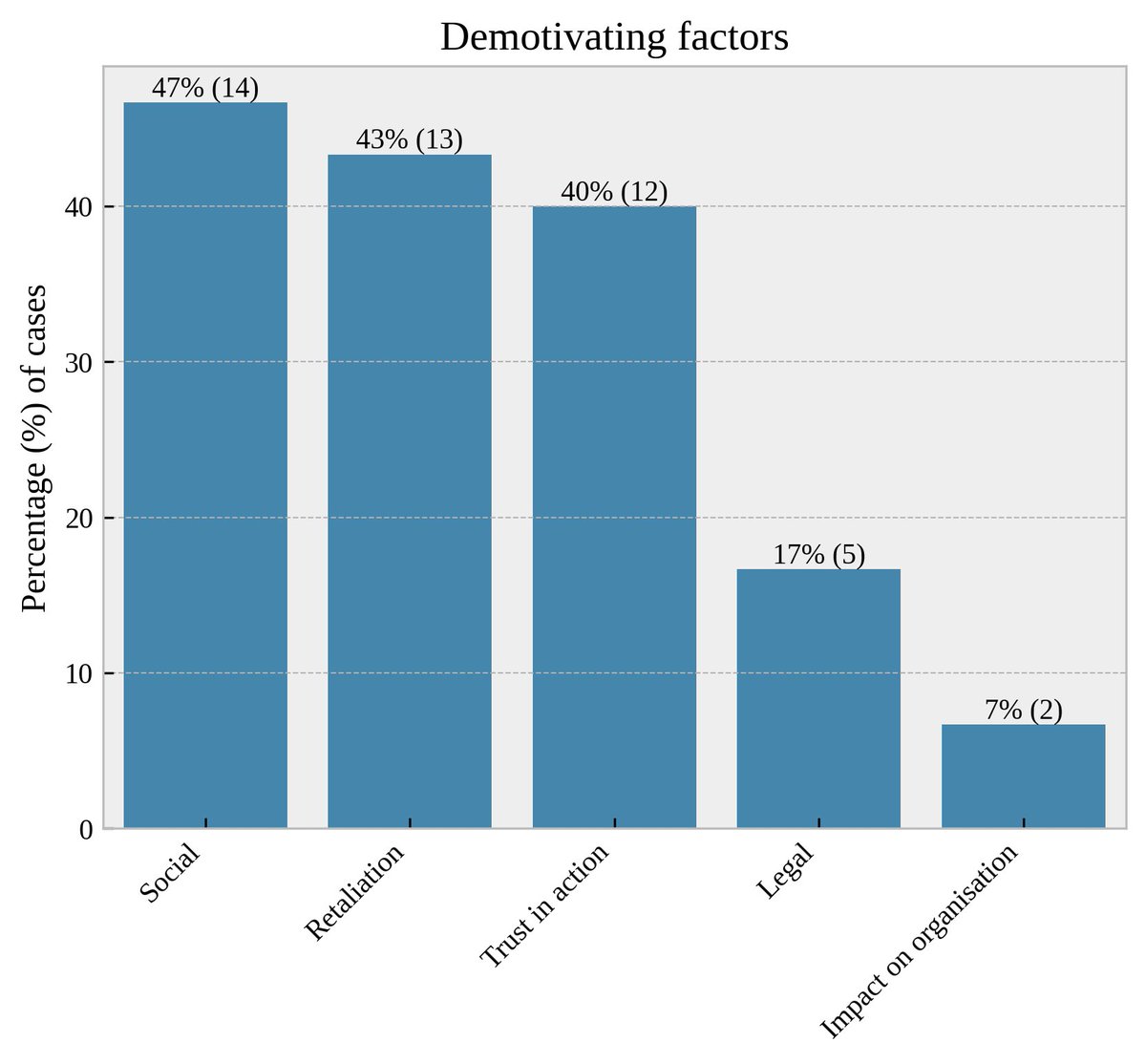
What will whistleblowers at AI companies face, and what would help them? A new paper I advised studied 30 cases of notable whistleblowers across industries:🧵
- Whistleblowers were most deterred by fearing: loss of social status, retaliation, and that tips wouldn't be acted on.
- The large majority appeared morally motivated, even with a skeptical assessment of their motives. Whistleblower rewards like those of the SEC were usually unavailable, but they could help correct the incentives to stay quiet.
Both sides seemed to find the technical assurances satisfactory. But the UK ultimately walked away due to broader geopolitical tensions. Such a trajectory also seems very plausible for AI.
https://t.co/zwaQ8fjpx3
"For well over a decade, a secure facility jointly operated by Huawei and British intelligence services has given the UK government unparalleled access to Huawei source code and telecom hardware for cyber security testing." Neat case study on tech verification by @ThomasVanDamme4
@krishnakaasyap Thanks! Agree all the meat is in the implementation. You might be interested in Appendices A and C.5, with our and others' ideas for implementation. And yep, much work remains! Still, I don't know if it'll be feasible to account for every NVL144.
Say the US wants a deal with China on powerful AI. Could we verify that China doesn’t cheat?
For the last year, my team produced the most technically detailed overview so far. Our RAND working paper finds: strong verification is possible—but we need ML and hardware research.
🧵
1. Great appendices.
2. In the 1960s, mathematicians & cryptographers at Sandia pioneered nuclear verification tech, permissive-action links, etc. A similar challenge exists today for AI.
Verification should be a key research priority.
Mapping policy goals to technical verifiable means will be hard, but I think we can do it.
@MauricBaker did amazingly detailed work here. Check it out to see all the layers we can use, and dive into the technical weeds.
We could have an arsenal of tried-and-tested methods to confidentially verify a US-China AI treaty. But at the current pace, in three years, we’ll just have a few speculative options. We need ML and hardware researchers, new RFPs by funders, and AI company pilot programs.