Lidewij de Vos viert de overwinning van FVD bij de gemeenteraadsverkiezingen🥳: "Wat een avond, wat een ongelooflijke overwinning. Forum voor Democratie is in elke gemeente waar we hebben meegedaan vertegenwoordigd. En hoe: met 1, 2, 3, 4, 5 of zelfs 6 zetels, in verschillende gemeenten zijn we de grootste of de één na grootste partij."
"Morgen begint voor ons een enorme klus. Kiezers in heel Nederland hebben ons het vertrouwen gegeven om de grote uitdagingen van onze steden en dorpen aan te gaan."
Het is zó belangrijk om morgen te gaan stemmen. We doen in 104 gemeenten mee en zijn van plan échte verandering af te dwingen.
Veel mensen beslissen vandaag of morgen pas op wie ze gaan stemmen. Overtuig daarom zo veel mogelijk mensen om te kiezen voor de enige partij die een écht andere koers wil varen: Forum voor Democratie.
Het kabinet-Jetten plaatst Nederland onderaan de prioriteitenlijst en zet de afbraak van de afgelopen decennia voort:
- Massale immigratie die ons ons thuis ontneemt
- Klimaatbeleid dat onze economie ruïneert
- Hogere belastingen die de creativiteit uit onze samenleving drukken
FVD maakt andere keuzes: keuzes in het Nederlands belang en uit liefde voor ons prachtige land. Mijn inbreng bij het debat over de #regeringsverklaring:
"Als je stopt met de massale immigratie en het klimaatbeleid, dan hoef je helemaal niet te bezuinigen op de zorg." @lidewij_devos
Steun onze missie, een nieuwe kans voor Nederland!
➡️ https://t.co/x0kC6zR3bL
Gisteren stemden VVD en CDA in Europees Parlement voor de megalomane “Green Deal” van Timmermans. Heel Europa vol met windmolens. Kost op korte termijn al 1.000 miljard - en uiteindelijk 11.000 miljard. Met minuscuul, onmeetbaar effect op klimaat. Wat bezielt deze partijen? #FVD
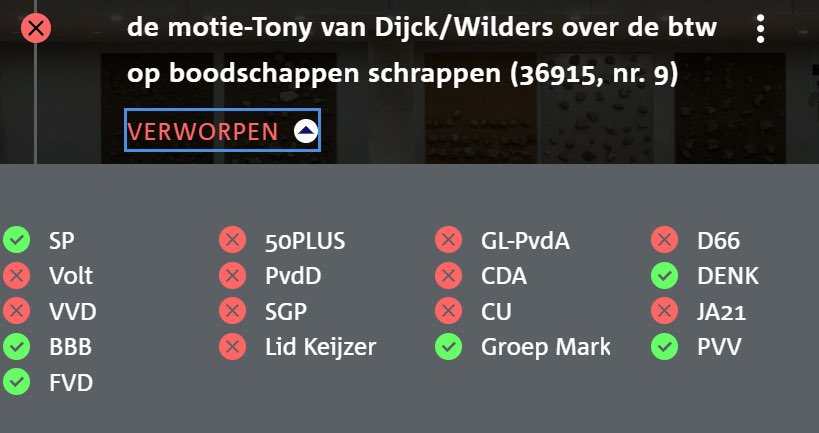
JA21 stemde gisteren, samen met D66 en het CDA, voor de motie van Klaver om twee miljard euro militaire steun extra te geven aan Oekraïne en tegen een motie om te garanderen dat deze steun niet ten koste van onze Nederlandse voorzieningen mag gaan, bekijk de uitslag hieronder:👇
Mijn oproep aan alle Kamerleden tijdens het debat over de verkiezingsuitslag: pak je stem terug!
Kies niet voor een stroperig formatieproces, maar doe recht aan de wens van de kiezer. Zet hoofdlijnen uit en zoek daar vakministers bij.
Daar kunnen we vandaag nog mee beginnen.
#Bitcoin/ Stock market – What’s Next?
The Big Sunday Report: All You Need to Know
🚩 TA / LCA / Psychological Breakdown: There is a lot of misinformation and confusion circulating about the current macro environment, the Federal Reserve’s actions, and how they affect both the stock and crypto markets. Let’s clear up these misunderstandings step by step in three parts:
1️⃣ QT vs. QE — What’s Actually Happening:
2️⃣ Misunderstanding #2: “The Fed Printed $50bn
3⃣ Misunderstanding #3: “QE IN 6 MONTHS"
Thank you for reading, make sure to join the Free Telegram channel: https://t.co/zkdgaR6H3c
1️⃣ QT vs. QE — What’s Actually Happening:
There is a lot of misunderstanding and wrong information circulating about the current market situation. First of all, the end of Quantitative Tightening (QT) is not the start of Quantitative Easing (QE). These are two completely different stages in the monetary cycle. QT means the Federal Reserve is reducing liquidity by letting bonds mature without reinvesting, means in other words, the FED collects back its dollars to pressure down inflation, while QE means the Fed is expanding its balance sheet and injecting new liquidity through asset purchases, which in other words mean money printing. Jerome Powell did not announce QE. He announced that QT will officially end on December 1, 2025. Unlike many analysts that claim that QT ended on the date of the FOMC meeting, its one more big misunderstanding! On the FOMC date, it was announced that QT is going to end on 1st of December, not that it already ended, thats a big difference! Until then, the Fed continues to reduce liquidity in the system. Historically, the Fed only begins QE after a liquidity crisis develops, such as in 2008, the 2019 repo crisis, or the 2020 Covid crash. That pattern has never changed, and there is no evidence that it will be different this time.
2️⃣ Misunderstanding #2: “The Fed Printed $50bn:
One major misunderstanding concerns the idea that the Fed “printed” 50 billion dollars last Friday. This is incorrect. What actually happened was a 50 billion dollar liquidity operation through the Fed’s Standing Repo Facility (SRF). These are overnight loans, not permanent injections of cash. The banks that borrowed this money are required to return it the next day, with a small amount of interest. This means there is no new money created and no permanent increase in the money supply. It is only a short-term liquidity bridge, not quantitative easing or money printing.
To understand this better, it is important to know the difference between the regular repo market and the Fed’s Standing Repo Facility. In the regular repo market, banks and institutions lend to each other overnight using Treasury securities as collateral. The SRF, on the other hand, is a direct backstop provided by the Federal Reserve, introduced in 2021 after the 2019 repo market collapse. The SRF allows banks and primary dealers to borrow cash directly from the Fed, up to a limit of 500 billion dollars per day. This does not mean the Fed prints that amount daily. The funds are lent and then repaid the next day, so the Fed’s balance sheet remains unchanged. If daily borrowing ever comes close to that 500 billion cap, it would signal extreme funding stress, likely appearing first in Japanese or European banks that rely heavily on dollar liquidity.
In normal market conditions, SRF usage is around zero to five billion per day. Seeing fifty billion in a single day is a clear sign of stress. The reason banks used the SRF instead of the regular repo market is because liquidity in the private repo market has dried up. Money market funds that once held around 2.2 trillion dollars in the reverse repo facility have been drained to about 14 billion today. Private lenders are short on cash and are charging higher rates, making borrowing expensive. As a result, banks are being forced to use the Fed’s channel, the SRF, to secure short-term liquidity.
Since August and September I have repeatedly pointed out that a liquidity crisis was forming in the repo market, and we are now seeing the first visible signs of that stress. The surge in SRF usage confirms that the system is tightening. The drained reverse repo pool means there is almost no excess liquidity left. The continuation of QT adds more pressure and makes it harder for banks to fund themselves cheaply. We are entering the late phase of QT, where cracks begin to show, and historically this stage always precedes the next policy shift, usually the start of a new QE cycle.
3⃣ Misunderstanding #3: “QE IN 6 MONTHS":
What most people have absolutely no clue about is that the Federal Reserve conducted QT for the first time in its entire history only in 2017, and it ended in disaster, with the 2019 repo market collapse, followed by the COVID crash. Exactly the same setup we’re witnessing right now. QT ran from October 2017 to September 2019, and just six months later, in March 2020, the Fed was forced to launch a massive QE program after the markets collapsed during Covid. That six-month gap happened only once in history, because 2017 was the first QT in the entire history of the FED. The 2020 QE came six months after QT because it was the first and only time the Fed ever stopped tightening. You can’t take that single data point and pretend it’s some kind of average or pattern. The Fed itself is still experimenting, it has never been here before, and even policymakers are operating blind.
The truth is simple: the system is cracking again, liquidity is drying up, and the real crisis hasn’t even started yet. The REPO is the beginning and we will see much worse days ahead, combined with the current goverment shutdown, so Democrats can blame the Republicans and vice versa.
Regarding #Bitcoin my position remains same, fully in USDT and shorts with an average short entry of 119k. Short orders are placed in the region of 117k to accumulate more shorts if market allows to visit
I can’t repeat it more often but joining DrProfit Premium can truly change your life as many testimonies are showing. Join here: https://t.co/4ilNrRrtAu
Trade with DrProfit on BloFin: https://t.co/BfOK8FYGfj
THIS IS NOT FINANCIAL ADVICE BUT EDUCATIONAL CONTENT ONLY. ALL WRITTEN HERE IS MY OPINION AND MY OWN TRADING AND INVESTING STRATEGY
Macro view $ETH
At the moment, I prefer to stay out of the $ETH market, as the price action on the weekly timeframe is not yet providing clear directional signals. This week is crucial:
a close above the red box would confirm support and increase the likelihood of a retest of the upper resistance.
Conversely, a weekly close below the red box would invalidate the current structure, increasing the risk of the range between these areas continuing and deteriorating momentum for the coming weeks.
Until I see a clear weekly close above the green box support and with direction towards resistance, I prefer to stay out and watch. It is better to react to the price than to anticipate it. Obviously for a macro view.
For key level
The upper zone (green box) represents the area of recovery. A weekly close above this level would indicate a return of strength and demand. In such a scenario, sentiment would improve and the likelihood of capital rotation towards altcoins would increase.
The lower zone (red box) is the structural support for the trend. As long as the price remains above this area, the market is in a consolidation phase. A weekly close below this level would compromise the bullish structure, opening the door to a progressive downward movement, with a deterioration in momentum and a potentially bearish market environment.
For trades on low TMF different strategies
Even voor iedereen die doet alsof “remigratie” een héél eng woord is: er bestáát gewoon al een “remigratiewet” in ons land, hè. Ingevoerd door keurige kartelkabinetten. Zo’n “Vrijwillige Vertrekregeling” is de normaalste zaak van de wereld. Talloze landen hebben iets vergelijkbaars.
En wat wij willen, is die reeds bestaande regeling fors uitbreiden zodat niet enkele honderden, maar vele tienduizenden mensen per jaar ons land weer verlaten en teruggaan naar hun landen van herkomst.
Beter voor hen, beter voor ons. Win/win!
https://t.co/FcOudRjYfL
Belasting betalen over je eigen afbetaalde woning. Dát is waar VVD, CDA, D66, ChristenUnie en SGP voor hebben gezorgd door de Wet Hillen af te schaffen.
Een straf voor mensen die spaarzaam zijn en hun schuld netjes hebben afbetaald.
De belastingdruk in Nederland is al veel te hoog. FVD wil de Wet Hillen herintroduceren.
Stem Forum voor Democratie op 29 oktober.
✅ Proposal PASSED! $DSTRX, the native token of @districts_xyz is now a staking token on Realio Network.
We’re expanding from Cosmos to EVM-compatible chains, unlocking new opportunities for delegators, validators + $DSTRX holders.
Stikstofbeleid, hoge arbeidskosten, gewasbeschermingsregels - een ongelijk speelveld binnen de EU: wat komt er kijken bij het runnen van een agrarisch bedrijf in Nederland?
Gisteren bezocht ik Vissers Fruit, een prachtig familiebedrijf in de Betuwe, om het dáárover te hebben!