Connecting chains.
Removing friction.
Security first.
Here’s what the Mavryk team shipped in November, what’s in audit, and where we’re heading before year-end 👇 https://t.co/3PpiiwUJto
“Just because you tokenize it doesn’t mean it’s a good deal to buy.”
Alex Davis (@mv1_Davis), Founder & CEO
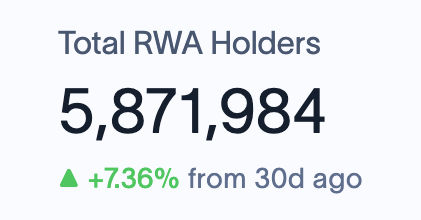
Tokenizing an asset doesn’t create buyers on its own. About 56% of large tokenized assets recorded zero weekly transfers.
Token ≠ Infrastructure
Japan's finance ministry is studying tokenized government bonds. Why?
Bonds are collateral. Japan's ¥250T+ repo market only settles on weekdays, in Tokyo hours.
Onchain, that collateral could move 24/7. That means more international use for the yen, in a global government-bond repo market worth $16 trillion.
The point of tokenization is not a new format. It is an asset that works harder.
@fedepontehq Actually, being a founder is probably one of the hardest things, as it's often a bumpy road, and if people call themselves that, then mad respect to them.
Things that will feel normal in 10 years:
✅ Owning 0.1% of a hotel in another country
✅ Borrowing against it the same afternoon
✅ Settlement before your coffee cools
✅ Compliance checks that happen inside the token, not at the door
✅ A full ownership history you can verify yourself
None of this needs a faster chain. It needs the right one. 🟠
What's the real bottleneck for tokenized real estate?
Not the tech. That part works. The hard part is everything wrapped around it.
Tell us what you'd fix first.
Many forget that partnership is a two-way road.
The hardest lesson I’ve learned about partnerships: enthusiasm is cheap, calendars aren’t. The partners worth building with show up, make time, and follow through on their commitments.
Thanks for having me on, @JosefHolm
Real-world assets are moving onchain.
The people making it happen will be at @proofoftalk, and so will our founder, @mv1_Davis.
See you at the Louvre Abu Dhabi, 3rd and 4th December. 🇦🇪
Attending? Reach out and let’s build together.
Owning a stock onchain should mean more than holding a ticker.
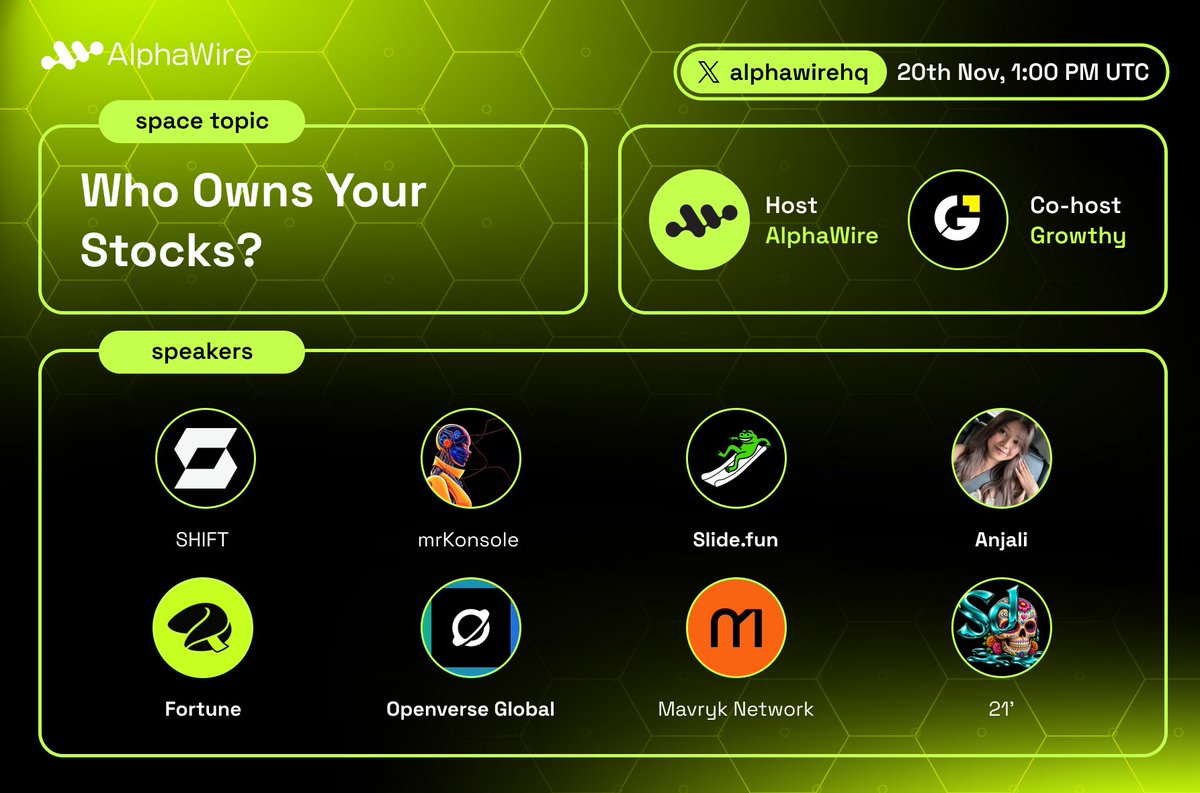
We’re joining @AlphaWireHQ and @Growthy_Web3 today to talk about tokenized stocks, ownership rights, and who really holds the underlying shares.
Today, 1 PM UTC / 5 PM GST.
https://t.co/htxV0u4DLd
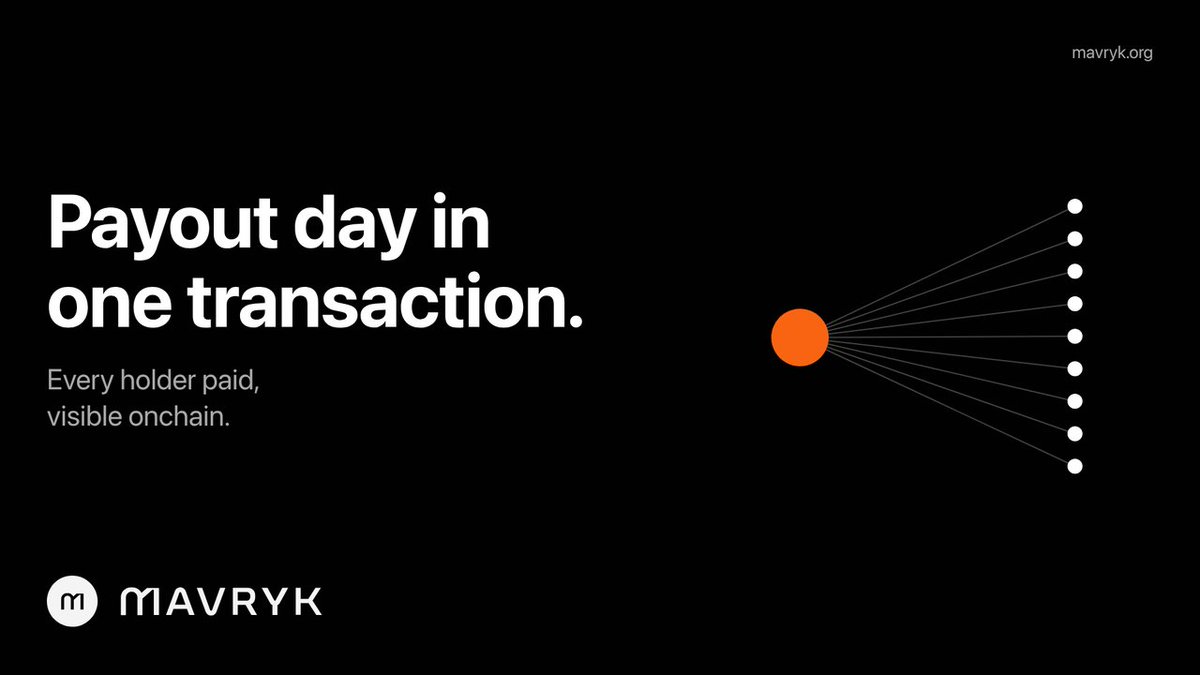
What actually happens on payout day for a tokenized building:
1. Rent lands in the property's account like it always has
2. The operator converts it and sends it to the distribution contract
3. The contract reads the token holder list at that moment
4. Every holder receives their share, pro rata, in one transaction
5. The whole thing is visible onchain. No statement to request, no waiting for a check
The rent stays the same. The tenants are the same. The only thing that changed is who gets paid, how fast, and how you can prove it.
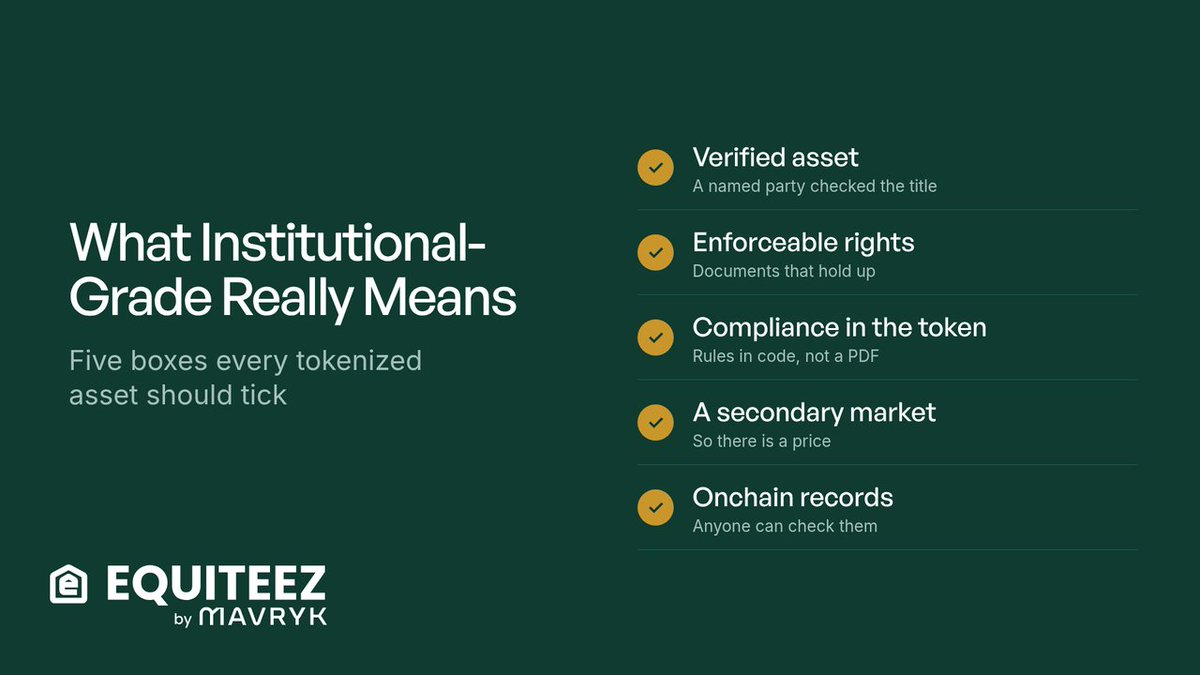
"Institutional-grade" gets used a lot. Here's what it actually has to mean for a tokenized asset:
- Someone verified the asset exists, and the title is clean
- The legal structure gives the token holder a real, enforceable right
- Compliance rules are enforced in the token, not promised in a PDF
- There's a secondary market, so there's a price
- The records are onchain and anyone can check them
Miss one, and what you have is a token with a nice brochure.
That is the bar we hold ourselves to at Equiteez, and the bar we would encourage anyone evaluating a tokenized asset to hold the issuer to.