1/4 #WSTC8#PopSesh#Alcids are a #seabird family in the #GoM and deemed a priority species by @NOAA. Little is known about them during their non-breeding season in #SBNMS where climate change is having big impacts. We used #CitizenScience to study trends in alcid abundance.
@EbyAlyssa Great question! The #SBNMS S4 program conducts standardized surveys on an established transect. An observer and recorder cover 90° one side of the vessel. Birds seen within 300m are counted with other behavioral observations (distance, number, age, distance from water, etc.).
1/4 #WSTC8#PopSesh#Alcids are a #seabird family in the #GoM and deemed a priority species by @NOAA. Little is known about them during their non-breeding season in #SBNMS where climate change is having big impacts. We used #CitizenScience to study trends in alcid abundance.
@penguin_nati We overlaid a grid system over the transect we take for each survey. Using this, we were able to effort correct the observations by dividing # of observations by the transect length for each grid cell. Then, we could use density maps and statistics!
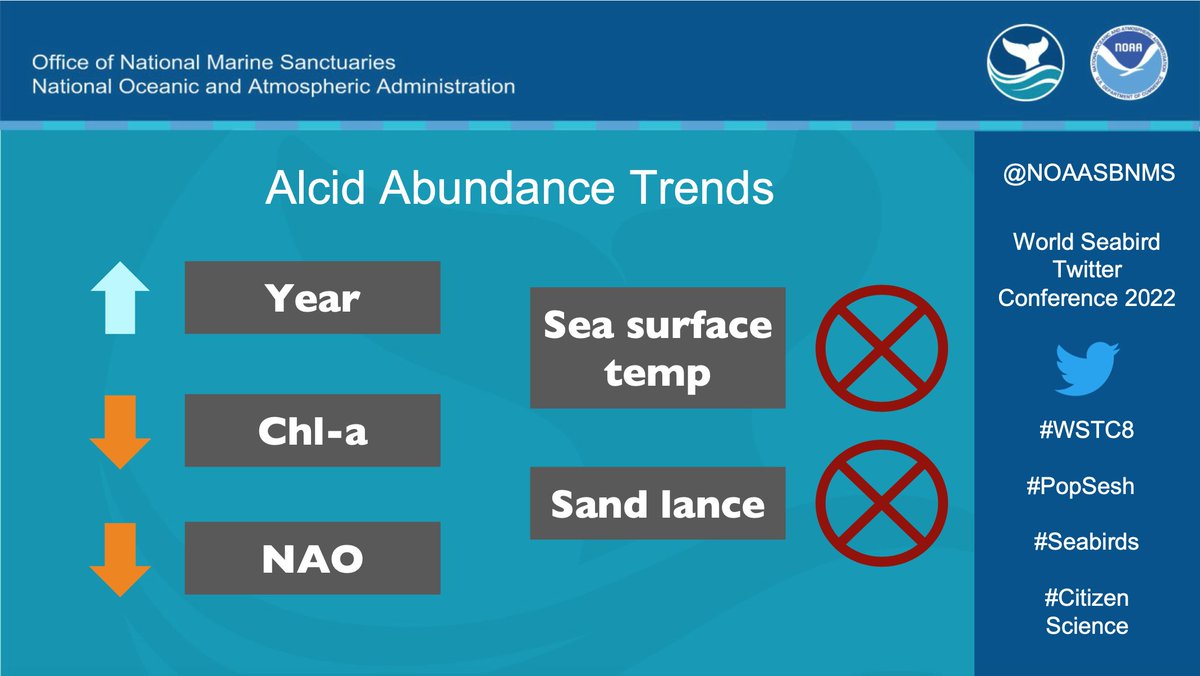
4/4 #WSTC8#PopSesh Alcid sightings ⬇️ in 2015, which had abnormal temp and a shift in chla dist. Alcid #'s correlated ⬆️ with year and ⬇️ with chla. A ⬇️ trend was seen with the #NAO index. With more long-term data, we may be able to see even more trends in alcid abundance!
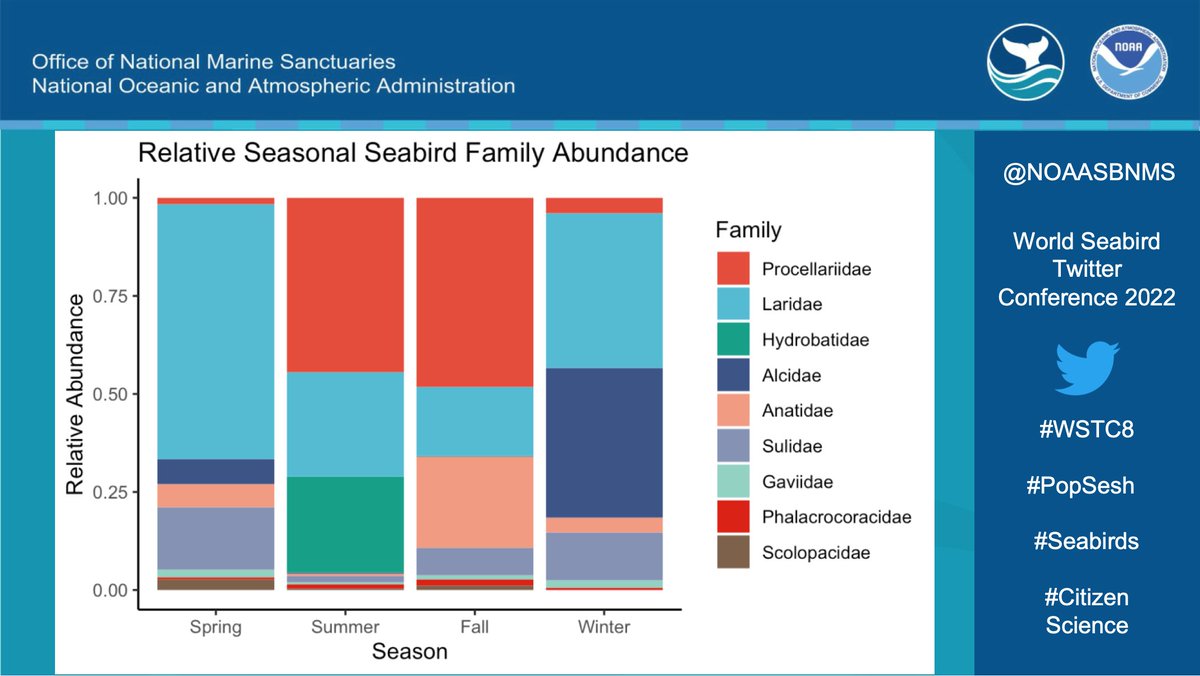
3/4 #WSTC8#PopSesh Alcids are the 2nd most abundant family during the winter 2013-2018, but are also seen in the spring (left). Compared to a survey from 1994-1995 (right), alcids were seen in the winter and fall. Could there a seasonal migration shift due to #climatechange?
Hello everyone! I will be presenting for the #WSTC8 on Alcid abundance and distributions within #SBNMS at 3:20PM EST for the #PopSesh! Hope to see you there 🐳
@Dena_Spatz This is really crucial research for bird conservation! I'm excited to see what your results find, and am curious if success of colony restoration methods will differ by species or geographic location? #ToolSesh2
@LeandroTamini@AvesArgentinas 936 carcasses is impressive! Have you considered working with other agencies to perform necropsies of a subset of these animals to get an idea as to their cause of death? Particularly interested in the predominantly juvenile seabirds. #ToolSesh2
@EPICislands@USFWSIntl@USAID@ABCbirds@BirdsCaribbean This is really important research and another great use of taking local action for community science and conservation! Will you continue to use these efforts and track success of invasive species management? #ToolSesh2
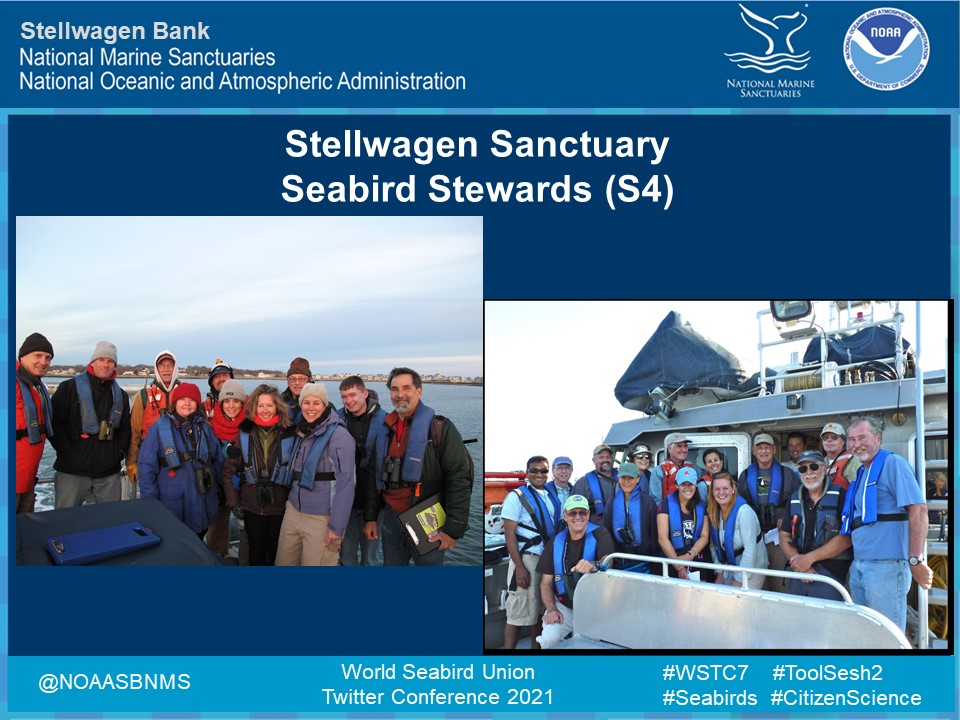
@NOAASBNMS@MassAudubon@Seabirders@sanctuaries@NOAA Love seeing community science at play for conservation and research! I'm excited to be using this data for my own research questions pertaining to alcids and climate change, and hope to see other students join the team in the future! #ToolSesh2
@sam_albright_ This is all super fascinating, Sam! Fellow Master's student and intern at #StellwagenBank. Do you have a working hypothesis? Does light/visibility and vocality relate to predation maybe? #ToolSesh2
We had the great pleasure of learning about @MaggieDJohnson’s research coupled by some snorkeling around the seagrass beds. Here’s some of our spoils: various calcareous and fleshy algae as well as seagrass, which help stabilize sediment and serve as habitat! #3cs38