@DongdongShe You seem happy enough to communicate in the public channel: you’re the one who took this to Twitter and shared private conversations.
If you’re going to share emails, might as well do so in full and not cherry-pick:
@DongdongShe You seem happy enough to communicate in the public channel: you’re the one who took this to Twitter and shared private conversations.
If you’re going to share emails, might as well do so in full and not cherry-pick:
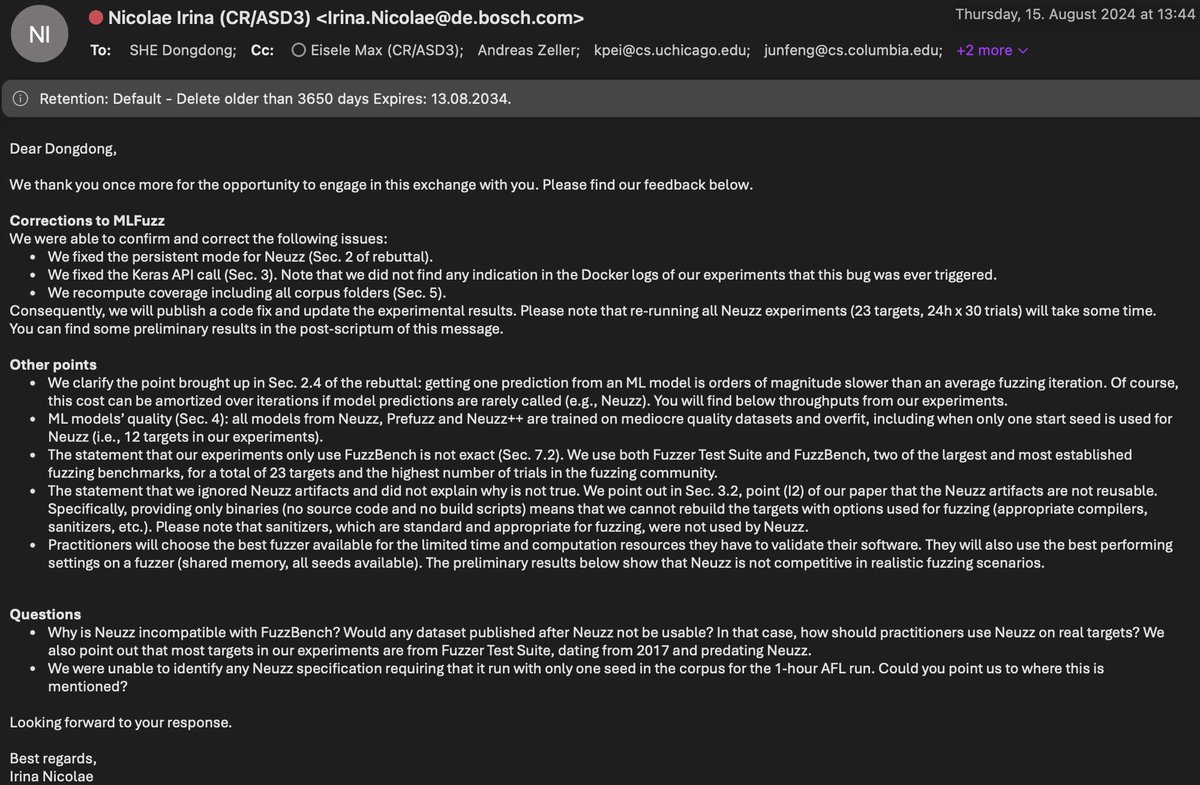
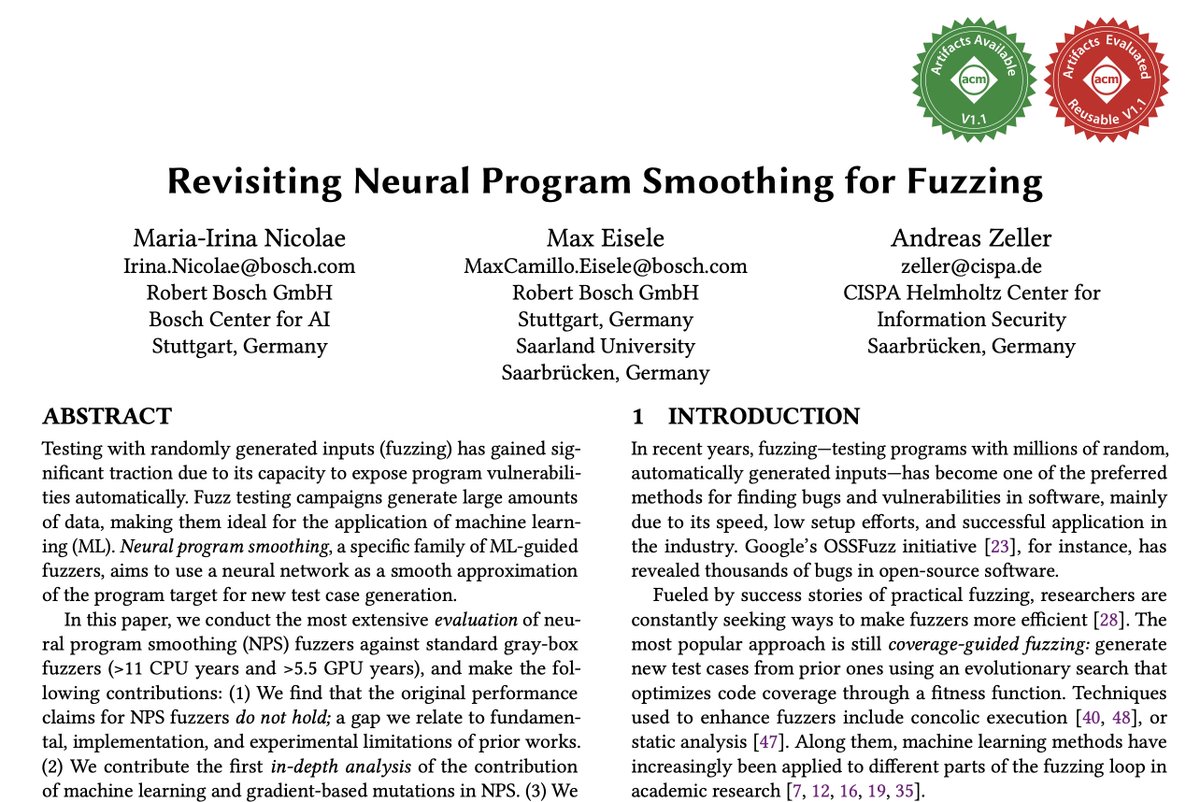
Recently, @DongdongShe et al. raised issues regarding our paper “Revisiting Neural Program Smoothing for Fuzzing”.
Tldr: they highlight two bugs in our code, make inaccurate statements, and ignore all the core issues we raised 🧵: 1/
Congratulations to my PhD student Max Eisele for winning the @sigsoft/@AcmSigbed Frank Anger Award!
@MaxCamillo works on testing and analyzing embedded systems at Bosch. He is best known so far for GDBFuzz, a GDB-based fuzzer for embedded systems https://t.co/tf1KrjTRW3
Missed our @FSEconf talk debunking neural program smoothing for fuzzing? Discover key insights in our latest Security Garden blog post. https://t.co/JEbWJuB3HI
In one year of work, @ririnicolae, @MaxCamillo, and I have deconstructed the controversial NEUZZ ML-based fuzzer and found that its original performance claims do not hold. Looking forward to lively discussions today 12:15 at @FSEconf! https://t.co/opuJemW00b
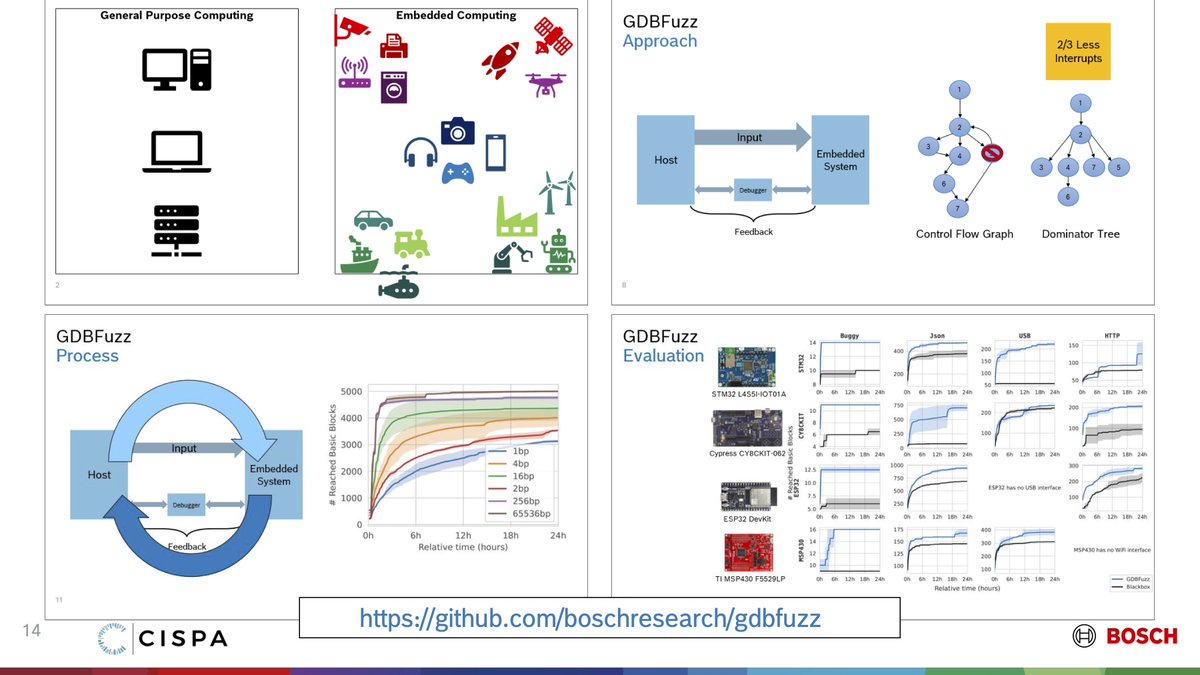
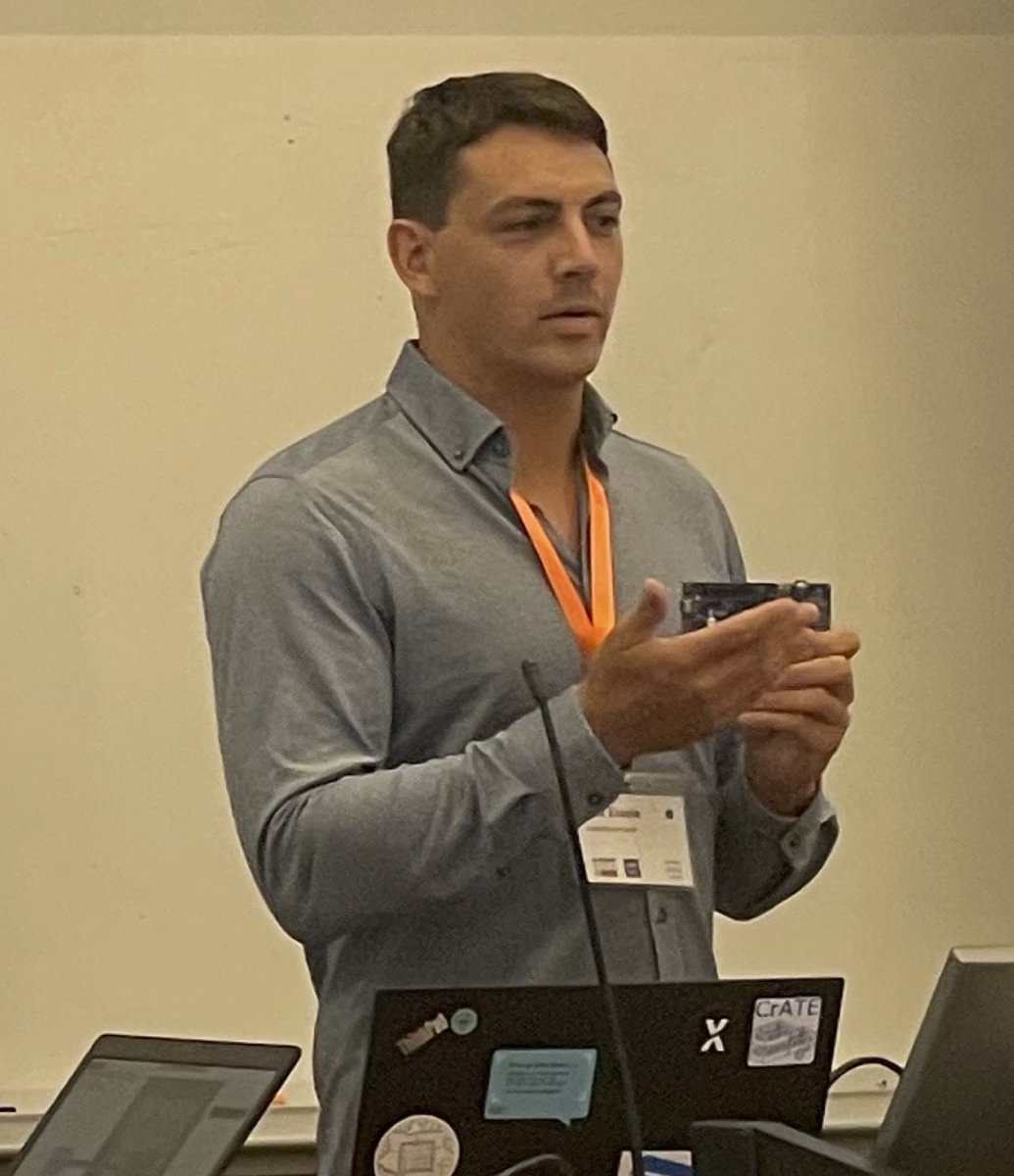
Fuzzing embedded systems! If you’re at @issta_conf or @ECOOPconf today, drop in at 2:15pm at G01 and see how we use GDB (yes, the GNU debugger) to fuzz test software running on embedded systems hardware: https://t.co/LDosqhlhb9
@soaphornseuo GDBFuzz can send fuzz data via any interface you can address from Python. Currently we implemented Serial (UART), USB MSC + CTRL, and TCP. Coverage-feedback is retrieved via a separate GDB connection
I just published a summary of our tool "GDBFuzz", which enables fuzzing of embedded systems on a scale using the standard GDB remote protocol and hardware breakpoints: https://t.co/eaIfh3hNTX
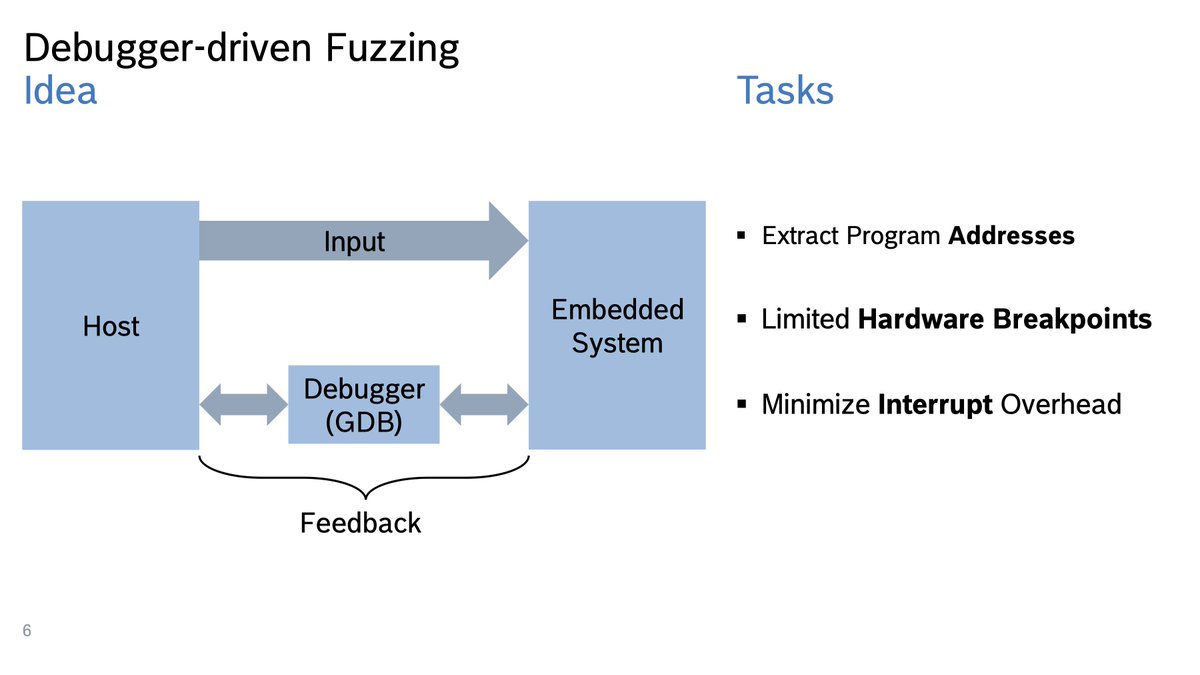
Based on this observation, we implemented GDBFuzz, which orchestrates the fuzzing process and controls debug units via the standard GDB remote serial protocol. A preprint is already available at https://t.co/t5VxlyOacA
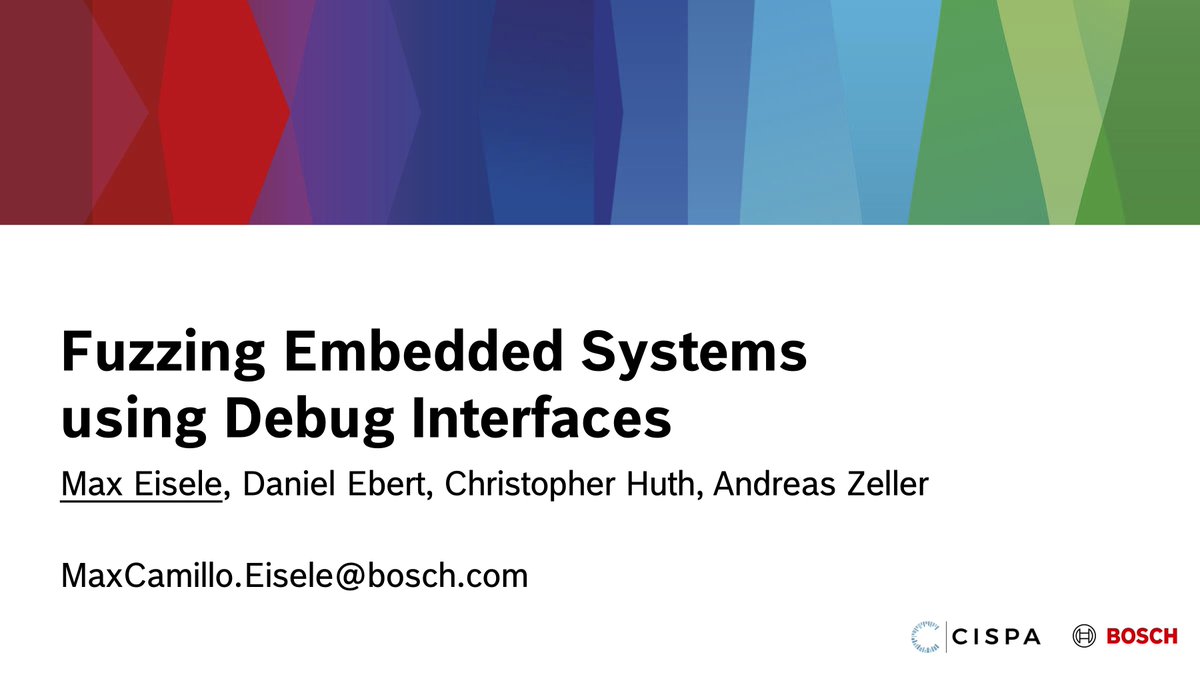
Happy to announce that our paper "Fuzzing Embedded Systems using Debug Interfaces" is accepted at #ISSTA2023 ! In the paper, we present our debugger-driven fuzzer GDBFuzz , which leverages hardware breakpoints to gain coverage feedback.
@AndreasZeller
Essentially, we show that the limited amount of hardware breakpoints typically present in microcontrollers suffice to perform coverage-guided fuzzing independent from processor architecture.