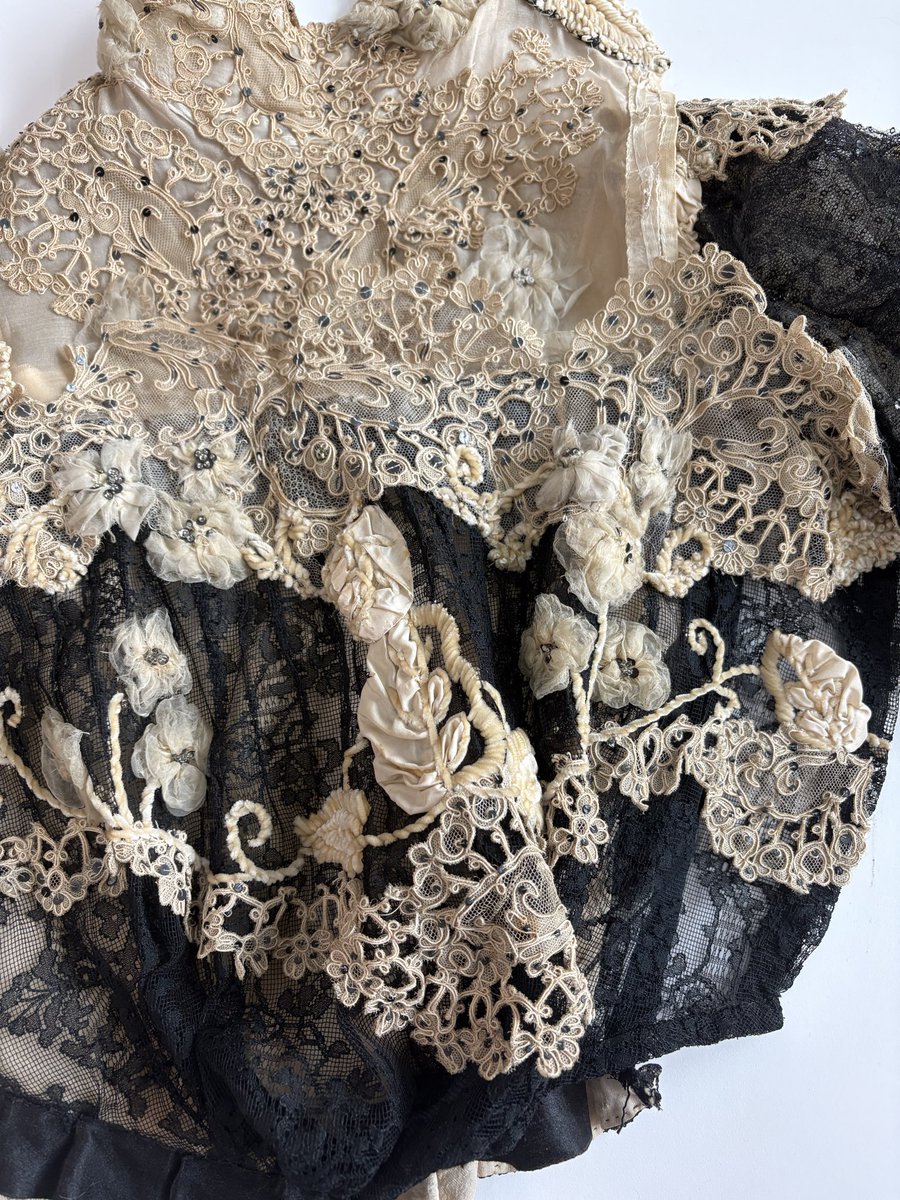
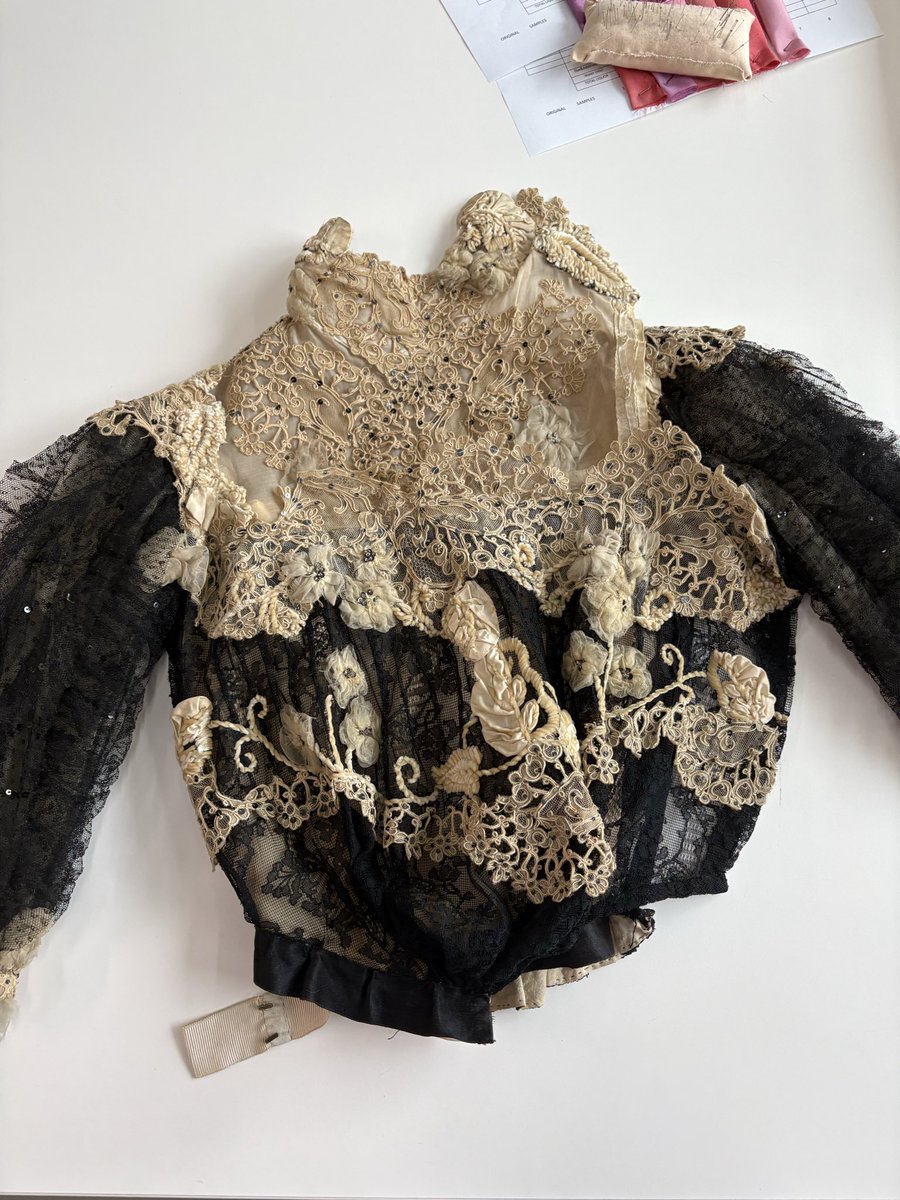
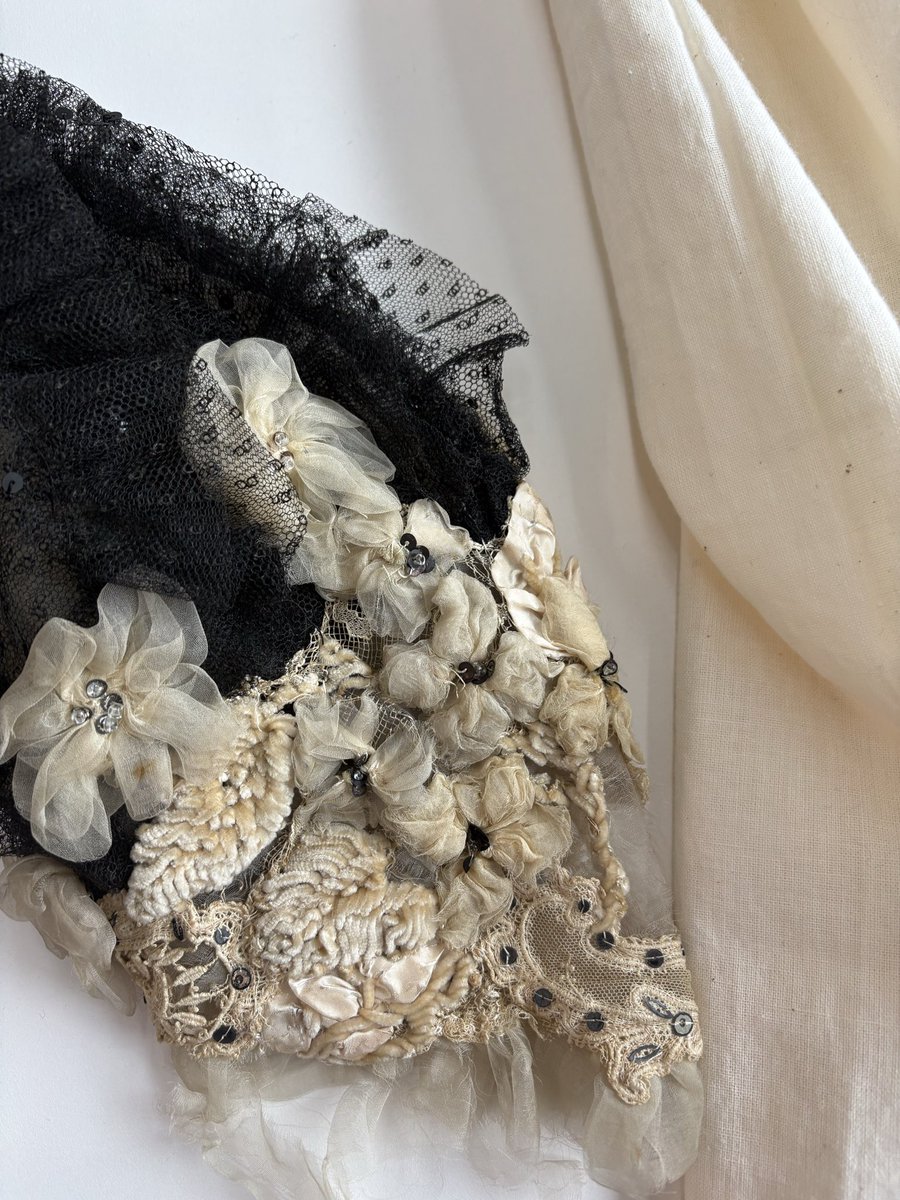
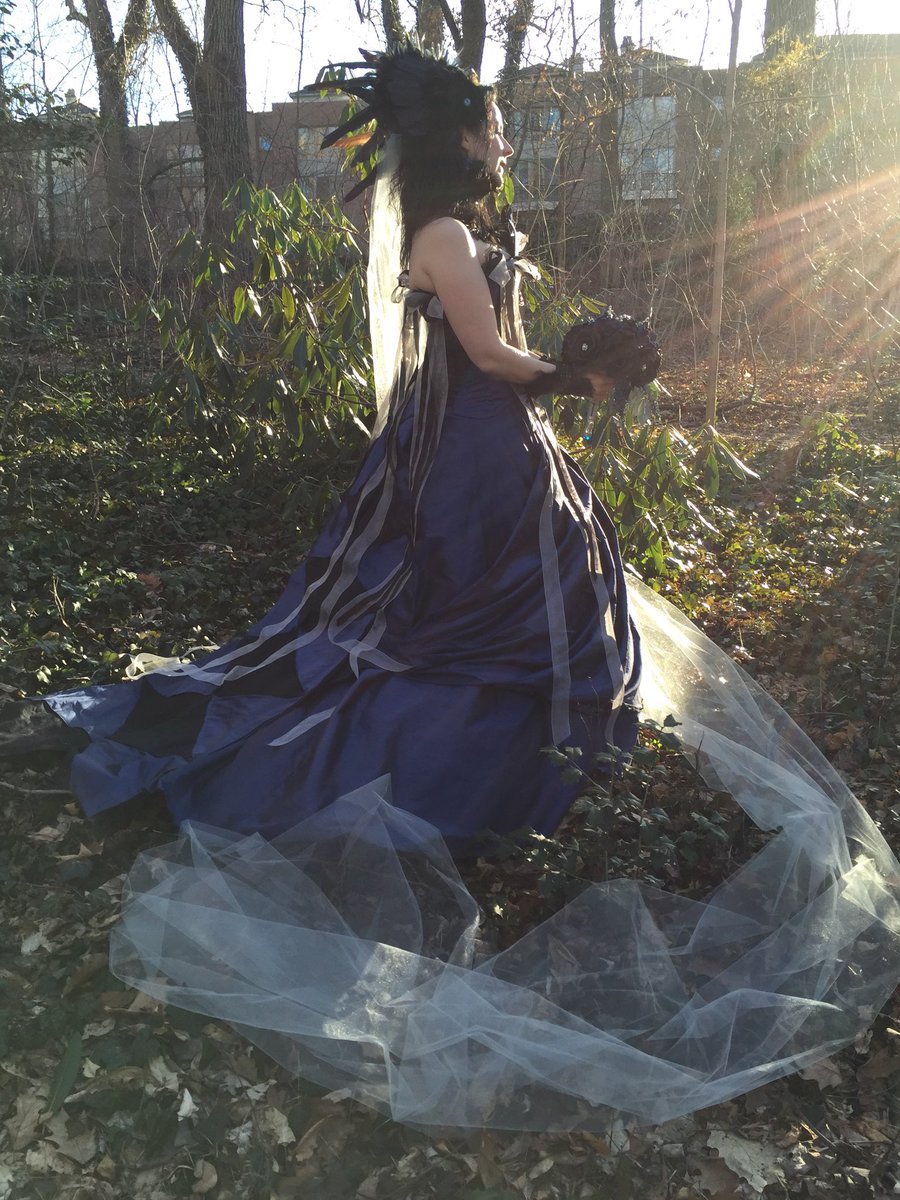
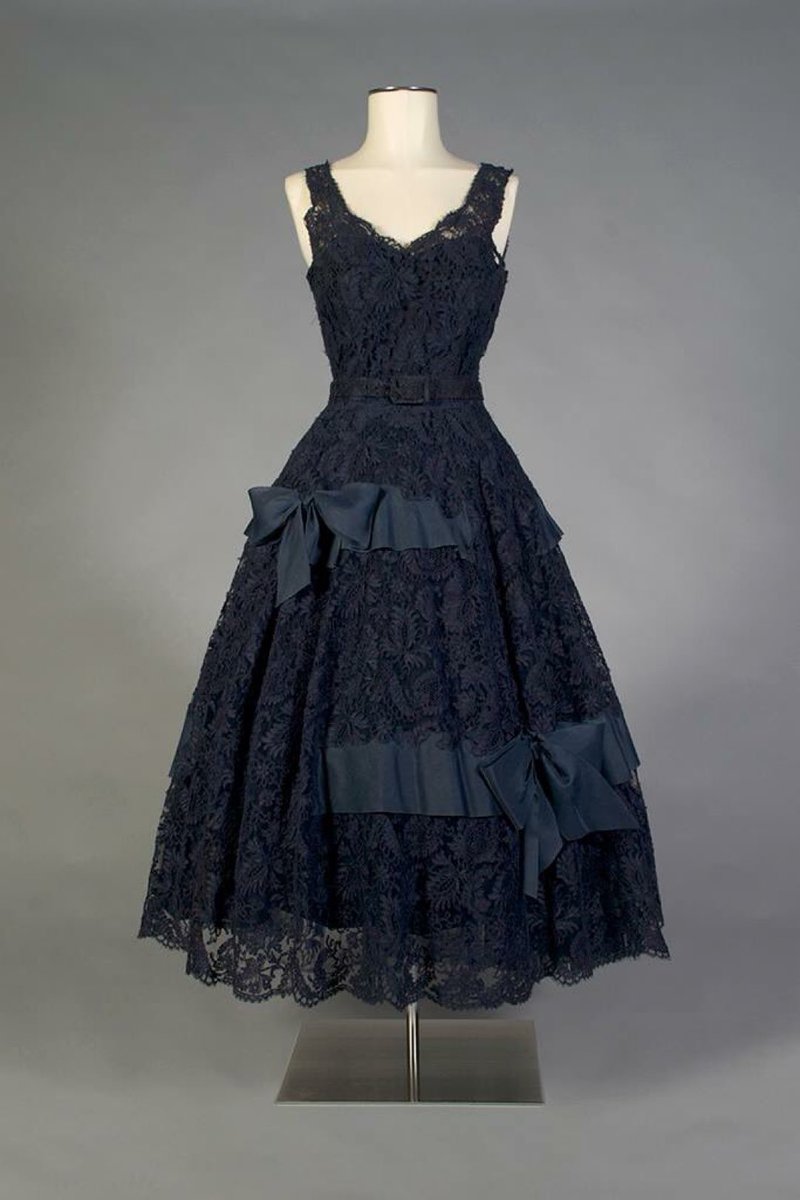
Corsets and bridal and gowns and cosplay and pretty much anything else we can dream up together. Historical? Of course! Fantasy? Absolutely. Weird? Yes, please. Payment plans always available.
Also frequently found at https://t.co/iA9h96ugyj
🎶I’m here to help!🎶
I've pieced together this incredibly rare & precious Edwardian colour movie, filmed 118 years ago at Upton Manor Farm in Southwick, England. This is the Autumn Harvest of 1908, showing rural life in the UK just 7 years after the end of the Victoria Era, when our life and work was considerably less mechanised.
This is amongst the earliest British colour films, which was made via Kinemacolour, developed by George Albert Smith in 1906. It employed a spinning 2-colour filter system of red and green filters to replicate "full colour". The separate colour frames line up pretty well, except fo shots of lateral movement, such as the horse's legs where the individual coloured filters become much more apparent.
The music I've used is the Largo movement from Dvořák's Symphony No. 9, "From the New World", which is rather ironic considering the film shows us scenes of the Old World long gone.
Watch until the end, which leaves us a charming little love story. Though perhaps she waved her fellow off to War on the Western Front 6 years later...
(One of my hobbies is to collect old colour film footage, and if you enjoy this example I might share a few extra videos on my account)
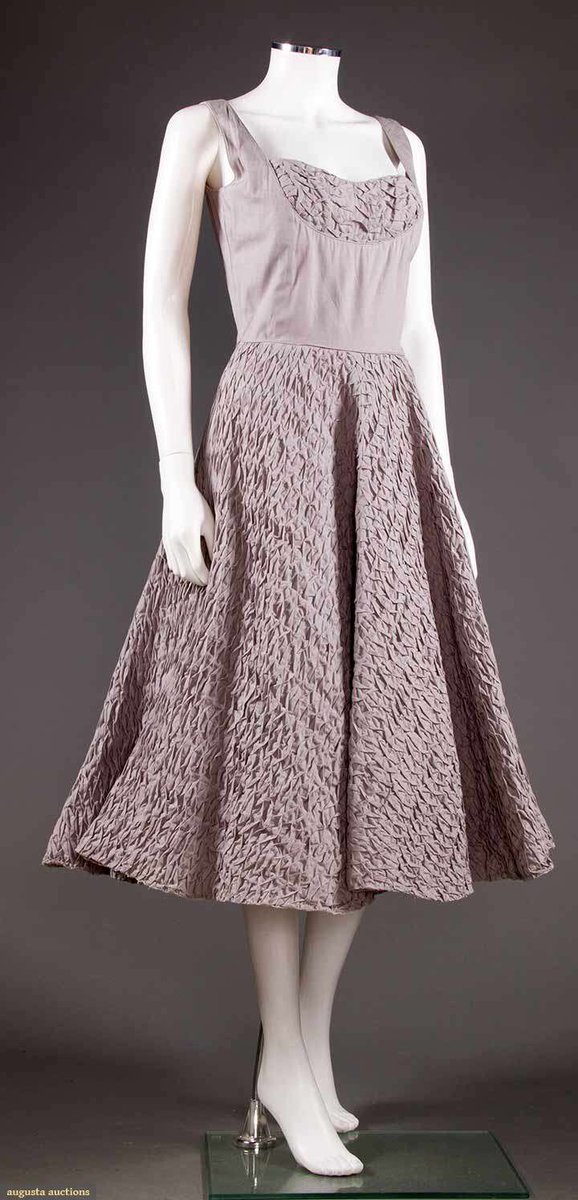
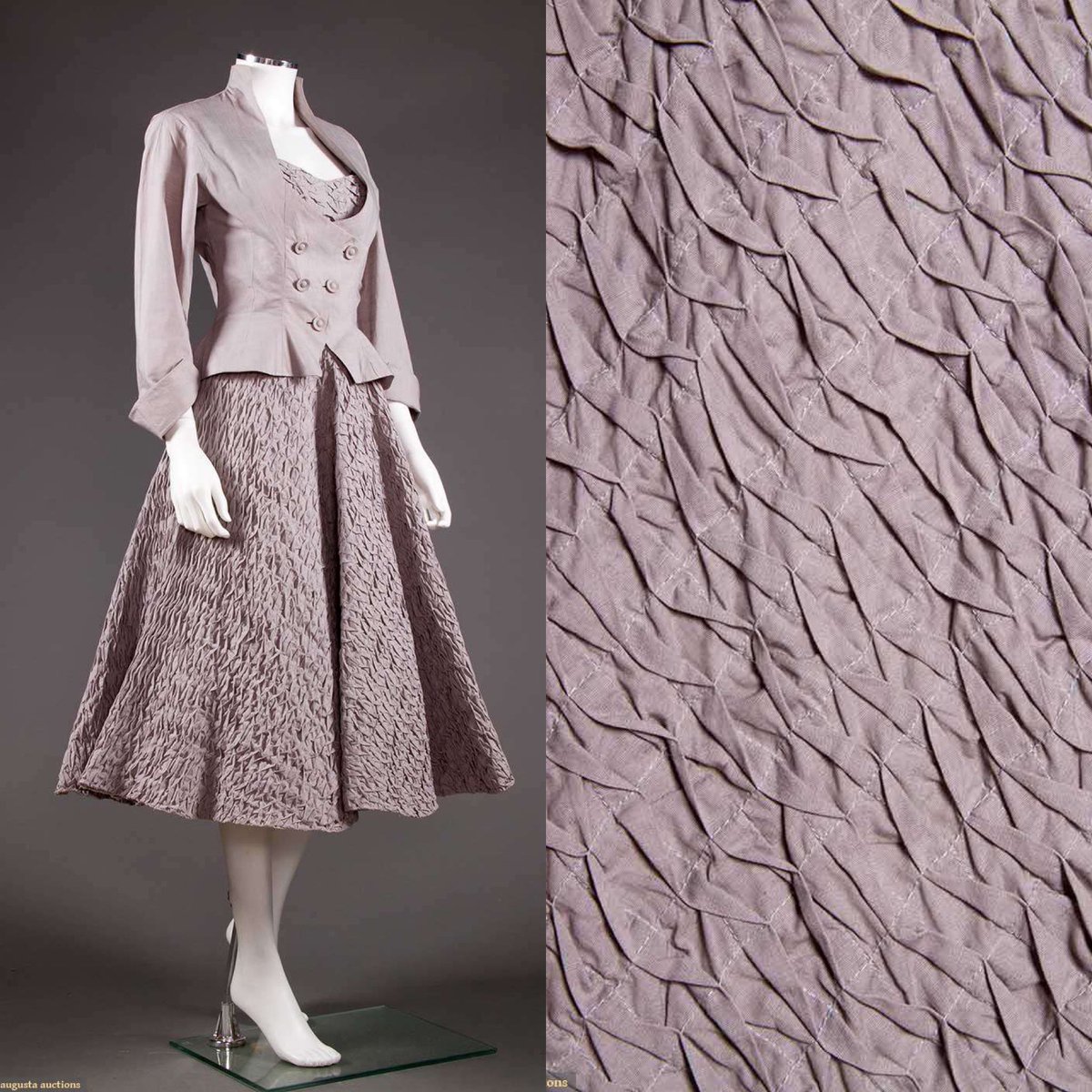
This is described as a summer party ensemble & though it is a subtle shade, I love its mutedness & attention to detail. The matching jacket is a neat piece of tailoring & the skirt & neckline are essentially a great swathe of smocking. Ceil Chapman, mid 1950s @AugustaAuction
Ann Lowe often decorated her evening dresses with a riot of colourful silk flowers, the sorts of blooms she had learnt to make as a child. This early #1960s gown is no exception but the flowers are self coloured lending the garment a ghostly beauty, Missouri Historical Society
Piña, or pineapple cloth, is made from the fibers of the Spanish Red Pineapple. It was highly valued for its delicate, sheer, and lustrous appearance, as well as for its labor-intensive production process. Piña was often blended with other fabrics such as silk, cotton, and abaca.
There is not very much light pollution where we live and so the sky last night was a cloth of stars, reminding me of these two celestial garments. One is a #1950s dress by Sophie Gimbel and the other a #1920s velvet coat by Yvonne May @museumatFIT#fashionhistory
My brain is tired so simply feast your eyes on Schiaparelli’s 1941 velvet evening jacket reflecting the times in which she lived. As Frenchwomen were encouraged to grow vegetables during war, so she designed the stitches for a part of the story onto her trademark colour @V_and_A
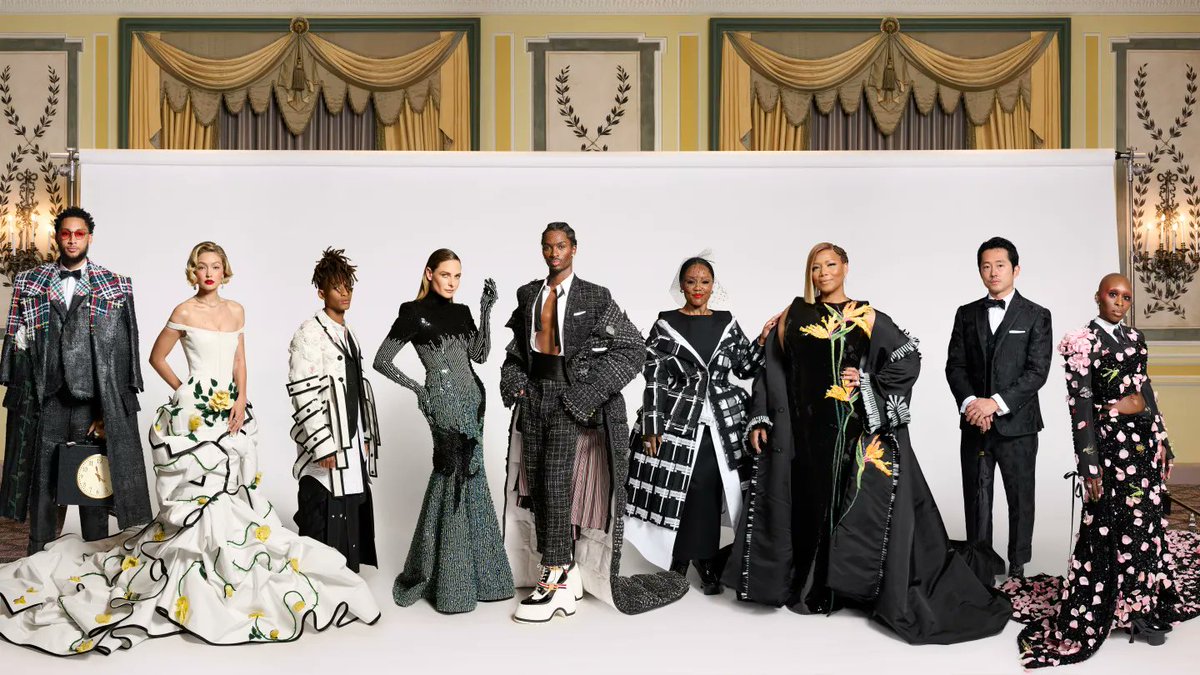
Today is the Met Gala. Here are some things to keep in mind while engaging in Met Gala discourse:
— The Met Gala is a fundraising event that supports the Metropolitan Museum’s Costume Institute.
— The Costume Institute preserves historical garments, curates public exhibitions, and educates people on how clothing reflects and shapes culture.
— In a political climate when public arts funding is being limited or contested, private fundraising efforts like this are even more important.
— Many organizations hold galas to raise money for their missions. This includes organizations focused on the arts, LGBTQ+ rights, environmental justice, and medical research. The Met is not the only institution that holds galas.
— The Met Gala raises money through ticket sales. Major fashion houses such as Gucci often purchase entire tables and invite celebrities to attend the event in their designs. For brands, this functions as a form of marketing, similar to advertising or runway shows. But here, that spending also helps fund a public cultural institution.
— Members of the public can later visit the museum and see exhibitions that contextualize fashion as part of cultural history. And their tickets are relatively affordable because they have been subsidized by these fundraisers.
— Not all clothing is meant to be practical or "presentable" by conventional standards. Some garments are made as artistic statements. Even if you wouldn’t wear something to the office, you can still appreciate the creativity and technical craft behind it.
— Events like this provide work for countless tailors, embroiderers, textile specialists, and artisans. These people often work on other types of cultural productions, such as the costuming for films, theatre, and TV shows. The Met Gala helps sustain these craft industries and thus keeps the production quality high for the areas of culture you care about.
— Traditional black tie is never wrong for a gala. In fact, this is how men traditionally dressed for the Met Gala for much of this event's history. Not everyone has the personality to pull off an avant-garde outfit, so they shouldn't be forced into one.