Indigenous Peoples’ Day 2025 🧡
At Maya Bridge, we don’t just provide interpretation—we protect identity, empower communities, and honor Indigenous languages that have been passed down for generations.
Today, we reflect.
We celebrate.
And we recommit to the work ahead.
🌊 Did you know that Marshallese voyagers once navigated the open ocean using stars, swells, and handmade stick charts?
Their language reflects that rich legacy of innovation and resilience. But in the U.S., Marshallese speakers often face barriers that erase that heritage.
Migration has been shaped by climate change, nuclear testing, and limited opportunities back home. But once in the U.S., many Marshallese speakers still face another challenge: lack of language access.
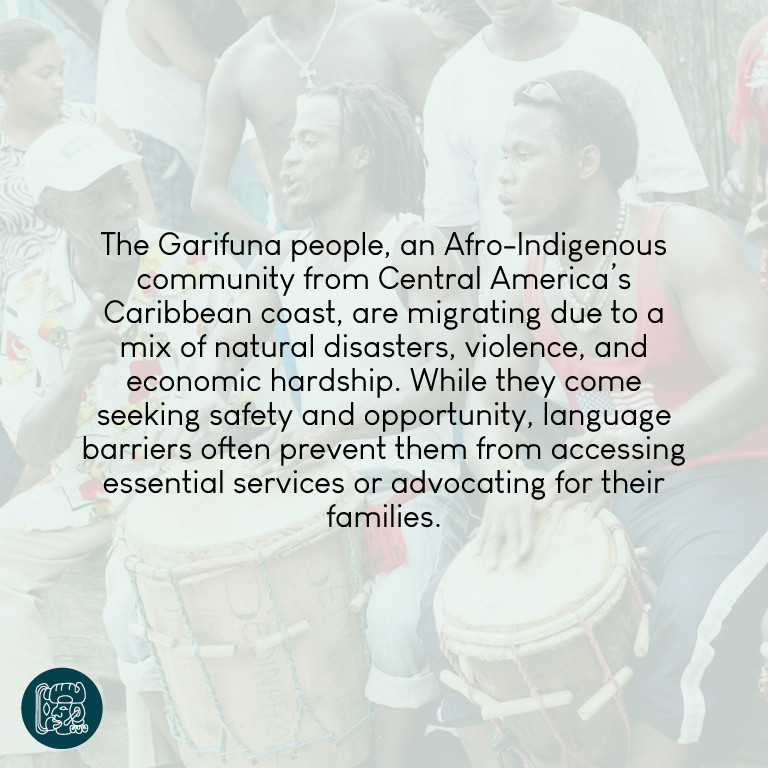
As Garifuna families migrate in search of safety and opportunity, one challenge follows them across borders: the language barrier.
Interpreters don’t just help with communication—they preserve culture and build trust during some of the most vulnerable moments in a person’s life.
🌊 WordWise: Garifuna 🌊
This week, we’re highlighting Garifuna, an Afro-Indigenous language spoken across Central America and the U.S
Learn a few basic words with us today and join in celebrating the voices that keep this language alive.
#WordWise#Garifuna
At Maya Bridge, we believe language access is a right, not a luxury. That’s why we provide 24/7 professional interpretation in Zoque and other Indigenous languages—because everyone deserves to be heard and understood.
🗣️ Who speaks Zoque—and why is interpretation so critical?
Zoque is an Indigenous language with deep roots in southern Mexico. But as more Zoque people migrate to the U.S., they often face major barriers accessing services due to a lack of qualified interpreters.
The Mixe–Zoquean language family may be one of the oldest in Mesoamerica. From its deep roots—possibly even tied to the ancient Olmecs—to the vibrant communities speaking it today, these languages carry centuries of cultural memory.
🫶🏽 Happy National Interpreter Appreciation Day!
At Maya Bridge, we believe language access is more than just a privilege—it’s a fundamental human right. Today, we celebrate interpreters, the hardworking individuals who tirelessly bridge cultures and peoples together.
📣 Language should never be a barrier to dignity or safety.
At Maya Bridge, we provide 24/7 on-demand Chatino interpretation—because equitable access to justice, healthcare, and essential services starts with understanding.
🎙️ This week’s WordWise features the Chatino language, spoken in the mountains of Oaxaca, Mexico.
Chatino is a tonal language with multiple regional variants—each with its own rhythm, pitch, and history. Tune in and listen closely: a single tone can change the meaning entirely!
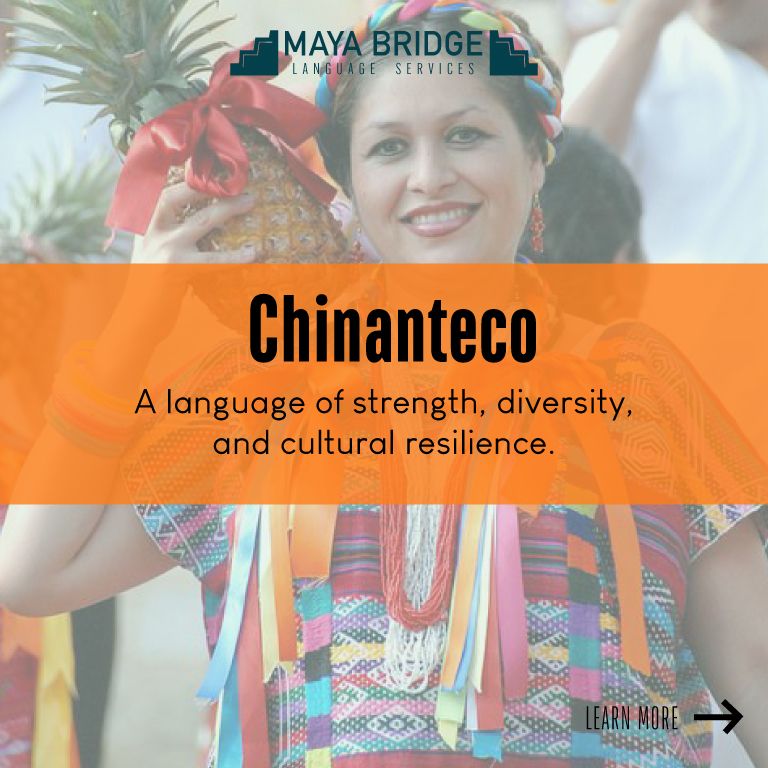
🗣️ Chinanteco isn’t one language—it’s a whole branch of them.
With 14 known variants and deep roots in Oaxaca and Veracruz, Chinanteco is a rich, complex part of the Oto-Manguean language family.
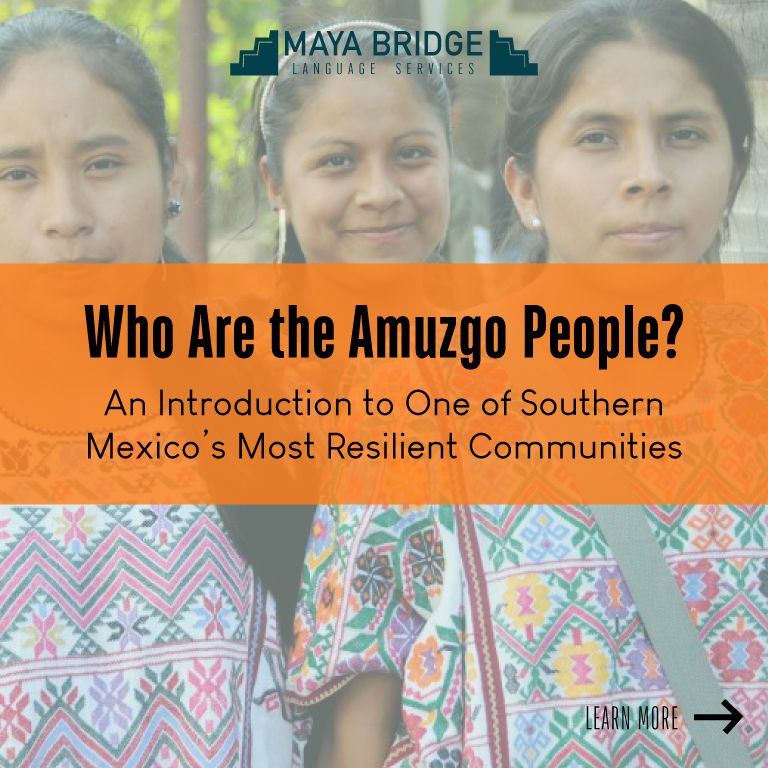
🧵 Who are the Tzjon non?
This week, we’re spotlighting the Amuzgo people—renowned for their weaving traditions, rich cultural heritage, and deep-rooted connection to the land.
At Maya Bridge, we proudly offer interpretation and translation services in multiple Zapoteco variants—ensuring that every voice is heard, understood, and respected.
At Maya Bridge, we understand that interpretation isn’t one-size-fits-all. That’s why we offer on-demand language access for Zapoteco and all of its variants, with interpreters trained to support culturally and linguistically accurate communication.
🌱 Oto-Manguean languages have been spoken for over 4,000 years.
From Mixteco to Zapoteco, they carry rich histories, deep cultural ties, and vibrant traditions—but they are often overlooked in language access conversations.