सेवा में,
माननीय मुख्यमंत्री @myogiadityanath जी उत्तर प्रदेश सरकार, लखनऊ, उत्तर प्रदेश।
विषय: UPSI भर्ती 2025 (विज्ञापन संख्या-पीआरपीबी-बी (उपनिरीक्षक संवर्ग)-03/2025) में रिक्त पदों की संख्या बढ़ाने, लिखित परीक्षा परिणाम के साथ ही स्कोरकार्ड/अंकपत्र जारी करने और अंतिम चयन परिणाम के बाद खाली पदों के रहने की स्थिति में वेटिंग लिस्ट जारी कर पद भरने के संबंध में।
महोदय,
सविनय निवेदन है कि हम उत्तर प्रदेश के प्रतियोगी छात्र हैं। हम पुलिस विभाग में सब-इंस्पेक्टर (SI) के पदों पर भर्ती के लिए आयोजित UPSI 2025-26 परीक्षा में शामिल हो चुके हैं। जो 14 और 15 मार्च 2025 को संपन्न हो चुकी है। महोदय हम आपके संज्ञान में वर्तमान में जारी भर्ती प्रक्रिया में पदवृद्धि और अन्य खामियों हेतू कुछ महत्वपूर्ण चीजें लाना चाहते है,
1. भारी कंपटीशन: इस वर्ष लगभग 16.5 लाख से अधिक अभ्यर्थियों ने मात्र 4543 पदों के लिए आवेदन किया है, जो बताता है कि कंपटीशन बहुत ज्यादा है।
2. काफी समय से भर्ती न होना: यह भर्ती 05 वर्षों बाद आई है, जिसकी वजह से लाखों फॉर्म भरे गए और लगभग 10 लाख 77 हजार अभ्यर्थियों ने परीक्षा दी है।
3. रिक्त पदों की उपलब्धता: उत्तर प्रदेश पुलिस में अभी भी सब-इंस्पेक्टर के कई पद रिक्त हैं जिन्हें वर्तमान में प्रक्रियाधीन भर्ती में पदवृद्धि कर भरा जा सकता है।
4. पिछली बार UPSI भर्ती 2020-21 में कुल पदों की संख्या 9534 थी लेकिन इस बार लगभग 05 वर्षों के बाद 2025-26 भर्ती में 4543 पदों के लिए भर्ती हो रही है किन्तु पदों की संख्या पिछली बार से आधी से भी कम है। जो भारी कंपटीशन होने के कारण बहुत ही कम है। यदि वर्तमान परीक्षा में पदों की संख्या बढ़ाई जाती है, तो यह योग्य युवाओं के लिए एक बड़ा अवसर होगा।
5. पुलिस भर्ती बोर्ड की पूर्व परीक्षाओं में देखा गया है कि केवल सफल उम्मीदवारों की सूची जारी की जाती है, जिससे बहुत से अभ्यर्थी यह जानने से वंचित रह जाते हैं कि वे कितने अंकों से अनुत्तीर्ण हुए हैं। अतः आपसे करबद्ध प्रार्थना है कि UPSI भर्ती 2025 का लिखित परीक्षा परिणाम घोषित करते समय DV/PST रिजल्ट के दौरान ही सभी अभ्यर्थियों (सफल और असफल) का स्कोरकार्ड आधिकारिक वेबसाइट पर उपलब्ध कराया जाए। परिणाम के साथ ही नॉर्मलाइज्ड अंक (Normalized Marks) और विषयवार अंक (Sectional Marks) भी प्रदर्शित किए जाएं। इससे भर्ती प्रक्रिया में पारदर्शिता आएगी और छात्रों का बोर्ड पर विश्वास और अधिक सुदृढ़ होगा।
6. श्रीमान अंतिम चयन परिणाम के बाद मेडिकल प्रक्रिया के बाद और कुछ चयनित उम्मीदवारों द्वारा जोइनिंग न लेने के कारण कुछ सीटें खाली रह जाती है। जिन्हें उसी भर्ती के अन्य अभ्यर्थियों में से वेटिंग लिस्ट जारी कर भरा जाना चाहिए जिससे कोई सीट खाली न जाए और कुछ अन्य अभ्यर्थियों को मौका मिल जाएं।
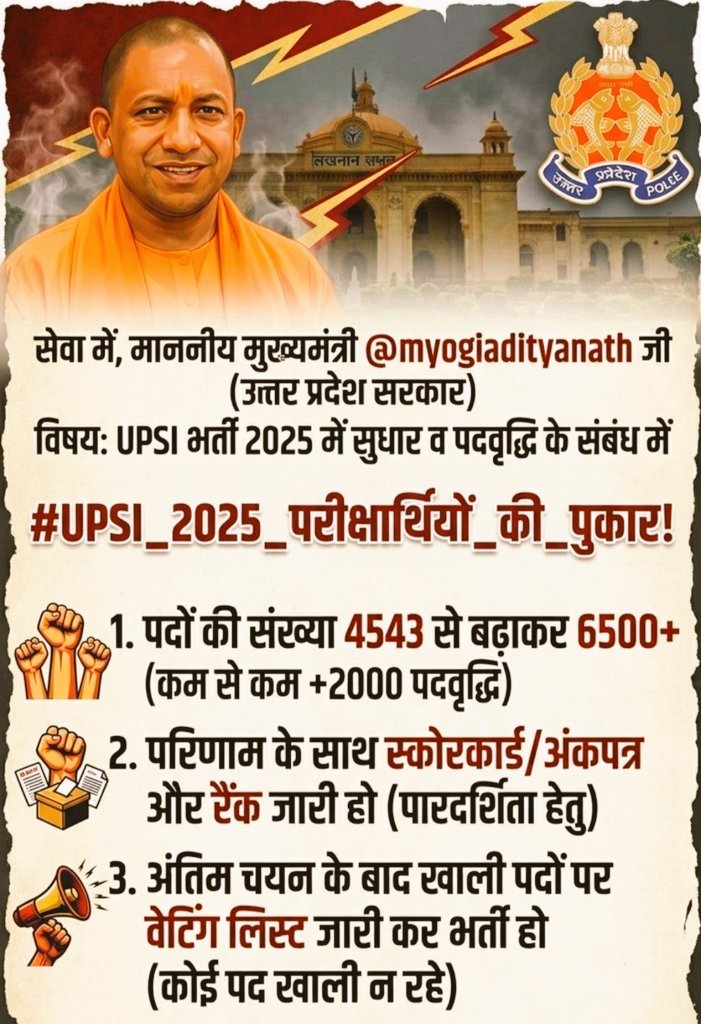
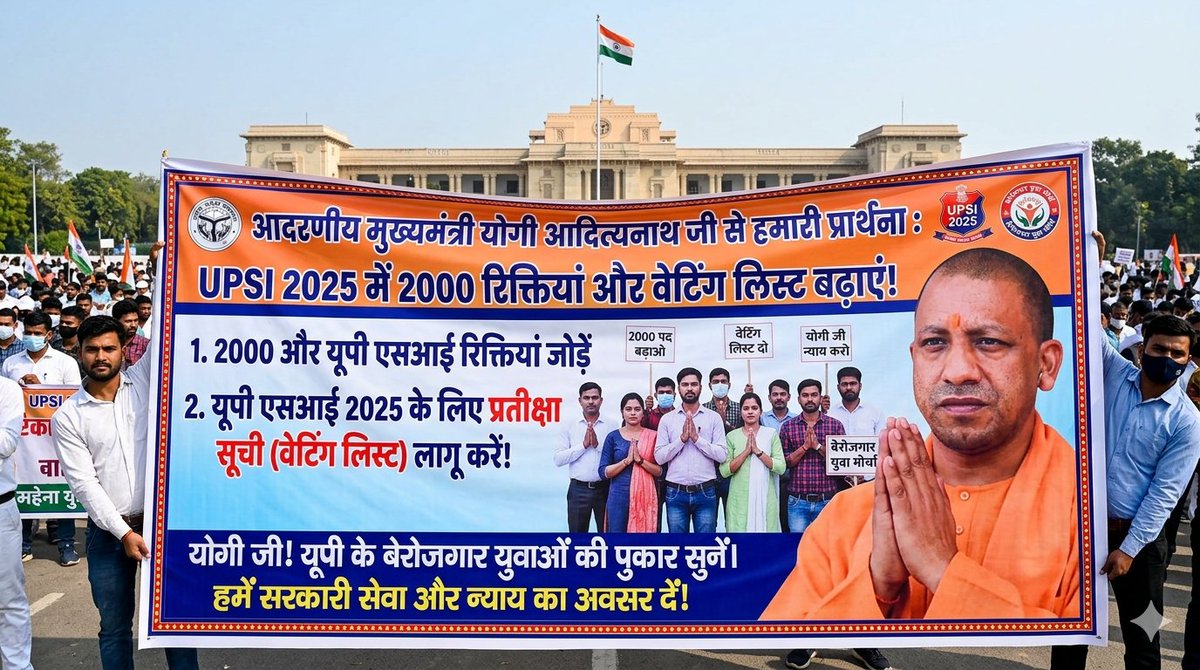
अतः आदरणीय मुख्यमंत्री जी आपसे हम सभी UPSI भर्ती 2025-26 के परीक्षार्थियों का विनम्र निवेदन है कि उत्तर प्रदेश में कानून व्यवस्था को और मजबूत करने तथा युवा बेरोजगारों को रोजगार देने के उद्देश्य से, UPSI भर्ती 2025- 26 की जारी भर्ती प्रक्रिया में पदों की संख्या 4543 से बढ़ाकर उसे कम से कम 6500-7000 करवाने, लिखित परीक्षा के स्कोरकार्ड दिखाएं जाने और अंतिम चयन परिणाम के बाद खाली पदों को वेटिंग लिस्ट से भरवाए जाने की कृपा करें। हम आपके सदा आभारी रहेंगे।
#UPSI भर्ती 2025-26 के परीक्षार्थियों की उत्तर प्रदेश सरकार से मुख्य 03 मांगे~
पदों में बढ़ोत्तरी ~ वर्तमान में प्रक्रियाधीन UPSI भर्ती में कम से कम 2000 पदों की वृद्धि की जाए।
पारदर्शिता ~ रिजल्ट के साथ व्यक्तिगत स्कोरकार्ड और सार्वजनिक रैंक सूची जारी हो।
वेटिंग लिस्ट ~ चयन प्रक्रिया के बाद रिक्त रहने वाले पदों के लिए प्रतीक्षा सूची अनिवार्य रूप से आए।
निवेदक~ लाखों #UPSI परीक्षार्थी..🙏🚩
#UPSI_INCREASE_2000_POST
#UPSI_GIVE_SCORECARD
#UPSI_GIVE_WAITING_LIST
@CMOfficeUP@UPGovt@myogioffice@GaganPratapMath
साथियों, एकजुटता ही हमारी सबसे बड़ी शक्ति है।🤝
हमारी मांगों को सरकार और विभाग तक मजबूती से पहुँचाने के लिए हमें डिजिटल मंच पर बहुत सक्रिय होना होगा।
इसलिए मेरी आप सभी से विनती है कि मुझे ट्विटर (X) पर फॉलो करें ताकि हम एक साथ मिलकर आवाज़ उठा सकें।
सभी साथी एक-दूसरे को भी फॉलो करें, जिससे हमारा नेटवर्क बड़ा हो और हमारी मुहिम को गति मिले।
#UPSI भर्ती 2025 की मुख्य 03 मांगें:
पदों में बढ़ोत्तरी ~ वर्तमान में प्रक्रियाधीन UPSI भर्ती में कम से कम 2000 पदों की वृद्धि की जाए।
पारदर्शिता ~ रिजल्ट के साथ व्यक्तिगत स्कोरकार्ड और सार्वजनिक रैंक सूची जारी हो।
वेटिंग लिस्ट ~ चयन प्रक्रिया के बाद रिक्त रहने वाले पदों के लिए प्रतीक्षा सूची अनिवार्य रूप से आए।
#UPSI_INCREASE_2000_POST
#UPSI_GIVE_SCORECARD
#UPSI_GIVE_WAITING_LIST
सेवा में,
श्रीमान एस. बी. शिरोड़कर जी,
चेयरमैन ऑफ @upprpb,
लखनऊ, उत्तर प्रदेश।
विषय: UPSI भर्ती 2025 (विज्ञापन संख्या-पीआरपीबी-बी (उपनिरीक्षक संवर्ग)-03/2025) में रिक्त पदों की संख्या बढ़ाने, लिखित परीक्षा परिणाम के साथ ही स्कोरकार्ड/अंकपत्र जारी करने और अंतिम चयन परिणाम के बाद खाली पदों के रहने की स्थिति में वेटिंग लिस्ट जारी कर पद भरने के संबंध में।
महोदय,
सविनय निवेदन है कि हम उत्तर प्रदेश के प्रतियोगी छात्र हैं। हम पुलिस विभाग में सब-इंस्पेक्टर (SI) के पदों पर भर्ती के लिए आयोजित UPSI 2025-26 परीक्षा में शामिल हो चुके हैं। जो 14 और 15 मार्च 2025 को संपन्न हो चुकी है। महोदय हम आपके संज्ञान में वर्तमान में जारी भर्ती प्रक्रिया में पदवृद्धि और अन्य खामियों हेतू कुछ महत्वपूर्ण चीजें लाना चाहते है,
1. भारी कंपटीशन: इस वर्ष लगभग 16.5 लाख से अधिक अभ्यर्थियों ने मात्र 4543 पदों के लिए आवेदन किया है, जो बताता है कि कंपटीशन बहुत ज्यादा है।
2. काफी समय से भर्ती न होना: यह भर्ती 05 वर्षों बाद आई है, जिसकी वजह से लाखों फॉर्म भरे गए और लगभग 10 लाख 77 हजार अभ्यर्थियों ने परीक्षा दी है।
3. रिक्त पदों की उपलब्धता: उत्तर प्रदेश पुलिस में अभी भी सब-इंस्पेक्टर के कई पद रिक्त हैं जिन्हें वर्तमान में प्रक्रियाधीन भर्ती में पदवृद्धि कर भरा जा सकता है।
4. पिछली बार UPSI भर्ती 2020-21 में कुल पदों की संख्या 9534 थी लेकिन इस बार लगभग 05 वर्षों के बाद 2025-26 भर्ती में 4543 पदों के लिए भर्ती हो रही है किन्तु पदों की संख्या पिछली बार से आधी से भी कम है। जो भारी कंपटीशन होने के कारण बहुत ही कम है। यदि वर्तमान परीक्षा में पदों की संख्या बढ़ाई जाती है, तो यह योग्य युवाओं के लिए एक बड़ा अवसर होगा।
5. पुलिस भर्ती बोर्ड की पूर्व परीक्षाओं में देखा गया है कि केवल सफल उम्मीदवारों की सूची जारी की जाती है, जिससे बहुत से अभ्यर्थी यह जानने से वंचित रह जाते हैं कि वे कितने अंकों से अनुत्तीर्ण हुए हैं। अतः आपसे करबद्ध प्रार्थना है कि UPSI भर्ती 2025 का लिखित परीक्षा परिणाम घोषित करते समय DV/PST रिजल्ट के दौरान ही सभी अभ्यर्थियों (सफल और असफल) का स्कोरकार्ड आधिकारिक वेबसाइट पर उपलब्ध कराया जाए। परिणाम के साथ ही नॉर्मलाइज्ड अंक (Normalized Marks) और विषयवार अंक (Sectional Marks) भी प्रदर्शित किए जाएं साथ ही सार्वजनिक रूप से सबक़ी रैंक लिस्ट जारी की जाए। इससे भर्ती प्रक्रिया में पारदर्शिता आएगी और छात्रों का बोर्ड पर विश्वास और अधिक सुदृढ़ होगा।
6. श्रीमान अंतिम चयन परिणाम के बाद मेडिकल प्रक्रिया के बाद और कुछ चयनित उम्मीदवारों द्वारा जोइनिंग न लेने के कारण कुछ सीटें खाली रह जाती है। जिन्हें उसी भर्ती के अन्य अभ्यर्थियों में से वेटिंग लिस्ट जारी कर भरा जाना चाहिए जिससे कोई सीट खाली न जाए और कुछ अन्य अभ्यर्थियों को मौका मिल जाएं।
श्रीमान आपसे हम सभी UPSI भर्ती 2025-26 के परीक्षार्थियों का विनम्र निवेदन है कि उत्तर प्रदेश में कानून व्यवस्था को और मजबूत करने तथा युवा बेरोजगारों को रोजगार देने के उद्देश्य से, UPSI भर्ती 2025-26 की जारी भर्ती प्रक्रिया में सरकार से शासनादेश लेकर पदों की संख्या 4543 से बढ़ाकर उसे कम से कम 6500-7000 करवाने, लिखित परीक्षा के स्कोरकार्ड और रैंक लिस्ट दिखाएं जाने तथा अंतिम चयन परिणाम के बाद खाली पदों को वेटिंग लिस्ट से भरवाए जाने की कृपा करें। हम आपके सदा आभारी रहेंगे।
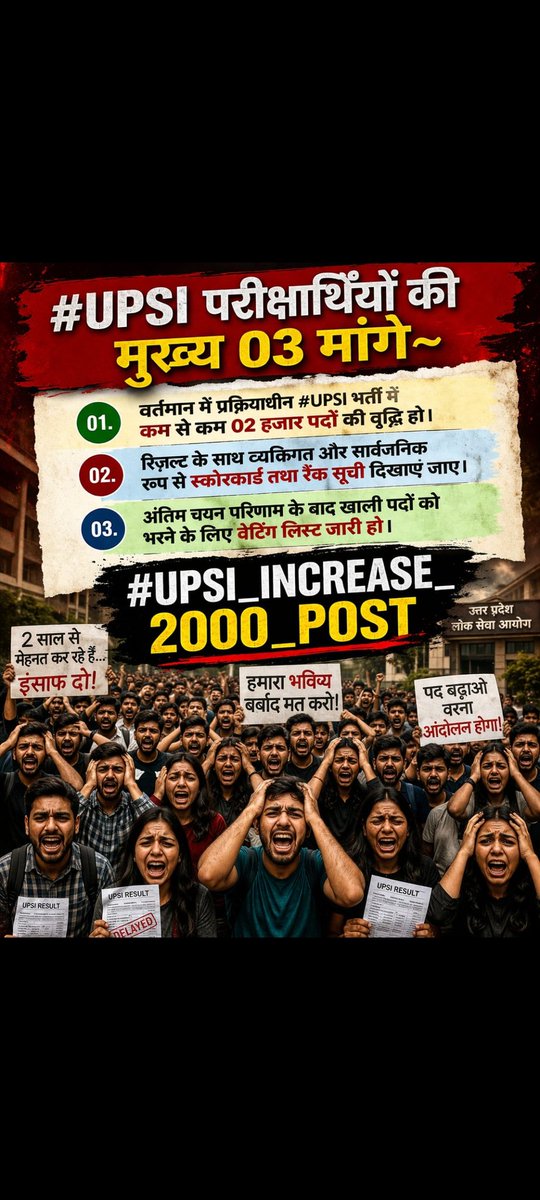
#UPSI भर्ती 2025-26 के परीक्षार्थियों की उत्तर प्रदेश सरकार से मुख्य 03 मांगे~
01. वर्तमान में प्रक्रियाधीन #UPSI भर्ती में सरकार से शासनादेश लेकर कम से कम 02 हजार पदों की वृद्धि हो।
02. रिज़ल्ट के साथ व्यक्तिगत और सार्वजनिक रूप से स्कोरकार्ड तथा रैंक सूची दिखाई जाए।
03.अंतिम चयन परिणाम के बाद खाली पदों को भरने के लिए वेटिंग लिस्ट जारी हो।
निवेदक ~ लाखों #UPSI परीक्षार्थी..🙏🚩
#UPSI_INCREASE_2000_POST
#UPSI_GIVE_SCORECARD
#UPSI_GIVE_WAITING_LIST
#UPSI_GIVE_RANK_LIST
@CMOfficeUP@UPGovt@myogioffice@myogiadityanath
No other country that was denied nuclear technology after 1974 has done what India did at Kalpakkam.
Over 200 Indian companies, including MSMEs, built the now fabled FBR reactor from scratch.
IGCAR's design team and a sprawling network of Indian manufacturers turned drawings into nuclear-grade hardware.
Late & Over-budget. Yes. An achievement nonetheless.
Let's walk through what's inside the 'Main vessel' or the 'pot' submerged in sodium.
Start at the heart: the core subassemblies [1].
These are hexagonal units, 4.5 metres tall, packed with fuel pins.
Nuclear Fuel Complex (NFC) in Hyderabad fabricated every single one, supplying over 60,000 crimped tubes and 2.5 lakh precision fuel pin components.
Second, how do you control a reactor that breeds plutonium?
You need two completely independent shutdown systems.
MTAR Technologies built both the CSRDM and DSRDM [2], the control and safety rod drive mechanisms.
CSRDM stands for Control and Safety Rod Drive Mechanism.
During normal operation, CSRDM does two jobs: it controls the reactor's power level by raising or lowering the control rods (absorbing more or fewer neutrons), and it can "scram" the reactor, meaning slam all rods into the core to shut down the chain reaction instantly
The second (DSRDM) - Diverse Safety Rod Drive Mechanism is deliberately designed to be different.
It uses electromagnets.
Cut the power, and the safety rods fall into the core by gravity alone.
MTAR also built the grid plate [9], one of the most precision-critical components in the entire reactor.
Every core subassembly sits on it.
MTAR delivered the control plug [13] too, the structure that houses all those drive mechanisms from above.
Next, the vessels.
L&T built both the main vessel [4] and the safety vessel [3].
The main vessel is roughly 13 metres in diameter, and L&T achieved tolerances within ±12mm across that entire span.
The safety vessel sits just 300mm outside the main vessel. That gap isn't wasted space. It's designed for robotic ultrasonic inspection.
If the main vessel ever leaks, the safety vessel keeps sodium levels high enough to keep cooling the core.
L&T supplied about 80% of all pool-type PFBR components, including the roof slab [11] from their Hazira facility and primary piping [10] from Powai.
BHEL Trichy handled the inner vessel [6] and thermal baffles with cooling pipes [5].
The inner vessel separates hot and cold sodium pools inside the reactor. The thermal baffles protect the main vessel wall from the 550°C sodium on the hot side.
Without these, the vessel's structural integrity would degrade within years.
Below the core sits WIL Walchandnagar's work: the core support structure [8] and the core catcher [7].
The core catcher is a circular pan covering the entire plenum area below the grid plate. Its job? Catch molten fuel debris if the worst happens.
It's designed to handle the meltdown of seven subassemblies simultaneously, preventing debris from reaching the main vessel while allowing natural convection cooling.
The core catcher is submerged in liquid sodium. Sodium touching the hot debris (in the event of fuel meltdown) on the pan heats up.
Hot sodium is less dense than cold sodium, so it rises. Cooler sodium from elsewhere in the pool flows in to replace it. That cooler sodium absorbs heat from the debris, warms up, rises, and the cycle repeats.
This continuous circulation pulls heat away from the molten fuel without any pumps running, without any electricity, without any operator pressing a button.
India is one of the few countries to incorporate an in-vessel core catcher in a fast reactor design.
Then there's Godrej.
They built the Large Rotating Plug (LRP) and Small Rotating Plug (SRP) [12].
These are massive, up to 8 metres in diameter, weighing nearly 120 tonnes combined.
They rotate 360 degrees with extreme precision to align fuel handling equipment with individual core positions.
This is how you refuel a sodium-cooled reactor without opening it up.
We talked about this fuel removal machine IVTM in our last post if you remember.
Lastly, don't forget to join us on 18th April 2026 @ 11:00 am for the Nuclear Sector webinar. Link in profile 🍺
Sources: PIB India, https://t.co/aVX7KlS5xt, MTAR Technologies, Godrej Power & Energy, L&T Heavy Engineering, Nuclear Engineering International, World Nuclear News.








![RahulRao_1992's tweet photo. No other country that was denied nuclear technology after 1974 has done what India did at Kalpakkam.
Over 200 Indian companies, including MSMEs, built the now fabled FBR reactor from scratch.
IGCAR's design team and a sprawling network of Indian manufacturers turned drawings into nuclear-grade hardware.
Late & Over-budget. Yes. An achievement nonetheless.
Let's walk through what's inside the 'Main vessel' or the 'pot' submerged in sodium.
Start at the heart: the core subassemblies [1].
These are hexagonal units, 4.5 metres tall, packed with fuel pins.
Nuclear Fuel Complex (NFC) in Hyderabad fabricated every single one, supplying over 60,000 crimped tubes and 2.5 lakh precision fuel pin components.
Second, how do you control a reactor that breeds plutonium?
You need two completely independent shutdown systems.
MTAR Technologies built both the CSRDM and DSRDM [2], the control and safety rod drive mechanisms.
CSRDM stands for Control and Safety Rod Drive Mechanism.
During normal operation, CSRDM does two jobs: it controls the reactor's power level by raising or lowering the control rods (absorbing more or fewer neutrons), and it can "scram" the reactor, meaning slam all rods into the core to shut down the chain reaction instantly
The second (DSRDM) - Diverse Safety Rod Drive Mechanism is deliberately designed to be different.
It uses electromagnets.
Cut the power, and the safety rods fall into the core by gravity alone.
MTAR also built the grid plate [9], one of the most precision-critical components in the entire reactor.
Every core subassembly sits on it.
MTAR delivered the control plug [13] too, the structure that houses all those drive mechanisms from above.
Next, the vessels.
L&T built both the main vessel [4] and the safety vessel [3].
The main vessel is roughly 13 metres in diameter, and L&T achieved tolerances within ±12mm across that entire span.
The safety vessel sits just 300mm outside the main vessel. That gap isn't wasted space. It's designed for robotic ultrasonic inspection.
If the main vessel ever leaks, the safety vessel keeps sodium levels high enough to keep cooling the core.
L&T supplied about 80% of all pool-type PFBR components, including the roof slab [11] from their Hazira facility and primary piping [10] from Powai.
BHEL Trichy handled the inner vessel [6] and thermal baffles with cooling pipes [5].
The inner vessel separates hot and cold sodium pools inside the reactor. The thermal baffles protect the main vessel wall from the 550°C sodium on the hot side.
Without these, the vessel's structural integrity would degrade within years.
Below the core sits WIL Walchandnagar's work: the core support structure [8] and the core catcher [7].
The core catcher is a circular pan covering the entire plenum area below the grid plate. Its job? Catch molten fuel debris if the worst happens.
It's designed to handle the meltdown of seven subassemblies simultaneously, preventing debris from reaching the main vessel while allowing natural convection cooling.
The core catcher is submerged in liquid sodium. Sodium touching the hot debris (in the event of fuel meltdown) on the pan heats up.
Hot sodium is less dense than cold sodium, so it rises. Cooler sodium from elsewhere in the pool flows in to replace it. That cooler sodium absorbs heat from the debris, warms up, rises, and the cycle repeats.
This continuous circulation pulls heat away from the molten fuel without any pumps running, without any electricity, without any operator pressing a button.
India is one of the few countries to incorporate an in-vessel core catcher in a fast reactor design.
Then there's Godrej.
They built the Large Rotating Plug (LRP) and Small Rotating Plug (SRP) [12].
These are massive, up to 8 metres in diameter, weighing nearly 120 tonnes combined.
They rotate 360 degrees with extreme precision to align fuel handling equipment with individual core positions.
This is how you refuel a sodium-cooled reactor without opening it up.
We talked about this fuel removal machine IVTM in our last post if you remember.
Lastly, don't forget to join us on 18th April 2026 @ 11:00 am for the Nuclear Sector webinar. Link in profile 🍺
Sources: PIB India, https://t.co/aVX7KlS5xt, MTAR Technologies, Godrej Power & Energy, L&T Heavy Engineering, Nuclear Engineering International, World Nuclear News.](https://pbs.twimg.com/media/HGBuTT6bYAAKH9O.jpg)





