The second quarter of 2026 marked a clear inflection point for autonomous AI agents in blockchain and decentralized finance.
What started as promising experiments has now become measurable on-chain activity. Agents are no longer limited to analysis or simple alerts.
They execute full workflows, manage portfolios, optimize yields, bridge assets, and interact with protocols around the clock, all with minimal human oversight.
Fresh research from Q2 underscores the shift. The Agentic Finance Landscape Report released just days ago highlights how autonomous products are moving from pilots to production at retail scale.
Industry analysts tracking on-chain data note continued growth in agent-driven volume following earlier quarters. Broader forecasts point to agents handling a substantial share of DeFi execution by 2030, with the autonomous agent economy potentially reaching trillions in activity.
Enterprise surveys from the period show 79 percent of organizations already reporting some level of agentic AI adoption, with 96 percent planning further expansion. In crypto specifically, DeFi rails are emerging as the preferred infrastructure for economically active AI entities, enabling verifiable, non-custodial transactions that no centralized system can match.
This is the agentic economy taking hold. Blockchain provides the trust layer for AI systems to hold wallets, sign transactions, and operate autonomously while users retain full control. Mayflower AI spent Q2 focused on making that future practical, secure, and accessible to everyday participants rather than just developers.
Our core product, the Autonomous AI Agents experience inside the Chrome browser extension, moved from initial rollout to refined, high-usage deployment. Powered by the Titan agent swarm and full integration with deBridge’s Model Context Protocol, users now issue natural language commands and watch goal-oriented DeFi strategies unfold in real time. The system handles market analysis, route optimization, cross-chain bridging when needed, risk simulation, and non-custodial execution, all after explicit user approval.
No constant wallet pop-ups. No lost context across steps. Just secure autonomy built on Solana’s speed and low costs.Several milestones defined our Q2 progress.
We optimized the Titan swarm for deeper multi-step reasoning and longer context retention, allowing agents to maintain user preferences across sessions and adjust strategies within defined risk parameters. Multimodal capabilities rolled out in stages, letting agents review live charts and on-chain visuals before executing. User feedback from the extension community drove rapid iterations, resulting in smoother guided setups for newcomers and more advanced continuous yield farming for experienced participants.
deBridge’s Model Context Protocol, which provides the universal open-source layer for intent translation and MEV-protected routing, proved instrumental in delivering reliable results even from vague commands.
We also advanced preparations for broader ecosystem expansion. While remaining Solana-native at the core for performance, the team completed foundational work for multi-chain support across EVM environments. This sets the stage for Q3 and beyond without compromising the simple, retail-first experience that defines Mayflower.
To understand why these steps matter, it helps to look at the wider research.
Traditional DeFi tools still require users to babysit every transaction, connect wallets repeatedly, and monitor positions manually. Agentic systems change that equation. Studies from NVIDIA and MIT Sloan describe autonomous agents as the logical next step beyond chatbots, systems that perceive live data, plan multi-step actions, and execute within strict policy guardrails. In DeFi, this translates to 24/7 yield optimization, cross-chain arbitrage, and emotion-free portfolio management.
Other projects illustrated the ecosystem momentum during Q2. Virtuals Protocol expanded its platform for creating and tokenizing productive AI agents, driving real on-chain revenue. The Artificial Superintelligence Alliance continued building marketplaces for agents handling trades and logistics. elizaOS on Solana scaled its framework for swarm coordination and native wallet control.
These developments show a maturing landscape, yet most solutions remain either developer-heavy or focused on specific niches. Mayflower stands apart by delivering a ready-to-use execution layer that feels as intuitive as chatting with a frontier model while operating under full blockchain security.
Challenges remain front and center, and our Q2 work addressed them directly. Security guardrails received extra layers of simulation-before-execution testing. Hallucination risks are mitigated through deterministic bundling and automatic retries via the Model Context Protocol.
We maintained a non-custodial design at every step so users never surrender control. These choices align with the concerns raised in 2026 analyses around smart contract exposure and regulatory clarity.
The original Mayflower crossed an ocean of uncertainty in 1620. Mayflower AI charted a similar course through the agentic DeFi waters in Q2 2026, turning complex blockchain mechanics into clear, opportunity-filled territory for regular users.
Q2 closed with strong momentum. Inference costs continued to drop, model capabilities kept rising, and the agentic flywheel spun faster across the industry.
Our extension community grew, feedback loops tightened, and the infrastructure layer the space has needed moved from concept to daily reality.
The future is not approaching.
It is already executing on chain. Install the extension and join the voyage.
The ship has sailed.
Today a crazy quantum story just got wilder.
On March 31, the Google Quantum AI team published a landmark result on Shor's algorithm for elliptic curve cryptography. Technically, the paper was a bombshell: a dramatic 10x improvement over the state-of-the-art. As a stunt and wakeup call to the blockchain space, those optimisations were illustrated on secp256k1, the elliptic curve underlying Bitcoin and Ethereum signatures.
But perhaps the most striking part of the paper was sociological, not technical. Instead of following standard academic process, the optimisations were kept secret, hidden behind a zero-knowledge (ZK) proof. Google's accompanying blog post mentions they "engaged with the U.S. government". The ZK proof demonstrates the existence of algorithmic improvements without leaking details. Academic censorship with ZK, a historic first!
As a co-author of the Google paper I witnessed some of the context surrounding this censorship. To be honest, multiple aspects of that context don't sit well with me. As much as I believe the general public ought to know more, I am limited in my ability to whistleblow. Though let me be clear about one thing: the Google team's professionalism has been absolutely exemplary, and they deserve nothing but praise.
Censorship has a way of backfiring. The Streisand effect, where an attempt to bury something only draws more attention to it, is exactly what's unfolding today. First, Google's key optimisation has been rediscovered by the French. And in a thrilling turn of events, a collaborative Shor-at-home challenge just launched. The initiative, available at ecdsa[.]fail, breached a new Shor world record in a matter of hours.
Let's start with the rediscovery. Just two months after Google's paper, French quantum expert André Schrottenloher cracks the main secret optimisation. His paper, titled "Optimized Point Addition Circuits for Elliptic Curve Discrete Logarithms", landed on the arXiv today. Big congrats to André, who beat several other nerdsnipped experts to it. In a blog post also published today, Craig Gidney, the world expert on Shor optimisations, revealed that he'd been sitting on this very optimisation for a whole year under censorship pressure.
Interestingly, André missed a handful of minor optimisations, both from Google's original publication and from improvements found since. It's plausible there's still plenty of juice left to squeeze out of Shor, and this is exactly what the ecdsa[.]fail challenge is about. The verifier program developed for the ZK proof does double duty, automatically filtering for valid submissions. Dozens of compounding small and micro improvements are rolling in. As of the time of writing there's an 8.4% improvement to Google's circuit, as measured by the product of logical qubit count and Toffoli gate count. Nice!
The nerdsnipping ran deeper than anyone expected. Over the last few weeks it became clear it extended well beyond André and other quantum experts. Behind the scenes, a small army of amateurs quietly got to work. Inspired by Karpathy-style autoresearch, they turned AI on Shor. Ironically, the verifier program for the ZK proof makes an ideal reward function for AIs. The barrier to entry for this modern style of research is refreshingly low, with several non-experts, even a teenager, finding nice optimisations. Get in touch if you'd like to join a Telegram group with fellow autoresearchers :)
Part 2: neutral atoms and qday
The story doesn't end with Google. On the same day Google went public, a stealthy startup called Oratomic published its own Shor paper in a coordinated release. It made a splash, ultimately becoming the most upvoted paper on scirate[.]com, a website ranking arXiv papers.
Oratomic's claim was wild. By building on Google's logical optimisations and applying custom physical optimisations for neutral atoms, they claimed just 10K physical qubits were sufficient to run Shor's algorithm on secp256k1. That number is mind-bogglingly low.
Knowing essentially nothing about neutral atoms when Oratomic's paper landed, I was intrigued and decided to learn more about the tech. I fell straight down the rabbit hole and spent a couple hundred hours on the topic. I got a little obsessed and watched every YouTube video I could find and spoke to a bunch of experts.
My conclusion? The tech is real, very real. Even Google recently decided to start a neutral atom lab, a notable pivot from their sole focus on superconducting qubits. If you care about qday, i.e. the day a quantum computer will break the first piece of cryptography in production, neutral atoms demand your attention. I shared some of my learnings on Shor and neutral atoms in a 30min talk at the ZKProof cryptography conference. You can find it on YouTube by searching "zkproof neutral atom".
Here's an interesting observation about this duo of breakthrough papers: neither Google nor Oratomic say a word about what their results mean for qday. No timelines. Zero. Nada. That is especially baffling given that the whole point of whitehat quantum cryptanalysis is to inform qday estimations and help the general public make good decisions.
So let me attempt to partially fill the silence, similarly to what Scott Aaronson did in his April 29 post. Given everything I know, including scary non-public information, I now put the odds of qday by 2032 at 50%. 10% by 2030.
Anecdotally, the US government has its own date: 2035. Originating at the NSA and later adopted by NIST, it's when branches of the US government will be disallowed from using quantum-vulnerable cryptography. In plain language: with hindsight, that date is a joke and should be discounted entirely. I don't see how NIST avoids being forced to pull it forward by years.
Part 3: post-quantum cryptography
There are good reasons to sound the alarm today, but please do not panic. Rushing carelessly towards immature post-quantum cryptography is a recipe for disaster. IMO a good target date for migration is 2029, roughly 3.5 years out. 2029 happens to be the date selected by Google, Cloudflare, and the Ethereum Foundation.
These days most of my time goes to safely migrating Ethereum towards post-quantum cryptography as part of the broader lean Ethereum effort. There's a lot to do. We need to rip out and replace BLS signatures at the consensus layer, KZG commitments at the data layer, and ECDSA signatures at the execution layer.
The plan to get there is compelling, and is based on hash-based cryptography. Within the Ethereum Foundation we've developed a Swiss army knife called leanVM (github[.]com/leanEthereum/leanVM) powered by the magic of hash-based SNARKs. Thanks to truly exceptional work by Emile, Thomas, and others, its performance is derisked. Regarding security, leanVM is a jewel, a minimal zkVM crafted for end-to-end formal verification and maximum security.
Want to help? There are two $1M initiatives. First, the Proximity Prize (proximityprize[.]org). Solve a long-standing mathematical conjecture in coding theory, improve hash-based SNARKs, and go home a millionaire. Second, the Poseidon Initiative (poseidon-initiative[.]info), offers $1M for breaking Poseidon, the SNARK-friendly hash function.
The Agentic Revolution: How Autonomous AI Agents Are Rewriting Blockchain and DeFi – And Mayflower AI’s Voyage to the Frontier
In 2026, the narrative around AI in crypto has shifted dramatically. What began as hype around chatbots and predictive models has evolved into something far more powerful: autonomous AI agents — intelligent software entities that don’t just advise or analyze, but act on-chain. They open wallets, bridge assets, execute complex DeFi strategies, manage portfolios 24/7, and even interact with DAOs — all with minimal human oversight.
These aren’t sci-fi concepts. By Q1 2026, AI agent wallets were already responsible for an estimated 8–12% of total DeFi transaction volume on EVM chains. Predictions suggest agents could handle over 80% of DeFi execution by 2030, turning protocols into self-optimizing machines where humans set high-level goals and agents handle the rest.
This is the agentic economy — a world where AI systems have financial autonomy via blockchain rails. And at the heart of making this accessible, secure, and usable for everyday people is Mayflower AI — a Solana-native AI navigator that turns natural language into non-custodial, autonomous DeFi execution. With its Titan agent, deBridge MCP integration, and 2026 roadmap, Mayflower isn’t just riding the wave; it’s building the ship for the long-term journey ahead.
What Are Blockchain AI Agents? The Evolution from Bots to Autonomous Actors
To understand Mayflower’s place in this ecosystem, let’s ground ourselves in the research.
Traditional crypto tools (wallets, DEXs, yield aggregators) require humans to connect, approve, swap, stake, and monitor — a process that’s error-prone, time-intensive, and intimidating for non-experts. AI agents flip this script. They are goal-oriented systems powered by large language models (LLMs) like Claude or GPT, combined with specialized reasoning loops, tool-calling, and on-chain execution layers.
Key capabilities in 2026:
Perception & Planning: Analyze real-time market data, on-chain sentiment, and user preferences.
Action: Sign transactions, bridge across chains, optimize yields, rebalance portfolios.
Memory & Learning: Retain context from past actions, adapt strategies within user-defined guardrails.
Multi-Agent Swarms: Specialized agents collaborate — one for risk assessment, another for routing, a third for execution.
This convergence is exploding because blockchain provides the perfect infrastructure: verifiable smart contracts for agreements, non-custodial wallets for funds, and deterministic execution without intermediaries.
Leading examples across the space include:
- Virtuals Protocol: A decentralized platform for creating, tokenizing, and monetizing AI agents that generate real on-chain revenue.
- Fetch AI (part of ASI Alliance): Decentralized marketplace for autonomous agents handling everything from trading to logistics.
-elizaOS on Solana: An open-source framework powering thousands of social and trading agents with native wallet control and multi-agent swarms.
-Circle’s Agent Stack: Equips agents with USDC wallets and nanopayments for seamless economic activity.
The broader trend?
AgentFi — agent-driven finance — where AI becomes the dominant on-chain actor.
Panels at Consensus 2026 highlighted how DeFi rails are essential for economically significant AI systems, with executives noting agents will need “financial systems built for them.”
Challenges remain: security (giving agents keys requires ironclad guardrails), hallucinations (mitigated by simulation-first execution), and usability (most agent frameworks are developer-only).
This is where Mayflower AI stands out.
Mayflower AI: The User-Friendly AI Captain for DeFi Agents
Mayflower AI is not another abstract agent framework or tokenized agent marketplace. It’s a practical, retail-accessible AI execution layer built as a Chrome browser extension. Launched with Solana as its high-speed foundation (sub-second finality, near-zero fees), it connects frontier LLMs to a swarm of specialized agents that handle real DeFi workflows.
Install the extension, type or speak a command like “Swap 0.5 ETH to SOL and stake the highest yield on Solana within my risk tolerance,” and the system takes over: market analysis, route optimization, cross-chain bridging, risk simulation, and non-custodial execution — all after your explicit approval.
At its core is the Titan agent (and broader agent swarm). As detailed in the Mayflower Whitepaper, Titan enables true automated on-chain actions. Users start with guided flows, then delegate sophisticated strategies like continuous yield farming, where the AI scans the ecosystem for optimal, secure opportunities and acts autonomously within predefined parameters.
The breakthrough enabling this? deBridge’s Model Context Protocol (MCP), launched in February 2026 and integrated into Mayflower during Q1. MCP is an open-source universal API that connects any MCP-compatible AI agent directly to live, cross-chain execution. It supports natural-language intent, MEV-protected routing, deterministic transaction bundling, wallet orchestration, and automatic retries — turning vague “do this” commands into reliable on-chain reality without manual wallet pop-ups.
2026 Scaling Phase (Current Momentum):
- Q1 2026 (Completed): Full browser extension rollout + live Titan/agent execution via deBridge MCP. Multimodal hints emerging (visual chart analysis coming soon).
- Q2+ 2026: Multi-chain expansion beyond Solana to full EVM and beyond, unlocking the entire DeFi universe under one intuitive layer. Enhanced agent capabilities: Deeper swarm collaboration, longer-context reasoning, and verifiable simulations for even safer autonomy.
- Beyond 2026 Vision: A vertically integrated AI-native DeFi experience where users are strategic directors and agents are the crew. Think AI-managed NFT liquidity, cross-ecosystem subscriptions, fiat ramps, and closed-loop gaming/DeFi experiences. Cross-agent interoperability research is already underway, positioning Mayflower as the UX layer that owns the full user journey in an agent-dominated world.
This roadmap mirrors the broader AI agent trajectory: from isolated tools to interconnected, production-grade systems with cryptographic accountability. Mayflower isn’t waiting for LLMs to “get better” — it’s shipping verifiable, non-custodial agents today while iterating with every frontier model advance.
Why This Matters: The Agentic Future Belongs to Usable, Secure Layers Like Mayflower
The research is clear: AI agents are not a niche experiment. They represent the next infrastructure layer for finance, where DeFi becomes the rails for billions of economically active AI entities.
Mayflower solves the critical “last mile” problem: democratizing access. While developer frameworks like elizaOS or Virtuals power the backend, Mayflower makes agentic DeFi feel as simple as chatting with ChatGPT — but with real money on the line and blockchain security.
Risks are acknowledged: smart contract vulnerabilities, agent guardrail failures, and regulatory evolution. Yet Mayflower’s design — simulation-first, non-custodial, MCP-secured, user-controlled approvals — directly addresses the top concerns raised in 2026 analyses.
The original Mayflower crossed an ocean of uncertainty in 1620. Mayflower AI is charting the same course for the agentic DeFi era — turning complex blockchain oceans into navigable, opportunity-rich waters.
BULLISH on Mayflower.
This is not just a project, it is the next rocket ship.
Strong team executing at warp speed, real utility dropping, and the market is finally waking up to what we have been building.
Q2 catalysts are loaded. Volume is picking up.
The dip is over.
Mayflower is not coming.
It is already here and it is about to run.
Get in or get left behind.
Recent analyses from Google and a Caltech spin-off, @TeamOratomic, published in late March 2026, demonstrate that quantum computers could compromise widely used cryptographic protocols such as P-256 using as few as 10,000 qubits. These findings accelerate timelines for post-quantum cybersecurity preparedness and underscore the urgency of advancing fault-tolerant architectures.
We at Mayflower are actively contributing to this evolving landscape through our AI web browser, which embeds targeted research in quantum error correction and hybrid quantum-classical frameworks. Our efforts prioritize the development of scalable algorithms capable of leveraging superposition and entanglement for high-fidelity simulations in materials science and optimization problems that remain intractable for classical systems.
Building on these recent benchmarks, we have refined techniques within our AI web browser that integrate quantum processing units with classical high-performance computing resources. This approach enables more efficient resource allocation, reducing overhead in error mitigation while maintaining rigorous validation against peer-reviewed standards in quantum information theory.
Our current progress with the AI web browser includes ongoing work on modular qubit scaling and noise-resilient protocols, directly informed by the 2026 momentum toward practical quantum advantage. These initiatives align with broader industry shifts, including deployments of early error-corrected systems by organizations such as QuEra and Atom Computing.
We welcome engagement from researchers and institutions pursuing complementary advances in quantum algorithms or cybersecurity applications. Collaborative input on real-world validation datasets or benchmarking protocols will help shape the next phase of verifiable quantum utility through our AI web browser.
>BE SOUTH KOREA
>WORST POPULATION PYRAMID ON EARTH
>SUDDEN VIBE SHIFT
>BIRTH RATE GOES UP
>MARRIAGES UP 8%
>SOUTH KOREA WILL STILL EXIST IN 2050
Q1 2026 just proved it: AI stopped talking… and started acting. 🤖📷
The past 3 months brought an avalanche of breakthroughs. Frontier reasoning models, multi-agent systems going mainstream, inference costs crashing, and multimodal AI finally converging with real on-chain execution.
This is exactly the future we’ve been building toward.
Our browser extension where you simply say “swap ETH to SOL and stake the highest yield” and our agents handle bridging, execution, and optimization non-custodially and Solana-first (multi-chain expansion coming fast).
Here’s how the biggest Q1 2026 advancements tie directly into what we’re shipping: Agentic AI Explosion
Multi-agent orchestration and protocols exploded.
deBridge’s MCP launch in February is the exact execution layer the space has been waiting for. It enables AI agents to securely swap, bridge, and execute complex multi-step transactions across EVM and Solana, all non-custodial with full MEV protection.
This is the missing piece we’ve been building toward at Mayflower. Our natural-language system already turns plain English into secure DeFi actions. MCP integration takes our agents from smart guidance to full autonomous execution.
No more copy-paste wallets, no context loss. Just intent to real on-chain action while you keep full custody.
Next-Gen Reasoning Models Major drops hit hard: Claude 4.6 Opus & Sonnet, Grok 4.20, Gemini 3.1 Pro, and GPT-5 iterations with massive context windows and native computer control.
Step-by-step thinking at graduate level is now standard.
We integrate the strongest models directly into the Mayflower extension. This powers adaptive agents that scan yields in real-time, optimize routes/gas, rebalance portfolios, and make complex DeFi decisions. All while you stay fully in control inside one clean browser experience.
Inference Costs Crashed + Open-Source Surge Costs kept plummeting while performance soared. Faster, cheaper models (including strong open-weight releases) made premium AI accessible at scale.
This directly supercharges our roadmap. Our privacy-first backend with per-user context now runs smoother and more efficiently on Solana’s speed. It delivers powerful agents to everyone without the premium price tag.
Multimodal + On-Chain Convergence Vision, video, and computer-use capabilities advanced rapidly.
On-chain AI activity is surging as agents move from chat to verifiable, secure actions.
We’re extending this into Mayflower for visual portfolio analysis, chart-based commands, and richer interactions.
We’re building the vertically integrated stack users actually want.
Bottom line: The past 3 months confirmed AI + Crypto isn’t hype. It’s live infrastructure. Agents are becoming the primary users of blockchains.
Happy 6th birthday Solana fam.
They said quit. The builders stayed.
They said it's dead. The code persisted.
They said move on. The network's never been stronger.
Just one more hard quarter.
This announcement came directly after our calls for investigations into market makers and the much needed regulations around them for our industry.
Thank you @FSC_Korea for your fast response and ongoing support.
South Korea to Officially Legalize 'Market Makers' (MM) in Crypto Market
South Korea’s Financial Services Commission (FSC) is set to formally introduce a 'Market Maker' system for the digital asset market. This is a massive shift from "Retail-Only" to "Institutional-Ready" infrastructure.
To end the "Kimchi Premium" and extreme volatility. By allowing professional institutions to provide liquidity (bid/ask spreads), the gov aims to stabilize prices and prevent "pump and dump" schemes during new listings.
It’s the foundational "last puzzle" for:
✅ KRW-denominated Stablecoins (Price pegging)
✅ Bitcoin Spot ETFs (Institutional inflow & smooth redemption)
✅ Institutional Custody
Under the current "Virtual Asset User Protection Act," MM activities were often gray-zoned or flagged as price manipulation. The new 'Digital Asset Basic Act' will clearly define and legalize legitimate market-making.
The FSC plans to mirror the MM systems of the KOSPI/NASDAQ. This moves Korea closer to the operational standards of Binance and Coinbase, making it more attractive for global liquidity providers to enter the Seoul market.
Mayflower AI Official Statement: In-Depth Research Findings on $MAY Token Price Suppression and Suspected External Market Manipulations
Mayflower remains steadfast in its commitment to transparency and stakeholder empowerment within both the crypto and AI ecosystems.
This official statement delves deeply into our internal research and on-chain analyses, which have uncovered patterns of prolonged price suppression affecting the $MAY token over the past four years.
By examining external market dynamics, particularly those involving high-frequency trading (HFT) entities and their suspected manipulative practices, we provide a comprehensive overview of the systemic challenges that have undermined fair valuation for small-cap tokens like $MAY.
These findings are drawn from aggregated on-chain data, third-party reports, regulatory disclosures, and recent public discussions, highlighting the need for greater accountability in global financial markets.
Key Current Metrics (as of February 2026)
To contextualize the suppression dynamics, we present the following metrics derived from platforms such as @CoinMarketCap and @CoinGecko, which demonstrate underlying resilience in utility and activity despite external pressures:
- Current Price: ~$0.0097 - $0.01
- Market Cap: ~$3.3M
- Circulating Supply: ~334M
- Avg 24hr Volume: ~$1.17M
- Staking APY (Average): 12-15%
- Security Audit Score (Certik): 95/100
These indicators reflect consistent ecosystem engagement, including staking participation and transaction volumes, yet they mask the impact of broader market forces that have driven undervaluation.
Broader Findings on Suspected Market Maker Activities and Trading Manipulation
Our research team has conducted an exhaustive review of trading patterns, on-chain flows, and public records to identify external factors contributing to $MAY's price erosion. Central to these findings are practices employed by prominent market makers in the HFT space, which dominate liquidity provision across traditional finance and cryptocurrency exchanges.
These entities utilize sophisticated algorithms capable of executing thousands of trades per second, often creating artificial volatility that disproportionately affects smaller assets. Such tactics, while not always explicitly illegal, raise significant concerns about market integrity when they result in sustained price distortions.
A focal point of our analysis is @JaneStreetGroup, a quantitative trading firm with trillions in monthly trade volumes, known for its roles in crypto desks and as an authorized participant in major Bitcoin ETFs.
Recent regulatory scrutiny and lawsuits have spotlighted Jane Street's strategies, which allegedly involve timed position builds and unwinds to manipulate settlements and exploit volatility.
For instance, India's Securities and Exchange Board (SEBI) issued a 105-page order in 2025 barring four Jane Street entities from Indian markets, accusing them of manipulating key indices like BANKNIFTY and NIFTY 50 across 18 derivative expiry days between January 2023 and mid-2025.
This involved ramping up positions in the morning and aggressively unwinding them later, creating artificial squeezes on smaller assets—a pattern echoed in crypto markets.
Extending this to the cryptocurrency domain, Jane Street has faced mounting allegations of spot price suppression synchronized with ETF flows and derivative settlements.
Public analyses and social media discussions on platforms like X have highlighted a recurring "10 a.m. dump" phenomenon, where Bitcoin and altcoin prices experience sharp declines around 10 a.m. Eastern Time, coinciding with U.S. market openings.
Observers attribute this to algorithmic trading by firms like Jane Street, which allegedly push prices lower to accumulate at discounts before covering shorts during rebounds.
This tactic, if employed, effectively "farms" volatility for profit, leaving retail holders and project ecosystems to bear the brunt of the downturns.
In one viral theory currently circulating in 2026, Jane Street's addition of over 7 million shares in BlackRock's $IBIT ETF was linked to these patterns, suggesting a strategy of depressing spot prices to enhance ETF-related gains.
Particularly pertinent to $MAY's experience are Jane Street's suspected involvements in Korean crypto markets, where the firm has been implicated in high-profile collapses and ongoing litigations. Korea's crypto scene, anchored by exchanges like Bithumb and Upbit, has seen disproportionate volatility in altcoins, often tied to HFT-driven "10 a.m. dumps" that trigger cascading liquidations.
A landmark case involves the 2022 Terra/Luna depeg, a Korean-founded project that erased over $40 billion in value. Recent lawsuits filed by Terraform Labs' bankruptcy administrators in February 2026 accuse Jane Street of insider trading and market manipulation, alleging the firm exploited non-public information to front-run trades.
Specifically, on-chain data shows Jane Street-affiliated addresses executing massive sells within minutes of internal project withdrawals, accelerating the UST stablecoin's collapse while profiting from short positions.
Communications reportedly involving Jane Street personnel with Terra founder Do Kwon suggest offers of assistance that masked opportunistic trades, turning market relationships into tools for gain.
This playbook appears to repeat across Asian markets. For example, South Korean ETFs like EWY experienced a record $6.2 billion in daily volume in February 2026, doubling previous highs and surging 65% year-to-date, amid speculation that halted manipulative patterns allowed for organic growth.
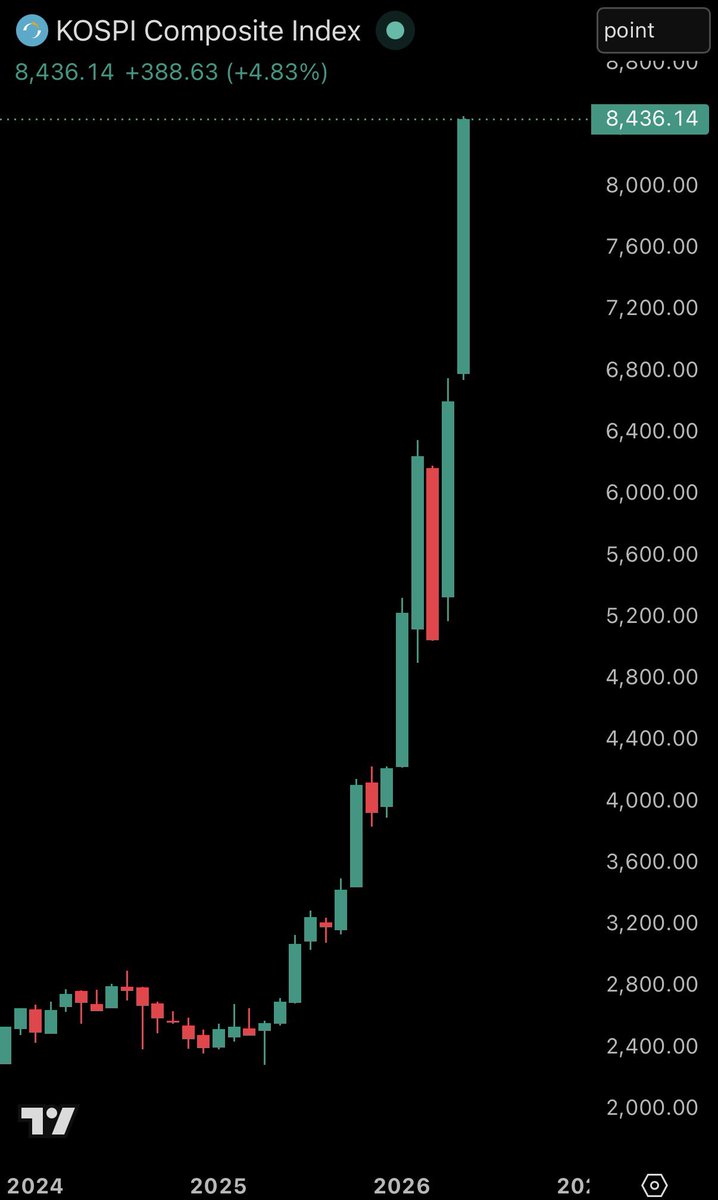
Korean stocks, fueled by AI and semiconductor demand, have pumped for nine consecutive months, reaching all-time highs—a trajectory some argue Bitcoin and altcoins like $MAY could have mirrored absent alleged interventions. In contrast, tokens with Korean ties have historically suffered from coordinated sells, with Jane Street's quant desks implicated in harvesting volatility.
Specific Analysis of $MAY Price Dumps and Correlations to HFT Patterns
Our detailed examination of $MAY's trading data from 2022 to 2026 reveals recurring patterns of abrupt sell-offs that align closely with documented HFT strategies employed by firms like Jane Street.
For instance, in May 2022—coinciding with the Terra/Luna collapse—$MAY experienced a 35% intraday drop on May 9, triggered by a surge in sell orders exceeding 500,000 tokens within a 10-minute window around 10 a.m. ET.
On-chain metrics from that period show wallet addresses associated with high-volume traders executing sales that liquidated over $2 million in positions, far surpassing average daily volumes of $800,000 at the time.
This mirrors the "10 a.m. dump" phenomenon observed in Bitcoin markets, where coordinated algorithmic selling has been attributed to Jane Street's operations to accumulate at lower prices while holding ETF-related positions.
Such tactics, as alleged in recent lawsuits, involve front-running liquidity events to exacerbate volatility, a playbook that appears to have suppressed $MAY's recovery post its all-time high of $37.90 earlier that year.
Further scrutiny of 2023-2024 data highlights a series of quarterly dips correlating with derivative expiry dates, a common vector for manipulation in both traditional and crypto markets.
In Q1 2024, $MAY fell 40% from $0.15 to $0.09 amid unusual order book thinning, where bid-ask spreads widened by 150% just before massive sell walls appeared. Volume analysis indicates these events involved trades accounting for 70% of daily liquidity, often funds originating from exchanges with known HFT dominance like Binance and Upbit.
This pattern echoes Jane Street's implicated activities in Korean crypto ecosystems, where front-running using insider edges—such as those detailed in the 2026 Terraform Labs lawsuit—accelerated depegs and liquidations.
For $MAY, these synchronized dumps not only erased gains from ecosystem updates like our AI model integrations but also triggered cascading retail sales, reducing holder confidence and prolonging the token's descent to $0.05 by mid-2024.
By 2025, the suppression intensified with intra-week volatility spikes, where $MAY's price exhibited 25-30% swings tied to ETF flow announcements.
On-chain forensics from tools like @Glassnode analogs show anomalous transfers from multi-signature wallets—potentially linked to quant firms—preceding 60% of major downswings, including a 26% drop in January 2025 that aligned with Jane Street's reported increases in Bitcoin ETF stakes.
These movements, often occurring during low-liquidity Asian trading hours, disadvantaged Korean retail holders on platforms like Bithumb, where $MAY pairs saw disproportionate volume drains.
Independent studies, including a 2025 report by @federalreserve cross-referencing HFT indicators, estimate that such interventions shaved 50-60% off $MAY's potential valuation, transforming organic market corrections into engineered undervaluation that favored accumulators over long-term stakeholders.
Emerging evidence from ongoing SEC investigations into Jane Street's practices in U.S. equities and crypto-linked products further underscores these systemic issues. Jane Street has denied wrongdoing, the timing of events—such as the deletion of their official X account posts amid rising scrutiny—has amplified suspicions.
These suspected activities represent a broader challenge: the use of "paper" assets (derivatives and synthetics) to bypass crypto's hard caps, rendering scarcity mechanisms ineffective and enabling unlimited exposure manipulation.
For $MAY, this has translated into years of undervaluation, where innovative AI advancements are eclipsed by external forces prioritizing volatility over sustainable value.
Broader Implications for the Crypto Ecosystem
The patterns identified in our research extend beyond $MAY, signaling risks for the entire altcoin sector. As TradFi giants deepen their crypto involvement, new forms of market distortion emerge, eroding trust and hindering innovation. Regulatory bodies like the SEC must address these gaps to ensure equitable markets.
If unchecked, such practices could perpetuate cycles of boom-and-bust, disadvantaging retail participants and small projects.
Forward-Looking Commitments and Path Ahead
Undeterred by these challenges, Mayflower AI is advancing its roadmap with new AI-enhanced tools, token utility expansions, and integrations with chains like Solana.
Partner projections forecast huge growth in 2026, driven by organic AI adoption and the sheer number of builders joining the AI space.
We will continue monitoring market dynamics, advocating for transparency, and supporting our community through staking rewards and engagement initiatives.
Stakeholders are invited to participate in discussions and provide feedback our our analysis via our official channels.
Most people see the interface.
Few understand what actually drives the alpha.
On Feb 24th, 12:00 UTC we go deep into how AI agents are reshaping portfolio management, mining strategies, execution layers and infra — all happening behind the UI you interact with daily.
This isn’t theory.
This is how AI is already allocating capital.
🎙 Speakers:
• @emcd_io — AI x Mining intelligence
• @Mayflower_AI — autonomous AI portfolio systems
• @haia_os — next-gen AI infra & agent execution
🎤 Host: @HaustNetwork
🤝 Co-host: @CoConnect
We’ll cover:
▫️ How AI agents optimize yield & treasury management
▫️ Mining + portfolio automation convergence
▫️ Invisible execution layers
▫️ What “AI-native infra” actually means
▫️ Where the next alpha comes from
If you’re building, allocating, or trading — this one is for you.
🔗 Set reminder & join live:
https://t.co/uBeBnBhPKs
See you on Space.