@Tommy_Torres ¿Has enseñado en salón de #escuelapública? Es difícil dar educación humana a niños con trauma detrás de una computadora. Damnificados afectados por pobreza, todavía no leen a los once años. Haz diferencia con acción, enseña a leer a un niño @IslandCorps
https://t.co/xAoMPODcSw
Jim Rohn's 7 attitude diseases that silently destroy success:
"Attitude diseases are deadly. They'll destroy all the good things you start. I'm a pro on these because I've had them all."
1. Indifference.
"The shrug of the shoulder. The guy's not even concerned. He's just drifting. There's one problem with drift: you cannot drift to the top of the mountain. Here's the key to the good life: Learn to put everything you've got into everything you do. The delusion is, 'If I had a better job, I'd really pour it on.' Wherever you are, pour it on."
2. Indecision.
"Mental paralysis. The guy can't make up his mind. He says, 'What if I get off on the wrong side?' Listen, after a while, it doesn't matter. Just get off. Any side will do. The ones that turn out to be wrong give you better experience to make better decisions. Don't see how many decisions you can get out of, see how many you can get into. That's where the adventure is."
3. Doubt.
"One of the worst is self-doubt. The guy doubts himself. Doubts if it'll last. Doubts if he can do that well. Doubts if he can make that much. A chronic, excellent self-doubter. You can imagine what damage that does to your future. Turn this coin over and become a believer. The understanding of self-worth is the beginning of progress."
4. Worry.
"Worry causes health problems, social problems, personal problems, family problems. Worry long enough, it'll drop you to your knees. I used to be known as a super worrier. Not a super warrior, a super worrier. My family wished I'd have been a warrior. It took me almost one year to kick the worry habit. It was one of the toughest years I ever spent. But I discovered you could live the most incredible life free of worry. Not free of challenge, not free of difficulty, free of worry."
5. Overcaution.
"Some people never will have much. They're too cautious. This is the timid approach to life. I used to say, 'What if this happens?' It's called the language of the poor. Then I discovered it's all risky. The minute you were born, it got risky. If you think trying is risky, wait till they hand you the bill for not trying. Getting married is risky. Having children is risky. Going into business is risky. I'll tell you how risky life is; you're not going to get out alive. Don't ask for security. Ask for adventure. Better to live 30 years full of adventure than 100 years safe in the corner."
6. Pessimism.
"The deadly disease of always looking on the bad side. The poor pessimist doesn't try to figure out what's right; he tries to figure out what's wrong. He doesn't look for virtue; he looks for faults. And when he finds them, he's delighted. How ugly. To the pessimist, the glass is always half empty. To the optimist, it's half full. Our lives are mostly affected by the way we think things are, not the way they are."
Jim shares what changed his thinking:
"I used to start the day reading the morning newspaper. I'd load up on wars and riots and murders and stabbings and killings. I'd even read the back pages. I seem to like that stuff for some weird reason. Then I'd start the day. You can imagine the kind of days I used to have. Mr. Shoaff gave me one of the greatest phrases: 'Jim, every day, stand guard at the door of your mind.' Don't let anybody just dump anything they want into your mental factory because you've got to live with the results."
7. Complaining.
"Complaining, crying, whining, griping. Spend five minutes complaining and you have wasted five, and you may have begun what's known as economic cancer of the bone. Surely they will soon haul you off into a financial desert and there let you choke on the dust of your own regret."
This is insane.
Scientists just taught living human brain cells to play DOOM.
Cortical Labs in Australia grew about 800,000 neurons (human stem-cell derived plus mouse neurons) on a silicon chip and connected them to a computer using a high density microelectrode array.
This system, called DishBrain, sends electrical signals representing the game environment and reads the neurons’ responses as control inputs.
These cells don’t see graphics. They receive patterns of stimulation encoding movement and feedback, then reorganize their firing to improve performance. In earlier experiments, these neuron networks began learning tasks like Pong in about 5 minutes of gameplay.
Because biological neurons adapt continuously and use extremely little energy, researchers are developing real bio-hybrid machines like the Cortical Labs CL1 biological computer, which runs living neural networks on silicon hardware.
For perspective, the entire human brain operates on roughly ~20 watts of power. Modern AI systems require far more energy for comparable tasks.
Researchers call this Synthetic Biological Intelligence. Future applications could include controlling robotic limbs, modeling neurological diseases, testing drugs, and building ultra-efficient computers that learn naturally instead of being trained from scratch.
This isn’t consciousness or a “brain in a jar.” It’s proof that living tissue itself can function as computing hardware.
Acceleration is everywhere.
Are you watching the Chinese New Year Gala? The Robot Kungfu show is mind blowing!!!
They just executed a coordinated martial arts routine with spatial precision, rhythm control, and dynamic balance adjustments in real time.
Kung fu, one of China’s most iconic traditional art forms , performed by machines built with cutting-edge AI control systems, advanced actuators, and high-speed feedback loops. Ancient discipline meets algorithmic precision.
Last year, humanoid robots stepped onto the Spring Festival Gala stage for the first time. This year, they held synchronized kung fu stances with balance that would humble half of us after leg day.
And they did it live!!! On the most-watched television event on the planet.
The progress in just one year is magical.
That’s what we call China speed.
What makes it even sweeter is where this happened.
I love how the progress is integrated in culture. In celebration. In a Lunar New Year gala watched by hundreds of millions.
It’s music to my ears.
The robots didn’t look like they were “trying” anymore. They looked like they belonged.
Their joint articulation was smoother.
Their formation timing tighter.
Their balance recovery almost elegant.
Their choreography is expressive.
That’s what happens when AI models improve, control systems get smarter, hardware stabilizes, and iteration cycles compress.
One year in robotics today is not the same as one year ten years ago.
It’s compounding.
If this is what 12 months looks like,
imagine 36.
The Chinese New Year Robot Kungfu Gala is just futuristic.
It was quite the statement!
The future is getting better very, very fast.
It was so beautiful to watch. What do you think?
Elon Musk thinks coding dies this year.
Not evolves. Dies.
By December, AI won’t need programming languages. It generates machine code directly. Binary optimized beyond anything human logic could produce. No translation. No compilation. Just pure execution.
Musk: “You don’t even bother doing coding.”
Code was never the point. It was friction. A tax we paid because machines didn’t speak human. AI just learned fluent human. The tax is gone.
Now plug that into Neuralink. No syntax. No keyboard. No screen.
Musk: “Imagination-to-software.”
Thought becomes executable. You imagine an outcome, the system architects and compiles it into reality instantly.
We’re not automating programming. We’re erasing it from existence.
The entire profession collapses into a thought. Decades of training reduced to irrelevance. The gap between idea and instantiation hits zero.
You don’t build anymore. You imagine, and it materializes.
Not incremental progress. Total phase shift. The way humans have created things for ten thousand years just became obsolete.
Welcome to a world where the limiting factor isn’t skill, resources, or time. It’s whether you can picture what you want clearly enough for a machine to birth it into existence.
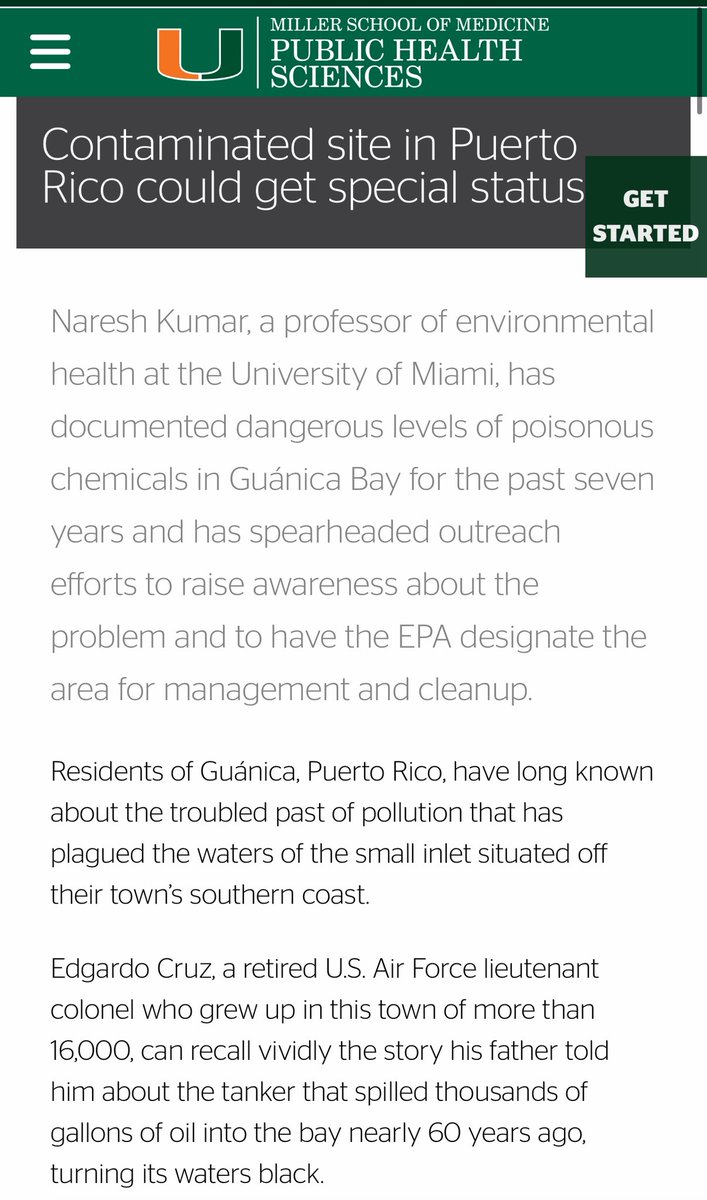
@IslandCorps lleva comunicando y trabajando situación de la salud de la niñez y juventud con la @univmiami Miller School of Medicine Global Institute en las escuelas públicas que IslandCorps, organización sin fines de lucro, tiene adoptadas en Guánica. Recomiendo que visites el Instagram de IslandCorps y apoyes a que esta noticia pueda tener impacto de rectificación en la población porque todos se quejan, pero nadie en Puerto Rico está ayudando a que la situación con la contaminación y la basura mejore. Nadie.
https://t.co/I3bxW90j3u
Jeff Bezos’s wedding guests are the perfect and quite embarrassing example of why money does not EVER, ever, ever, buy class.
Hundreds of adults and only a handful were dressed appropriately for a wedding. Ladies, remember, snake attire is appropriate for the nightclub, not for a wedding in Venice. Money can buy a castle, but never elegance.
Bring back dignity, etiquette, and taste, Americans.
Grateful this guy is putting out these videos so we can truly see how these companies are poisoning us. Will you eat Doritos again after watching this?
Estamos quemando más de $7 millones al día para alimentar turbinas rotas con petróleo importado. Ese es dinero del contribuyente que se va en humo.
Este señor habla de “libertad” economica pero el plan que menciona en su tweet mantiene a Puerto Rico dependiente del control federal, del combustible importado, subsidiado por dinero de contribuyente en los estados y de una infraestructura manejada por la deuda. Eso no es conservadurismo, pero si es colonialismo. 🦖
No necesitamos un nuevo amo. Necesitamos soberanía energética.
Puerto Rico no está pidiendo un nuevo amo. TENEMOS que romper con este problema grave de energia para construir algo mejor: resiliencia, equidad e independencia del colonialismo fósil.
Ya hemos visto lo frágiles que son las redes de energia centralizadas - especialmente cuando dependen de combustibles importados. ¡Pregúntale a Texas!
Puerto Rico ha gastado miles de millones en combustible no renovable, solo para dejar pueblos enteros a oscuras cada vez que pasa un huracán o un apagón como este. Reemplazar un combustible fósil (petróleo) por otro (gas) no es innovación — es dependencia disfrazada para quedarnos en la misma oscuridas de siempre.
@Jenniffer@JPHusker_@RepPabloJose
We burn $7M/day powering broken energy turbines, a failure to US tax-payer funding. Let’s stop feeding dependency on the US taxpayer for Puerto Rico’s petroleum and start building the future of our economically viable island.
Solar didn’t fail us; ask @casapuebloorg in Adjuntas. Solar + batteries were the only systems that kept people alive in rural PR after Hurricanes and earthquakes. Solar lights kept me teaching displaced children how to read with a little glimmer of light in the dark after so many disasters.
Puerto Rico needs distributed, storm-hardened microgrids, not one centralized fossil grid vulnerable to total failure. What fails our island is taxpayer-funded fossil infrastructure that depends on ships and bureaucracy.
Let’s make the future real in Puerto Rico. The outdated ideas of the past have repeatedly failed us and the next generation.
Mr. Peterson, It’s strange that as a conservative Republican, your plan for rectifying Puerto Rico energy issues perpetuates dependency, centralized control, and fossil fuel reliance paid for by the US taxpayer - all things that go against the principles of economic freedom, energy independence, and local governance.