Les recuerdo que para llegar al Congreso se requiere:
Sacar al menos el 5% del voto valido en Diputados Y 5% en Senado.
Además, sacar mínimo 3 senadores y 7 diputados.
Con esas reglas y 35 partidos, solo van a pasar 6 o 7 partidos. NADIE MAS.
Si votas por un partido que no pasa la valla, solo haces crecer (mas cúrules) a los que ya han pasado.
The immune system is powerful.
Sometimes, too powerful.
If it goes unchecked, it can turn on us -
attacking our own organs, tissues, even our blood.
That’s why the 2025 Nobel Prize in Medicine matters so much.
It honors three scientists who figured out how the body stops itself from self-destructing.
🧬 Mary Brunkow
🧪 Fred Ramsdell
🧫 Shimon Sakaguchi
Here’s the story :👇
Every day, your body fights off thousands of invaders - viruses, bacteria, fungi.
But the real magic? It knows not to attack you.
That precision is everything.
And for decades, scientists thought they knew how it worked:
Bad immune cells were weeded out early in the thymus (central tolerance). End of story.
Except… that wasn’t the whole story.
Sakaguchi’s bold idea (1995)
He challenged the dogma.
He found a new class of immune cells doing something unexpected:
➡️ They weren’t attacking.
➡️ They were protecting.
He called them regulatory T cells - the immune system’s peacekeepers.
They roam the body and tell other immune cells:
“Stand down. This is us. Don’t attack.”
It was a radical idea at the time. But he was right.
Brunkow & Ramsdell’s breakthrough (2001)
They were studying a mysterious mouse.
It had a single mutation - and developed devastating autoimmune disease.
They found the cause: a gene called Foxp3.
🧬 Foxp3 isn’t just any gene.
It’s the master switch that tells cells to become regulatory T cells - the same ones Sakaguchi discovered.
Mutate it in mice or humans… and the immune system spins out of control.
In kids, that mutation causes a rare and deadly disease: IPEX syndrome.
The missing link (2003)
Sakaguchi came back to close the loop.
He proved that Foxp3 is what powers the regulatory T cells - the body’s tolerance enforcers.
This confirmed the whole mechanism.
➡️ We don’t just delete dangerous immune cells early on.
➡️ We also deploy specialized cells to watch over the rest.
➡️ That’s how we avoid autoimmune chaos.
The impact? Massive.
Their discoveries opened an entire new field: peripheral immune tolerance.
We now have:
🔹 New approaches to treat autoimmune diseases
🔹 Promising advances in organ transplant tolerance
🔹 Immunotherapies that fine-tune the immune system to fight cancer - without turning on the body
Some of these are already in clinical trials.
This isn’t just a scientific triumph.
It’s a reminder that:
✅ Curiosity still drives paradigm shifts.
✅ Going against the mainstream can change everything.
✅ Basic science leads to better medicine.
And sometimes, three scientists working decades apart can quietly solve one of biology’s deepest mysteries.
👉 That’s worth a Nobel.
The 2025 medicine laureates identified the immune system’s security guards, regulatory T cells, which prevent immune cells from attacking our own body.
The fundamental knowledge that researchers have gained through the discovery of regulatory T cells and their importance for peripheral immune tolerance, has spurred the development of potential new medical treatments. Mapping of tumours shows that they can attract large numbers of regulatory T cells that protect them from the immune system. Researchers are therefore trying to find ways to dismantle this wall of regulatory T cells, so the immune system can access the tumours.
In autoimmune diseases, researchers are instead trying to promote the formation of more regulatory T cells. In pilot studies, they are giving patients interleukin-2, a substance that makes regulatory T cells thrive. Researchers are also investigating whether interleukin-2 can be used to prevent organs being rejected after transplantation.
Another strategy researchers are testing to slow an overactive immune system is to isolate regulatory T cells from a patient and multiply them in a laboratory. These are then returned to the patient, who will thus have more regulatory T cells in their body. In some cases, researchers also modify the T cells, putting antibodies on their surface that function like an address label. This allows researchers to send these cellular security guards to a transplanted liver or kidney, for example, and protect the organ from being attacked by the immune system.
There are many more examples of how researchers are testing how regulatory T cells can be used to combat diseases. Through their revolutionary discoveries, Mary Brunkow, Fred Ramsdell and Shimon Sakaguchi have provided fundamental knowledge of how the immune system is regulated and kept in check. They have thus conferred the greatest benefit to humankind.
The 2025 Nobel Prize in Physiology or Medicine has been awarded to Mary E. Brunkow, Fred Ramsdell and Shimon Sakaguchi “for their discoveries concerning peripheral immune tolerance.”
For the first time, Sweden have beaten Germany at the Euros, and they've done it in extraordinary fashion… handing the Germans their BIGGEST defeat. The historic win lands Sweden at the top of the group. A day they will never forget 🇸🇪👏
🤩 🇵🇪 📚 Docente peruano se encuentra entre los 50 mejores del mundo y podría ganar el 'Nobel de la Educación'
Melecio Tito Mamani ha sido seleccionado como finalista en el concurso Global Teacher Prize 2025.
https://t.co/Qn4FLwojUi
@MarioArceZ@elenarios67 Yo no he recibido una transferencia desde BBVA que hice hacia mi cuenta sueldo.
Mi papá tampoco recibió una transferencia desde BCP a su cuenta Scotiabank.
El problema es con Scotiabank porque a los demás sí les ha debitado.
La institución nacional de derechos humanos llamando “presidente constitucional” a un ex dictador, condenado por crímenes calificados de lesa humanidad. Al menos, disimulen. La Defensoría (la de verdad, la q fue) se enfrentó al autoritarismo de Fujimori. Hoy, le rinde pleitesía.
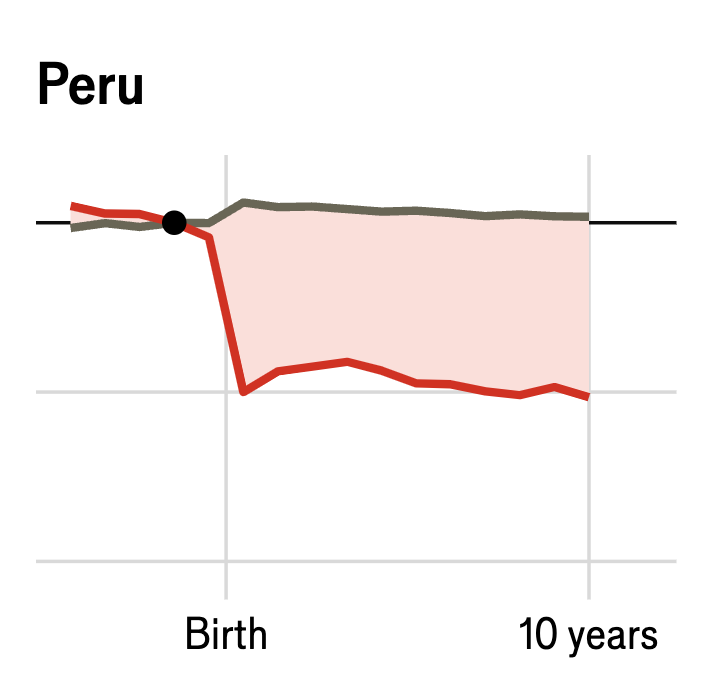
Un nuevo estudio de @TheEconomist estima el impacto de la maternidad en la carrera laboral de 134 países.
Los autores definen "child penalty" como el % en el que disminuye la probabilidad de que una mujer esté empleada 10 años después de nacer su primer hijo. En Perú es -42%.
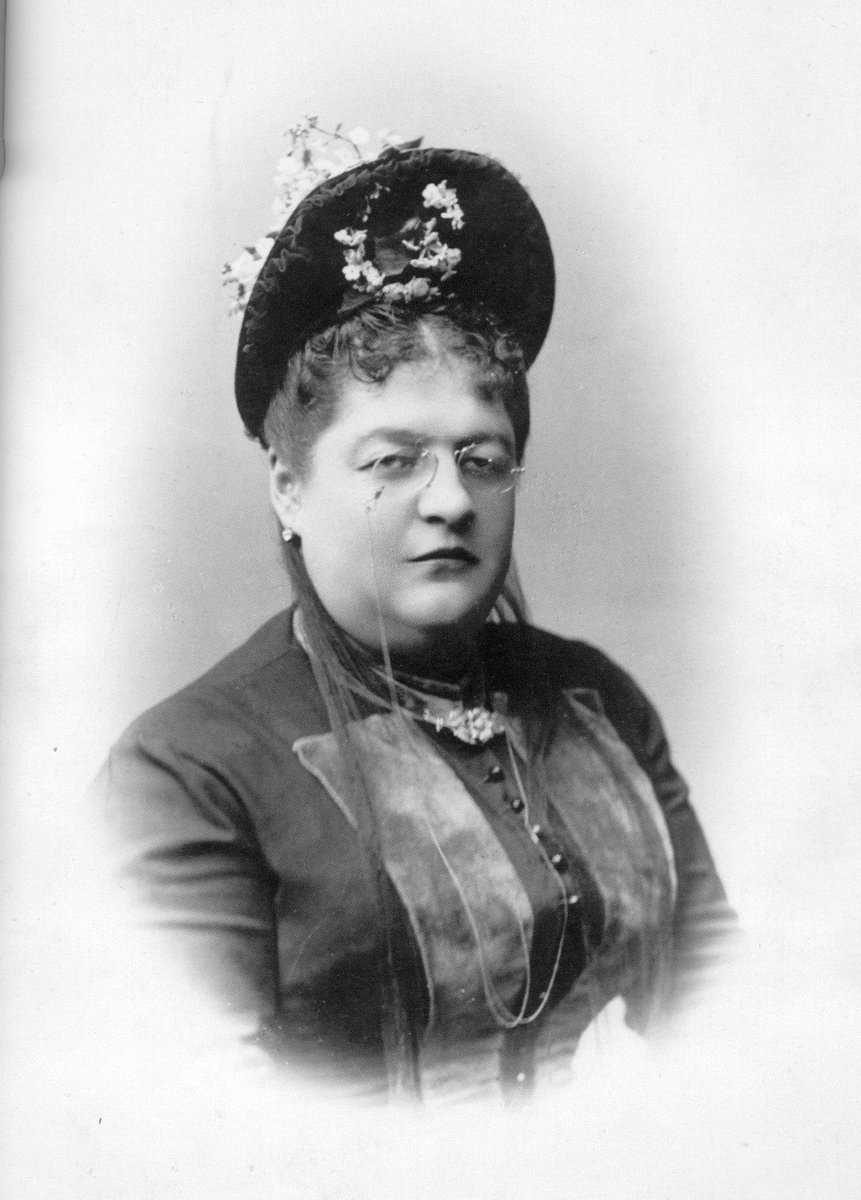
Ayer leí tres tuits de instituciones culturales peruanas celebrando a #ClorindaMatto. Ninguno calibraba cabalmente su obra y legado. Voy a contarles porque esta periodista, novelista, política y educadora no fue una abuelita bonachona, sino una figura transgresora y combativa. 🧵
#HuancaínaDeOro | “Espero tus bendiciones mamá, estoy yendo a ganar”, le dijo la atleta Luz Mery Rojas Llanco a su madre Herlinda, cuando partió de su natal #Sapallanga a Chile, a los Juegos Panamericanos Santiago 2023. Y cumplió.
🔗La historia aquí👉 https://t.co/fCkZCs0DAS