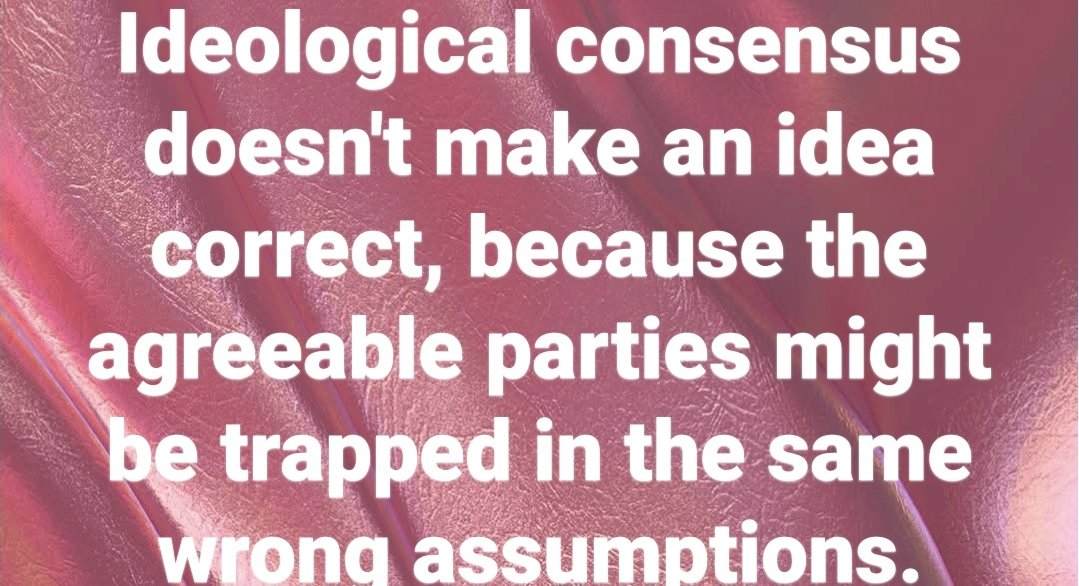
@drkhcld Came across this while searching for people having issues with Reedsy.., I always use the backup feature when transferring raw text from Reedsy
@ndekekwe Epic!
Wonder if this can compare with Starbucks and similar consumer goods producers doubling into digital finance after seeing millions in membership and loyalty cards subscription.
Or some firms with internal power generation, venturing into energy resale to neighboring firms.
I generally think funding local media in Africa, amid declining ad revenue, is a whole different ball game from the American context. In the U.S., communities often speak glowingly of their local media as part of their heritage. We can’t say the same in Africa, well, except for a few beloved radio stations.
That’s why the funding conversation here has to be more realistic. Socioeconomic realities mean most news consumers can’t afford subscriptions…and even when they can, they’d rather channel that money elsewhere. Add to that the massive trust gap between citizens and the media, and the challenge becomes clearer.
So, I believe we need to approach it on multiple fronts:
- Diversifying revenue: membership, events, training, niche products…local media can’t rely on ads alone.
- Rebuilding trust: advertisers follow audiences, and audiences follow credibility. Without loyalty, ad spend will keep drifting away.
- Policy & ecosystem support: governments and the private sector must begin to treat strong local media as a public good. Just as we incentivize agriculture or tech startups, there should be frameworks that help media survive without compromising independence.
At the end of the day, local media in Africa need a new business imagination, one that blends traditional revenue with community-driven and mission-driven approaches.
I have been following U.S. media trends for a while, and my current Media Transformation Fellowship at the Poynter Institute has deepened my understanding of how local news really works.
This new research points to some hard truths, and opportunities for how we engage audiences:
- For households earning above $100k, paying a few dollars for local news is an easy ask. But for those below $50k, it’s not that simple.
- Many people don’t realize that journalism’s funding model has collapsed. To them, news still feels “free” because Facebook and Instagram keep the feed flowing.
- Most importantly, the constant “democracy” framing turns people off. They may understand the connection intellectually, but emotionally they resist it. The word now triggers partisan fatigue, regardless of their actual beliefs.
The big takeaway is that if want people to trust, listen, and eventually support local news, we have to shift our framing, meeting them where they are, without pushing them away with the language of crisis.
This is a rich and timely piece, and I recommend it to anyone thinking seriously about the future of journalism:
Don’t dwell on “democracy,” and other new findings about how to market local news via @NiemanLab
#HIBAF24 VIRTUAL PANEL ONGOING 🚨
Join the final panel discussion for today! Hausa in the diaspora, with our panelists joining in from different time zones.
Moderated by @Mazhun, in conversation with @theaisharimi & @Marzuq_Ungogo#HIBAF24
#HIBAF24 EVENT 📣
"A New Generation of the Hausa Diaspora" will explore the myths, stories, and realities of the Nigerian Hausa diaspora. The panel will discuss the challenges, triumphs, and evolving cultural identity of this generation in a globalized world.
GUEST ANNOUNCEMENT 📣
Mazhun Idris is an Istanbul-based digital journalist and a bilingual writer. He’s a member of the Advisory Group for UNESCO/Global Voices “Digital Activism for Promotion of Indigenous Languages & Multilingual Diversity on the Internet” 1/4
Exactly 24 hours after announcing his YouTube channel, Cristiano Ronaldo gains 20 million subscribers
The most influential people in the world
The GOAT 🐐
Haberde "Nijerya'dan kaçan Batılı çokuluslu şirketlerin yerini Asyalı ve Türk firmalar alıyor" demiş.Haberin içeriğine baktım sadece bir Türk firmasından bir satır içerisinde bahsedilmiş. Ve o firmada 2015 yılından bu yana Nijerya'da faaliyet gösteriyor
https://t.co/E2wpiPJKmc
Good day to share this video of British-Tanzanian actor, Lucian Msamati, reading from Things Fall Apart. The novel by Chinua Achebe was first published today in 1958. Watch!
MY UPCOMING SPACE TOMORROW
1st Topic: Oil Subsidy Removal in Nigeria: Economic Liberation or Increased Hardship?
Speaker: Dr. Bello Salihu, @bellosaleh
Energy (Oil & Gas) Professional, based in UK.
2nd Topic: From Subsidies to Solutions: Exploring Alternatives for Nigeria's Energy Future.
Speaker: Dr. Mohammed Dahiru Aminu. @mdaminu
Energy Expert & Policy Specialist, Africa Policy Research Institute, Berlin Germany.
11th June 2024 at 8PM Nigerian Time.
You can't afford to miss this!
https://t.co/FDDPk8rrIK…