I'm happy to share that our lab had three short papers and a long paper accepted at @midl_conference!
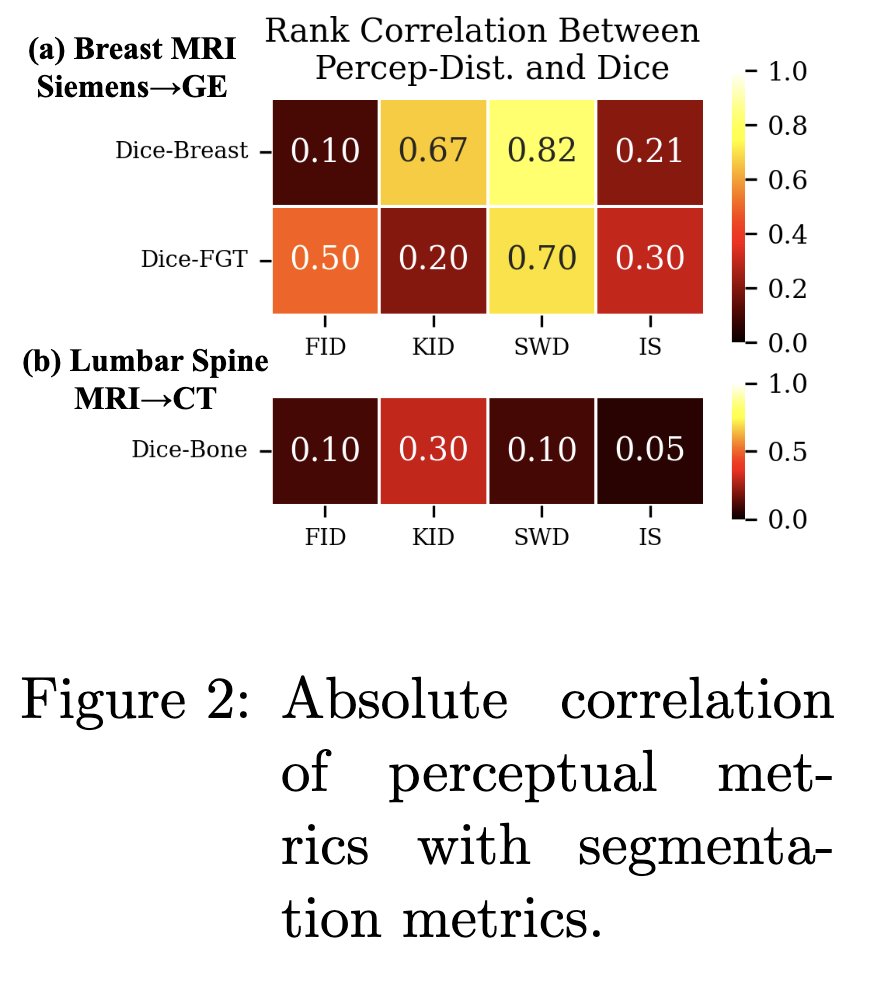
(1/4): Rethinking Perceptual Metrics for Medical Image Translation
(https://t.co/0cOQJ8yzOY), led by me;
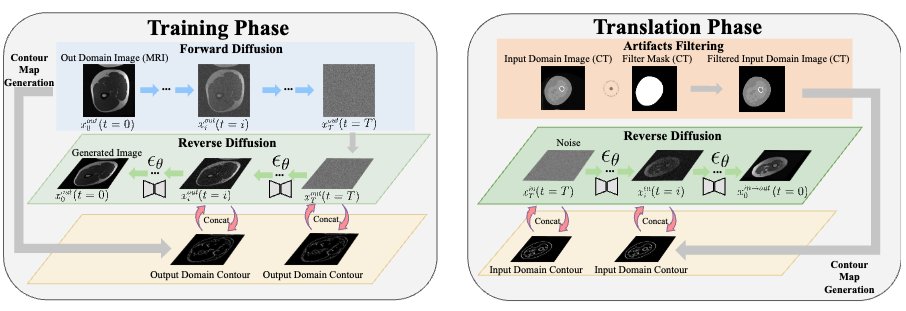
Excited to share our new paper, "ContourDiff: Unpaired Image Translation with Contour-Guided Diffusion Models”, which leverages domain-invariant anatomical contour representations to preserve anatomy through translation! (1/N)
https://t.co/p9ecw211sk
Code: https://t.co/Wk7soJq0SC
🔗 Dive into our study by @Hanxue99893888, Roy Colglazier, Haoyu Dong, Jikai Zhang & more. See how we're transforming MRI analysis!: https://t.co/r70CzVMEvh
🦴Introducing "SegmentAnyBone", a universal model for MRI bone segmentation. This model can segment bones in any MRI location, tackling a major challenge in medical imaging.
#SegmentAnyBone#MedicalImaging#AI#DukeSpark
How and why do neural nets learn differently from natural images vs. medical images? I’m happy to announce my new #ICLR2024 paper, “The Effect of Intrinsic Dataset Properties on Generalization”! https://t.co/KkrlZNldL7
Check out the code: https://t.co/XzRI3u0iki
More info next..
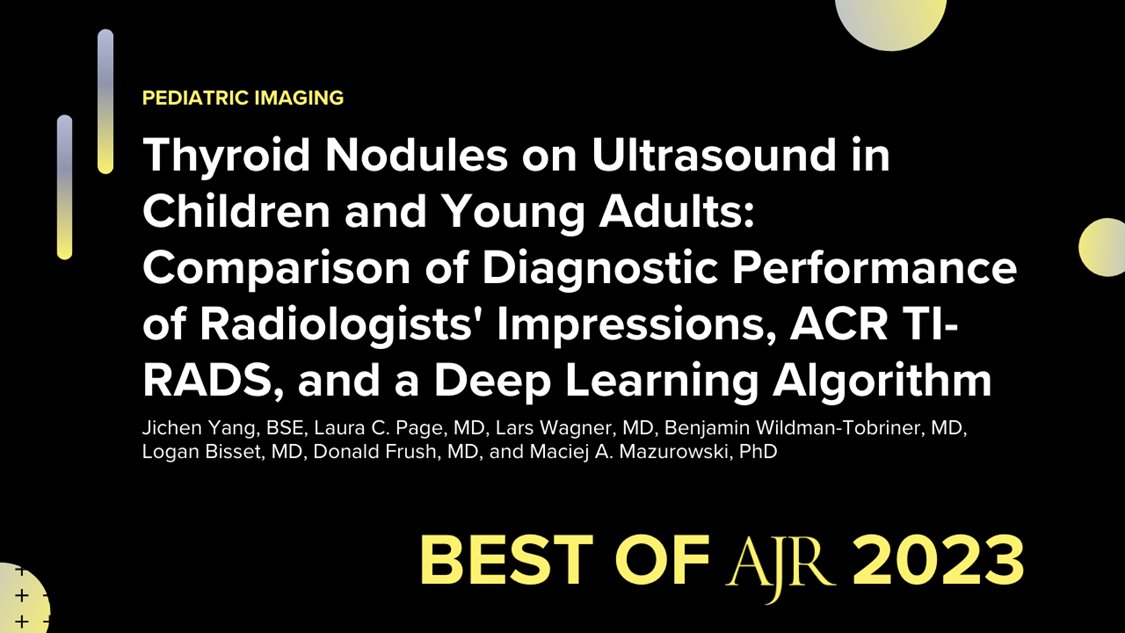
🔍 It compared radiologists' impressions, ACR TI-RADS, & deep learning in identifying benign and malignant thyroid nodules via ultrasound. A major step in improving pediatric healthcare accuracy. Discover more: https://t.co/diwQLlmi8N… #MedicalImaging#AI
🎉 Exciting news! The paper, "Thyroid Nodules on Ultrasound in Children and Young Adults," won the Best of @AJR_Radiology award in Pediatric Imaging for 2023! It is co-authored by @JichenYang10, Laura C. Page, Lars Wagner, @benWTmd, Logan Bisset, Donald Frush, and @MazurowskiPhD.
This article from @benWTmd, @MazurowskiPhD, et al. compared the diagnostic performance of ACR TI-RADS and a deep learning algorithm in differentiating benign and malignant thyroid nodules on ultrasound in children and young adults.
https://t.co/Heq64GemF2
Which examples in a neural net’s training data were important for learning interpretable concepts? Our paper “Attributing Learned Concepts in Neural Networks to Training Data” has been accepted for an oral presentation at the #NeurIPS2023 ATTRIB Workshop! https://t.co/FeyxfwuinE
Excited to announce our new paper in IEEE Trans. in Med. Imaging, "SWSSL: Sliding window-based self-supervised learning for anomaly detection in high-resolution images", led by Haoyu Dong!
https://t.co/8G8DGSFYnS
Code: https://t.co/hjPzql4RlP (1/N)
This paper introduces a method for anomaly detection in high-resolution medical images, that outperforms state-of-the-art techniques by 8% AUC for digital breast tomosynthesis lesion detection.
Congratulations to our Ph.D. student Haoyu Dong for his new paper in IEEE Transactions in Medical Imaging, "SWSSL: Sliding window-based self-supervised learning for anomaly detection in high-resolution images"!
https://t.co/1JsxuUzu6q
https://t.co/9WJwEjJuRK
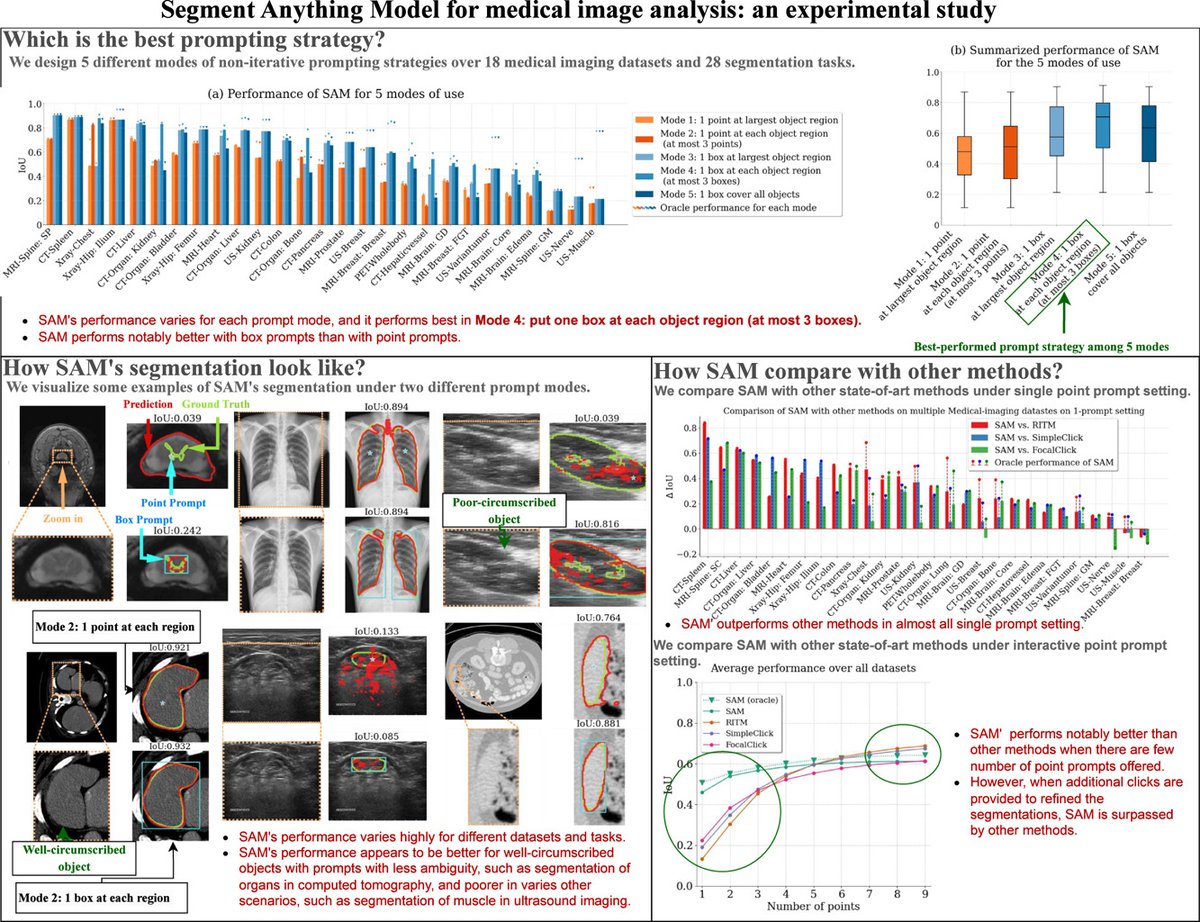
Happy to announce that our paper, "Segment Anything Model for medical image analysis: An experimental study" has just been published in Medical Image Analysis! https://t.co/q4kPLxZiLO
arXiv version: https://t.co/PzCuSF5hqT
code: https://t.co/FfCCZ6NZeH
(1/2)
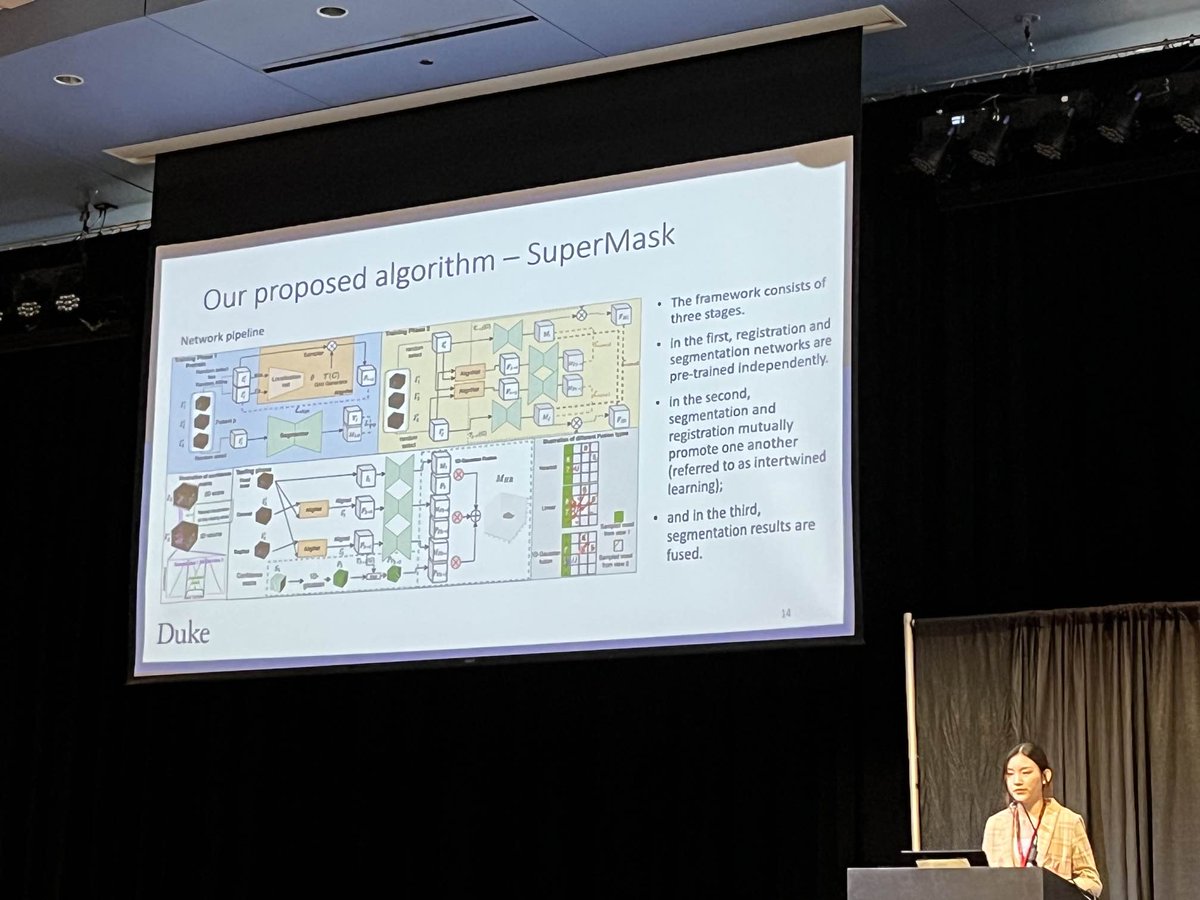
Check out our Ph.D. student @Hanxue99893888 presenting the very first oral talk at #MIDL2023 last week! Her paper is "SuperMask: Generating High-resolution object masks from multi-view, unaligned low-resolution MRIs", found here: https://t.co/IBKB8DC4Jw
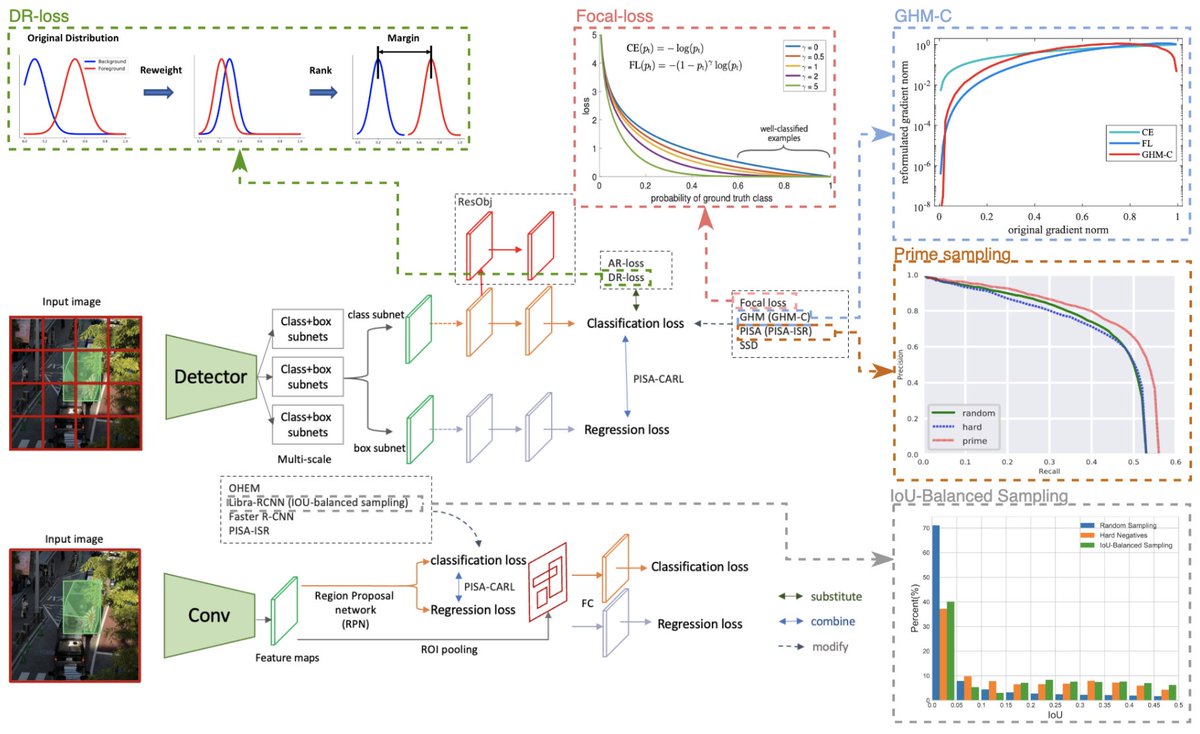
The foreground-background imbalance problem can cause significant drops in object detection performance. Our new paper, “A systematic study of the foreground-background imbalance problem in deep learning for object detection”, is now on the arXiv! https://t.co/AJHPbQRT4g (1/n)
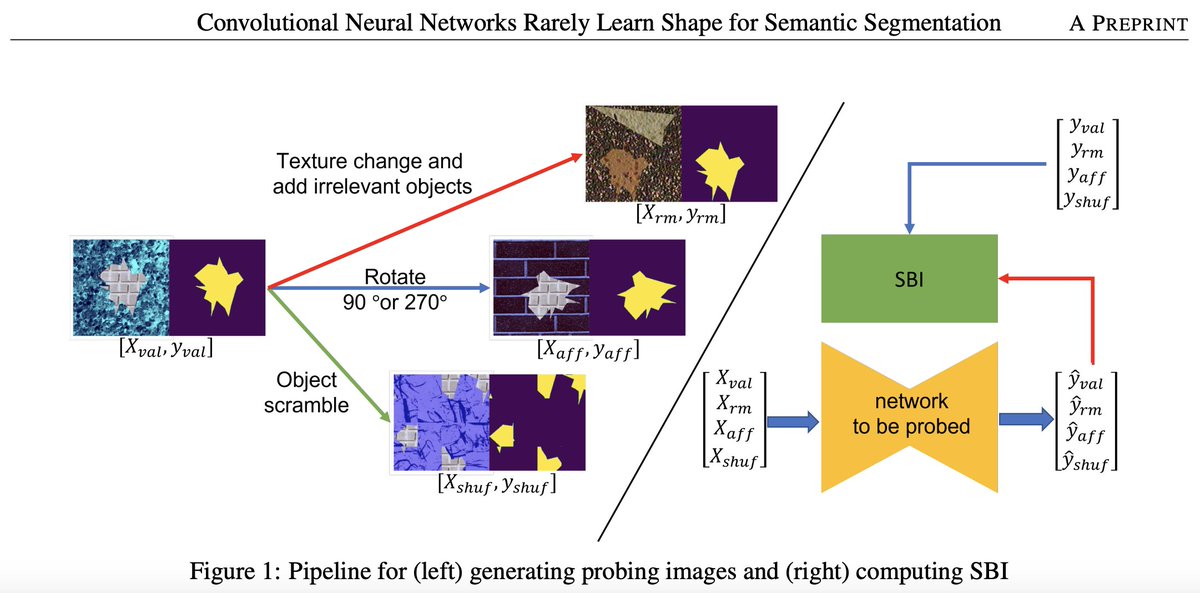
New preprint from my lab: "Convolutional Neural Networks Rarely Learn Shape for Semantic Segmentation" by Yixin Zhang and @MazurowskiPhD! They study how segmentation CNNs learn and rely on object shape, the causes and applications of shape learning, etc. https://t.co/nvytOV1I8L
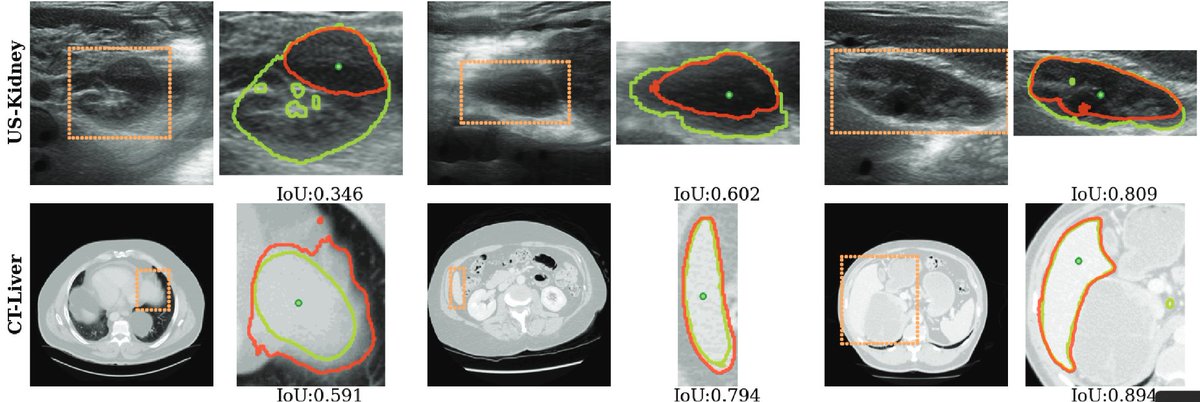
Does Segment Anything Model (SAM) really work on medical images?
We tested it on 11 datasets and wrote a paper:
https://t.co/cYaNOSSpRY
In brief: Performance varies widely across different datasets from impressive (given zero-shot setup) to poor.
Details follow. 🧵1/14.
Check out our lab's new paper, “Segment Anything Model for Medical Image Analysis: an Experimental Study”! We broadly evaluated the new SAM on 11 medical image datasets for 19 segmentation tasks! https://t.co/lqvictoED0 (1/4)
We are already working on updating our paper, with additional datasets, other explorations of using SAM for medical image analysis, and more. Follow us to stay in the loop!