The Lab of Daniel S. McGehee in the department of anesthesia and critical care at the University of Chicago. We study nicotine addiction, pain and parkinson's.
E163: How do octopuses coordinate their arms? [SJK Audio Edition] https://t.co/liDSciKnDT via @YouTube Check out the audio version of our newest article and learn how octopus arms have segmented neurons that allow them to make big and tiny movements at the same time!
Next week (Thursday, January 16th), we welcome Dr. Julia Cox, from Northwestern University, for the Department of Neurobiology Faculty Candidate Seminar. Join us!
📍KCBD 1103 at 10:00 am
"Neural circuit mechanisms of value-based decision making"
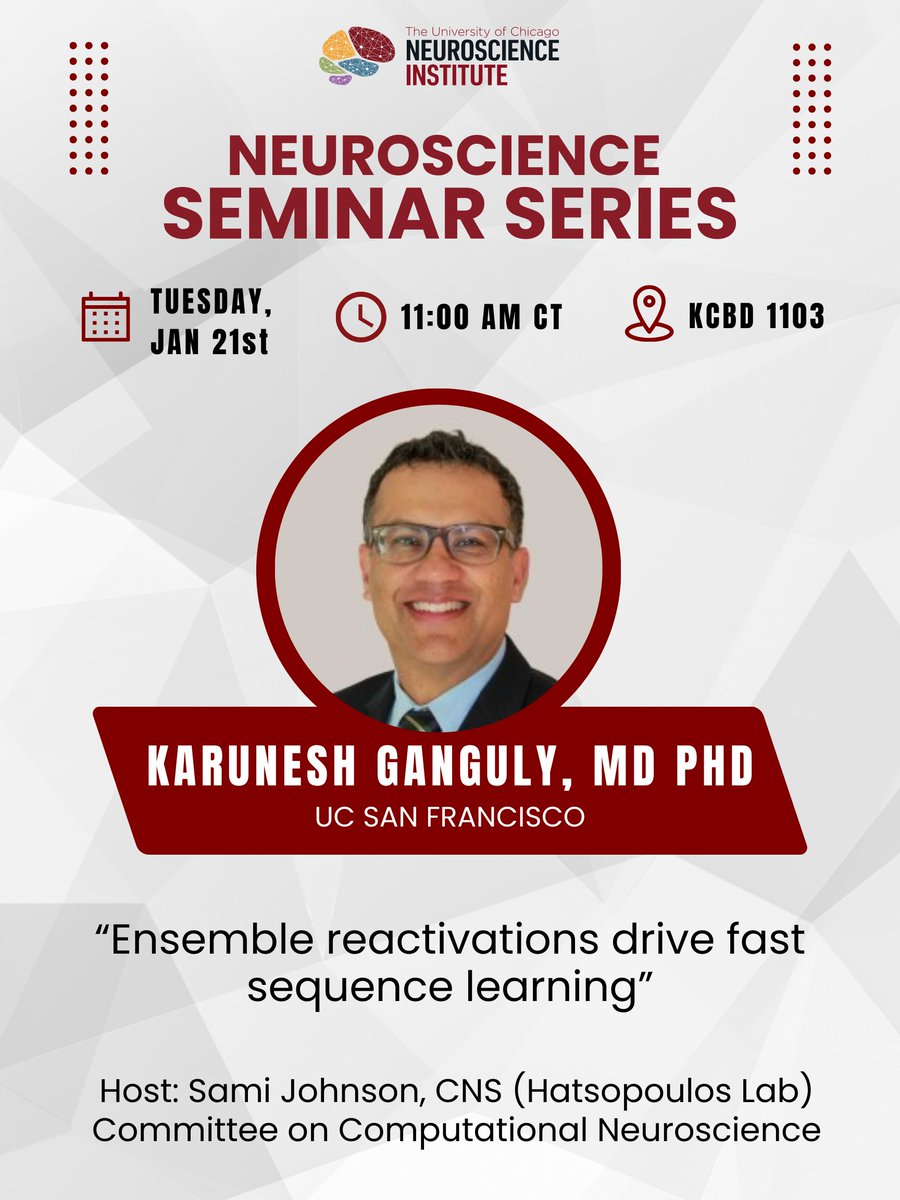
Next week our Neuroscience Seminar Series features Dr. Karunesh Ganguly, MD PhD from the University of California San Francisco. Join us!
🗓️Tuesday, January 21st, 11:00 am | KCBD 1103
“Ensemble reactivations drive fast sequence learning”
Professors Christopher M. Gomez, MD, Richard Kraig, MD, PhD, James A. Mastrianni, MD, PhD, and Anthony T. Reder, MD, from the Department of Neurology, are on the list. Congratulations! 👏
https://t.co/ZkUeZ72HSX
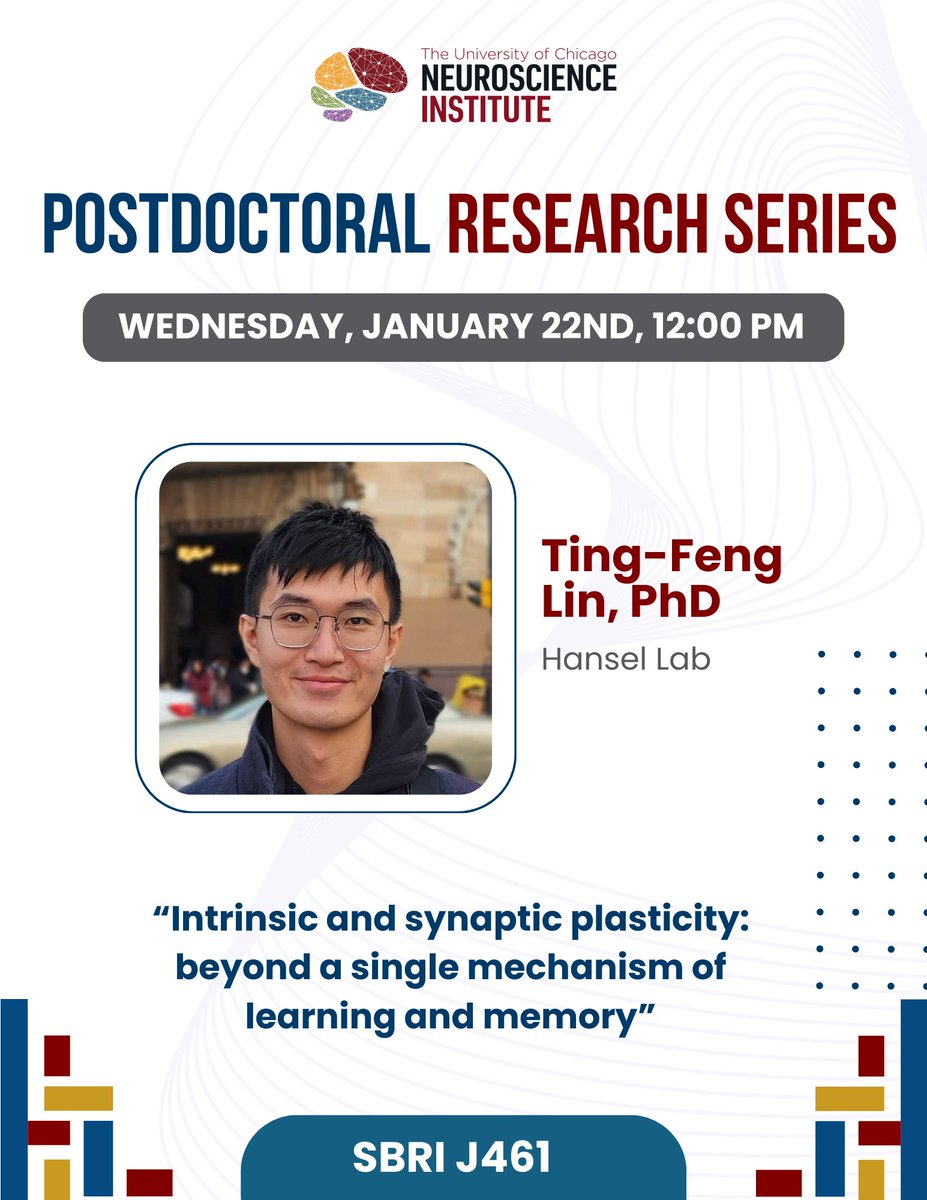
We will host our monthly Postdoctoral Research Series next week! Please join us to learn more about the work of Ting-Feng Lin, PhD from the Hansel Lab!
🗓️Wednesday, January 22nd, 12:00 pm
📍SBRI J461
one ion channel subunit, many faces. our preprint shows that multiple K+ conductances in 🐭vestibular hair cells require Kv1.8/Kcna10 --> Kv1.8-null hair cells generate larger and slower voltage⚡️ responses, which may impair fast detection of head motions
https://t.co/mD24XGNMuW
during this project, I loved getting to know "gK,L" --> gK,L is the low-voltage-activated K+ conductance that passes heaps of K+ from type I hair cells into the calyx cleft --> read more about non-quantal transmission here: https://t.co/kr2jHlRKkI
How does the octopus nervous system control its 8 wiggly uber-flexible arms and integrate information from all those suckers? Possibly, by modularity, suckerotopy, and cooperation between segments of the axial nerve cord ⬇️ https://t.co/MT7PMZA8y3
Thrilled to begin my tenure as @SSIBsociety President. Congrats to @Kanoski_Lab on his incredible stewardship of this amazing society. DM or email to learn more about the society and #SSIB2025 and hope to see you in Oxford, UK
I also want to encourage academia-bound underrepresented neuroscientists in their PhD stage to apply for this awesome opportunity! I have earned 2 years of funding for the rest of my PhD + up to 4 years of funding for my Postdoc! Happy to help any applicants seeking advice :)
Nice write-ups about @TruongLy18's new paper, with comments from Nick Betley, Haijiang Cai, @LuckmanLab, @LoraHeisler, and @_Chen_Ran_.
Science: https://t.co/2M2IGhQCRM
Nature: https://t.co/HmsIiadH4v
UCSF: https://t.co/8UGdOKhwKx
@UCSF @HHMINEWS
Our napping, memory, and Down syndrome paper was just published in PNAS. Napping+REM does not support memory consolidation in Down syndrome children. Great work Spanò, Edgin and Company. This is also my first human study! There is life beyond the rodent. https://t.co/VNaOBrtj2m
Check out this beautiful video from one of our #OpenScope projects! All panels were recorded simultaneously. The top plane are dendrites in the brain's top layer. The bottom row shows activity in a deeper layer of the brain – layer 5.
More on OpenScope: https://t.co/6ouyiw3fyZ
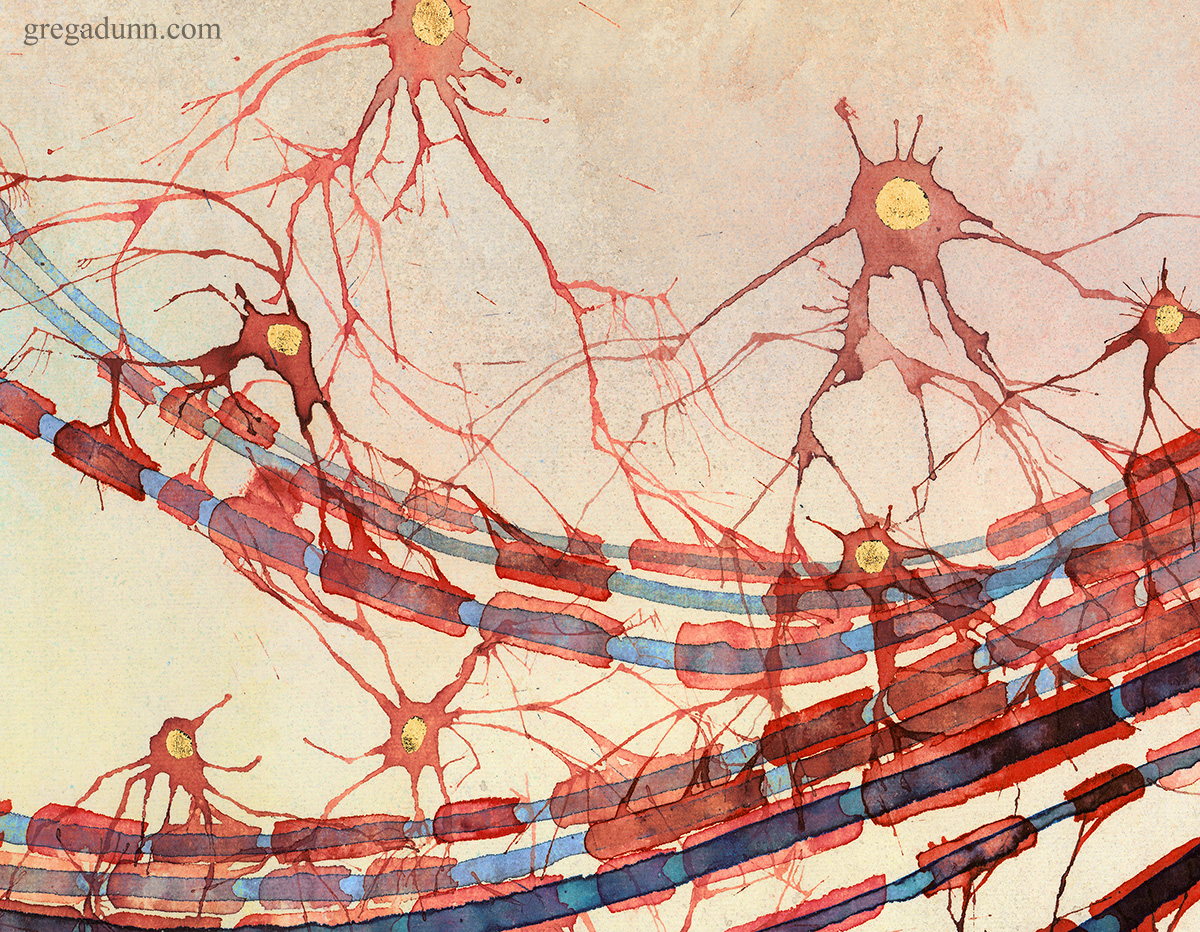
New print Myelination out today and available via link below. This pretty pretty process of glia wrapping their membranes around axons not only makes our brains faster and more efficient.
https://t.co/Qr46viwBzz
#myelin#glia#neuron#neuroscience#brain