🚨RED STATE TEXAS IS BEING TRANSFORMED BEFORE OUR EYES
The same thing happening in Houston is now unfolding in the heart of Dallas.
Annual Muharram Jaloos....
Men chest-beating in public squares.
Islamic flags raised high.
Streets occupied.
People keep saying, "Houston is gone."
Dallas is just as captured, if not more.....
This isn't random. This is happening across Texas, city after city.
Despite hundreds of mosques already built across the state, they still march into our public squares.
Despite knowing exactly how much controversy it creates, they do it anyway.
They want you to see it.
They want you to know they don't care.
And they want you to get used to it.
This is RED STATE TEXAS.
We are being dominated in our own cities while Washington stays silent...
If your politicians won't speak out and take action against the Islamization of your state...
VOTE THEM OUT.
The takeover isn't coming It's already here.
On 23 June 1985, Air India Flight 182 (Canada to India) was bombed by Babbar Khalsa, a Khalistani organisation.
All 329 people were killed. It's also known as Kanishka bombing. It remains the deadliest terrorist attack in Canadian history.
Now, for the first time, Canada's intelligence agency CSIS has explicitly blamed Khalistani extremists for the 1985 Air India bombing.
It took Canada 41 years to acknowledge it as a terrorist attack.
Read this article. DEI has only one purpose, and it has nothing to do with social justice or equity.
Every person carries a moral frame that precedes any training module: conscience, faith, community. Romans 2:15: the law written on the heart. DEI exists to displace it.
The endpoint is moral authority reassignment. Away from God, family, country, conscience. Toward the NGO-Administrative Complex. That's what the training was always for: consultation transfer.
The military was a top target because it had to be.
Indian students are DIYing a semiconductor fab at IIT Bombay.
In just 10 months they've built:
1. A DLP-based lithography machine.
2. A tube furnace to oxidise silicon.
3. A DC plasma sputter.
Total cost: ₹30 lakh.
Here's a rare behind-the-scenes look at HackerFab IITB.
The Geopolitics of the Guillotine: The True Reason India Was Partitioned
By @shreehistory
In the first installment of this investigation, the ledger of the empire was laid bare, revealing how Britain systematically extracted wealth from India across two world wars and defaulted on a £350 billion debt. Part Two of this story examines the physical and political mechanism used to guarantee that default would never be challenged. The retreat from the subcontinent was not a simple lowering of a flag. It was a meticulously calculated geopolitical guillotine, executed in two distinct stages, designed to permanently fracture the region and paralyze the newly independent state.
To prevent a unified, economically resurgent India from demanding reparations for the wartime extraction, Britain engaged in a strategy of systemic balkanization. This was achieved first by economically amputating Burma in 1937, and second, by lighting the political house on fire in 1947 through the abrupt creation of Pakistan, the deliberate fracturing of India into over five hundred independent sovereign entities, and the demographic weaponization of the military.
I. The First Cut: The Amputation of Burma (1937)
The blueprint for weakening the subcontinent began a decade before the famous partition of 1947. Throughout the early twentieth century, Burma was administered as a province of British India. This administrative union was highly beneficial to the broader Indian economy, because Burma was an economic powerhouse that consistently ran massive trade surpluses.
Burma was the rice bowl of the empire, exporting vast quantities of rice across the globe. It possessed massive, highly lucrative teak forests essential for imperial naval and railway construction. Most importantly, Burma held newly discovered and highly productive oil fields.
By the mid-1930s, Britain was beginning to panic over its balance of payments with India. The debts were accumulating, and the British Treasury realized that an India bolstered by Burmese exports could potentially offset its deficits and demand hard currency repayments. London needed to sever this economic shield.
In 1935, the British government passed the Government of India Act, which separated Burma from British India and granted it a distinct constitution as a separate crown colony, effective in 1937. While the British publicly framed this as a concession to Burmese nationalism, the underlying economic reality was far more cynical. By carving Burma out of India, Britain ensured that the lucrative revenues from Burmese rice, teak, and oil would no longer flow into the Indian balance of payments. Burma's export surpluses were redirected to settle British deficits directly with London. India was stripped of its primary economic buffer, leaving its balance of payments highly vulnerable to British manipulation.
Crucially, this territorial amputation should have been fiercely opposed by the Indian National Congress as an imperial division of the national inheritance. Instead, the INC played directly into the British design. Consumed with the pursuit of provincial autonomy within British India and willing to accept the British framing of Burmese nationalistic demands, the INC failed to mount a serious, unified political fight to keep Burma within the Indian union.
By accepting the first cut without a concerted fight, the INC allowed the first geopolitical domino to fall. This failure was not lost on the British establishment. The precedent was set. If the Indian leadership would passively accept the surgical amputation of a wealthy province, it emboldened London to believe they could execute a far more devastating division a decade later. The acceptance of Burma's separation signaled to the British that the territorial integrity of the subcontinent was entirely negotiable, paving the way for the second stage of the guillotine.
II. The Demographic Weaponization of the Military (1918-1945)
The physical enforcement of this division relied heavily on how Britain managed the Indian armed forces. For decades, the British military apparatus in India operated on a deeply sectarian "martial race" theory. The British systematically favored Muslims in the recruitment for the cavalry and the prestigious infantry regiments.
Prior to the massive wartime expansions, Muslims constituted the majority of the combatant ranks in the British Indian Army. This was a deliberate imperial design to keep the primary coercive arm of the state in the hands of a demographic minority that the British deemed politically reliable.
However, the sheer scale of human attrition required for the First and Second World Wars forced the British to drastically expand recruitment. Millions of Hindus were inducted into the army to fight in Europe, the Middle East, and Asia. This wartime necessity temporarily gave the Hindu soldiers a numerical majority within the ranks of the military.
To strip this newfound defensive advantage away, the British executed rapid and systematic disbandment of the army the moment the wars concluded. They did this suddenly once the First World War ended in 1918, and they repeated the exact same maneuver after the Second World War ended in 1945. By rapidly demobilizing the troops, the British deliberately removed the numerical advantage the Hindu soldiers had gained, ensuring they would not possess the organizational mass to defend their homeland in the event of a post-colonial conflict.
Meanwhile, the British ensured the officer class within the remaining Indian regiments remained disproportionately Muslim and heavily energized along religious lines. This was by design. When the partition occurred, these religiously motivated military elements formed the vanguard of the attack on India, specifically leading the tribal and military invasion of the Kashmir valley. As I have written about elsewhere, it was only through the fierce defensive leadership of the Kodandera family heirs, notably General K.M. Cariappa, that Kashmir was saved from slipping away into the hands of this British-engineered assault.
III. The 565 Kingdoms Problem: Legal Balkanization (1947)
With the military artificially balanced to favor a future conflict, Britain turned to the legal balkanization of the state. For over a century, the British Raj had governed through a dual system. There was British India, directly administered by the Crown, and there were the Princely States, over five hundred sixty-five semi-autonomous kingdoms ruled by local monarchs under the suzerainty of the British Crown.
When the British parliament passed the Indian Independence Act of 1947, it contained a devastating legal mechanism. It declared that British paramountcy over the Princely States would simply lapse upon the transfer of power.
This meant that the five hundred sixty-five princely states legally became fully sovereign, independent nations on August 15, 1947. The British offered no mechanism for their integration, drew no boundaries for them, and provided no legal framework to force them to join either India or Pakistan.
Britain deliberately left India not as one unified country, but as a chaotic archipelago of over five hundred independent sovereign entities scattered across the map, interspersed with the directly governed provinces. The legal reality was a balkanized nightmare. India was envisaged as a fractured, weak entity, doomed to spend years negotiating, coercing, and fighting to integrate these five hundred kingdoms.
IV. The Pakistan Experiment: A Geopolitical Counterweight
In stark contrast to the five hundred pieces India was left in, the Muslim League's demand for Pakistan was encouraged and structured as a single, cohesive geopolitical bloc, albeit divided into two wings.
The creation of Pakistan was the ultimate imperial insurance policy. A united, independent India would inevitably emerge as a major global power, capable of utilizing its vast population and resources to challenge British economic interests and demand the £350 billion in wartime reparations. By carving out a massive Islamic nation on India's western and eastern flanks, Britain created a permanent geopolitical counterweight.
The Pakistan experiment was designed to ensure the subcontinent would remain perpetually divided. It created a massive Islamic nation on the side, bound to compete with India for resources, territory, and strategic dominance. This rivalry would force India to divert massive portions of its newly independent budget away from economic development and debt recovery, and toward military defense on its new, long, and porous borders.
By keeping India and Pakistan in a state of permanent tension, Britain ensured that neither nation would ever possess the bandwidth or the unified diplomatic leverage to challenge the Treasury in London over the unpaid sterling balances. The balkanization of India into five hundred pieces was the immediate trap, and Pakistan was the long-term geopolitical cage.
V. The Ten-Month Acceleration: Leaving on the Boil
The final, most devastating element of this strategy was the timing of the exit. When Prime Minister Clement Attlee initially announced the British departure, the target date was June 1948. This timeline would have allowed the Indian leadership roughly a year to negotiate the integration of the five hundred princely states, establish administrative continuity, and conduct a proper financial audit of the wartime ledgers.
When Lord Louis Mountbatten arrived in March 1947, he abruptly advanced the date of independence by ten months, moving it to August 1947.
The official justification was the escalating communal violence in Bengal and Punjab. However, the strategic reality was that Britain wanted to leave while the country was on the boil. By accelerating the timeline by ten months, Mountbatten ensured that the Indian leadership would be handed a fractured, burning state with absolutely no time to prepare.
There was no time to negotiate the accession of the five hundred kingdoms peacefully. There was no time to properly divide the military, the civil service, or the physical assets of the treasury. There was no time to audit the £1.3 billion owed to India.
By advancing the date, Britain ensured that the announcement of the Radcliffe Line, which sliced through communities and provinces, would trigger immediate, unmanageable chaos. Millions of refugees were thrown onto the roads. The violence erupted precisely as the British were pulling out their final administrative personnel.
Britain did not stay to manage the fires they had lit. They deliberately left when the country was at the absolute peak of its boil, ensuring that the new Indian government would be entirely consumed by the sheer mechanics of survival.
VI. The Ultimate Victory: Resurgence of Truth
The two-stage partition of the subcontinent was a masterpiece of imperial geopolitical engineering. First, they amputated the economic shield of Burma to protect their balance of payments, a move unopposed by the INC. Then, they systematically dismantled the military's demographic balance to engineer a future conflict, legally shattered India into five hundred pieces, and carved out a massive Islamic counterweight in Pakistan. Finally, they accelerated the exit by ten months to ensure the powder keg exploded just as their ships left the harbor.
While the Indian leadership, led by Nehru and Patel, spent the critical years of 1947 and 1948 fighting to integrate the five hundred kingdoms, defending Kashmir from a British-energized military assault, and managing a massive refugee crisis, the British Treasury in London quietly finalized its default.
The geopolitical chaos was the perfect smokescreen. The strategy worked flawlessly in the short term. The country was broken into pieces, a massive rival was installed on its borders, and the unpaid wartime debt vanished into the fog of a British-engineered catastrophe.
Yet, the Mundaka Upanishad declares Satyameva Jayate, truth alone triumphs. This ancient civilizational aphorism becomes starkly evident when observing how India pulled herself together despite the labyrinth of malicious designs enacted by various imperial actors. Against the calculated arithmetic of default, the legal balkanization of five hundred kingdoms, and the violent trauma of an engineered partition, the subcontinent endured. The fires lit by the arsonists eventually burned out, but the foundation of the civilization remained.
To fully appreciate this resilience, Indians must reclaim and understand their history from their own viewpoint. For too long, the narrative of the subcontinent has been filtered through the ledgers and dispatches of the colonizer. Only by connecting these historical threads from an indigenous perspective can the modern generation recognize the profound civilizational values that have allowed them to thrive through centuries of extraction and orchestrated division.
The truth of this history is no longer a weapon for grievance, but a foundation for destiny. The era of merely surviving these geopolitical and financial assaults is finally over. Armed with the unvarnished truth of their own past, India has reached the threshold where it is no longer time to just survive. It is now time to thrive.
References and Further Reading
British Parliament. (1935). Government of India Act, 1935.
British Parliament. (1947). Indian Independence Act, 1947.
Cariappa, K. M. (1979). Indian Army: Some Memories and Reflections.
Jalal, A. (1994). The Sole Spokesman: Jinnah, the Muslim League and the Demand for Pakistan. Cambridge University Press.
Khan, Y. (2007). The Great Partition: The Making of India and Pakistan. Yale University Press.
Menon, V. P. (1956). The Integration of the Indian States. Orient Longman.
Myint-U, Thant. (2001). The Making of Modern Burma. Cambridge University Press.
Omissi, D. (1994). Indian Voices of the Great War: Soldiers' Letters, 1914-1918. Macmillan.
Tomlinson, B. R. (1979). The Political Economy of the Raj 1914-1947: The Economics of Decolonization in India. Macmillan.
All rights reserved. You must get written permission if you want to republish. Twitter/X users can share, repost, like, comment but please provide attribution to @shreehistory who did all this research.
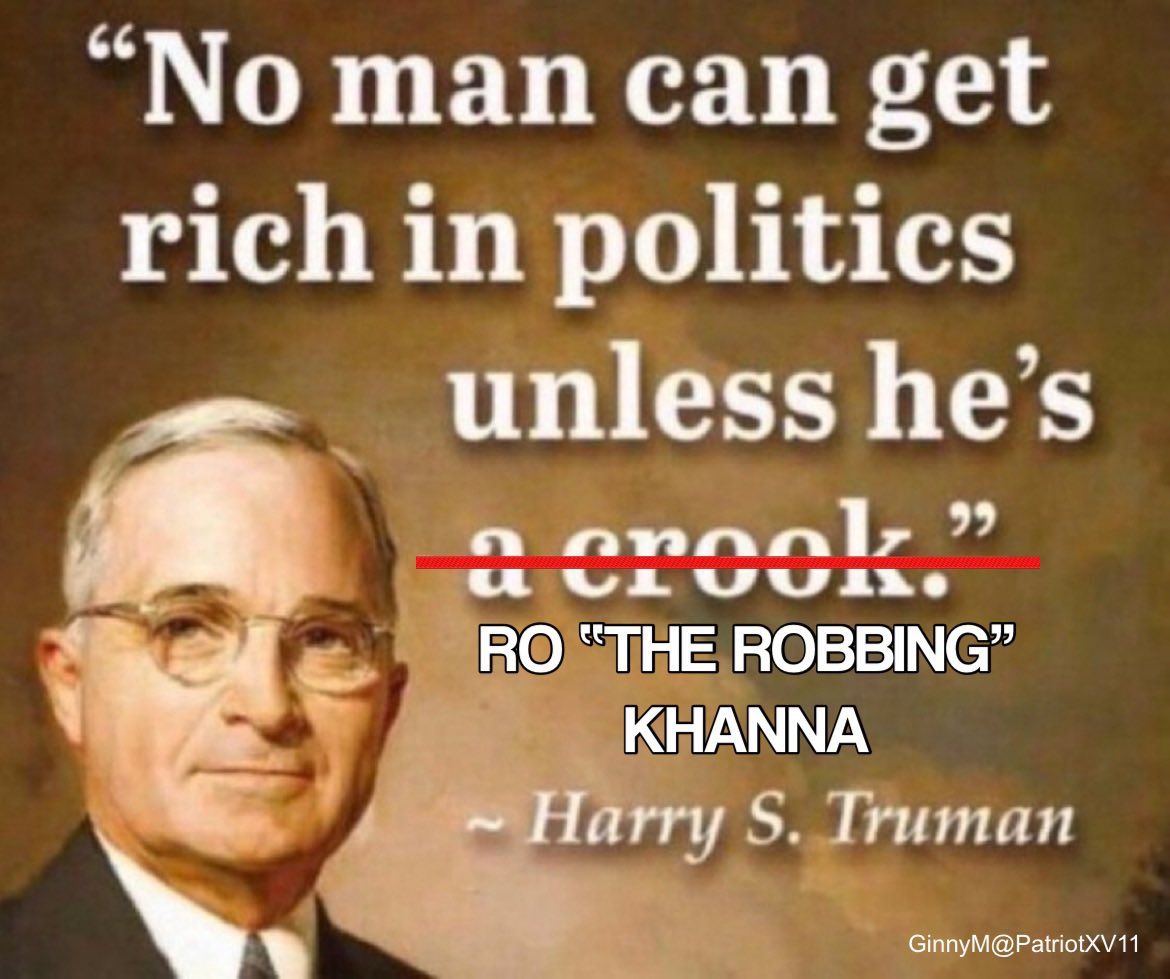
@RoKhanna The worst thing is that the Demand lefties like are the most hateful.
Specially against Hindus and people of Indian origin. Which is even worst because you are a person of Indian origin.
How Britain Engineered History’s Greatest Financial Heist
By @shreehistory
I. The Stroke of Midnight
At the stroke of midnight on August 14, 1947, as the world watched the Union Jack descend over New Delhi and the saffron, white, and green of a new nation unfurl, history recorded a triumph of self-determination. The British Empire, exhausted by war and weakened by the inexorable tide of nationalism, was relinquishing its crown jewel. The romanticized narrative of the 20th century tells us that Britain granted India its freedom, an act of political magnanimity marking the end of colonial dominion.
But beneath the pageantry of lowering flags, the soaring rhetoric of Jawaharlal Nehru’s "Tryst with Destiny," and the chaotic tragedy of Partition, a very different kind of transfer was taking place. It was not a transfer of political power, but of financial liability.
In the quiet, wood-paneled chambers of the British Treasury and the Reserve Bank of India, a ledger was being closed. To the accountants and chancellors in London, Indian independence was less a geopolitical retreat and more a Chapter 11 bankruptcy filing, a meticulously orchestrated maneuver by which Britain effectively declared independence from its own creditor.
The colonizer owed the colonized a staggering fortune. And the colonizer was broke.
II. The First Extraction and the Silencing
To understand the audacity of the financial maneuvering of 1947, one must look back to the blueprint drafted three decades earlier, during the First World War. The great financial heist of the mid-century was not an anomaly; it was the perfection of a formula born in the trenches of Europe, paid for in the fields of Bengal.
When the First World War erupted in 1914, Britain found itself in desperate need of men, material, and money. It turned to its empire. India was coerced into contributing hundreds of millions of pounds to the British war effort, alongside the lives of over a million Indian soldiers. To finance this, the British Raj effectively commandeered India’s export earnings and heavily increased taxation, flooding the domestic economy with paper currency while draining its physical gold reserves. Britain abandoned the gold standard, but India was forced to maintain it, absorbing the inflationary shock.
By the war's end, the economic strain on the Indian populace was immense. Prices of essential goods had skyrocketed, and the returns on the capital extracted for the war were nowhere to be seen. As the Indian public began to realize the scale of this economic theft, dissent began to boil. Nationalist leaders pointed to the economic drain, exposing the arithmetic of imperial exploitation.
London’s response was not to remedy the extraction, but to legislate silence. In 1919, the British government passed the Anarchical and Revolutionary Crimes Act, widely known as the Rowlatt Act. The Act allowed for the incarceration of suspects without trial and curbed the free press, specifically targeting the dissemination of seditious materials, which in practice meant anyone explaining how the British were bankrupting the country. When protests erupted against this silencing, the British military responded with the Jallianwala Bagh massacre in Amritsar, killing hundreds of unarmed civilians.
The message was unequivocal: the colony would pay, and it would suffer in silence. The economic truth was to be suppressed by force. It was a precedent that would prove vital 28 years later, when the sums involved would be exponentially larger.
III. The Blank Check of World War II
By the time the Second World War began, the British Empire was already financially strained. The defense of the Middle East, Southeast Asia, and the British Isles required capital that London simply did not possess. Once again, the British turned to the vast, seemingly bottomless reservoir of the Indian economy.
To fund the massive mobilization of troops, the provisioning of armies, and the purchase of raw materials, the British Raj essentially wrote itself a blank check against the Indian taxpayer. India was declared a "non-self-governing territory" contributing to the war effort, but instead of paying India in hard currency for the goods and labor extracted, Britain credited the Reserve Bank of India with pounds sterling. These were not transferable funds; they were essentially IOUs, piling up in London as "Sterling Balances."
The human cost of this capital extraction was catastrophic. The most visceral manifestation of this economic drain was the Bengal Famine of 1943. While the British Treasury accumulated sterling balances, the diversion of grain and the financial extraction policies led to the starvation of an estimated two to three million people in Bengal. The Indian taxpayer was literally funding the survival of the British Empire with their lives and their livelihoods.
By 1945, the sheer scale of this extraction was breathtaking. Britain owed India roughly £1.3 billion. To comprehend the magnitude of this sum, one must view it not through the lens of modern consumer inflation, but as a share of the economy. In 1947, £1.3 billion represented roughly 13.5 percent of Britain’s entire Gross Domestic Product. If the British Treasury were forced to write a check for that proportion of its economy today, it would need to find approximately £350 billion.
It was a sum so massive that paying it in full would have instantly bankrupted post-war Britain, a nation that was, at that very moment, surviving on American Marshall Plan aid and rationed bread. The colonizer owed the colonized. And the colonizer had no intention of paying in full.
IV. The Safety Valve and the Negotiation
Facing the prospect of domestic economic collapse, the British government executed an audacious maneuver. The transfer of power in 1947 was not merely a political act; it was a financial release valve.
There is a historical curiosity, often unspoken in popular narratives, that complicates the story of India’s independence. The Indian National Congress (INC), the primary vehicle of Indian nationalism and independence, was not born from a grassroots peasant uprising, but was initially floated by a British colonial official, Allan Octavian Hume, in 1885. Historians have long debated the "safety valve" theory: the idea that Hume and the Viceroy engineered the creation of the INC to provide a controlled, institutional outlet for the rising frustrations of the Western-educated Indian elite, preventing a violent, uncontrollable rebellion.
While the INC evolved into a formidable force for independence under Mahatma Gandhi and Nehru, the institutional DNA of the organization was steeped in British legal and political frameworks. When it came time to negotiate the financial settlement of 1947, the lingering effects of this "safety valve" dynamic became apparent.
The negotiations over the Sterling Balances were brutal, conducted behind closed doors by the British Labour government’s Chancellor of the Exchequer, Sir Stafford Cripps, and the Indian delegation led by Nehru and Sardar Vallabhbhai Patel. Britain argued that a sudden withdrawal of £1.3 billion would crash the pound sterling, bankrupt the Sterling Area, and trigger a global financial crisis. The threat was explicit: if India demanded its money, the ensuing chaos would ensure India received nothing.
India was in a state of profound vulnerability. The subcontinent was engulfed in the horrific trauma of Partition; millions of refugees were on the move, and the new government was struggling to establish basic administrative continuity. In this moment of existential crisis, the Indian leadership accepted terms that effectively castrated its own wealth.
The 1947 agreement dictated that the vast majority of the £1.3 billion would be "blocked." Only a fraction was immediately released; the remaining £1.15 billion was locked in London, to be doled out in agonizingly slow installments over a decade or more. Worse, the agreement stipulated that these blocked balances would earn little to no interest. By accepting this compromise, the post-colonial government effectively agreed to a structural haircut on the asset, surrendering the real-time economic utility of the money to save the British economy from default.
The safety valve had, once again, operated exactly as designed.
V. The Alchemy of Devaluation
With India's massive claim successfully trapped in the vaults of the Bank of England, Britain weaponized the only tool it had left: the currency itself.
Having forced India to accept deferred payments, Britain engineered a stealth default through the alchemy of foreign exchange. On September 18, 1949, just over two years after Indian independence, the British government unilaterally announced a massive devaluation of the pound sterling. The pound’s value against the US dollar was slashed overnight from $4.03 to $2.80, a devaluation of 30.5 percent.
Because India’s sterling balances were, by the very terms of the 1947 agreement, denominated in pounds, this overnight maneuver was an economic earthquake. It instantly vaporized almost one-third of the purchasing power of the money owed to India. If India wanted to use those sterling balances to buy American machinery, Canadian wheat, or Swiss capital goods, they would find that nearly a third of their money had vanished into the ether.
Britain, on the other hand, enjoyed a sudden, massive windfall. The real value of the debt owed to India was slashed by a third with the stroke of a pen. India was bound by the Sterling Area agreement and had to devalue the rupee proportionately, tying its currency to the declining fortunes of the British pound and further devastating its import capacity. It was a financial ambush, executed with the cold precision of an actuary.
VI. The Central Bank’s Quiet Payout
As if this financial evisceration was not sufficient, the final insult was administered at the very heart of India’s financial system.
The Reserve Bank of India (RBI), the nation's central bank, had been established in 1935 under British colonial rule as a privately owned entity. Its shareholders were a mix of private banks, financiers, and investors, a group that included substantial British and colonial-era capital.
Just after independence, the Indian government recognized the strategic necessity of nationalizing the central bank. The RBI (Transfer to Public Ownership) Act was passed in 1948, and the bank was officially nationalized on January 1, 1949.
The terms of this nationalization reveal a profound asymmetry in the post-colonial transition. When the Indian government took ownership of the RBI, it did not simply seize the assets. It compensated the private shareholders handsomely. Under Section 4 of the 1948 Act, the compensation was calculated not at a discounted state rate but based on the average market price of the shares on the Bombay Stock Exchange during the months preceding the Act. Because RBI shares, with a face value of one hundred rupees, were trading at a premium of roughly fifty percent on the open market, the total payout from the Indian exchequer to the 500,000 private shares was approximately 7.5 crores.
But the generosity of the settlement did not end with a cash buyout. Under Section 4(2) of the Act, the shareholders were given the option to take their compensation in Government of India promissory notes bearing a guaranteed interest rate of three percent per annum. This was a staggering mechanism of financial alchemy. The British and colonial-era investors were effectively allowed to convert their equity in India's central bank into risk-free sovereign debt backed by the newly independent Indian taxpayer. They could hold these 3 percent government papers and collect a perpetual stream of interest, ensuring that the extraction of wealth from the subcontinent continued long after the political transfer of power.
The juxtaposition is staggering, bordering on the absurd. Private shareholders of India’s central bank were paid out in full, at peak market valuations, and handed guaranteed interest-bearing bonds. Meanwhile, the Indian public, who had already paid for Britain’s survival in two world wars through forced extraction and inflation, was left holding devalued, blocked IOUs that had just lost a third of their value in the currency markets.
The private investors were made whole. The Indian public was made paupers.
VII. The Durgapur Paradigm: The Empire Strikes Back
The long shadow of this financial subjugation played out in the subsequent decades, dictating the trajectory of the newly independent nation’s development.
By the late 1950s, India had launched its Second Five-Year Plan, an ambitious push to industrialize. But the country was facing a severe balance-of-payments crisis. The sterling balances had been largely drawn down to pay for essential imports, and the country was running out of foreign exchange. India needed to build three major steel plants to fuel its industrialization. The Soviet Union stepped in to fund the Bhilai Steel Plant; West Germany funded the Rourkela plant. Britain, eager to maintain its commercial foothold, wanted the contract for the Durgapur Steel Plant.
Rather than releasing any lingering goodwill or acknowledging the massive debt still technically being dribbled out, Britain offered a new arrangement. In 1958, the UK government extended a fresh £100 million loan, a "new" line of sterling credit, to India.
This was not a repayment of the wartime debt; it was fresh financing. The British government essentially told India: We will lend you this new money, but you must use it to buy British goods. The money flowed straight back into the pockets of a British consortium of steelmakers, subsidizing the post-war British heavy engineering industry.
The Indian taxpayer, who had already funded the British war machine, was now taking on new debt to buy British machinery, because the money they were originally owed had been blocked, devalued, and structurally dismantled. The cycle of financial dependency had been perfectly preserved.
VIII. Amnesia and the True Cost of the Union Jack
Today, the historical amnesia surrounding these events is profound. The narrative of 1947 is frozen in the amber of political triumph: the lowering of the flag, the end of empire, the dawn of a new era. Mainstream histories focus on the geopolitical maneuvering, the tragedy of Partition, and the drafting of a constitution. The great financial heist remains obscured in the shadows of central bank archives and Treasury minutes.
The Indian population has been kept largely in the dark about the arithmetic of their own subjugation. The textbooks speak of the political transfer of power, but rarely of the transfer of financial liability. The £350 billion equivalent that was extracted, blocked, devalued, and systematically stripped of its value is a phantom limb in the national memory.
When the viceroys departed, Britain did not just walk away from the subcontinent; it walked away from an invoice it could not afford to pay. It declared independence from its own empire. Through a masterclass in financial engineering, leveraging the Rowlatt-era instinct for suppression, the "safety valve" of institutional compromise by a party supposedly fought for freedom and did deals behind the doors, the blunt instrument of currency devaluation, and the quiet payouts of risk-free bonds to colonial shareholders, Britain managed to offload the cost of its own survival onto the very people it had colonized.
Independence was not a gift. It was a getaway car. And the true price of the Union Jack's descent was paid not by the British taxpayer, but by the millions of Indians whose sweat and starvation funded an empire, only to be handed a worthless IOU in return.
References and Further Reading
Bhattacharya, S. (1997). The Colonial State and the Monetary System in India. Oxford University Press.
Bhowani, B. R. (1965). India's Sterling Balances. International Monetary Fund (IMF) Staff Papers, Vol. 12, No. 1, pp. 1-42.
Chandavarkar, A. (1989). The Imperial Bank of India and the Reserve Bank of India: A Study in Central Banking Transition. Oxford University Press.
Datta, B. (1949). The Devaluation of the Rupee. The Indian Economic Journal, Vol. 1, No. 1, pp. 1-12.
Hume, A. O. (1885). The Indian National Congress: A Retrospect.
Keynes, J. M. (1946). The Balance of Payments of the United Kingdom.
Mukerjee, M. (2010). Churchill's Secret War: The British Empire and the Ravaging of India during World War II. Basic Books.
Reserve Bank of India. (1948). The Reserve Bank of India (Transfer to Public Ownership) Act, 1948. RBI Historical Archives.
Sarkar, S. (1989). Modern India: 1885-1947. Macmillan.
Tomlinson, B. R. (1979). The Political Economy of the Raj 1914–1947: The Economics of Decolonization in India. Macmillan.
(All rights reserved. You must get written permission if you want to republish)
Twitter users can share, repost, like, comment but please provide attribution to @shreehistory who did all this research.
🚨 CALIFORNIA’S HOMELESS SCAM EXPOSED 🚨
They bought this rotting hotel for $8 MILLION in 2020 to “house the homeless.”
Six years later? Still empty. Boarded-up windows, caution tape everywhere, total collapse.
Now they want ANOTHER $20 MILLION — that’s $625,000 PER PERSON — and not a single homeless Californian has slept there.
This isn’t compassion.
This is a VIPER’S NEST OF CORRUPTION.
Billions poured into the homelessness industry while tents explode across streets. Where did the money actually go? Into connected pockets, that’s where.
California isn’t broken.
It’s being looted in broad daylight.
RT if you’re sick of this grift.
Tag your politicians.
The scam ends when we expose it.
#CaliforniaCorruption #HomelessGrift #TaxpayerTheft #WhereDidTheMoneyGo
Xavier Becerra said nothing in California needs to change because “people still visit Disneyland.”
With a comment like that, he belongs in Disneyland. Because he’s a Mickey Mouse candidate!
An imam in Alabama, Ragab Abdelmoneim of the Islamic Academy of Huntsville, openly told his audience that Muslims must be ready to sacrifice their lives through jihad in order to establish “the religion of Allah” in the United States.
He claimed that victory over America is closer than ever.
This isn’t being preached in some remote village overseas. This is being said openly on American soil.
At what point does this stop being protected “religious speech” and become a national security threat?
How is he not arrested?
1. ALL VOTERS MUST SHOW PHOTO I.D. (IDENTIFICATION!).
2. ALL VOTERS MUST SHOW PROOF OF CITIZENSHIP.
3. NO MAIL-IN BALLOTS (EXCEPT FOR ILLNESS, DISABILITY, MILITARY, OR TRAVEL!).
4. NO MEN IN WOMEN’S SPORTS.
5. NO TRANSGENDER MUTILIZATION SURGERY ON OUR CHILDREN.
🚨Florida AG James Uthmeier is drafting articles of impeachment against Miami-Dade Circuit Judge Miguel De La O, after the judge acquitted a mother who drowned her 15-month-old daughter.
GiveSendGo Raises Money for a Deserving Young Antisemite
by Hugh Fitzgerald
GiveSendGo is a Christian, or rather “Christian,” version of GoFundMe. And it is now engaged in raising money for one Austin Franco, a sweet-faced chinless wonder and 19-year-old student at Cornell, by the shores of Lake Cayuga, who really, truly, madly does not like Jews. How do we know? Because he said, or rather wrote so, to two Jewish brothers who were interested in interviewing him for a job with their startup.
"Gabe Einhorn told The Post he 'felt bad exposing' Franco — whose name he blacked out from the screenshot — but felt obligated to share the message to highlight growing antisemitism."
Gabe Einhorn shouldn’t “feel bad” about exposing Franco. He should feel great. Now anyone contemplating hiring Austin Franco will, after a few seconds of searching his name, find out about his bigotry, and if a decent sort, will promptly drop his CV into the nearest garbage can.
Of course, Franco will always find work. I should imagine he’ll be a good prospect as an employee of CAIR, or at the Embassy of Palestine at the UN, or possibly as a jack-of-small trades as a speechwriter or general all-round gofer for Tucker Carlson, or Nick Fuentes or Mayor Zohran Mamdani. He’s just the bigoted boy for the job. And there are so many antisemites running around these days, some with deep pockets, that the GiveSendGo operation should supply Austin Franco with a steady stream of moolah until the next antisemite steps up with his begging bowl, and pushes Franco to the side.
Read more at the link in the next post.
🚨Iran demanded FIFA ban all LGBTQ ceremonies and Pride activities ahead of tomorrow's World Cup match against Egypt.
FIFA's response: Request denied.
Two nations where homosexuality isn't just illegal, it's punishable by death will now play under Pride banners tomorrow
The entire western media has appropriated significant Hindu words ‘Guru, mantra and Pundit’ and indulge in distorted references to them! I have heard of porn gurus and drug gurus etc! Every Hindu must reclaim the original authenticity of these words. https://t.co/hAZzJR98ac
“There is a rise in anti-Hindu and anti-Indian hate in America.
Yesterday, an elected official in Florida called for me to be deported.
I’m not going anywhere. We’re not going anywhere”
- USA Congressman Raja Krishnamoorthi