How China Built the World’s Biggest Train Station on Top of a Mountain
Welcome to Chongqing East Station: China's $7.8 billion high-speed rail megaproject. 1.22 million square metres. 40,000 peak workers. A 16,500-tonne steel tube truss roof assembled on the ground and hydraulically slid 57 metres upward onto 41-metre tree-shaped "Huangjue" columns.
• How 40,000 workers built a 1.22M m² station in just 38 months on a mountain
• The sliding assembly method — why the 16,500-tonne roof was built on the ground first
• The Huangjue tree columns — 41-metre branching steel structures designed for earthquake resistance
• Stainless steel cladding installation at 57 metres above a mountain slope
• Why Chongqing East Station is now the largest railway hub in the world
• The high-speed rail network connecting Southwest China to 14 major cities
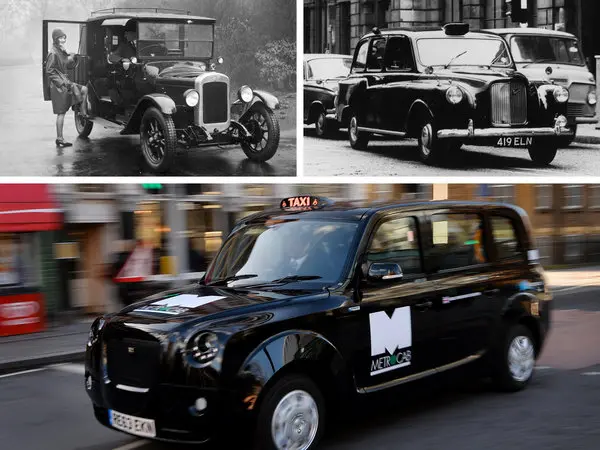
To get a license to drive a black cab in London, you have to memorize 25,000 streets, 20,000 landmarks, and the fastest route between any two points in a six-mile radius of Charing Cross. It takes most people three to four years.
A British neuroscientist asked the obvious question nobody had thought to ask. What does that actually do to a human brain?
Her name was Eleanor Maguire. The study changed neuroscience forever.
The exam is called The Knowledge. It was introduced in 1865, and the format has barely changed since.
Applicants ride a moped around London for years with a clipboard strapped to the handlebars, tracing every possible route between every possible pair of points in the city.
They get tested in person by an examiner who can ask them, on the spot, for the shortest legal route between any two addresses in a database of tens of thousands. Half the people who attempt it fail.
The ones who pass have spent an average of four years studying full time and have taken the test 12 times before getting through.
Maguire was watching a TV movie about it in 1995 when she had the idea. These were not ordinary people. They were people running one of the most extreme spatial memory training programs that exists anywhere on Earth.
If the human brain could be reshaped by experience, this was the cleanest natural experiment anyone was ever going to find.
She put 16 of them in an MRI machine.
Their posterior hippocampi were significantly larger than the brains of matched controls. The longer a driver had been working, the bigger the difference got.
A 40-year veteran had a measurably more developed hippocampus than a 5-year veteran, and both had more than someone who had never driven a cab.
Here is why that finding broke a century of consensus.
Until 2000, every neuroscience textbook in the world taught a version of the same idea. The adult brain is essentially fixed. You are born with a set number of neurons. Childhood is the window where the wiring gets laid down. After puberty, the structure freezes, and the rest of your life is just slow decline.
Maguire's study was one of the first pieces of human evidence that this was simply wrong. Adult brains physically remodel themselves in response to what you ask them to do. Not metaphorically. Structurally. With grey matter you can measure on a scan.
The skeptics had an obvious objection. Maybe people with bigger hippocampi were just more likely to become taxi drivers in the first place. The brains were not changing. The job was selecting for brains that already looked that way.
So Maguire ran the experiment again. Properly this time.
She recruited 79 trainees who were just starting to study for The Knowledge and 31 controls who were not. She scanned all of them at the start. Then she waited four years. Of the 79 trainees, 39 eventually passed the exam and 20 failed. She scanned them again.
The trainees who passed had grown larger posterior hippocampi over those four years. The trainees who failed had not. The controls who never studied had not. The brain change was not selection. It was construction.
The act of memorizing the city had physically rebuilt the part of the brain responsible for spatial memory, and the rebuild only happened in the people who actually did the work.
There is a quieter finding from this research that almost nobody quotes, and it is the one I cannot stop thinking about.
The drivers had a bigger posterior hippocampus, but they had a smaller anterior hippocampus. The brain had not magically expanded. It had reallocated. Tissue that was being used for one type of memory had been compressed to make room for another.
When Maguire ran follow-up cognitive tests, the cabbies were measurably worse than controls at certain visual memory tasks unrelated to navigation. They had paid for The Knowledge with something else. The trade was real.
She also ran a second control experiment that is the part of the story most people never hear. She scanned London bus drivers. Same hours behind the wheel. Same city. Same traffic. Same stress. The only difference was that bus drivers follow fixed routes. They do not have to navigate. Their hippocampi looked completely normal.
The cab drivers had not grown bigger hippocampi from driving. They had grown them from the constant, active, effortful retrieval of spatial information from memory.
That distinction is the entire study.
Then in 2020, McGill researchers ran the inverse experiment. They tracked 50 regular drivers and measured how often they used GPS. The participants who relied most heavily on turn-by-turn navigation had measurably weaker spatial memory. When the researchers retested a subset of them three years later, the heavier GPS users had declined fastest.
The hippocampus, the same region the cabbies had built up by ignoring shortcuts, was being slowly hollowed out in everyone else by accepting them.
The mechanism Maguire spent 25 years documenting works in both directions. Brains grow what you make them grow. They lose what you stop asking them to do.
The taxi drivers were running the most intense spatial memory training program on Earth. Most of the rest of us are running the opposite program without realizing it.
Maguire died in early 2025. UCL's tribute described the cabbie study as a stroke of creative genius. She had spent her entire career on a single question. What does it physically take to remember something, and what changes inside a person who remembers a lot of it.
The answer is the part that should change how you live.
@kirtlenus It’s even deeper than that. The loathing for Labour isn’t the just result of what they are doing - which is bad enough. No, people are sickened by what Labour politicians actually are - deeply unpatriotic people who put others above the British.
Mylatest @ https://t.co/KURLp7Xy93 -“The most plausible paths to a dramatic unwind—some obvious, some not—all lead to the same endgame: a systemic reset that forces governments, central banks, and markets to start over, driving many folks to the poorhouse” https://t.co/J4LpPVkjli
Hackney carriage drivers say speed restrictions and traffic schemes in the capital are an existential threat to the black cab
How Sadiq Khan made London into a taxi driver’s worst nightmare https://t.co/VVVSf8l2Al
“Is it a little bit homophobic to focus on the straights of Hormuz rather than the gays of Hormuz?”
No Kings protester, completely serious: “Yes, absolutely, I agree.”
It’s important that every patriot understands the seriousness of the threat Islam presents to the sovereignty of Britain and the survival of the British people. This means understanding what Muslims believe, according to the Qur’an, the Hadith and the Sunnah. These are the 8 ideals of Islam defined by Sharia law:
1. ‘You are the best nation, raised up for humankind, commanding what is good and forbidding what is wrong, and believing in Allah.’ (3:110). This verse of the Qur’an not only teaches Muslims that they are superior to non-Muslims but also provides them with a mandate to punish non-believers on the basis of Sharia law. This includes floggings for apostasy, refusing to pray to Allah, consumption of alcohol, extra-marital sex or homosexuality; amputations for theft; the sexual enslavement of non-Muslim women and children; and the stoning to death of all women, Muslim and kaffir, for adultery.
2. It is, perhaps, unique to Islam among the world religions that it commands its followers not only to love their God but to actively hate non-Muslims, not to associate with them in their daily life and to treat them in every respect as enemies. Just as importantly for the conquest of non-Muslim peoples, Islam also commands Muslims not to do or say anything that would betray Muslims to non-Muslims, no matter what crimes they have committed against them. Examples of this include the Muslim Mayor of London, Sadiq Khan, denying the existence of Muslim grooming, rape and trafficking gangs operating in London even after reading Metropolitan Police reports of such crimes. No Muslim will ever subject a fellow Muslim to any law that is not Sharia.
3. In Sharia law, every woman is considered to be under the guardianship of a male, her walī. The line of guardianship begins with her father, in the absence of whom the role is passed to her paternal grandfather, brother, nephew or uncle, even her sons. When she marries, her husband takes on this role and with it the right, on the authority of the Qur’an (4:34), to beat her when she disobeys him. A wife must have sex with her husband whenever he wants. In Sharia law, illicit sex (zinā) is between a man and a woman who is neither his wife nor his slave. There is no separate crime of rape, in or out of marriage.
4. In addition to the requirement that a women covers herself when in public, depending on the severity of its application, with a hijab, niqab or burqa, Sharia law also authorises a woman’s male guardian to control her movements, including confining her to the home and only permitting her to leave when attended by a male guardian. Any woman, Muslim or non-Muslim, not covered or without a guardian in public is therefore regarded by Muslims as sexually available: that is, a religiously sanctioned object of rape.
5. Marriage in Sharia law is a contract between the woman’s guardian and her future husband, over which the woman has no say. Brides are purchased from the guardian by the groom, at which point she becomes sexually subordinate to him. There is no minimum age for marriage, and there is no age of consent to sex once she is married. It is unlawful for a woman to have sex before or outside of marriage, just as it is for her to refuse sex to her husband once married.
6. Female genital mutilation, which is endorsed to varying degrees by different schools of Sharia law, is practised as a means to control female sexuality, which is conceived purely as a means to test Muslim men. Other means include the separation of women from men in daily life, the covering of their bodies when in public, their confinement to the family home, and the ban on women even looking at men. Any woman raped by a man is assumed to have disobeyed one or more of these injunctions, and it is the woman’s task to prove otherwise. In 2003, the National Commission on the Status of Women in Pakistan reported that as many as 88% of women imprisoned in Pakistan were victims of rape or gang rape who were unable to provide the required four male witnesses to testify that they were, as is required under Sharia law.
7. As an ideology of conquest, Islam teaches Muslims that slavery is legitimate under Sharia law, and female slaves are regarded as the spoils of jihad. Raping a slave, consequently, is not illicit sex. Indeed, it is the right and duty of Muslim men to enslave nations that have not converted to Islam.
8. Sharia law offers three options to conquered peoples: to convert to Islam; to be killed; or to live in a state of ‘dhimmitude’. This is a neologism formed from the Arabic word, dhimmi, meaning ‘protected person’, and ‘servitude’, and is used to describe the subordinate social, political, legal and religious status of non-Muslims under Sharia law.
Dhimmis, who are prohibited from building places of worship (churches or synagogues) to their own religion or owning property, are required to pay an annual tax (jizya) to the Islamic State in return for their lives. Restricted in their professions and even in their movements, dhimmis are subjected to a process of continual humiliation and degradation by the separate laws under which they live in a two-tier state, through obedience to which they are rendered collectively servile and submissive.
We can recognise in these conditions of servitude, and the burden of paying increased tax so that millions of Muslims can live on benefits and in social housing, a description of the way British people are forced to live in Britain today. Dhimmitude describes not only the social, political, legal and religious status of Britons in the two-tier UK state under Keir Starmer’s Government, but also our state of servitude and submissiveness.
Dhimmitude is the psychological state to which Sharia law reduces non-Muslims in the countries conquered by Islam. There is, perhaps, no greater evidence of the Islamisation of Britain than the prevalence of this state in vast swathes of the British people and in all the political, legal, civil, media, educational and cultural institutions of the UK.
Extract from my new book, ‘The Great Replacement and the Islamisation of Britain’. If you’re horrified at the Islamisation of Britain, don’t want to see our children grow up under Sharia law, and want to know what we can do to oppose Islam and restore Britain to the British, please consider purchasing a copy of my book. The link is below.
https://t.co/kpQBeanKll