Math and empirical data indicate that the first few users in a formative #usability study will uncover most of the common problems that are available for discovery, but how can this help when planning these types of studies? https://t.co/IpE9knqwNF
In an experiment with digital twins predicting SUS scores for business software, we found similar standard deviations for humans and AI but very different shapes (skewness and kurtosis). https://t.co/Uur22t2tCw
The Product Market Fit item score is the percentage of respondents who would be very disappointed if they could no longer use a product that they have been using. https://t.co/R3M1eoUH8i
As a #UX researcher, have you ever worried about using the wrong rating scale format? Would it surprise you to learn that it often doesn’t matter? https://t.co/uKS8ZFkd4t
Our analyses of three versions of a technical activity checklist indicate that a list of 16 activities is too much, 9 isn’t quite enough, and 10 is just right. https://t.co/BBeeEWpsBH
Our study of clothing websites found that they provide experiences that are above average (collectively, at the 82nd percentile in the SUPR-Q). Individually their SUPR-Q percentiles ranged from the 50th percentile (H&M) to the 98th (Banana Republic). https://t.co/yIsT1kBJ2O
Most surveys contain a mix of closed-ended (e.g., rating scales) and open-ended questions. Here are five reasons to use open-ended questions. https://t.co/qhUfWokyfX
Some variables cannot be observed directly. Trust is one example; it can only be measured through inference. Such variables are hidden (latent). https://t.co/ANRNSk9hZp
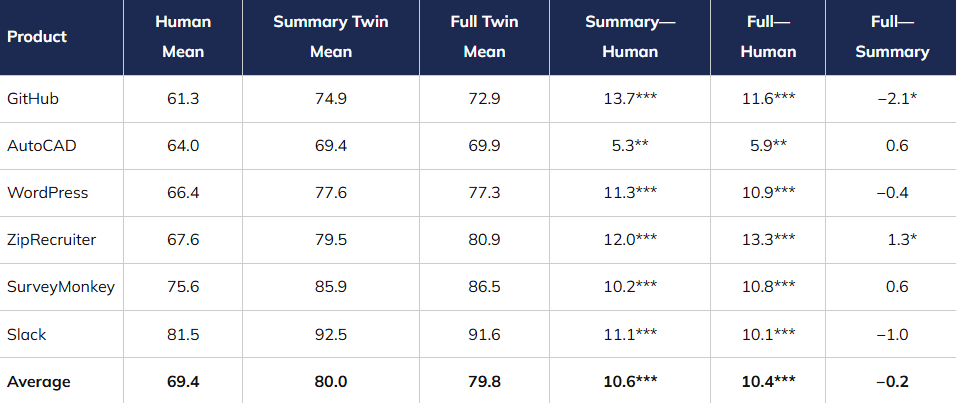
We found digital twin prediction of SUS scores for six software products inflated by ~10 points with radically different human/AI distributions. https://t.co/Uur22t2tCw
Analysis of a Wright map of the 16-item SUPR-Qm revealed opportunities to streamline the questionnaire by removing redundant items. https://t.co/hFCsdncyQz
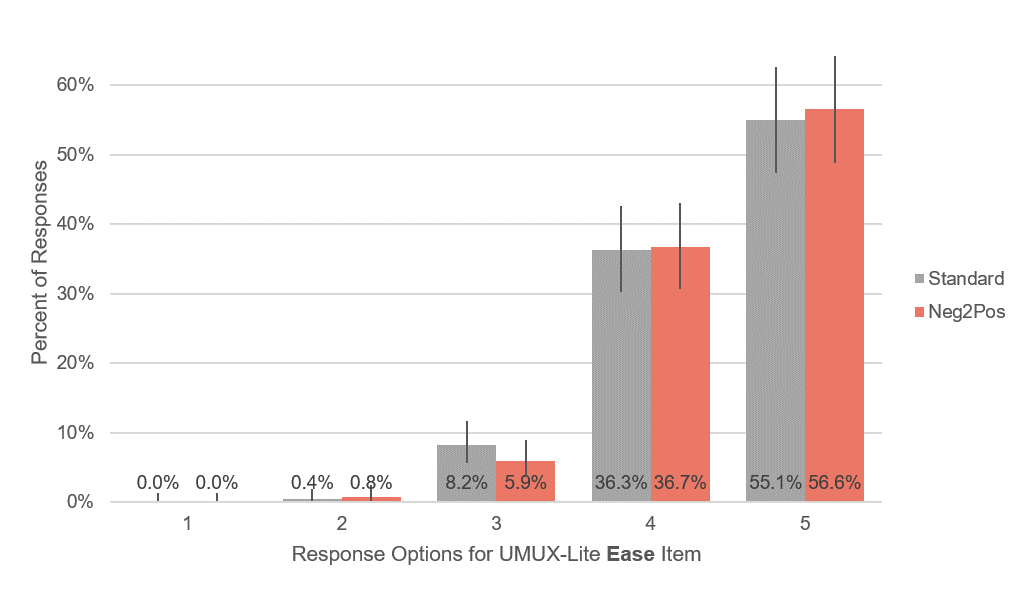
We found no significant differences or interactions between mean UMUX-Lite ratings collected with standard five-point linear numeric scales (1 to 5) and an alternative five-point scale numbered from −2 to +2 (with 0 in the middle). https://t.co/pcE06MHru1
There are different reasons to use open-ended questions, all related to discovery but differing in their #research contexts and the extent to which they are directive or nondirective. https://t.co/qhUfWokyfX