82 years ago today, eight American sailors jumped onto a sinking Nazi submarine in the middle of the Atlantic.
What they pulled out of it changed the war. And the Navy buried the whole story for years.
First, you need to know that U-505 was already cursed. German sailors called her the unluckiest boat in the fleet. In October 1943, during a brutal British depth-charge attack, her own captain shot himself in the head in the control room, in front of his crew. He remains the only submarine commander in history known to have killed himself underwater in combat. His second-in-command calmly took over, rode out the attack, and sailed her home.
Eight months later, her luck ran out completely.
June 4, 1944. Two days before D-Day. Captain Daniel Gallery's hunter-killer group, built around the escort carrier USS Guadalcanal, had been stalking U-boats off West Africa. Gallery had an idea his superiors considered borderline insane: don't sink the next one. Capture it. No US Navy crew had boarded and taken an enemy warship on the high seas since 1815.
The destroyer escort USS Chatelain caught U-505 on sonar and fired a salvo of hedgehog bombs. The U-boat broke the surface 700 yards away. Gunfire raked the conning tower, wounding her captain. He gave the order to abandon ship.
The Germans rushed out so fast they botched the scuttling. The sub was flooding, but her engines were still running. She was circling the battle at six knots, empty, sinking, and very possibly rigged with demolition charges.
So Lt. Albert David and eight men from USS Pillsbury chased her down in a whaleboat, leaped aboard, and climbed down the hatch into a dark, flooding submarine that could explode or go under at any second. They shut the scuttling valves, disarmed the charges, and stopped the flooding.
Down there they found the prize: Enigma cipher machines and roughly 900 pounds of codebooks and charts. Current settings. The keys to the German navy's secret communications.
But here's the catch. The treasure was only valuable if Germany never found out. One leak and Berlin changes every code overnight.
So the Navy ran one of the great cover-ups of the war. The sub was towed 1,700 miles to Bermuda and given a fake American name: USS Nemo. Around 3,000 sailors were sworn to total silence. The 58 captured German crewmen vanished into a POW camp in rural Louisiana, hidden even from the Red Cross. Germany declared U-505 lost with all hands and notified the families. The dead men were alive in Louisiana, and their boat was working for the US Navy.
The secret held until the war ended.
Lt. David received the Medal of Honor, the only one awarded in the Atlantic Fleet in all of WWII.
And the submarine? In 1954, Chicagoans raised $250,000 to bring her home. She was towed across Lake Michigan and dragged through the streets of Chicago to the Museum of Science and Industry.
She's still sitting there right now. You can walk through her.
163 years ago this week, the largest battle ever fought in North America was already on the march. And the men walking toward it had no idea.
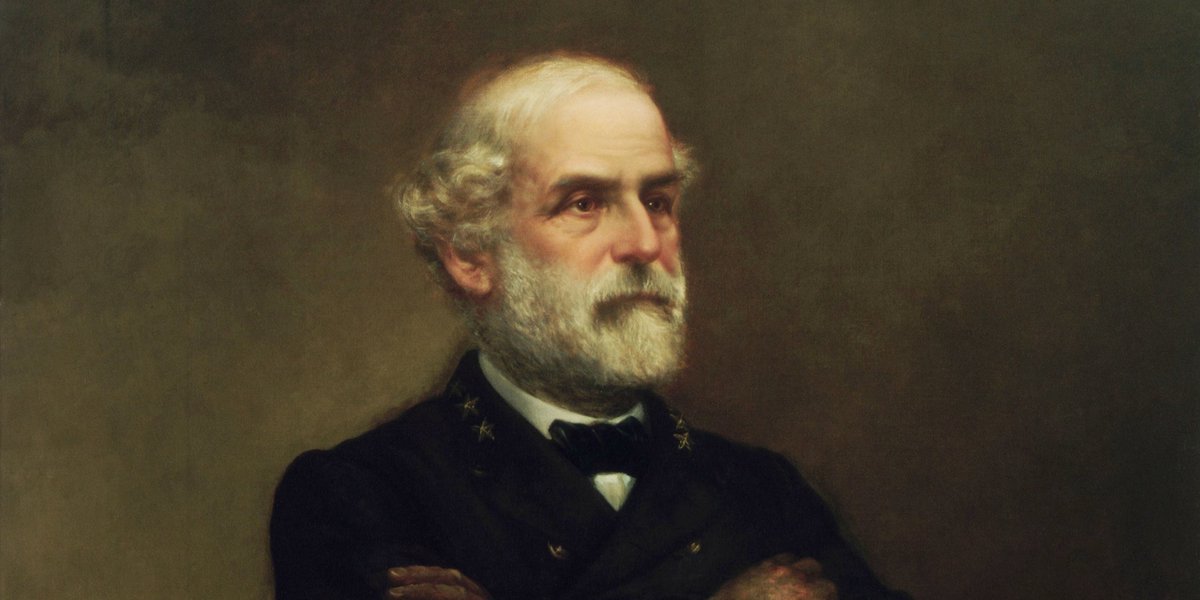
In early June 1863, Robert E. Lee began quietly pulling his army out of its camps at Fredericksburg, Virginia. Corps by corps, 70,000 men slipped west and north while a thin screen of troops stayed behind to keep the campfires burning and fool the Union army across the river.
It worked. For days, Union commander Joseph Hooker stared at those fires and wasn't sure the enemy was even gone.
Lee was gambling everything. His plan: swing through the Shenandoah Valley, cross into Pennsylvania, win a massive victory on Northern soil, and break the Union's will to keep fighting. Vicksburg was starving. The Confederacy needed a miracle, and Lee believed his army could deliver one. His own soldiers believed it more than he did. They thought they were unbeatable.
Nobody marching out of Fredericksburg that week had ever heard of the little Pennsylvania crossroads town they were heading toward. It had a shoe factory, a Lutheran seminary, and about 2,400 residents.
Four weeks later, 160,000 men would collide there. In three days, more Americans would fall at Gettysburg than in any battle before or since. Then Lee's army would limp home in the rain, and the Confederacy's last great gamble would be over.
Every soldier who died there spent this week in June simply walking. Sore feet, summer dust, letters home.
Everyone obsesses over Roman legions. Nobody talks about the Roman Navy. Which is strange, because the navy story is more insane than anything the legions ever did.
264 BC: Rome decides to fight Carthage, the greatest naval power on earth, with almost zero warships. Carthaginian sailors had centuries of experience. Most Romans had never been on open water.
Then Rome got lucky. A Carthaginian quinquereme ran aground on their shores. Rome dragged it onto the beach, took it apart piece by piece, and reverse-engineered the entire ship. Within about 60 days they had built 100+ copies.
One problem: ships are useless without rowers, and Rome had none. So they built rowing benches on dry land and made thousands of farm boys practice oar strokes in the dirt, in formation, before ever touching the sea.
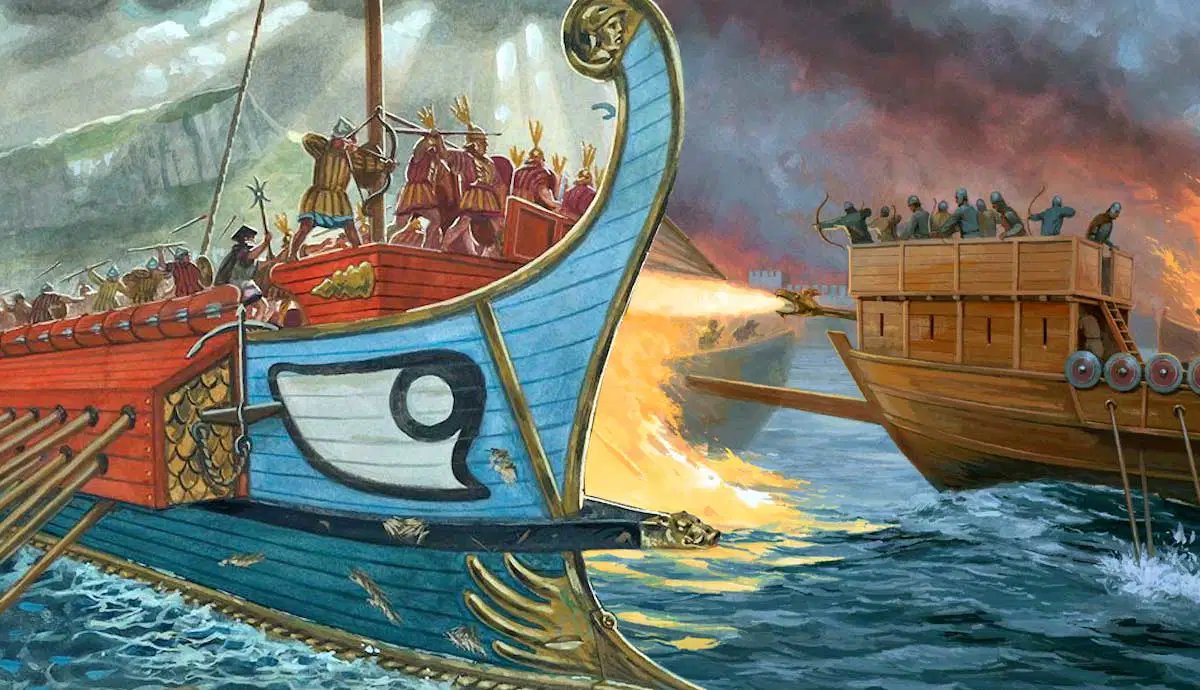
The ships were heavier and slower than Carthage's. Roman crews could not outmaneuver anyone. So Rome stopped trying. They bolted a 36-foot spiked drawbridge called the corvus to every deck. Get close, drop the bridge, the iron spike pins the ships together, and suddenly it's not a sea battle anymore. It's a land battle on a floating platform, against Roman infantry.
At Mylae in 260 BC, Carthage's admirals laughed at the clumsy Roman ships and sailed straight at them. Rome captured or sank 44 vessels. The Roman commander Duilius got Rome's first naval triumph and a column in the Forum decorated with the bronze rams of enemy ships.
Then came the real enemy: weather. Roman crews were so inexperienced at sea that storms killed more of them than Carthage did. In 255 BC, a single storm off Sicily destroyed an entire fleet, hundreds of ships and over 100,000 men, likely the deadliest maritime disaster in human history. Worse, the corvus itself may have doomed them, making the ships top-heavy and unstable in rough water. Their greatest weapon was also sinking them.
Rome's response? Build another fleet. It sank too. Build another. Over 23 years Rome lost 600+ ships and hundreds of thousands of men, more than Carthage lost, and never once considered quitting.
By 243 BC the treasury was empty. So wealthy Roman citizens personally loaned money to build one final fleet of 200 ships, repayable only if Rome won. In 241 BC that fleet ambushed Carthage's navy at the Aegates Islands and ended the war.
Rome lost more ships, more men, and nearly every advantage. They won anyway, because Carthage was fighting a war and Rome was fighting forever.
84 years ago today, a pilot running out of fuel made a decision that won the Pacific War. Most Americans have never heard his name.
June 4, 1942. Six months after Pearl Harbor, Japan's navy is undefeated. Four of the carriers that burned Pearl, Akagi, Kaga, Soryu, and Hiryu, are steaming toward Midway to finish off the US Pacific Fleet.
At 7:52 AM, Wade McClusky launches from USS Enterprise leading 32 Dauntless dive bombers. Here's the detail nobody mentions: McClusky is a fighter pilot. He'd been given the air group weeks earlier and had barely flown a dive bomber in combat. Now he's leading every SBD the Enterprise has at the most important target in the Pacific.
9:20 AM. He arrives at the intercept point where the Japanese fleet is supposed to be.
Empty ocean. Nothing for miles.
The Japanese had turned. Nobody knew where. And now McClusky owns the worst math problem in naval aviation: his fuel is bleeding away, and every minute he keeps searching, he condemns more of his own pilots to ditch in open water where nobody will find them.
Doctrine is clear. Turn back.
McClusky keeps going. He works a search pattern, squeezing miles out of dying fuel tanks.
9:55 AM. Far below, a single Japanese destroyer is cutting a white scar across the ocean at flank speed. It's the Arashi, racing to rejoin the fleet after depth-charging the American submarine Nautilus. Think about that. A failed sub attack is about to give away the entire Japanese navy.
McClusky reads the wake like an arrow and follows it.
10:02 AM. The horizon fills with the entire Japanese strike force. Four carriers, their decks crammed with planes being refueled and rearmed. Fuel lines snaking everywhere. Bombs stacked in the open.
And here's the miracle: the sky above them is empty. Minutes earlier, American torpedo squadrons had attacked at sea level and been annihilated. Torpedo 8 lost all 15 planes. One survivor, Ensign George Gay, watched what came next while hiding under his seat cushion in the water. Those doomed pilots dragged every Japanese fighter down to the waves. The door upstairs was wide open.
10:22 AM. McClusky pushes over from 14,500 feet. Both squadrons follow him down onto Kaga. It's actually a mistake, doctrine said split the targets, but Lt. Dick Best catches it mid-dive, pulls out with two wingmen, and goes after Akagi alone. His single bomb pierces the flight deck into the packed hangar. It's enough.
By 10:28, Kaga, Akagi, and Soryu, the third hit simultaneously by Yorktown's bombers, are floating infernos. Six minutes. Three carriers that attacked Pearl Harbor, gone. Hiryu follows them to the bottom that evening.
The cost of McClusky's gamble was real. Many Enterprise bombers never made it home, some shot down, others swallowed by the sea when their tanks ran dry. McClusky himself was jumped by two Zeros on the way out, took five bullets through his shoulder, and still flew his shot-up Dauntless back to the Enterprise.
Admiral Nimitz said McClusky's decision "decided the fate of our carrier task force and our forces at Midway." Japan never won another major battle.
One borrowed pilot. One destroyer's wake. One choice to keep flying when every gauge said go home.
On the night of April 28, 1944, more American soldiers were killed rehearsing for D-Day than were killed storming Utah Beach on D-Day itself. It happened in secret, and the survivors were ordered to take it to their graves. Most did.
Six weeks before the real invasion, the US Army staged a full dress rehearsal at Slapton Sands in Devon, a beach chosen because it looked almost exactly like the Normandy shore codenamed Utah. Eisenhower wanted it realistic, so they used live ammunition. That decision killed men before the enemy even arrived, when timing went wrong and incoming troops were shelled by their own naval guns on the sand. But the worst was still hours away.
Just after midnight, a convoy of eight tank landing ships, packed with men, trucks and fuel, was crawling across Lyme Bay in a long slow line. Out in the dark, nine German E-boats had slipped in from Cherbourg, and they could not believe what they were seeing. The convoy was nearly defenseless. One escort ship had been damaged in a collision and sent to port, never replaced. Worse, a typo had put the landing ships and their lone escort on different radio frequencies, so the warnings that could have saved them were broadcast to no one.
The E-boats opened fire. One ship burst into flames, another was hit and went under in about six minutes, taking hundreds down with her. Men poured into water barely above freezing. Then the cruelest detail: they had been issued life belts but never trained to wear them, so many strapped them around the waist instead of under the arms. When they jumped, the weight of their packs flipped them face-down, and the belts held them there. Hundreds drowned upside down in their own life jackets.
By dawn, around 749 Americans were dead, more than would die taking the actual beach on June 6. And the generals had a problem bigger than the bodies. Ten of the officers aboard held BIGOT clearance and knew the time and place of the entire invasion. If even one had been pulled alive from the sea by the Germans, D-Day would have had to be cancelled. Frantic teams searched the water for all ten. Every body was recovered. The secret held.
So the whole thing was buried. Bodies quietly interred, paperwork sealed, survivors warned that talking meant court martial. The records were not declassified until 1974. For decades these men had no monument and no mention. They died twice, once in the water and once in the silence that followed.
It was called Exercise Tiger. Now you know.
This is putin casually admitting to what can only be described as a textbook war crime, and he’s doing it with a smug smile on his face.
He literally brags about using Ukraine as a human testing ground.
He openly admits that they didn't fire their "Oreshnik" missile at a military test range. Instead, they fired it at populated areas in Ukraine just because it was "convenient to watch”.
Think about that for a second. He sent explosive warheads into communities, and then sent drones in right after just to count the bodies and measure the craters "down to the millimeter" like it’s some kind of science fair project.
But the scariest part is how he ends it. He casually drops that they are collecting this data so they can figure out how to better use these massive missiles in "urban areas”. That is political speak for densely populated cities filled with civilians, apartment buildings, and schools.
It’s pure, calculated terror.
putin: “After all, we... we used to test such systems at testing ranges. But 'Oreshnik' wasn't tested that way. And this wasn't a combat application. In fact, we haven't had a single combat application of 'Oreshnik' over the territory of Ukraine in the full, so to speak, sense of the word.
And the last one—to be completely honest, I will reveal a major, major state military secret to you. We simply struck a location where it was convenient to observe the results. Well, this concerns Bila Tserkva, and it especially concerns... concerns the DPR [so-called Donetsk People's Republic] area within the perimeter of the main fortified area.
Afterward, our drones flew into that area—the target area we had struck—and simply looked at how the multiple reentry vehicles had landed. They calculated everything down to the millimeter, exactly where everything hit.
For us, this is important in order to make future decisions regarding the full-scale deployment of 'Oreshnik' against designated targets. Including within urban areas.”
On December 8, 1980, sportscaster Howard Cosell shocked millions of viewers by announcing John Lennon’s death live on air during a Monday Night Football game between the New England Patriots and the Miami Dolphins.
In the midst of a tense tie in the final seconds, Cosell uttered his famous line that the game was “just a football game” before confirming that the legendary Beatle had been shot and killed as he left his New York apartment.
The photograph from the private album of a junior officer of Panzer‑Aufklärungs‑Abteilung 37, taken during the French campaign of 1940, captures an unusually intimate and unexpected scene: a festively arranged table, bottles of champagne, a tin of caviar, and a mixed group of German soldiers and two captured Royal Air Force airmen seated together in apparent conviviality. At the head of the table sits Hauptmann Freiherr Hans‑Ulrich von Luck und Witten, then commanding the reconnaissance battalion of Rommel’s 7. Panzer‑Division, the celebrated Gespensterdivision.
The caption in the album—“With Tommy flyers at Fécamp, 12 Juni 1940”—anchors the moment within the final phase of the German advance to the Channel coast. After the death of Major Erdmann near Lille, von Luck had been elevated to command the battalion, a decision based on merit despite his junior rank. On 9 June, his unit reached the coast, where Rommel ordered him to seize Fécamp, a port still defended by French and British forces and covered by the guns of HMS Ambuscade and HMS Hampton. When the defenders refused to surrender, German artillery—including captured coastal guns—bombarded the harbour. By the evening of 10 June, the port fell after a short, sharp engagement. Two days later, the collapse of nearby St. Valery‑en‑Caux brought the surrender of thousands of Allied troops, a major success for Rommel’s division.
Von Luck later recalled that during these operations a pair of British bombers attacked his positions. One was shot down by 8.8‑cm Flak, and two crewmen parachuted into his lines. Instead of sending them to the rear immediately, he invited them to join his officers at a celebratory dinner. Later research clarifies the details: the aircraft was a Blenheim of No. 40 Squadron, shot down on 12 June near Életot. Its navigator, Sgt David L. Doris, was killed; the surviving crew, Sgt C. D. W. Bartlam and Sgt E. Rodgers, became von Luck’s unexpected guests.
The photograph thus records a fleeting moment of formality and courtesy amid a fast‑moving campaign���an intersection of victory, exhaustion, and the peculiar chivalry occasionally found in the early war.
Colourised by RJM
In 1954, a U.S. Air Force B-57B Canberra captured footage of Castle Bravo — the most powerful nuclear test ever conducted by the United States.
The detonation at Bikini Atoll yielded 15 megatons, 1,000× stronger than Hiroshima.
This is not World War II footage.
This is Toretsk, Ukraine — and it’s not as far away as you think.
A city that once had over 30,000 residents. Now almost completely erased.
There is no excuse for this. None.
The janitor saw a soldier crying alone at the gate. What he did next left the whole terminal speechless.
It was just past 6 a.m. at a busy airport when Army Corporal James Whitfield sat down in an empty row of seats at Gate 14 and put his head in his hands.
He had just missed his flight.
Not because he was careless. Not because he overslept. James had been held up in a security line for 40 minutes, his military ID triggering an additional screening that morning of all mornings. By the time he reached the gate, the door was closed. The plane was already pulling back from the jetway.
He was supposed to be on it to say goodbye to his mother.
She had passed away three days earlier. The funeral was in eight hours, two states away. And James a 26-year-old who had spent the last year deployed overseas, had come home just in time to miss it.
He didn't make a scene. He just sat there in his uniform, quietly falling apart.
That's when Marcus Webb noticed him.
Marcus, 58, had been mopping the floor near the gate when he looked up and saw the young soldier. He set his mop aside, walked over, and sat down next to him without saying a word. After a moment, he asked, simply: "You okay, son?"
James told him everything.
Marcus listened. He didn't offer empty words. He didn't say it'll be okay. He just sat with him in the quiet for a moment, nodding slowly. Then he stood up, took off his work gloves, and said, "Wait here."
Marcus walked to the nearest ticket counter. He had $800 in his checking account, his rent was due in five days. He asked the agent for the next available flight to James's destination. She found one leaving in two hours. The ticket cost $794.
Marcus paid for it without hesitating.
When he walked back to Gate 14 and handed James the printed boarding pass, the soldier stared at it like he didn't understand what he was holding.
"I can't let you do this," James said, his voice breaking.
Marcus shook his head. "You already can't stop me."
A gate agent who witnessed the exchange later shared the story online. Within hours, thousands of strangers had found Marcus's GoFundMe and covered his rent three times over. He refused most of it, asking that the rest go to a veterans' fund.
"I just saw a young man who needed to be somewhere. I had the money. He needed it more than I did that day. That's all it was." Marcus Webb, airport custodian
James made it. He walked into the funeral home twenty minutes before the service began, still in his uniform.
His family said his mother would have loved the story.
They'd never met before that morning. They've talked every week since.
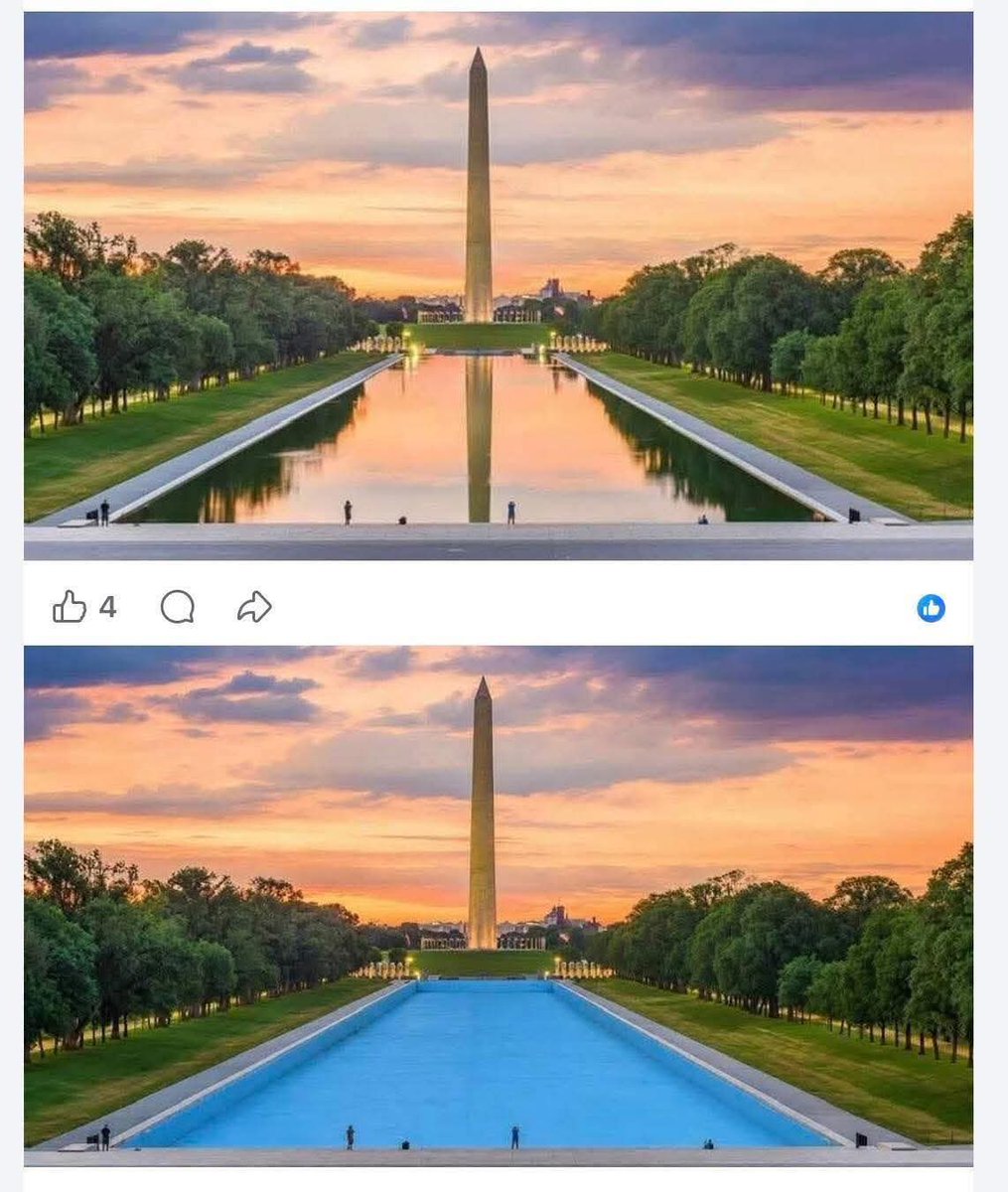
I stood at this pool, at both monuments and saw both reflections…
He’s a God damn idiot, as are the fools that support him. The “Reflection Pool” wasn’t designed by American architect Henry Bacon a hundred years ago to look like a swimming pool. It’s designed to have a darkened characteristics that has reflective qualities to reflect the monuments.
That way, the Washington Monument is reflective to you when at the Lincoln Memorial, and when at the Washington Monument, the Lincoln Memorial is reflective to you.
It’s designed to enhance the grandeur of monuments, create an illusion of reflection, and inclusion of expansive space of unity.
He’s a tacky vulgar person that vulgarizes everything he touches. America isn’t becoming great, it’s becoming vulgar.
Credit - Mathew Reed
The Battle of Midway began with America missing almost everything it shot at. 24 hours later it had won the most lopsided victory in modern naval history.
First, the setup. US codebreakers had cracked enough of Japan's naval code to suspect "AF" meant Midway. To prove it, they had the island radio a fake message in the clear saying its water plant had broken down. Two days later, Japanese intelligence dutifully reported that "AF is short of water." Trap confirmed. The US Navy was now waiting in ambush for a fleet that thought IT was the ambusher.
Then, on June 3, 1942, the shooting started... badly.
That morning, Ensign Jack Reid's PBY patrol plane spotted Japanese ships 500+ miles out and radioed "Sighted main body." It wasn't the main body. It was the invasion transports. The actual carriers were somewhere else entirely.
Nine B-17 bombers flew out and attacked from high altitude. Crews came home reporting hits on four ships. Actual hits: zero. Post-war records confirmed not a single bomb connected.
That night, four PBY flying boats, lumbering patrol planes never meant for this, staggered through the dark and put a torpedo into the tanker Akebono Maru. It turned out to be the ONLY successful American aerial torpedo attack of the entire battle.
Then came June 4. Dive bombers caught the Japanese carriers with fuel hoses and ordnance scattered across their decks. In about five minutes, three carriers were burning wrecks. A fourth followed by nightfall.
Japan lost four fleet carriers. The Pacific War flipped in an afternoon, and Japan never regained the initiative.
This was how beautiful the Rose Garden was and that was the beautiful Jackie Kennedy attending to it! Who would have ever thought it would look like a dump now! What a disgrace.
Former German Chancellor Gerhard Schröder has been spotted in Moscow.
At this point, nobody should be surprised.
For years, Schröder served as one of Putin's most valuable assets in the West. While millions of Europeans believed they were building peace through economic cooperation, the Kremlin was building leverage, influence, and dependency.
The result was catastrophic. Germany became dependent on russian energy, and Europe helped Putin grow his war machine.
Ukraine repeatedly warned that Nord Stream was not an economic project but a geopolitical weapon. Those warnings were ignored.
Today, after hundreds of thousands of casualties, destroyed cities, abducted children, and countless war crimes, Schröder is back in Moscow.
History should remember that Putin did not build his influence in Europe alone. He had help: politicians, executives, lobbyists, and intellectuals who convinced themselves that profit was more important than principles.
84 years ago today, the most important Japanese admiral in the Pacific sailed into a fog bank he could not see out of, carrying secret orders he believed were known to no one on earth.
The Americans had read them three weeks ago.
In May 1942, Admiral Isoroku Yamamoto had a plan to end the war in the Pacific in 30 days. He would draw the surviving US Navy carriers into a trap near a tiny atoll called Midway, 1,300 miles northwest of Hawaii, and destroy them with the largest naval force ever assembled. 200 ships. 700 aircraft. 100,000 men. Four heavy carriers under Vice Admiral Chuichi Nagumo would lead the strike. The American fleet, which had only three serviceable carriers left after the Coral Sea, would be annihilated. Then Hawaii would fall. Then the US would sue for peace.
The plan was perfect.
It was also compromised.
In a basement in Pearl Harbor, a small team of cryptanalysts under Commander Joseph Rochefort had broken the Japanese naval cipher JN-25 in the spring of 1942. They were reading roughly 20 percent of every Japanese signal in real time, and educated guesswork filled in the rest. By mid-May they knew the target was somewhere referred to only as "AF." But where was AF?
Rochefort had a hunch. He sent a signal in the clear from Midway saying their water distillation plant had broken down. Two days later, Japanese intercepts mentioned that "AF" was running short of fresh water. Bingo.
By May 27 Admiral Chester Nimitz knew the date of the Japanese attack, the composition of the Japanese force, the route Nagumo would take, and roughly the time he would launch his first strike. He pulled every American carrier to a point northeast of Midway called "Point Luck" and waited. The trap had been set for him. He set a trap inside the trap.
On June 2, Nagumo's four carriers approached Midway through the worst fog any of them had ever seen. Visibility dropped below 600 yards. His ships could barely see each other. He held radio silence to protect his approach. He believed he had complete surprise. He believed the American carriers were thousands of miles away in the South Pacific. He believed he was about to win the war.
Yamamoto, on the battleship Yamato 600 miles behind him, had intelligence that the American carriers might in fact be at sea. He chose not to break radio silence to warn Nagumo. He assumed Nagumo had the same intelligence. Nagumo did not.
At 4:30 AM on June 4, Nagumo launched 108 aircraft against Midway from a position the Americans had been waiting for him to reach.
By sunset, three of his four carriers were burning hulks. The fourth would sink the next morning. Japan lost 3,057 men, 248 aircraft, and the four best carriers of the Pacific War in a single day. Japanese naval aviation never recovered. The war was decided in six minutes between 10:22 and 10:28 AM on June 4.
The whole disaster traced back to one decision on June 2: a Japanese admiral sailing into fog, trusting that nobody knew where he was going.
Ian Fleming initially wanted Alfred Hitchcock to direct the first James Bond movie. It didn't materialise. Cary Grant was also approached to play the character but it didn't work out as he committed to do only one movie.
The helicopter scene in "From Russia with Love" (1963) was Terrence Young's idea and is a homage to the scene in Hitchcock's "North by Northwest" (1959).
During the filming of this scene, a camera operator's leg was hit by the blades of the helicopter that came in too low and he had to have his foot amputated. Sean Connery too came close to death when an inexperienced pilot flew a little too close, endangering his life.
(Sources:
1. "Revealed: The secret telegram that shows Ian Fleming wanted Alfred Hitchcock to direct the first Bond film", Graham Smith, Daily Mail, 2012.
2. "How Cary Grant nearly made Global James Bond Day an American affair", Amanda Holpuch, The Guardian, 2012.
3. "REVISITED: the ‘banned’ FRWL commentary", The Spy Command, 2014.
4. "Production Notes - From Russia With Love", MI6)