Data conversion decisions can have implications beyond implementation.
Even seemingly minor inconsistencies in source data can create downstream challenges when information must be mapped to standardized values in a new system.
Consider medication data: variations in spelling, abbreviations, and free-text entries can turn what appears to be a straightforward conversion into a much more complex exercise in data review and reconciliation.
In this audiogram, Lynn Cole, Project Manager at MediQuant, shares recommendations for identifying and addressing common conversion challenges before they become larger obstacles.
Learn more about MediQuant's approach to data migration and conversion: https://t.co/AJIySjYh9Z
New platforms, shifting priorities, and smarter investments are reshaping what’s next for data management.
Historical data still holds value. But not all data needs to be kept forever, and the applications that once housed it don’t necessarily need to remain part of the equation.
That’s where a broader approach to data lifecycle management changes the conversation.
It’s not just about where the data goes when an application is retired. It’s about knowing what to preserve, what can be retired, and what technology can best support the future.
➡️Explore what’s possible with Beyond the Archive: https://t.co/dnKvggucor
As imaging portfolios grow and technology continues to evolve, healthcare organizations are taking a closer look at what they have, what they need, and how a more intentional approach can help reduce costs.
Join MediQuant's ArkNotes webinar, “Smart Imaging Portfolio Rationalization for IT Leaders” on December 8 at Noon ET.
Listen as our panel of clinical, operational, and technical experts explore how healthcare organizations can approach imaging portfolio rationalization with greater clarity and confidence while creating a stronger foundation for what comes next.
Reserve Your Spot: https://t.co/XktHQfB6Ay
Last month’s top read: Why application rationalization belongs in the cybersecurity conversation.
Every application in a healthcare environment carries a cost—and potentially a risk. Gaining a clear view of the application environment helps leaders identify unsupported systems, inherited liabilities, redundant platforms, and applications that no longer serve the organization.
Read the full article: https://t.co/MSNA9Jnebe
#ApplicationRationalization #HealthcareCybersecurity #HealthcareIT #DigitalTransformation
With health systems making new investments in imaging technology, maintaining access to historical studies shouldn’t mean shouldering the cost and complexity of legacy infrastructure.
This Imaging Technology Week, we’re looking beyond the image to the bigger picture: how healthcare organizations can preserve clinical imaging data while reducing costs and simplifying management of aging systems—all to ensure continuity of care.
With DataArk’s medical imaging archive capabilities, MediQuant helps healthcare organizations retire legacy imaging systems, preserve historical studies, and maintain seamless access to critical imaging data that supports informed clinical decisions.
Explore Now: https://t.co/VhYTWJZB92
Legacy applications can create complexity long after they're not needed.
Maintaining outdated systems just to preserve access to historical data can add unnecessary costs, increase IT burden, and introduce ongoing risk.
There's a better way.
By preserving the information that matters and retiring the applications that no longer serve your organization, your team can simplify IT environments while maintaining access to meaningful historical data.
Discover a better approach to healthcare data lifecycle management.
Explore Beyond the Archive 👉 https://t.co/dnKvggucor
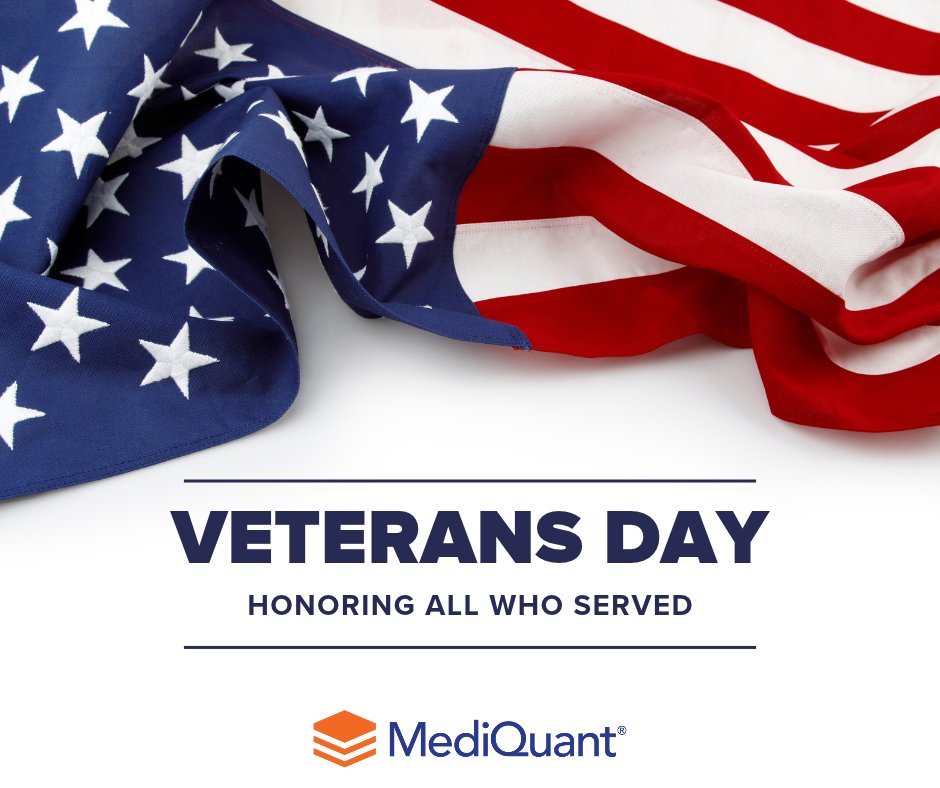
As we reflect on the importance of service, we also recognize the vital role that data plays in supporting veterans and those who care for them. At MediQuant, we are committed to providing innovative data solutions that empower healthcare organizations to make better decisions, faster.
Join us in honoring our veterans and their contributions to our nation. Thank you for your service!
We're proud to sponsor CHIME26 Fall Forum and support the conversations and connections that help move healthcare forward.
Our team looks forward to connecting with healthcare IT leaders next week.
Attending CHIME26? We'd love to connect. Send us a private DM to schedule time with our team.
Data management doesn’t end when an application is retired.
There’s a better way to manage data throughout its lifecycle, helping organizations preserve access, strengthen security, and reduce unnecessary cost while protecting the value of their information.
Explore a better way Beyond the Archive.
https://t.co/dnKvggucor
#DataManagement #HealthcareIT #DigitalTransformation #DataLifecycle
"Health systems are under significant pressure to maintain costs while storage and software costs continue to rise." - Jim Jacobs, President & CEO, MediQuant
Aligning retention policies with a broader data lifecycle management strategy can help your organization take a more comprehensive view of the data and systems that support it.
Learn more in our latest news release.
Read more: https://t.co/sCLVDYb9rf
The countdown is on. The data is at risk. And time is running out.
One organization had just two and a half months to archive critical patient accounting data before losing access during an M&A.
What would happen if your legacy data vanished overnight? With MediQuant and DataArk, you won't have to find out.
Watch Lights Out: The Threat of Vanishing Data Access: https://t.co/HuwrLg0YCC
#HITHorrorStories #HealthcareIT #DataArchiving
Your legacy systems may be retired. Their costs may not be.
Application retirement is an opportunity to reduce ongoing licensing, infrastructure and maintenance expenses. But realizing those savings requires more than moving data out of an old system.
MediQuant helps healthcare organizations move beyond legacy applications while preserving access to historical data.
Retire the system. Not the value.
Go Beyond the Archive: https://t.co/dnKvggucor
Modernization should not come at the cost of autonomy.
For tribal health organizations, data is deeply connected to privacy, culture, sovereignty, and patient safety.
DataArk helps tribes and consortiums control access to their information at a granular level, while bringing disparate legacy systems together into a longitudinal patient record.
That means tribal organizations can:
🔷Protect sensitive information
🔶Determine who can access specific data
🔷Keep tribal records appropriately separated
🔶Make historical data usable for analytics and decision-making
Patient-first data management gives communities the control they need to determine how their data is accessed, protected, and used.
Hear from Kel Pults, DHA, MSN, RN, NI-BC, NREMT, MediQuant’s Chief Clinical Officer & VP, Government Strategy, on how modern data management can support tribal health organizations and the communities they serve.
Visit our full Tribal Health page to learn how MediQuant helps government and tribal healthcare organizations modernize access to critical data while maintaining security, control, and continuity.
https://t.co/AIdJEKNee3
#TribalHealth #DataSovereignty #HealthcareIT #PatientSafety #HealthIT #HealthcareData
The quality of your data conversion directly affects how clinicians find information, use workflows, and rely on clinical decision support in the new system.
A strong conversion process should include:
🔶Technical validation
🔶Clinical, chart-to-chart validation
🔶Structured data mapping
🔶Document organization and file conversion
Data may look correct in the new EHR while still losing important functionality behind the scenes. For example, unmapped allergy data may display properly but fail to trigger the alerts providers need.
Experienced healthcare data conversion partners help organizations manage these complexities while freeing internal teams to focus on implementing and learning the new system.
Data conversion is not just a migration task. It’s a critical part of EHR implementation strategy.
https://t.co/AJIySjYh9Z
#HealthcareIT #EHR #DataConversion #HealthIT
Retiring a legacy application is an important first step toward reducing costs. But what happens to the data left behind?
Without a strategy for managing that data throughout its lifecycle, healthcare organizations continue paying to store, secure, and manage records long after the usefulness of the data has expired.
Data lifecycle management can change what happens next.
The goal isn't simply to archive data. It's to manage it's entire lifecycle.
Is your healthcare organization ready to move 🔶Beyond The Archive🔶?
Schedule a Demo 👉 https://t.co/dnKvggucor
The next big thing in healthcare data? Less.
🔶Less legacy technology to maintain.
🔷Less infrastructure tied to systems that no longer support the future.
🔶Less data to store, secure, and manage.
DataArk helps healthcare organizations move beyond traditional archiving by supporting the ongoing retirement of legacy applications, smarter data lifecycle management, and long-term access to the information teams still need.
Because archiving the data isn’t the end of the story.
See what’s possible beyond the archive: https://t.co/dnKvggucor
If your go-live date is already set, the time to start your data conversion plan is now.
Whether you're 18 months from go-live or already inside your implementation window, our team will help you understand:
➡️What your conversion will require
➡️What questions to ask before you select a vendor
➡️How to plan for both conversion and archiving
➡️Where your legacy data should actually live
Every conversion is scoped to your environment, timeline, and legacy system. The process includes discovery, data extraction, development and mapping, validation, and data loading—planned before and after go-live so any last-minute clinical activity documented in your legacy system carries over to your new EHR.
Ready to scope your conversion?
Request a consultation: https://t.co/JrWMkZf6Um
#HealthcareIT #EHRMigration #DataConversion #GoLive #HealthIT
We’re here at ModMed's MOMENTUM 2026 in Florida!
If you’re attending, come visit our team to talk about your healthcare data conversion needs, including how to preserve access to critical information, retire legacy applications, and migrate data to support a more streamlined technology environment.
We’d love to connect. Stop by Booth 213 and say hello!
#MOMENTUM2026 #HealthcareIT #HealthTech #HealthcareArchiving #ModernizingMedicine
Are Multiple Archive Vendors Haunting Your Organization?
Too many vendors. Rising costs. Data scattered across systems. Sound familiar? That's a real IT horror story.
One healthcare system faced the challenge of managing multiple archive vendors. By partnering with MediQuant, they simplified their archival environment, eliminated unnecessary costs, and brought greater clarity to their data.
This October we are revisiting the scary side of healthcare IT - and the stories of how organizations turned their challenges into solutions.
Watch the full series here: https://t.co/L3DLqu47mA
Tufts Medicine (Tufts), a leading academic medical center in Massachusetts operating five hospitals with over 1,000 beds and 2,000+ providers, was searching for the right partner to archive accounts receivable (AR) from 5 applications: Cerner Millennium, Cerner Invision, MEDITECH, Athena Health, and McKesson Paragon.
Faced with complex revenue cycle and financial data challenges, MediQuant stepped in to deliver the solution Tufts needed by leveraging DataArk®, MediQuant’s signature active data archiving platform. Through DataArk, MediQuant was able to complete Tuft’s archival on time, ensuring compliance and efficiency while maintaining business continuity.
Read the full case study: https://t.co/Gg2rZTImza...