🦠 Can targeted phage therapy protect the kidneys?
A new study in hLife reveals the potential of targeted bacteriophage therapy to alleviate E. coli-associated renal injury in diabetic kidney disease.
🔗 https://t.co/Ghh0cf3zzd
#hLife#PhageTherapy#DiabeticKidneyDisease
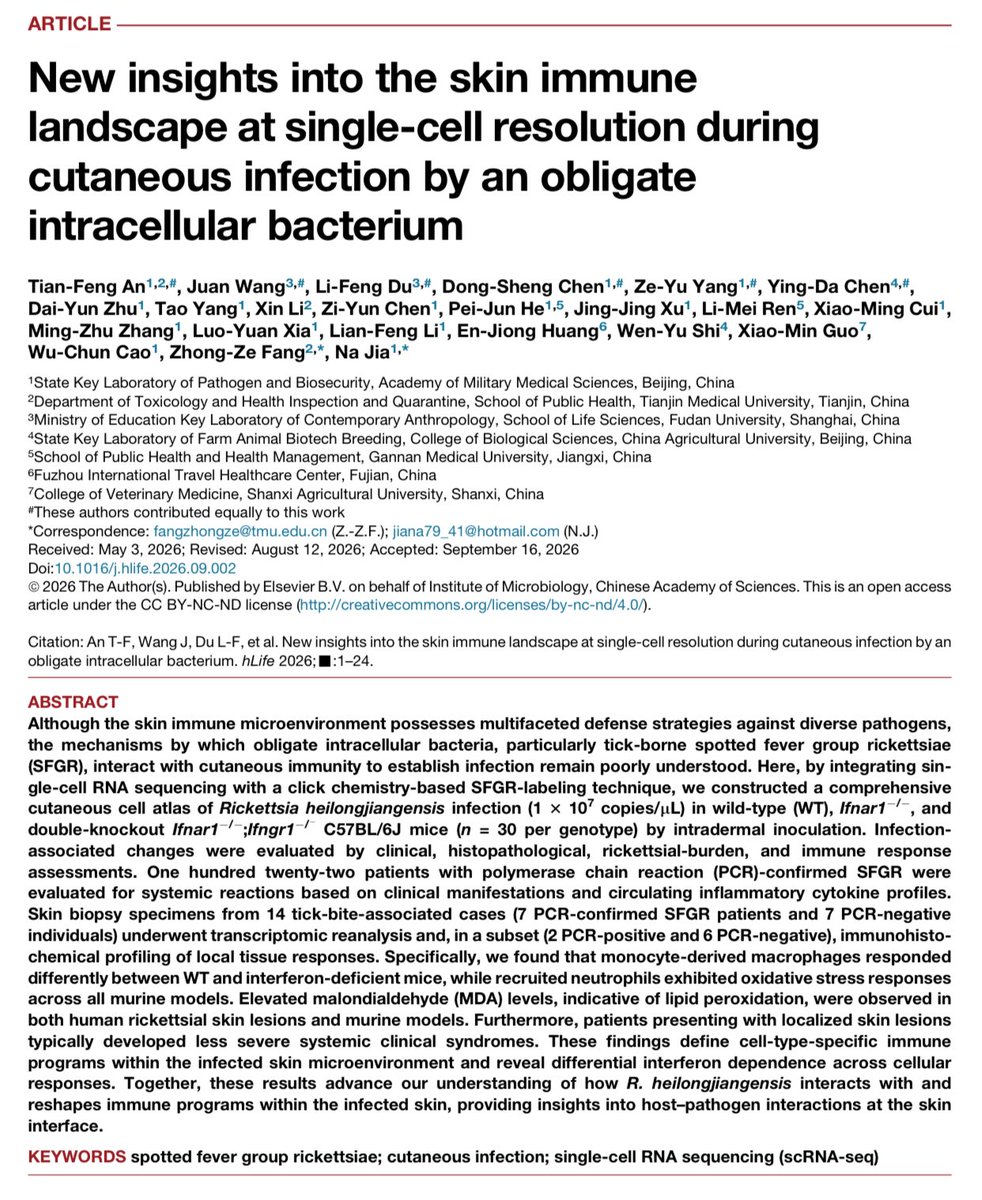
🧬 What happens in the skin immune landscape during bacterial infection?
A new study in hLife uses single-cell analysis to reveal the skin immune landscape during infection by an obligate intracellular bacterium.
🔗 https://t.co/9MwVZun9g7
#hLife#Immunology#SingleCell
If a researcher has previously co-authored publications with individuals who have records of retractions or research misconduct, or if members of their research group carry such retraction histories, any new manuscript they submit may be automatically flagged by the system prior to peer review.
This means that a single instance of academic misconduct can result in a permanent mark against the researcher.
New expert consensus: recurrent preschool wheeze is messy. Mostly viral/early asthma; younger kids often hide other causes. SABA 1st, steroids if severe only, no routine azithro. Treatable traits > old phenotypes.
https://t.co/N62zyjjtYE
#PreschoolWheeze#PediatricAsthma
No targeted Tx for sepsis-related AKI in kids. Hyp: gut MB butyrate protects via GKA—barrier support, immune rebal, less tubular stress. Mostly preclin. Test carefully in kids.
https://t.co/9x70bAB7B7
Call for Papers | hLife
Virtual cells for translational medicine
Linking molecules to function, predicting cell responses, disease mechanisms & targets, tissue interactions, lab-in-the-loop AI, and patient-specific models.
Deadline: June 30, 2027
Submit: https://t.co/uzTDGTCFSh
hLife | Call for Papers: Virtual Cells for Translational Medicine
Can virtual cells transform how we understand disease and discover therapies? We invite researchers worldwide to share their latest advances and shape the future of translational medicine.
@wshenrx@yiyiyihe
Maternal depression in the perinatal period linked to more emotional problems in kids at age 6. Depression peaking in the 2nd year postpartum tied to conduct issues + lower cognitive scores. Screening beyond 6 months matters.
https://t.co/xAwtEJFAfT
#Pediatrics#MedEd
"She reminded us that because of our station in life we were unlikely to get second chances, so we needed to make the most of every opportunity—and enable paths for others. “Remember your origins,” she told us."