🔬 BREAKING from The BMJ:
A population‑based cohort study led by researchers at Brigham and Women‘s Hospital and Harvard Medical School (Nils Kruger et al.) — using a prespecified, trial‑benchmarked design and data from two national US claims databases (Optum and MarketScan) — evaluated the real‑world cardiovascular effects of tirzepatide vs a placebo proxy (sitagliptin) in 52,971 patients with type 2 diabetes and established atherosclerotic cardiovascular disease.
✅ At 1 year, tirzepatide reduced the risk of MACE (composite of MI, stroke, and all‑cause mortality) from 4.4% to 2.9% — absolute risk reduction of 1.4% (95% CI: 2.1%–0.7%); HR: 0.68 (95% CI: 0.58–0.80); NNT = 70
✅ Myocardial infarction: HR 0.67 (95% CI: 0.52–0.87); NNT = 130
✅ All‑cause mortality: HR 0.55 (95% CI: 0.42–0.72); NNT = 122
✅ Ischaemic stroke: HR 0.91 (95% CI: 0.64–1.28); NNT = 2,500 — no meaningful difference
✅ Infection‑related mortality was substantially lower with tirzepatide: HR 0.40 (95% CI: 0.26–0.61); NNT = 200
✅ Infections requiring hospital admission also reduced: HR 0.64 (95% CI: 0.55–0.75); NNT = 48
✅ Negative control outcomes (lumbar radiculopathy and abdominal hernia) showed no association, supporting robustness of confounding adjustment
✅ The survival benefit appeared driven in part by reductions in serious infections, suggesting broader non‑atherosclerotic mechanisms beyond cardiovascular risk factor modification
This study provides a clinically interpretable estimate of tirzepatide‘s incremental cardiovascular benefit when added to standard of care — with NNTs that can inform shared decision‑making — and highlights the value of trial‑anchored real‑world evidence to complement randomised trials for regulatory and clinical decisions. 📖
📄 Read the full paper: Tirzepatide and the risk of atherosclerotic cardiovascular events: population based cohort study
🔗 DOI: 10.1136/bmj‑2026‑100011
#BMJ #Tirzepatide #GLP1 #Cardiovascular #MACE #Diabetes #RealWorldEvidence #Cardiology
🔬 BREAKING from Circulation:
The American Heart Association has released a new scientific statement on Surviving Pediatric Cardiogenic Shock — providing the first comprehensive framework for the diagnosis, severity staging, and management of children with heart failure‑related cardiogenic shock (CS), a condition with mortality rates ranging from 25% to 50%.
✅ Proposed standardized definition for pediatric CS: cardiac dysfunction resulting in clinical or biochemical evidence of tissue hypoperfusion (cool extremities, elevated lactate >2 mmol/L, abnormal organ function, irritability, or altered mentation)
✅ Novel severity staging system (adapted from SCAI classification): Stage A (at risk) → B (beginning) → C (classic) → D (deteriorating) → E (extremis) — enabling consistent communication and early identification of clinical trajectory
✅ Key management principles:
Early recognition and transfer to centers with advanced circulatory support capabilities
Tailored vasoactive support (epinephrine, milrinone, dobutamine) based on CS phenotype
Respiratory support to reduce afterload and oxygen demand
Close monitoring of lactate, end‑organ function, and oxygen extraction ratio to guide therapy
Timely escalation to mechanical circulatory support (ECMO or ventricular assist devices) when end‑organ perfusion continues to decompensate despite maximal medical therapy
✅ Health equity considerations: Black race and Hispanic ethnicity are associated with higher mortality in pediatric cardiomyopathy/myocarditis, likely mediated by severity at presentation and delays in accessing appropriate care
✅ Future directions include validating the proposed staging system, studying multidisciplinary shock teams, exploring novel biomarkers (angiopoietin‑2, IL‑6, galectin‑3), and developing clinical decision tools
This statement fills a critical gap in pediatric cardiology by providing bedside‑friendly diagnostic criteria and a management algorithm for a high‑risk population that has historically lacked standardized guidance. 🇺🇸📖
📄 Read the full paper: Surviving Pediatric Cardiogenic Shock: Clinical Approach, Improving Outcomes, and Future Directions: A Scientific Statement From the American Heart Association
🔗 DOI: 10.1161/CIR.0000000000001461
#Circulation #AHA #PediatricCardiology #CardiogenicShock #HeartFailure #PICU #CardiacICU
📢 SAVE THE DATE: HFSA 2026
The Heart Failure Society of America (HFSA) Annual Scientific Meeting 2026 will take place on October 9–12, 2026 in Phoenix, Arizona, USA — bringing together clinicians, scientists, nurses, pharmacists, and patient advocates from around the world to advance heart failure care through multidisciplinary collaboration.
One key reminder:
✅ Clinical trial submissions are closing soon — the deadline is August 11, 2026
📅 Date: October 9–12, 2026
📍 Venue: Phoenix, Arizona, USA
🔗 Submit your clinical trial here: https://t.co/9zX9iE9tNa
#HFSA2026 #HeartFailure #ClinicalTrials #Cardiology #HFSA
🔬 BREAKING from Metabolism:
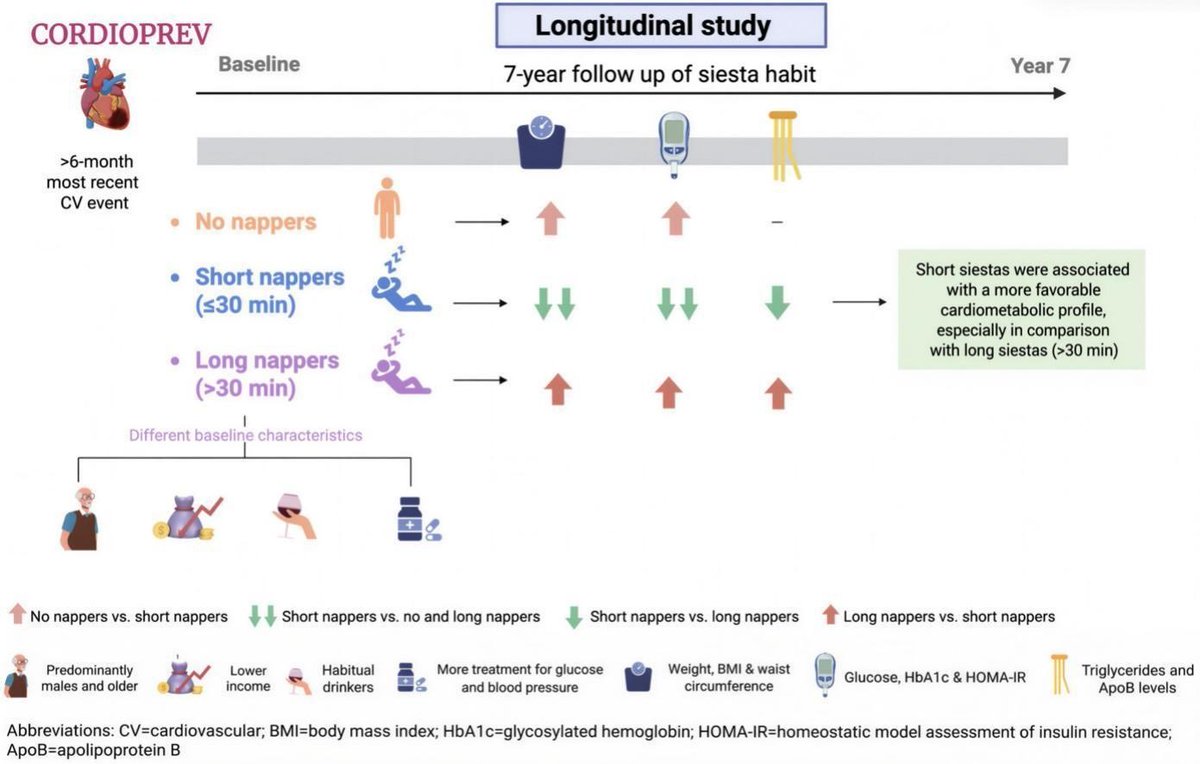
A 7‑year follow‑up study of 872 patients with established coronary heart disease from the CORDIOPREV trial (NCT00924937) — led by researchers at Reina Sofia University Hospital and University of Cordoba, Spain (corresponding authors: Juan Luis Romero‑Cabrera and José López Miranda) — evaluated the association between habitual siesta (daytime napping) patterns and cardiometabolic health over nearly a decade.
✅ Participants were classified as non‑nappers, short nappers (≤30 min), or long nappers (>30 min) based on repeated reports over 7 years
✅ Short nappers had significantly lower weight, BMI, and abdominal circumference throughout follow‑up compared with long nappers (P < 0.05)
✅ Short nappers also showed lower fasting glucose, glycated haemoglobin, HOMA‑IR, apolipoprotein B, and triglyceride levels versus long nappers (P < 0.05)
✅ Among patients without diabetes, short nappers had more favourable anthropometric measures than long nappers
✅ Among patients with diabetes, short nappers showed better glycaemic control and lower triglycerides than long nappers
✅ Long nappers consistently displayed a less favourable cardiometabolic profile across multiple parameters
This study provides novel evidence that a habitual short siesta (≤30 min) is associated with better cardiometabolic health in patients with coronary heart disease — while longer naps may confer less benefit — suggesting that both duration and consistency of napping habits matter for secondary prevention. 🇪🇸📖
📄 Read the full paper: Short siesta habit and cardiometabolic health: A 7‑year follow‑up in coronary heart disease patients from the CORDIOPREV study
🔗 DOI: 10.1016/j.metabol.2026.156724
#Metabolism #Siesta #CardiometabolicHealth #CHD #CORDIOPREV #Cardiology #LifestyleMedicine
🔬 BREAKING from Circulation:
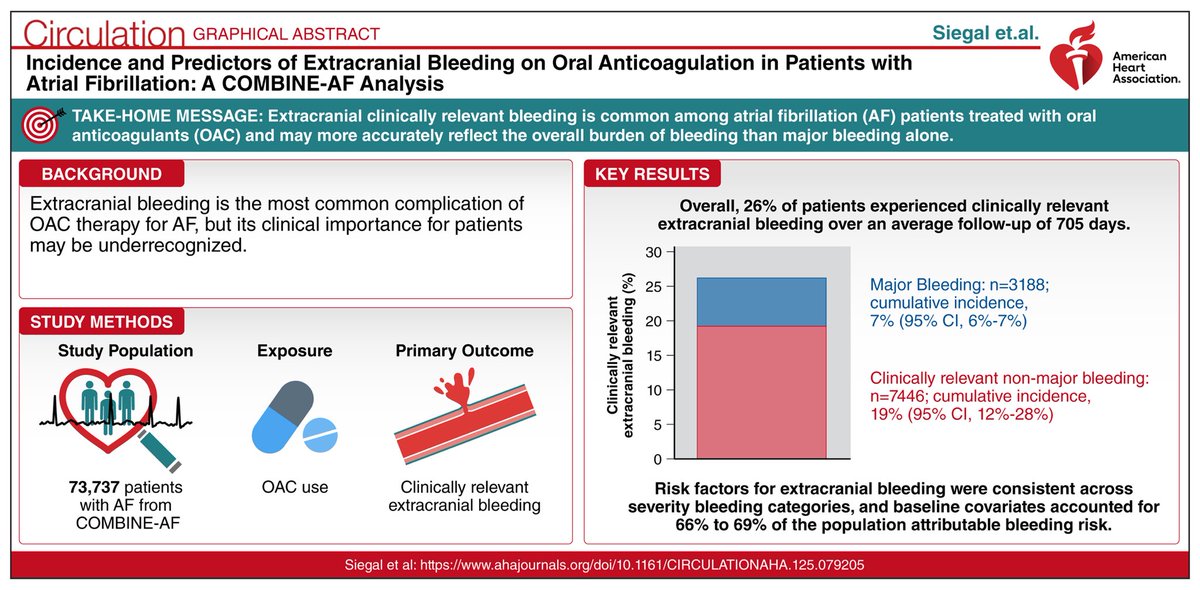
A pooled analysis of 73,737 patients with atrial fibrillation from 5 pivotal randomized trials (COMBINE‑AF) — comparing direct oral anticoagulants vs warfarin — provides comprehensive data on the incidence, predictors, and population attributable risk of extracranial bleeding, the most common complication of OAC therapy.
✅ Cumulative incidence of clinically relevant extracranial bleeding was 26% (95% CI: 18%–35%) over a mean follow‑up of 705 days — corresponding to an event rate of 7.6 per 100 person‑years
✅ Major bleeding occurred in 7% (2.1 per 100 person‑years); clinically relevant non‑major bleeding in 19% (5.2 per 100 person‑years)
✅ Bleeding site distribution differed by severity: gastrointestinal bleeds accounted for 49% of major bleeds, 26% of clinically relevant bleeds, and 15% of clinically relevant non‑major bleeds
✅ Risk factors for bleeding were consistent across severity categories
✅ Multivariable models explained 66%–69% of the population attributable bleeding risk — suggesting that additional unmeasured or unknown factors contribute to the remaining one‑third
This analysis demonstrates that extracranial clinically relevant bleeding is far more common than major bleeding alone and may more accurately reflect the overall burden of OAC therapy in patients with AF. The substantial unexplained risk highlights the need for further research to improve bleeding risk prediction. 📖
📄 Read the full paper: Incidence and Predictors of Extracranial Bleeding on Oral Anticoagulants for Stroke Prevention in Patients With Atrial Fibrillation: A COMBINE‑AF Analysis
🔗 DOI: 10.1161/CIRCULATIONAHA.125.079205
#Circulation #AFib #OAC #Bleeding #Anticoagulation #Cardiology #StrokePrevention
🔬 BREAKING from European Heart Journal:
The European Association of Cardiovascular Imaging (EACVI) and ESC Council for Cardiology Practice have released a new clinical consensus statement on the implementation of cardiac computed tomography (CCT) in everyday practice — providing a practical, evidence‑based guide for general cardiologists on when and how to use CCT across the full spectrum of heart disease.
✅ Key clinical indications covered:
Coronary artery disease — from CACS for risk stratification in asymptomatic patients, to CCTA for acute chest pain and chronic coronary syndromes, to advanced applications like FFR‑CT and stress CT perfusion for functional assessment
Valvular heart disease — valve planimetry, calcium scoring for AS severity (≥2000 HU in men, ≥1200 HU in women for severe AS), prosthetic valve evaluation, and detection of HALT/thrombosis/pannus
Cardiomyopathies — excluding CAD, assessing myocardial bridging in HCM, and diagnosing constrictive pericarditis (pericardial thickness >4 mm, calcifications)
Cardiac masses — differentiating thrombus from tumour, benign from malignant, and guiding surgical planning
Large vessel diseases — acute aortic syndromes, aortic diameter measurement (inner‑edge to inner‑edge, ECG‑gated), and post‑surgical/TEVAR follow‑up
Pulmonary embolism — acute and chronic PE diagnosis, risk stratification by RV/LV ratio
Adult congenital heart disease — coronary anomalies, pulmonary vein anomalies, pre‑procedural planning, and prosthetic valve assessment
✅ Practical guidance on:
Patient preparation and safety (heart rate control, contraindications, radiation dose ALARA principle)
Scan protocols tailored to clinical questions
Standardized reporting systems: CAC‑DRS for calcium score, CAD‑RADS 2.0 for CCTA, including modifiers for high‑risk plaque (HRP) and ischaemia (I+/I−)
Extra‑cardiac findings — present in ~41% of patients, clinically relevant in ~16%, and life‑threatening/malignant in ~2.5%; pulmonary nodules are the most frequent finding requiring follow‑up per Fleischner Society guidelines
This consensus statement is essential reading for all cardiologists navigating the expanding role of CCT in daily clinical practice — linking technical knowledge to practical application across the entire spectrum of cardiovascular disease. 📖
📄 Read the full paper: Implementation of cardiac computed tomography in everyday practice: A clinical consensus statement of the European Association of Cardiovascular Imaging (EACVI) of the ESC and the ESC Council for Cardiology Practice
🔗 DOI: 10.1093/eurheartj/ehag389
#EHJ #EACVI #CardiacCT #CCTA #Cardiology #Imaging #Consensus
🔬 BREAKING from European Heart Journal:
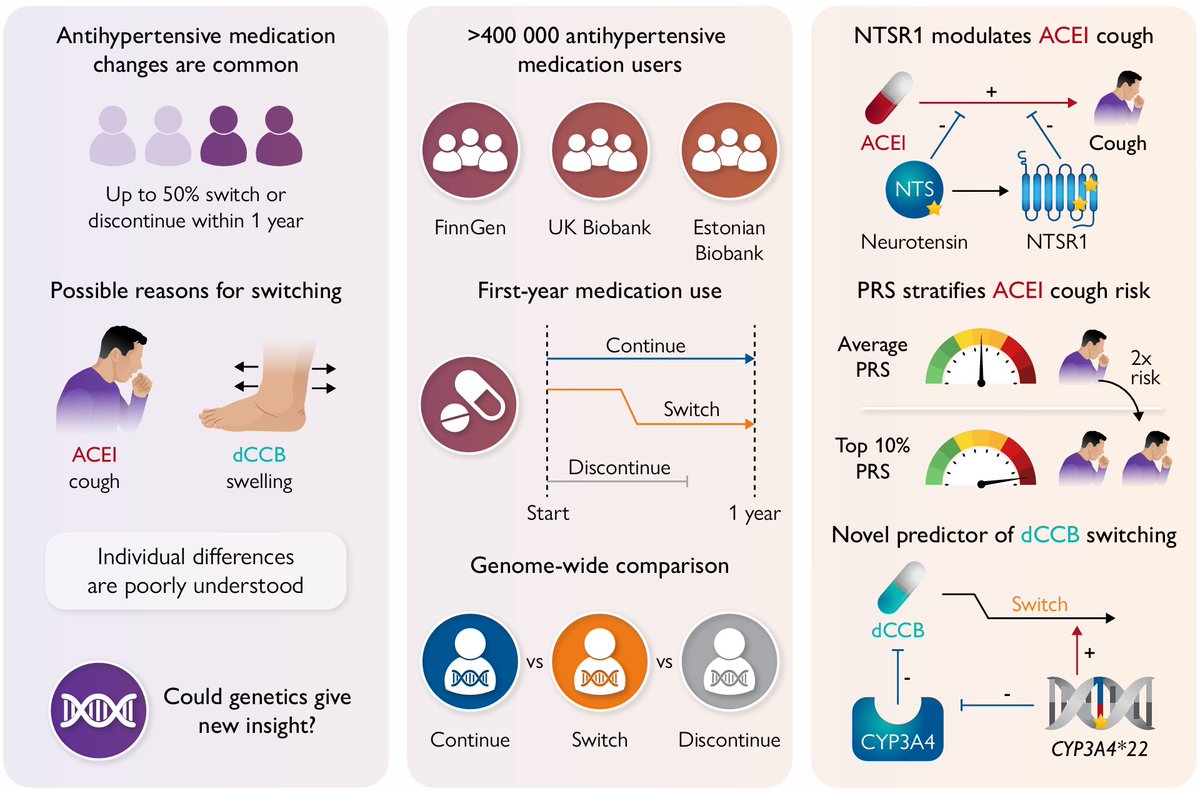
A large‑scale pharmacogenomic study integrating genomic and longitudinal medication data from >400,000 antihypertensive users across three population‑based biobanks (FinnGen, UK Biobank, and Estonian Biobank) identified genetic predictors of short‑term antihypertensive medication switching and discontinuation.
✅ 14 genome‑wide significant loci were identified for switching from ACE inhibitors (ACEI) and dihydropyridine calcium channel blockers (dCCB) to other antihypertensives
✅ Neurotensin‑NTSR1 pathway implicated in ACEI‑induced cough: a 320‑fold Finnish‑enriched missense variant in NTSR1 (G301R) was strongly protective (OR: 0.49; P = 3.3 × 10⁻⁴³); a variant near RASSF9 tagging the neurotensin gene NTS was also identified (OR: 0.74; P = 1.2 × 10⁻⁴⁹)
✅ Drug‑gene interaction analysis showed NTSR1 G301R carriers had reduced ACEI‑induced cough risk (interaction OR: 0.39; P = 8.1 × 10⁻⁴)
✅ CYP3A4*22 — a functional allele associated with reduced enzyme activity — was identified as a novel predictor of dCCB switching (OR: 1.23; P = 6.1 × 10⁻¹⁰), supporting genotype‑guided prescribing for calcium channel blockers
✅ A polygenic risk score for ACEI switching predicted two‑fold higher ACEI cough risk in the top 10% PRS group compared with the middle 20% in an independent replication sample
✅ Sex differences were observed: female sex was associated with higher risks of switching (OR: 1.13–1.88) and discontinuation (OR: 1.25–1.66); three ACEI switch variants showed stronger effects in females
This study extends the classical bradykinin‑substance P model of ACEI‑induced cough to include neurotensin‑NTSR1 signalling, identifies CYP3A4*22 as a functional predictor for dCCB switching, and validates medication use trajectories as a powerful framework for pharmacogenetic discovery. 📖
📄 Read the full paper: Side effects in hypertension treatment: a pharmacogenomic analysis
🔗 DOI: 10.1093/eurheartj/ehag575
#EHJ #Pharmacogenomics #Hypertension #ACEI #Genetics #Cardiology #PrecisionMedicine
🔬 BREAKING from European Heart Journal:
A translational study led by researchers at Guangzhou Medical University and University of California San Diego (corresponding authors: Hui Shen, John Y.J. Shyy, and Kaizheng Gong) reveals a protective AMPK/USP10 positive feedback loop in the pulmonary endothelium that enhances ACE2 stability and function — offering a novel mechanism and therapeutic strategy for pulmonary arterial hypertension (PAH).
✅ USP10 levels were decreased in the lung endothelium of human idiopathic PAH patients and rodent pulmonary hypertension (PH) models
✅ AMPK/USP10 loop activation increased ACE2 Ser‑680 phosphorylation and Lys‑788 deubiquitination, maintaining ACE2 homeostasis and lung vascular patency
✅ Endothelial cell‑specific USP10 transgenic mice showed mitigated PH, confirming the protective role of this loop
✅ Liraglutide (a GLP‑1 receptor agonist) phenocopied the protective effects of USP10 overexpression — activating the AMPK/USP10 loop in pulmonary endothelium and ameliorating PH in rodents
✅ These findings provide a rationale for using GLP‑1 RAs as a potential therapeutic strategy to alleviate PAH
This study identifies a novel AMPK/USP10/ACE2 axis in pulmonary vascular protection and positions GLP‑1 receptor agonists as a promising repurposing opportunity for PAH — a disease with high unmet need. 🇨🇳📖
📄 Read the full paper: AMPK/USP10 loop activation of ACE2: implications for pulmonary hypertension
🔗 DOI: 10.1093/eurheartj/ehag568
#EHJ #PulmonaryHypertension #PAH #AMPK #USP10 #ACE2 #GLP1 #Cardiology
🔬 BREAKING from EuroIntervention:
The ICARE OFDI randomized trial — a multicentre, prospective, non‑inferiority trial led by Dr Benjamin Honton and Dr Nicolas Combaret (principal investigators) across multiple centres in France — compared intravascular lithotripsy (IVL) vs rotational atherectomy (RA) for plaque modification in 169 patients with moderate‑to‑severe calcified coronary lesions, using optical frequency domain imaging (OFDI) guidance.
✅ IVL was non‑inferior to RA for the primary endpoint of minimal stent area (MSA) (6.0±2.3 mm² vs 5.9±2.2 mm²; P for non‑inferiority < 0.05)
✅ Adequate stent expansion was similar between groups (65.1% vs 65.1%; P = 0.994)
✅ Major strut malapposition was significantly lower with IVL (57.8% vs 80.2% with RA; P = 0.002)
✅ Periprocedural complications were comparable between groups
✅ 12‑month target lesion failure (TLF) rates were equivalent (IVL: 2.4% vs RA: 1.2%; P = 0.61)
✅ Calcified nodules were present in 48% of the overall cohort
This head‑to‑head randomized trial demonstrates that IVL is a safe and effective alternative to RA for calcified plaque preparation, with comparable MSA and clinical outcomes, and potentially better stent apposition — supporting IVL as a valuable option in the armamentarium for calcified coronary lesions. 📖
📄 Read the full paper: Intravascular lithotripsy in comparison to rotational atherectomy for calcified lesions: the ICARE OFDI randomised trial
🔗 DOI: 10.4244/EIJ‑D‑26‑00426
#EuroIntervention #IVL #RotationalAtherectomy #CalcifiedLesions #PCI #OCT #Cardiology
🔬 BREAKING from European Heart Journal:
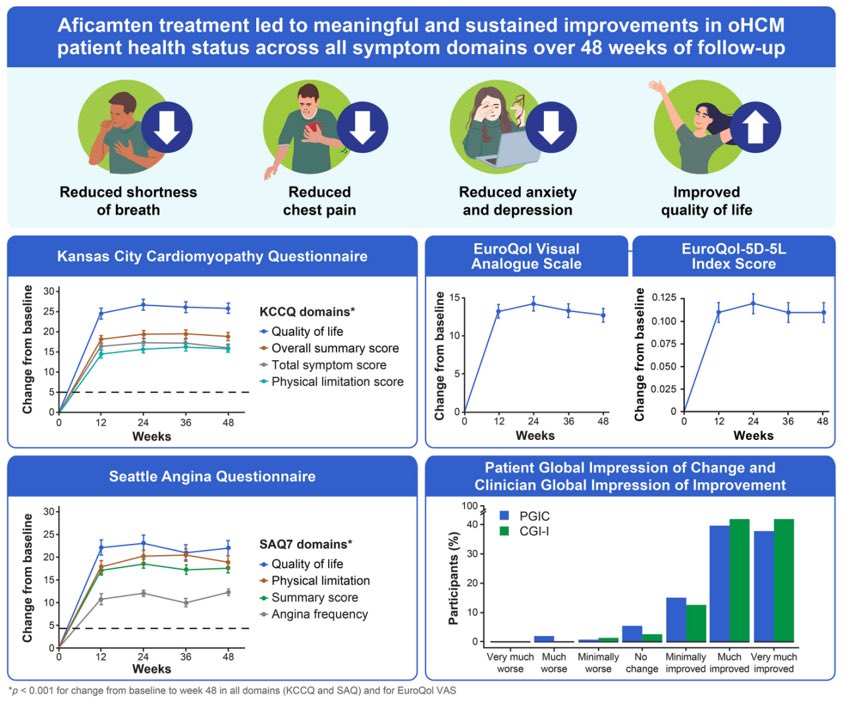
The FOREST‑HCM open‑label extension study — led by Shepard D. Weiner, MD (Columbia University Irving Medical Center) and the FOREST‑HCM Investigators — evaluated the long‑term effects of aficamten on patient‑reported outcomes (PROs) in 172 patients with obstructive hypertrophic cardiomyopathy (oHCM) over 48 weeks of follow‑up.
✅ Significant and sustained improvements were observed across all PROs by week 12 and maintained through week 48
✅ KCCQ‑Overall Summary Score improved by 18.8 points (95% CI: 16.9–20.6; P < 0.001), with the largest gain in the Quality of Life domain (+25.8 points; 95% CI: 23.2–28.5; P < 0.001)
✅ SAQ7‑Summary Score increased by 17.2 points (95% CI: 15.1–19.4; P < 0.001); EQ‑5D‑5L index improved by 0.11 and VAS by 12.7 points (both P < 0.001)
✅ Improvements in PROs were modestly correlated with reductions in NT‑proBNP, LVOT gradients, and NYHA class improvement
✅ Safety — transient LVEF reduction to <50% occurred in 6 patients (2.3 per 100 patient‑years); new‑onset atrial fibrillation in 4 patients (1.5 per 100 patient‑years); both subgroups still demonstrated health status improvements
This study demonstrates that aficamten provides meaningful and durable improvements across multiple dimensions of health status in patients with oHCM for up to 48 weeks — reinforcing its role as a disease‑specific therapy that enhances patients’ lived experience. 📖
📄 Read the full paper: Long‑Term Impact of Aficamten on Patient‑Reported Outcome Measures in Obstructive Hypertrophic Cardiomyopathy: Results From FOREST‑HCM
🔗 DOI: 10.1093/eurheartj/xuag244
#EHJ #HypertrophicCardiomyopathy #Aficamten #PROs #KCCQ #Cardiology #QualityOfLife
🔬 BREAKING from Circulation:
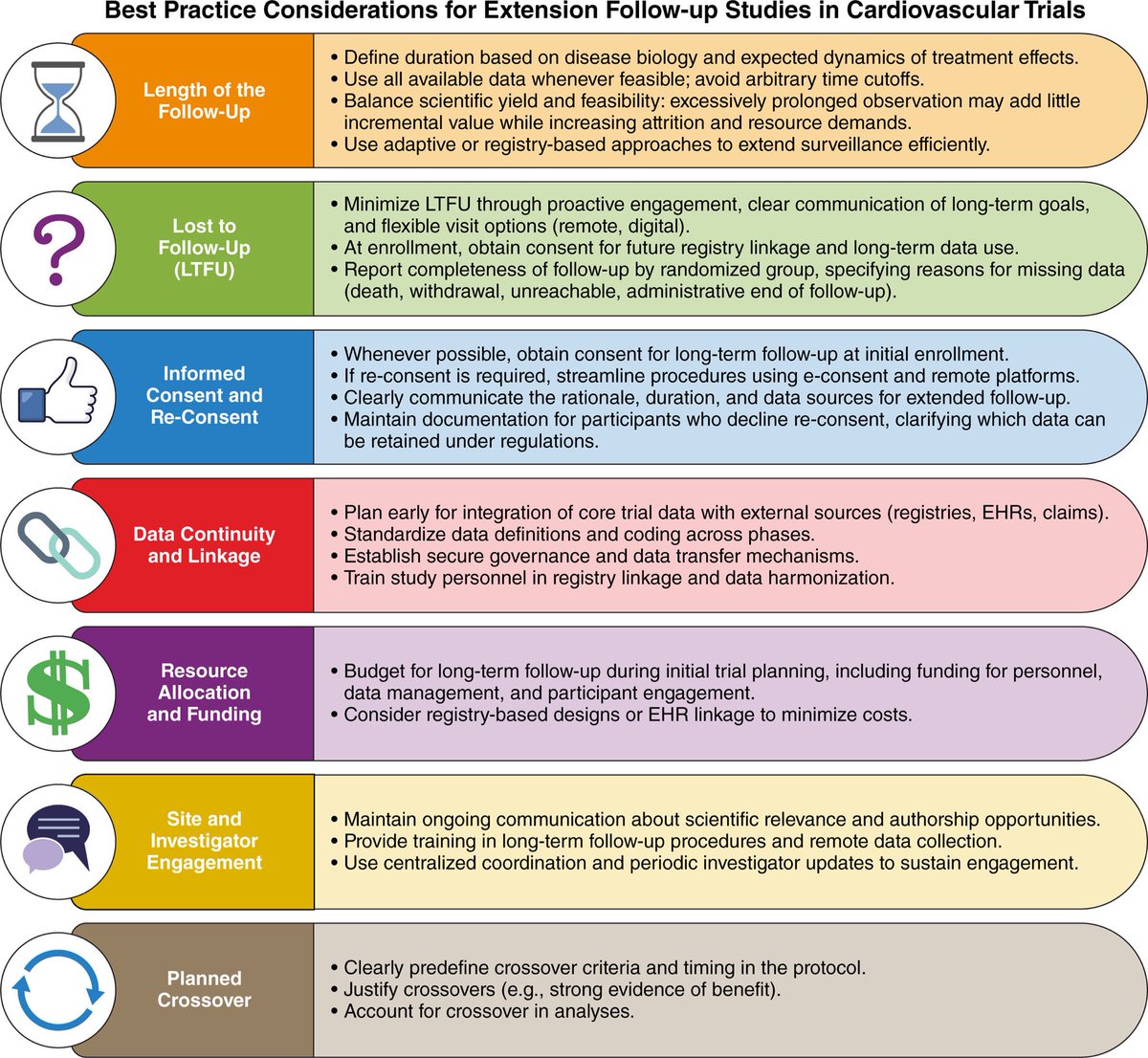
The American Heart Association has released a new scientific statement on methodologic standards for follow-up extension in cardiovascular trials — addressing a critical gap in trial methodology as extended observation often reveals delayed benefits or harms that shape clinical practice and guidelines.
✅ Key recommendations:
Define the primary outcome for the extension phase prospectively, recognizing that treatment effects may evolve over time and noncardiovascular mortality accumulates
Select follow-up duration based on disease biology, expected treatment effect trajectories, outcome dynamics, and power considerations — with adaptive approaches where feasible
Minimize and report loss to follow-up transparently by randomized group, distinguishing death, withdrawal, and true LTFU
Use the estimand framework (ICH E9 R1) to clarify the clinical question of interest and prespecify how intercurrent events (e.g., crossover, rescue therapy) are handled
Address nonproportional hazards with time-varying effects, milestone survival, or restricted mean survival time; handle competing risks appropriately
Preserve randomization with intention-to-treat as the primary analysis, complemented by estimand-aligned sensitivity analyses
This statement provides the first comprehensive methodological guidance for the design, analysis, and reporting of extension follow-up trials — promoting rigor, transparency, and consistency across cardiovascular clinical research. 📖
📄 Read the full paper: Methodologic Standards for Follow‑Up Extension in Cardiovascular Trials: A Scientific Statement From the American Heart Association
🔗 DOI: 10.1161/CIR.0000000000001458
#Circulation #AHA #ClinicalTrials #Methodology #Cardiology #Research
🔬 BREAKING from JTCVS:
A real‑world observational cohort study led by Prof. Xiangbin Pan from Fuwai Hospital, Chinese Academy of Medical Sciences — involving 386 patients undergoing mitral valve transcatheter edge‑to‑edge repair (M‑TEER) between January 2021 and December 2025 — compared outcomes of a simplified workflow under sole transesophageal echocardiographic (TEE) guidance (n = 286) vs conventional procedures under combined fluoroscopy and TEE guidance (n = 100).
✅ Technical success: 98.3% with sole‑TEE vs 97.0% with combined guidance (P > 0.05)
✅ 30‑day major adverse events: 2.8% vs 7.0%, respectively (P > 0.05)
✅ At 1‑year follow‑up (median 16.5 months), estimated cumulative incidence of cardiovascular mortality (4.4% vs 6.4%), all‑cause mortality (6.0% vs 8.5%), and composite of all‑cause mortality and HF hospitalization (11.3% vs 11.3%) — all not significantly different between groups (all P > 0.05)
✅ M‑TEER failure at 1 year: 4.8% vs 6.3% (P > 0.05)
✅ Adjusted HRs for the three primary endpoints: 1.52 (0.61–3.79), 0.96 (0.42–2.18), and 0.93 (0.48–1.81)
This study demonstrates that sole‑TEE guidance for M‑TEER is feasible and achieves favorable procedural and follow‑up outcomes comparable to conventional fluoroscopy‑guided procedures in experienced centers — supporting a simplified workflow that reduces radiation exposure and potentially streamlines the procedure. 🇨🇳📖
📄 Read the full paper: Real‑World Outcomes after Simplified Mitral Valve Transcatheter Edge‑to‑Edge Repair under Sole Transesophageal Echocardiographic Guidance
🔗 DOI: 10.1016/j.jtcvs.2026.07.018
#JTCVS #MTEER #MitralValve #TEE #StructuralHeart #Cardiology #FuwaiHospital
🔬 BREAKING from European Heart Journal:
This comprehensive review by Masatake Kobayashi (Tokyo Medical University), Bertram Pitt (University of Michigan), and Faiez Zannad (Université de Lorraine) provides a mechanistic framework linking mineralocorticoid receptor (MR) overactivation to the development and progression of heart failure with preserved ejection fraction (HFpEF) — and summarizes the clinical evidence for MR‑targeted therapies across the HFpEF continuum.
✅ Key HFpEF risk factors — advancing age, female sex, obesity, diabetes, and CKD — are all closely linked to MR overactivation through three under‑recognized mechanisms: renin‑independent aldosterone excess, cortisol dysregulation, and ligand‑independent Rac1 activation
✅ MR overactivation promotes myocardial hypertrophy and fibrosis, vascular remodelling, and systemic inflammation — all hallmark pathophysiological features of HFpEF
✅ Non‑steroidal MRA finerenone significantly reduced the primary composite of total worsening HF events and CV death in FINEARTS‑HF (rate ratio: 0.82; 95% CI: 0.71–0.95; P = 0.007), while spironolactone showed benefit in TOPCAT Americas primarily on HF hospitalization
✅ Aldosterone synthase inhibitors (baxdrostat, lorundrostat, vicadrostat) are emerging as alternative approaches to suppress MR activation and are being evaluated in ongoing CV and kidney outcome trials
✅ Safety profile — hyperkalaemia risk with finerenone appears lower than with steroidal MRAs; MRA therapy also approximately halves the risk of hypokalaemia in HFpEF
This review calls for early implementation of MR‑targeted therapies across the HFpEF continuum — from risk factors to established disease — to mitigate the global burden of this increasingly prevalent syndrome. 📖
📄 Read the full paper: Mineralocorticoid receptor overactivation in heart failure with preserved ejection fraction
🔗 DOI: 10.1093/eurheartj/ehag578
#EHJ #HFpEF #MR #MRA #Finerenone #HeartFailure #Cardiology
🔬 BREAKING from The Lancet:
The MIST trial — an investigator‑initiated, international, open‑label, randomised controlled trial led by Dr Marc Ruel (University of Ottawa) across 7 centres in Canada, India, China, Germany, the USA, and Japan — enrolled 170 patients with multivessel coronary artery disease to compare patient‑reported physical recovery after minimally invasive cardiac surgery (MICS) CABG via small thoracotomy vs conventional sternotomy CABG.
✅ At 1 month, MICS CABG significantly improved physical recovery vs sternotomy: SF‑36 PCS score 45.1 vs 42.2 (mean difference: 2.9; 95% CI: 0.3–5.5; P = 0.031)
✅ No deaths or strokes occurred in either group up to 12 months; only 1 MACCE in the MICS group vs 0 in the sternotomy group
✅ Median hospital stay: 5 days (IQR 4–7) for MICS vs 6 days (IQR 5–8) for sternotomy (P = 0.008)
✅ MICS CABG was associated with less postoperative pain (P = 0.02) and faster return to normal activities (P = 0.01) at 1 month
This first randomised trial comparing MICS CABG vs sternotomy in multivessel disease demonstrates that MICS CABG performed by experienced teams improves early physical recovery without compromising safety through 12 months — supporting its consideration in appropriately selected patients. 📖
📄 Read the full paper: Multivessel coronary artery bypass grafting via small thoracotomy versus sternotomy (MIST): an investigator-initiated, international, open-label, randomised controlled trial
🔗 DOI: 10.1016/S0140-6736(26)01288-2
#TheLancet #CABG #MICS #MinimallyInvasiveSurgery #CardiacSurgery #Cardiology
🔬 BREAKING from NEJM:
A 31‑year‑old man with a history of nonobstructive apical hypertrophic cardiomyopathy diagnosed at age 15 — but lost to follow‑up — presented with presyncope and a systolic murmur. Echocardiography revealed midventricular hypertrophy (maximal wall thickness 26 mm) , a resting gradient of 30 mm Hg, and LVEF of 40% .
✅ After beta‑blocker therapy, LVEF improved but the gradient worsened — increasing from 30 to 145 mm Hg (peak‑to‑peak), indicating progressive obstruction
✅ Left ventriculography and cardiac MRI demonstrated near‑complete apposition of the ventricular walls during systole, with a teardrop‑shaped apical pouch — a classic feature of midventricular obstruction in hypertrophic cardiomyopathy
✅ Myomectomy was performed; postoperative complete heart block required placement of a dual‑chamber ICD
✅ At 5‑month follow‑up, the patient was asymptomatic
This case illustrates the dynamic progression of hypertrophic cardiomyopathy from a nonobstructive apical phenotype to severe midventricular obstruction over 16 years — and the effectiveness of surgical myomectomy in relieving symptoms and obstruction, even in a patient with preserved systolic function following medical therapy. 📖
📄 Read the full paper: Midventricular Obstruction in Hypertrophic Cardiomyopathy
🔗 DOI: 10.1056/NEJMicm2603868
#NEJM #HypertrophicCardiomyopathy #HCM #Myomectomy #Cardiology #CaseReport
🔬 BREAKING from EuroIntervention:
The OCVC‑BIF trial OCT substudy — a prespecified serial optical coherence tomography analysis led by researchers at Osaka University Graduate School of Medicine (Daisuke Nakamura et al.) — evaluated mechanistic vascular healing and luminal changes at the side‑branch (SB) after adjunctive SB‑drug‑coated balloon (DCB) vs SB‑conventional balloon treatment following main‑vessel stenting and protocol‑mandated kissing balloon inflation (KBI) in 221 patients with coronary bifurcation lesions.
✅ SB‑DCB showed no adverse effect on main‑vessel stent healing — the incidence of uncovered and malapposed struts was low and comparable between groups across all segments at 9 months
✅ SB lumen volume from post‑PCI to 9‑month follow‑up: +0.14±5.64 mm³ with DCB vs –2.15±9.51 mm³ with conventional balloon (P = 0.042 by parametric analysis; sensitivity analysis P = 0.093)
✅ Within‑group analysis: SB lumen loss was significant in the conventional balloon group (P = 0.03), but not in the DCB group (P = 0.81)
✅ No significant differences were observed between groups in ostial SB area, minimum SB area, or SB volume immediately post‑PCI
This mechanistic OCT substudy suggests that adjunctive SB‑DCB treatment after KBI may help preserve SB lumen without compromising main‑vessel stent healing, supporting the feasibility of this strategy in selected bifurcation lesions. 📖
📄 Read the full paper: Drug‑coated versus conventional balloons for side‑branch treatment at coronary bifurcations: optical coherence tomography substudy of the OCVC‑BIF randomized trial
🔗 DOI: 10.4244/EIJ‑D‑26‑00428
#EuroIntervention #BifurcationPCI #DCB #OCT #InterventionalCardiology #Cardiology
🔬 BREAKING from The BMJ:
The COMPETE trial — an investigator‑initiated, multicentre, prospective, randomised, active‑controlled, open‑label trial with blinded outcome assessment, led by Prof. Xiangbin Pan (Fuwai Hospital, Chinese Academy of Medical Sciences) and Prof. Yongjun Wang (Beijing Tiantan Hospital, Capital Medical University) across 39 centres in China — enrolled 1,000 patients with migraine and patent foramen ovale (PFO) to compare the efficacy of antithrombotic agents (aspirin, clopidogrel, rivaroxaban) vs first‑line preventive therapy (metoprolol) for migraine prevention.
✅ All three antithrombotic agents were non‑inferior to metoprolol for the primary endpoint (≥50% reduction in monthly migraine days or attacks): aspirin 61.7%, clopidogrel 66.8%, rivaroxaban 78.4%, metoprolol 61.8%
✅ Rivaroxaban showed superiority over metoprolol (absolute difference: 16.2%; 98.33% CI: 6.0%–26.4%; P < 0.001) and also outperformed aspirin and clopidogrel in pairwise comparisons
✅ Rivaroxaban was associated with greater reductions in migraine days and attacks, higher rates of complete migraine cessation, and greater improvements in migraine‑specific quality of life
✅ No major bleeding events occurred — safety profile was favourable across all groups, with gastrointestinal symptoms more common with aspirin and bradycardia/hypotension with metoprolol
✅ Subgroup analyses suggested particularly strong effects with rivaroxaban in patients with migraine with aura (difference 27.3%; 98.33% CI: 5.3%–49.4%) and grade 3 right‑to‑left shunt (difference 18.8%; 98.33% CI: 5.8%–31.8%)
This hypothesis‑generating trial provides early directional evidence that antithrombotic pathways — particularly factor Xa inhibition — may play a role in PFO‑associated migraine, potentially helping to identify patients with an embolic‑driven migraine phenotype who may benefit from targeted therapy. 🇨🇳📖
📄 Read the full paper: Antithrombotic treatment for migraine in patients with patent foramen ovale: multicentre, randomised, active controlled, open label trial
🔗 DOI: 10.1136/bmj‑2026‑100103
#BMJ #Migraine #PFO #Antithrombotic #Rivaroxaban #Neurology #Cardiology
🔬 BREAKING from JACC:
The PARTNER 3 trial health status substudy — a 7‑year follow‑up analysis of 943 low‑surgical‑risk patients with severe aortic stenosis randomized to TAVR with a balloon‑expandable valve vs SAVR — provides the longest‑term detailed comparison of patient‑reported health status outcomes between the two strategies.
✅ Both TAVR and SAVR resulted in significant and durable improvements in KCCQ‑OS from baseline through 7 years, with >60% of patients achieving excellent outcomes (alive, KCCQ‑OS ≥75, no ≥10‑point decline) at 7 years
✅ TAVR provided substantially faster early recovery: 16.2‑point KCCQ‑OS advantage at 1 month (95% CI: 14.3–18.1; P < 0.001), with 92.5% of TAVR patients achieving meaningful improvement vs 62.4% for SAVR
✅ Small but significant TAVR benefit persisted through 2 years (mean difference: 1.9–2.7 points), but no significant between‑group differences were observed from years 3 to 7
✅ KCCQ‑OS declined modestly over time (~1 point per year) in both groups, driven primarily by decreases in physical functioning — reflecting natural aging and comorbidity progression — while symptom and quality‑of‑life improvements remained relatively stable
✅ Exploratory analyses suggested potential TAVR benefit in patients with reduced LVEF (interaction P = 0.027) and potential SAVR benefit in older patients (>74 years) (interaction P = 0.053), though subgroup sample sizes were small
This study demonstrates that TAVR offers faster recovery without compromising long‑term health status outcomes compared with SAVR in low‑risk patients — with both strategies providing durable, meaningful improvements that are sustained for at least 7 years. These findings provide crucial data to inform shared decision‑making for the growing population of low‑risk aortic stenosis patients. 📖
📄 Read the full paper: Health Status Outcomes 7 Years After Transcatheter or Surgical Aortic Valve Replacement in Low‑Surgical Risk Patients With Aortic Stenosis
🔗 DOI: 10.1016/j.jacc.2026.07.015
#JACC #TAVR #SAVR #AorticStenosis #HealthStatus #QualityOfLife #Cardiology
🔬 BREAKING from JAMA:
The MERCURI‑2 trial — a multicenter, double‑blind, placebo‑controlled randomized clinical trial conducted at 7 centers in the Netherlands and led by researchers at Amsterdam University Medical Center — enrolled 784 patients undergoing elective cardiac surgery to evaluate whether dapagliflozin, initiated 1 day prior to surgery, reduces postoperative acute kidney injury (AKI).
✅ Dapagliflozin significantly reduced AKI incidence at 7 days: 28% vs 52% with placebo (relative risk: 0.54; 95% CI: 0.45–0.65; P < 0.001)
✅ Absolute risk reduction of 24% — number needed to treat of approximately 4
✅ Intervention: 4 doses of dapagliflozin 10 mg (day before surgery through postoperative day 2)
✅ Safety profiles were similar between groups: atrial fibrillation (45% vs 45%) and reoperation (11% vs 10%)
✅ 99% of participants (778/784) completed follow‑up testing
This is the first randomized trial to demonstrate that a pharmacologic intervention — perioperative dapagliflozin — can prevent AKI after elective cardiac surgery, a complication affecting up to 50% of patients, with no observed safety concerns in this population. 📖
📄 Read the full paper: Dapagliflozin and Acute Kidney Injury Following Cardiac Surgery: A Randomized Clinical Trial
🔗 DOI: 10.1001/jama.2026.9268
#JAMA #Dapagliflozin #AKI #CardiacSurgery #SGLT2i #Cardiology #Anesthesiology
🔬 BREAKING from Circulation:
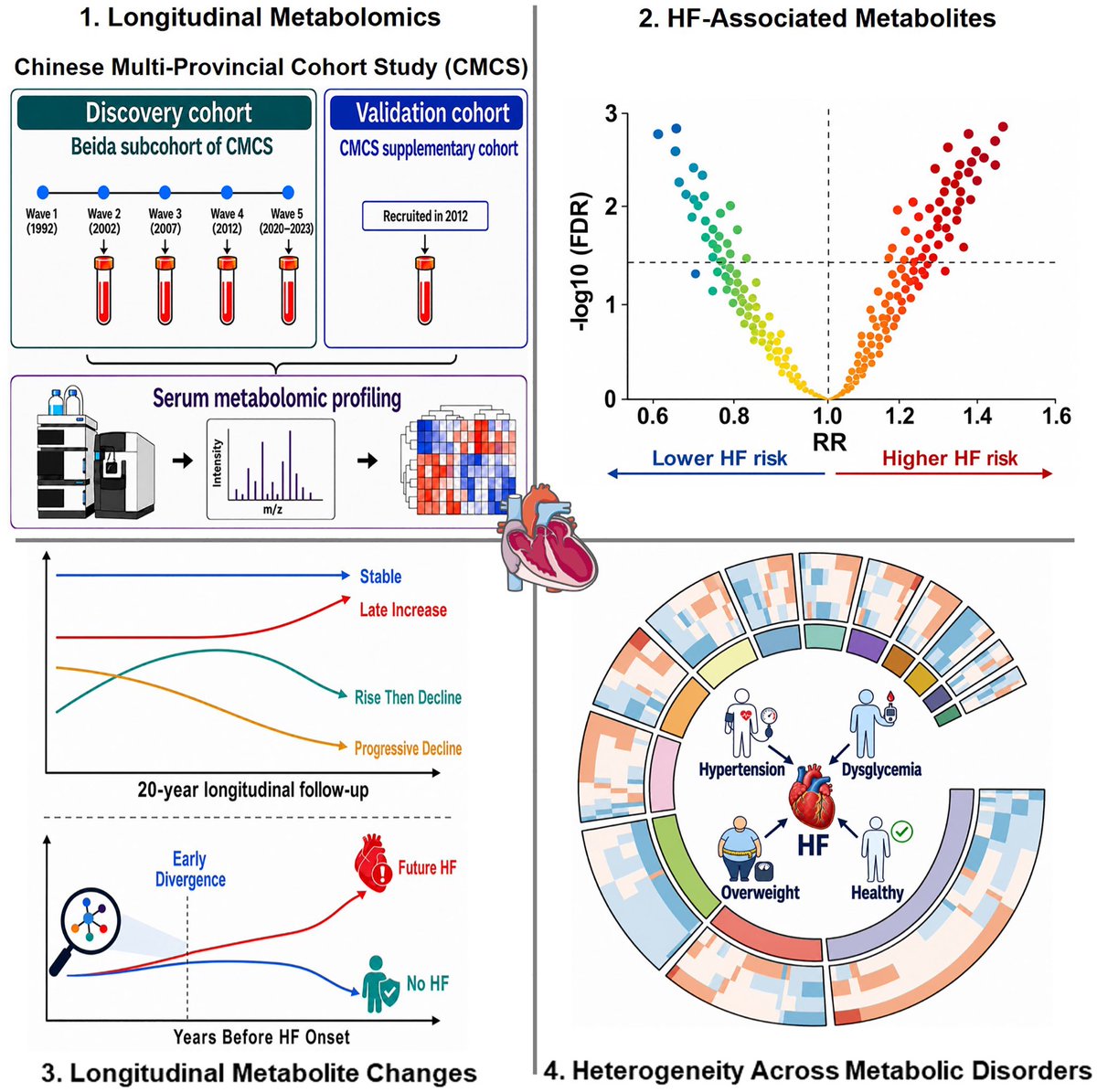
A landmark 20‑year longitudinal metabolomic study led by Prof. Jing Liu and Prof. Yue Qi from Beijing Anzhen Hospital, Capital Medical University, and Prof. Lemin Zheng from Peking University Institute of Cardiovascular Sciences — based on 4,774 serum samples collected at 4 time points from 1,728 HF‑free participants in the Chinese Multi‑Provincial Cohort Study — provides the first comprehensive temporal landscape of metabolic alterations preceding heart failure (HF) onset.
✅ 23 metabolites were associated with HF risk at FDR‑adjusted P < 0.05 — including 9 novel metabolites not previously linked to HF
✅ Metabolic divergence began >5 years before clinical diagnosis, with most changes initiating 15 to 20 years before clinical manifestation — revealing a previously unrecognized window for early intervention
✅ Four distinct trajectory clusters were identified: risk‑associated metabolites remained relatively stable or increased, while protective metabolites (e.g., specific glycerophospholipids) showed progressive decline — reflecting signatures of accelerated biological aging
✅ Population heterogeneity was striking:
Hypertension — metabolites involved in energy metabolism and vasodilatory response
Obesity — metabolites linked to lipotoxic effects and oxidative stress
Dysglycemia — metabolites related to inflammatory processes and glucocorticoid mechanisms
✅ Metabolites were consistently associated with NT‑proBNP and cTnT, supporting their relevance to cardiac dysfunction in HF pathophysiology
This study fundamentally expands our understanding of HF pathogenesis by mapping the metabolic trajectory over two decades before clinical onset and revealing distinct metabolic signatures across different risk factor profiles — paving the way for metabolically tailored prevention and early intervention strategies. 🇨🇳���
📄 Read the full paper: Metabolomic Profiles and Changes During the 20 Years Preceding Heart Failure
🔗 DOI: 10.1161/CIRCRESAHA.126.328542
#Circulation #HeartFailure #Metabolomics #LongitudinalStudy #PrecisionMedicine #Cardiology
🔬 BREAKING from JACC: Asia:
The TAKOC Registry — a multicenter, observational registry led by Prof. Changsheng Ma and Prof. Yihong Sun from Beijing Anzhen Hospital, Capital Medical University, across 18 tertiary hospitals in China — enrolled 421 Takotsubo syndrome (TTS) patients to investigate treatment patterns and outcomes stratified by initial presentation: ACS‑like vs non‑ACS.
✅ Non‑ACS presentation was more common (61.0%) and associated with male sex, physical triggers, dyspnea, lower LVEF, and higher cardiogenic shock incidence — despite significantly lower troponin levels
✅ Non‑ACS phenotype had markedly worse outcomes: 30‑day mortality (23.0% vs 7.3%; adjusted HR: 2.28; 95% CI: 1.18–4.41; P = 0.017) and long‑term mortality (adjusted HR: 2.44; 95% CI: 1.32–4.51; P = 0.043)
✅ Treatment disparities were striking: non‑ACS patients received more diuretics, vasoactive drugs, and mechanical circulatory support, but fewer cardiovascular medications (antiplatelets, beta‑blockers, RAAS inhibitors)
✅ In‑hospital antiplatelet and beta‑blocker use was associated with reduced 30‑day mortality in the non‑ACS group; RAAS inhibitors showed benefit specifically in the ACS‑like group
This study identifies non‑ACS presentation as a high‑risk TTS phenotype with disproportionately poor outcomes — despite less pronounced biomarker elevation — underscoring the critical need for heightened clinical suspicion and phenotype‑tailored treatment strategies. 🇨🇳📖
📄 Read the full paper: Non‑ACS Presentation in Takotsubo Syndrome: A High‑Risk Phenotype with Distinct Treatment Patterns and Worse Outcomes
🔗 DOI: 10.1016/j.jaccasia.2026.06.002
#JACCAsia #TakotsuboSyndrome #TTS #HeartFailure #Cardiology #RiskStratification