4. a Mughal map. The map has been described by Susan Gole in her chapter, The Town of Srinagar in Indian Maps. Also, do check my chapter on map-making (The City of Kashmir, Srinagar: A Popular History). Btw, you can not, unfortunately, access the map, I tried:(
3. Mughal baghs can be seen east of Dal (1). Also, you can find some of the city's prominent monuments marked on the map, including Jamia Masjid, Khanqah-i Maulla, Masjid-i Nau, and Shankaracharya Temple. The absence of the Afghan-era citadel of Sherghari indicates that this is
2. also see Koh-i Maran hillock. Notice the large number of Mughal baghs around the western bank of Nigeen Lake (3) and the eastern bank of Dal Lake (2). This would also include the Hazratbal shrine, but could not determine which one it is. Shalimar & the rest of the (surviving)
1. The oldest Mughal Map of Srinagar: This old painted cloth map of Srinagar, located in the Jaipur City Palace, gives a fairly accurate idea of Srinagar during the Mughal rule. The centre of the map is marked by the densely built Mughal walled city, Naagar Nagar (4). You can
A forthcoming book claims to fill a historiographical gap as Dara Shukoh has been “excised” from discourse. Why do pop-historians position themselves as lone rediscoverers, overlooking existing scholarship? Supriya Gandhi’s exceptional book on Dara Shukoh has been out for years!
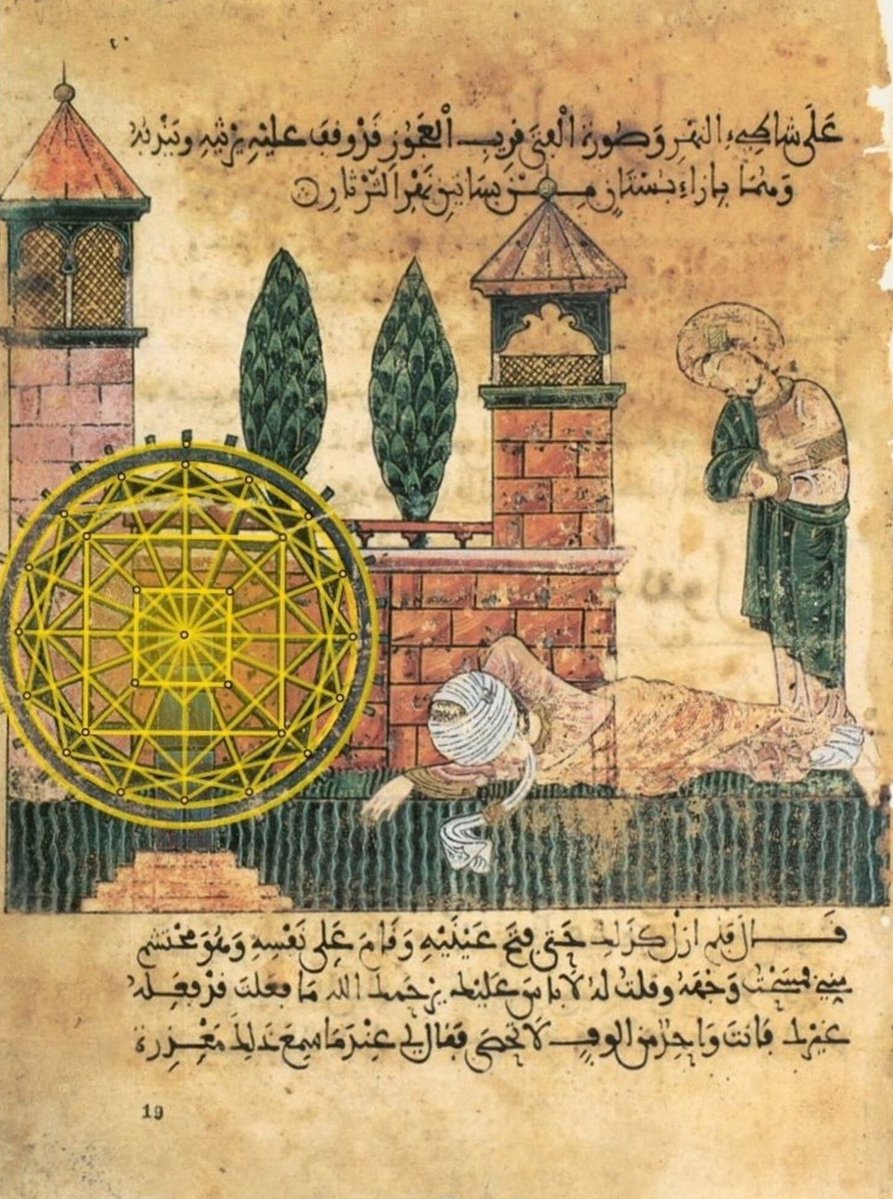
A 13th‑century illustration from one of the only surviving illustrated Arabic romance manuscripts of al‑Andalus, the Ḥadīṯ Bayāḍ wa‑Riyāḍ. The young man collapsed by the water is Bayad, fainted from lovesickness. Behind him turns a noria, its eight‑pointed star motif echoing the geometric patterns common in al‑Andalus. One of the only surviving examples of Andalusi miniature painting.
Lahore was one of the major publishing centres of religious literature in British India. Here are some pages from 'Vak Sudhakara', an Udasin text in a very traditional format on topics like Vedanta. Printed by the famous Kohinoor Press in 1875 in 'Shri Lavapura' (Lahore).
Pages from 'Lataif-e Hindi' or 'The New Cyclopaedia Hindoostanica of Wit' by Lallu Lalji. Part of the famous Fort William repertoire, it was published in 1810 in Calcutta. It is a collection of humorous stories in Persian & Nagari scripts. Includes a vocabulary at the back.
Chinese Qur’an written by a woman calligrapher, Amatullah Nur-ul-Ilm, daughter of Rashid. 1050 AH / 1640 CE. The city of Khanbaliq, predecessor to modern Beijing.
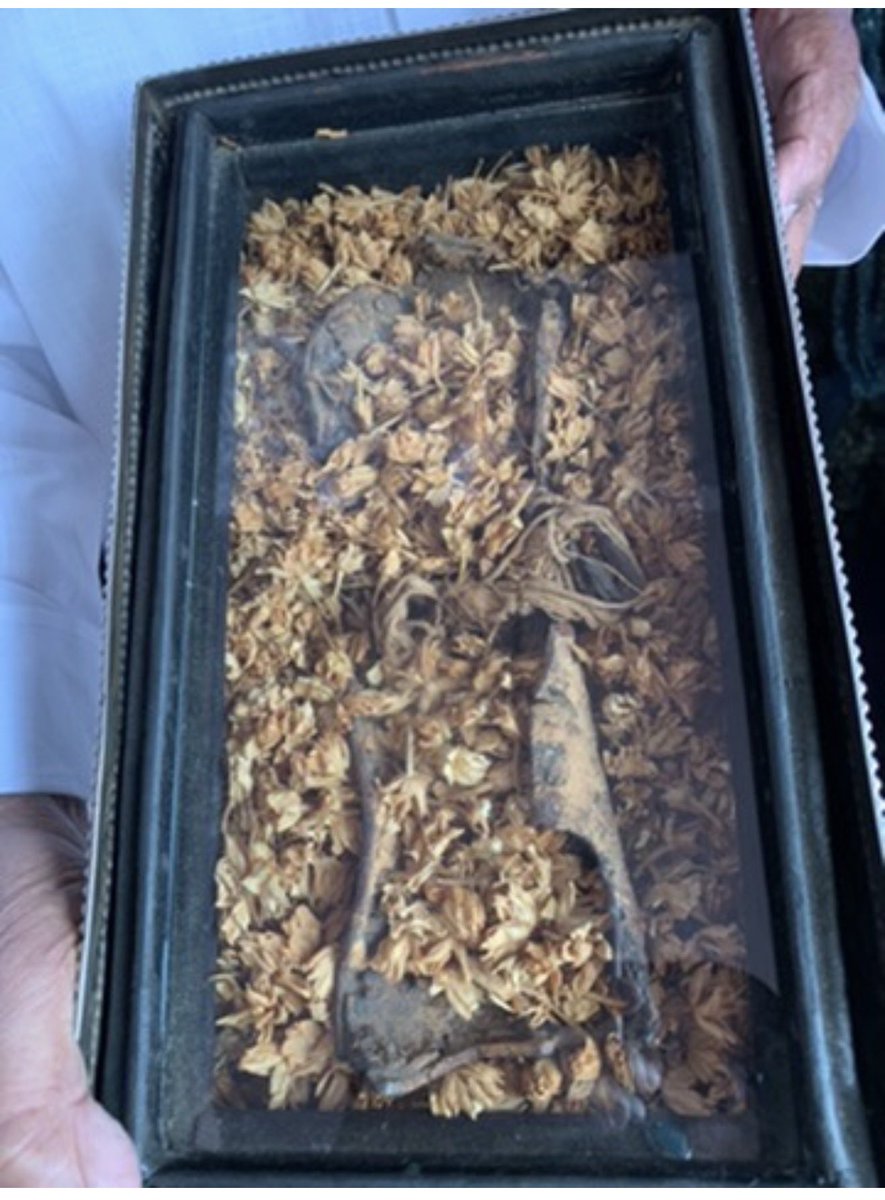
The Dargah Asar Sharif in Delhi's Jama Masjid has one of the pair of the Prophet's sandals. The other being in Topkapi . It was inherited by the Mughal emperors via Timur and gifted to the Jama Masjid along with other relics
I made a video on the taburrukat some years ago
https://t.co/rJPuHWdlwE
@Jeet_19802021@Timurid_Mughal Yes, Aurangzeb had a reputation as zinda per, especially from the 1680s onward. He is buried in a Sufi shrine, after all.
For more on this, see this book (released next month): https://t.co/mdVuIhiMu7
Azizan Bai & her role in Kanpur in 1857
one of the most fascinating stories of the uprising of 1857 is that of the courtesan Azizun Bai of Kanpur.
Kanpur saw fierce battles between the forces of Nana Sahib and Tatya Tope against the British.
Colonial and Indian historians have mentioned Azizun’s role during the battles of Kanpur. She had personally nothing to gain and no personal grudges, unlike many of the other women who had joined in the uprising. She was simply inspired by Nana Sahib.
Her memory is still alive among the people of Kanpur. She dressed in male attire like Lakshmibai and rode on horseback with the soldiers, armed with a brace of pistols. She was part of the procession the day the flag was raised in Kanpur to celebrate the initial victory of Nana Sahib.
Lata Singh writes in her article “Making the ‘Margin’ Visible” that Azizun was a favourite among the sepoys of the 2nd cavalry posted in Kanpur, and was particularly close to one of the soldiers, Shamsuddin.
Her house was a meeting point of the sepoys. She also formed a group of women, who went around fearlessly cheering the men in arms, attended to their wounds, and distributed arms and ammunition.
She made one of the gun batteries her headquarters for this work.
During the entire period of the siege of Kanpur, she was with the soldiers, who she considered her friends, and she was always armed with pistols herself.
OTD 1799 was martyred Tipu Sultan who died valiantly fighting the British East India company
Known as Sher-e-Mysore, he died fighting the British East India Company at Seringapatnam. He chose to stand and fight what he thought was an invading power.
His epitaph on his tomb in Srirangapatnam reads :
"The martyr of Arab is Sibte Nabi [Husain] , Fatima's lakht e jigar and Jaan e Ali
From Fatima and Haider e Dakhani was [born] Tipu Sultan, Jaan e Wali, who was martyred [in Deccan] "
This epitaph links him to Imam Husain, one of the greatest martyrs in Islamic tradition. It calls him Jaan-e-Wali-beloved of the saints.
This was not just praise. Tipu followed a spiritual path, kept a diary of prayers and dreams, and believed that ruling was a sacred responsibility. The tiger symbol he used was not decoration, it showed his courage and how he chose to live and die.
Born in 1751 to Hyder Ali, Tipu became ruler of Mysore in 1782. Btw he was fourth generation born in India.
He modernized his army, developed rocket weapons, and sought alliances with leaders like Napoleon Bonaparte and the Ottoman Sultan to resist British expansion. He understood early that the Company was not just trading, but conquering.
After his death, Richard Wellesley declared, “India is ours,” showing how much his resistance had challenged them.
Today, he rests at the Gumbaz beside his parents. People still visit, and flowers are still offered.
The tiger lives on in memory, long after the empire that defeated him.
#TipuSultan #SherEMysore #OTD
#TipuSultan #srirangapattana #seringapatnam #deathanniversary
Today in Indian History
Death of Sultan Iltutmish
1236
On his death bed he is said to have nominated his daughter Raziya but the nobles raised Ruknuddin to the throne
"You will find her a better person than any of her brothers"
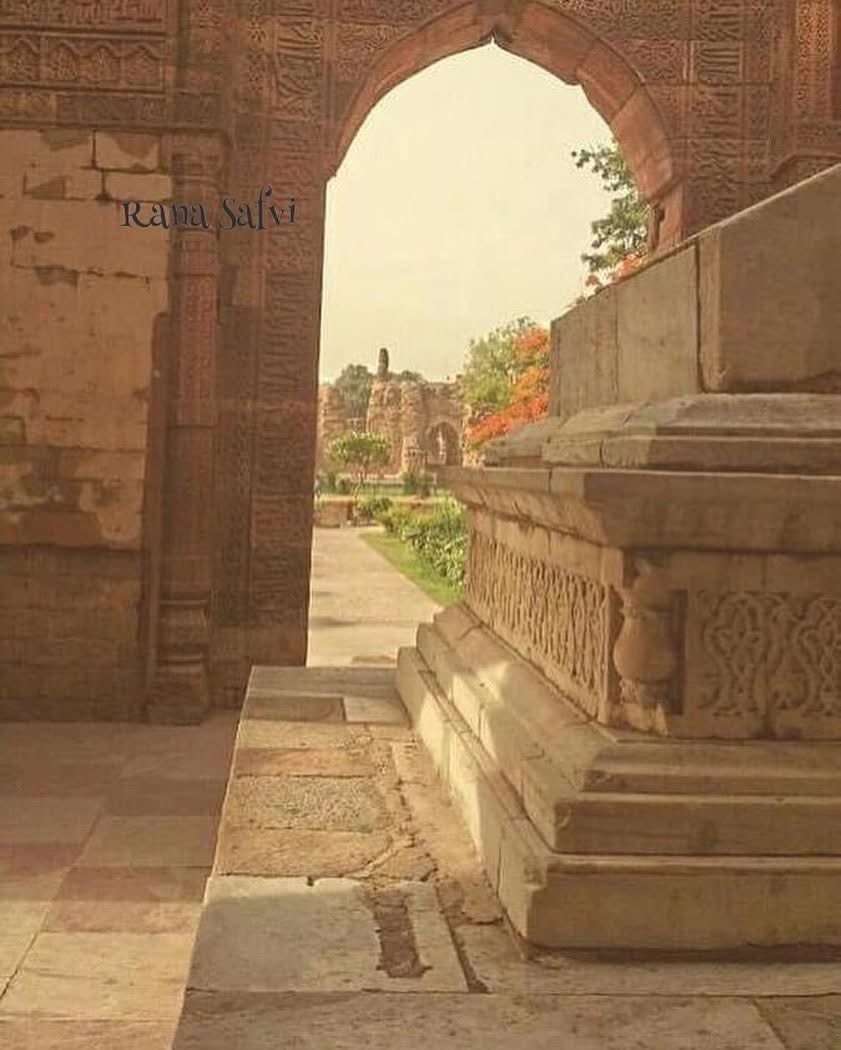
He is buried in the Qutub Complex, Delhi , in a beautiful tomb ascribed to his daughter Raziya by Sir Syed Ahmad Khan.
Agar firdaus bar ru-ye zamin ast
Hamin ast o hamin ast o hamin ast
if there is a paradise on earth, it is this, it is this, it is this
Hazrat Amir Khusrau said this for India 8 centuries ago.


![iamrana's tweet photo. OTD 1799 was martyred Tipu Sultan who died valiantly fighting the British East India company
Known as Sher-e-Mysore, he died fighting the British East India Company at Seringapatnam. He chose to stand and fight what he thought was an invading power.
His epitaph on his tomb in Srirangapatnam reads :
"The martyr of Arab is Sibte Nabi [Husain] , Fatima's lakht e jigar and Jaan e Ali
From Fatima and Haider e Dakhani was [born] Tipu Sultan, Jaan e Wali, who was martyred [in Deccan] "
This epitaph links him to Imam Husain, one of the greatest martyrs in Islamic tradition. It calls him Jaan-e-Wali-beloved of the saints.
This was not just praise. Tipu followed a spiritual path, kept a diary of prayers and dreams, and believed that ruling was a sacred responsibility. The tiger symbol he used was not decoration, it showed his courage and how he chose to live and die.
Born in 1751 to Hyder Ali, Tipu became ruler of Mysore in 1782. Btw he was fourth generation born in India.
He modernized his army, developed rocket weapons, and sought alliances with leaders like Napoleon Bonaparte and the Ottoman Sultan to resist British expansion. He understood early that the Company was not just trading, but conquering.
After his death, Richard Wellesley declared, “India is ours,” showing how much his resistance had challenged them.
Today, he rests at the Gumbaz beside his parents. People still visit, and flowers are still offered.
The tiger lives on in memory, long after the empire that defeated him.
#TipuSultan #SherEMysore #OTD
#TipuSultan #srirangapattana #seringapatnam #deathanniversary](https://pbs.twimg.com/media/HHdHfKnWMAEeywU.jpg)
![iamrana's tweet photo. OTD 1799 was martyred Tipu Sultan who died valiantly fighting the British East India company
Known as Sher-e-Mysore, he died fighting the British East India Company at Seringapatnam. He chose to stand and fight what he thought was an invading power.
His epitaph on his tomb in Srirangapatnam reads :
"The martyr of Arab is Sibte Nabi [Husain] , Fatima's lakht e jigar and Jaan e Ali
From Fatima and Haider e Dakhani was [born] Tipu Sultan, Jaan e Wali, who was martyred [in Deccan] "
This epitaph links him to Imam Husain, one of the greatest martyrs in Islamic tradition. It calls him Jaan-e-Wali-beloved of the saints.
This was not just praise. Tipu followed a spiritual path, kept a diary of prayers and dreams, and believed that ruling was a sacred responsibility. The tiger symbol he used was not decoration, it showed his courage and how he chose to live and die.
Born in 1751 to Hyder Ali, Tipu became ruler of Mysore in 1782. Btw he was fourth generation born in India.
He modernized his army, developed rocket weapons, and sought alliances with leaders like Napoleon Bonaparte and the Ottoman Sultan to resist British expansion. He understood early that the Company was not just trading, but conquering.
After his death, Richard Wellesley declared, “India is ours,” showing how much his resistance had challenged them.
Today, he rests at the Gumbaz beside his parents. People still visit, and flowers are still offered.
The tiger lives on in memory, long after the empire that defeated him.
#TipuSultan #SherEMysore #OTD
#TipuSultan #srirangapattana #seringapatnam #deathanniversary](https://pbs.twimg.com/media/HHdHfKmWEAA26l0.jpg)








![iamrana's tweet photo. OTD 1799 was martyred Tipu Sultan who died valiantly fighting the British East India company
Known as Sher-e-Mysore, he died fighting the British East India Company at Seringapatnam. He chose to stand and fight what he thought was an invading power.
His epitaph on his tomb in Srirangapatnam reads :
"The martyr of Arab is Sibte Nabi [Husain] , Fatima's lakht e jigar and Jaan e Ali
From Fatima and Haider e Dakhani was [born] Tipu Sultan, Jaan e Wali, who was martyred [in Deccan] "
This epitaph links him to Imam Husain, one of the greatest martyrs in Islamic tradition. It calls him Jaan-e-Wali-beloved of the saints.
This was not just praise. Tipu followed a spiritual path, kept a diary of prayers and dreams, and believed that ruling was a sacred responsibility. The tiger symbol he used was not decoration, it showed his courage and how he chose to live and die.
Born in 1751 to Hyder Ali, Tipu became ruler of Mysore in 1782. Btw he was fourth generation born in India.
He modernized his army, developed rocket weapons, and sought alliances with leaders like Napoleon Bonaparte and the Ottoman Sultan to resist British expansion. He understood early that the Company was not just trading, but conquering.
After his death, Richard Wellesley declared, “India is ours,” showing how much his resistance had challenged them.
Today, he rests at the Gumbaz beside his parents. People still visit, and flowers are still offered.
The tiger lives on in memory, long after the empire that defeated him.
#TipuSultan #SherEMysore #OTD
#TipuSultan #srirangapattana #seringapatnam #deathanniversary](https://pbs.twimg.com/media/HHdHfKnWQAAd0rc.jpg)