Every validator knows the feeling node goes down, you SSH in, and start typing the same 10 commands from memory.
We decided to fix that.
☀️ Celestia Node Management Tool v1.0
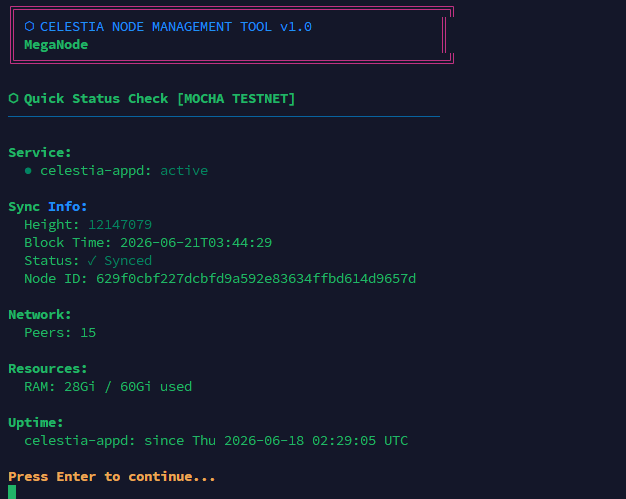
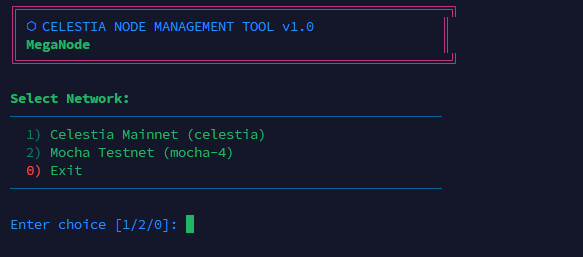
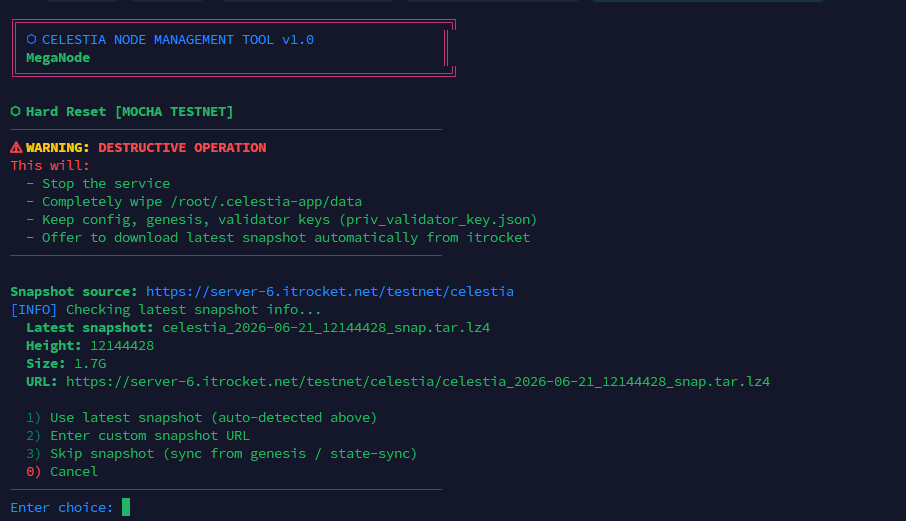
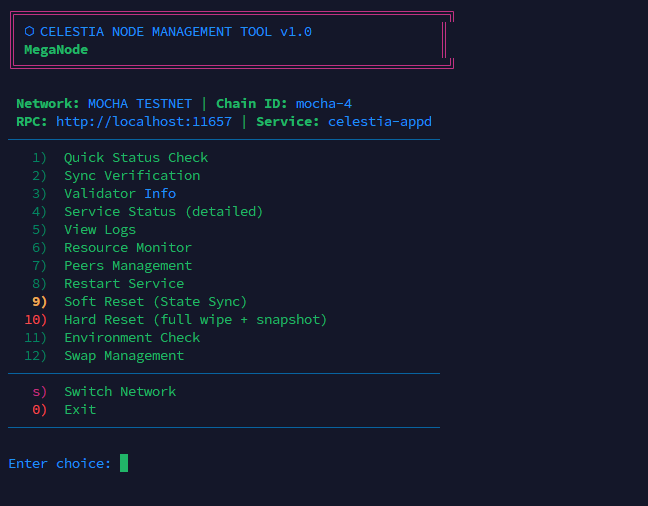
One CLI for Mainnet + Mocha. Sync check, validator info, state-sync reset, snapshot restore, log viewer — all in one place.
Open source. No keys. No trust required.
🔗 https://t.co/3FUj1Mwib1
Built with love by validators, for validators 💜
Would love your thoughts @CelestiaOrg happy to adjust based on the community's feedback 🙏
Currently validating on Mocha the tool supports both Mocha & Mainnet. Mainnet operators, your feedback would mean a lot 🙏
Thanks to the validators for always keeping the network stable.
#Celestia
Today I activated my Mocha validator on @celestia after a couple of intense weeks working through setup, debugging, and optimization.
It wasn’t always smooth there were late nights fixing sync issues and tracking down small misconfigurations that caused missed blocks. But those moments forced me to really understand how the system works under the hood.
Now the validator is running stable, with uptime steadily improving and monitoring in place. Seeing it become Bonded felt less like a finish line, and more like the start of a longer commitment.
For me, running a validator isn’t just about rewards it’s about reliability and contributing to the network in a meaningful way.
Grateful for the early support from the team @POpsTeam1 🙏 made a real difference during setup, especially while working through early sync and configuration issues.
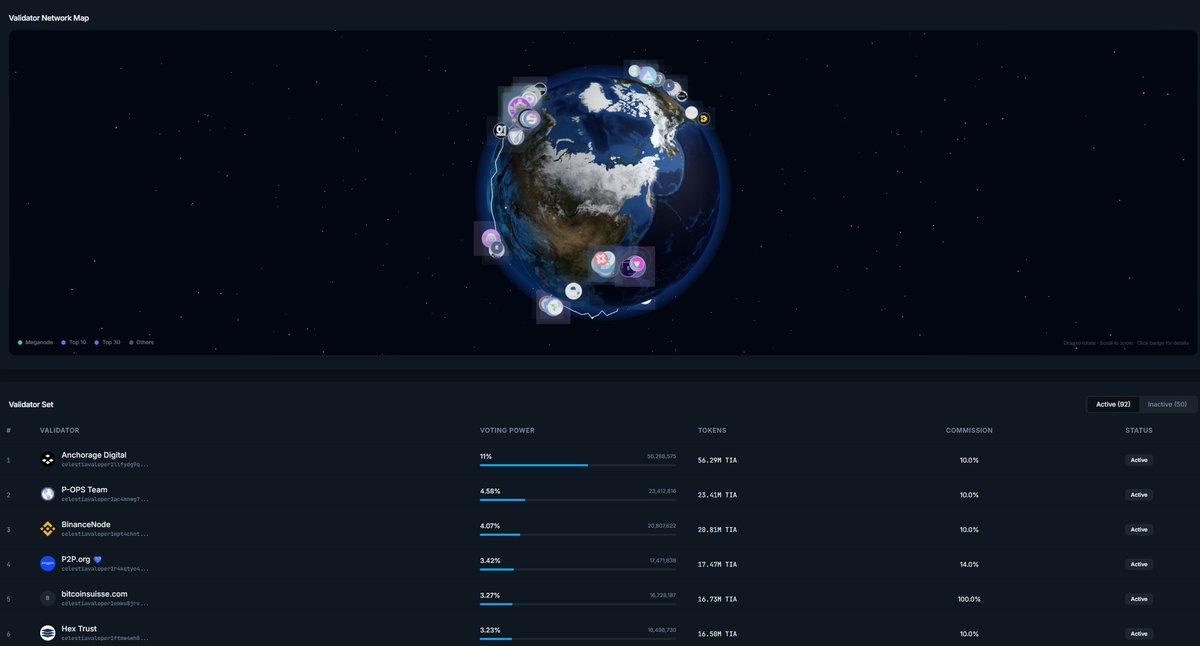
I’m also building tools with Meganode to make the Celestia ecosystem more transparent and easier to explore:
👉 https://t.co/tBuNGpcx1U
Long term, I’m committed to improving both infrastructure and community tooling around Celestia.
#Celestia
🛡️⚙️ WEDNESDAY WATCH | SECURITY IS A CONTINUOUS RESPONSIBILITY
🟣 P-OPS TEAM | VERIFY ACCESS. PROTECT SYSTEMS. MAINTAIN CONTROL.
☕️🌅 Good morning, Operators, Delegators and Infrastructure Builders!
🔐 Every validator depends on more than reliable hardware and stable connectivity.
It depends on trust in the systems, credentials and people authorised to operate it.
⚙️ Services need permissions.
🔑 Operators need access.
📡 Nodes need secure communication.
🛡️ But every unnecessary privilege or forgotten credential introduces potential risk.
💡 This Wednesday, we’re focusing on a fundamental principle of infrastructure security:
Access should be deliberate, limited and regularly reviewed.
🧩 WEDNESDAY FOCUS: ACCESS CONTROL & PRIVILEGE MANAGEMENT
🔍 Strong security isn’t simply about keeping unauthorised users out.
It’s also about ensuring authorised accounts have only the permissions required to perform their responsibilities.
🔐 Restrict administrative privileges.
👤 Review active user accounts.
🔑 Protect SSH keys and credentials.
🌐 Limit remote management access.
📝 Maintain visibility over privileged activity.
⚙️ Remove permissions that are no longer necessary.
Because a compromised account with excessive privileges can quickly become a much larger infrastructure incident.
🛠️ WHAT OPERATORS SHOULD REVIEW:
🔹 SSH Security — Verify key-based authentication and restrict unnecessary access.
🔹 User Permissions — Audit accounts, groups and sudo privileges.
🔹 Credential Hygiene — Rotate exposed credentials and revoke unused keys.
🔹 Service Accounts — Apply least-privilege permissions wherever practical.
🔹 Remote Access — Restrict management interfaces to trusted networks.
🔹 Audit Visibility — Ensure privileged actions can be investigated.
🚨 WEDNESDAY SECURITY CHECK
✅ Are all administrative accounts still required?
✅ Are SSH keys assigned to recognised operators?
✅ Is unnecessary root access restricted?
✅ Are unused credentials revoked?
✅ Are privileged activities logged?
✅ Could compromised access be contained quickly?
🖥️ WEDNESDAY TERMINAL WATCH
🔎 Useful Linux commands for reviewing access controls:
🔹 Review Privileged Group Membership
getent group sudo
🔹 Inspect SSH Configuration
sudo sshd -T | grep -E 'permitrootlogin|passwordauthentication|pubkeyauthentication'
🔹 Review Recent Logins
last -n 10
🔹 Check Sudo Activity
sudo journalctl _COMM=sudo --since "24 hours ago"
🔹 Review Listening Services
sudo ss -tulpen
🔹 Inspect Account Information
getent passwd
⚠️ Review findings before making changes. Incorrect SSH or permission modifications can interrupt remote access to critical infrastructure.
🎯 TODAY’S OPERATIONAL CHALLENGE
Choose one validator or supporting infrastructure server.
🔍 Audit its administrative accounts.
🔑 Review authorised SSH keys.
🛡️ Identify unnecessary privileges.
📝 Document anything requiring attention.
The objective is simple: ensure every account, credential and permission has a legitimate operational purpose.
🧠 WEDNESDAY QUESTION
❓ If an operator’s credentials were compromised today, how much of your infrastructure could an attacker access?
🛡️ WEDNESDAY TAKEAWAY
🔐 Limit privileges.
🔑 Protect credentials.
👤 Verify authorised access.
📊 Monitor administrative activity.
⚙️ Review permissions regularly.
Because reliable infrastructure isn’t just about keeping validators online.
It’s about maintaining control over the systems responsible for keeping networks secure.
🟣 P-OPS TEAM
🌐 Supporting resilient validator infrastructure across 80+ networks through secure, community-focused operations.
☎️ STAY CONNECTED WITH P-OPS TEAM:
🌎 Website: https://t.co/JwGLL5Ku2A
🌳 Linktree: https://t.co/IDz3lxpUay
🐥 Twitter:
↗️ Telegram: https://t.co/q9j7HGizQt
👾 Discord: https://t.co/uPeZyUvOUz
#Blockchain #Web3 #Staking #Validators #ProofOfStake #NodeOps #Infrastructure #CyberSecurity #DevOps #Decentralisation
🌅🛰️ THURSDAY STATUS | READINESS BEYOND UPTIME
🟣 P-OPS TEAM | STAY READY. STAY RESILIENT.
☕️ Good morning, Operators, Delegators and Infrastructure Builders!
Another Thursday. Another opportunity to strengthen the systems keeping decentralised networks moving. ⚙️
🌐 Blocks continue to be produced.
📡 Networks continue to communicate.
🔄 Validators continue participating in consensus.
🛡️ But operational readiness requires more than simply keeping infrastructure online.
It requires knowing what happens when something goes wrong.
🔍 THURSDAY FOCUS: OPERATIONAL READINESS
A healthy validator is important.
A validator backed by tested recovery procedures, effective monitoring and clear operational processes is even better.
Because resilience isn’t just about preventing failures.
It’s about being prepared to respond when they occur.
⚙️ YOUR THURSDAY STATUS CHECK:
🟣 Consensus Health → Verify signing activity, participation and missed duties.
📡 Peer Connectivity → Review connection stability and network latency.
💾 Storage Capacity → Check available space and disk performance.
🔄 Chain Synchronisation → Confirm nodes are progressing as expected.
🚨 Alert Readiness → Ensure critical notifications are reaching the right people.
🛡️ Recovery Procedures → Review backups, restoration steps and failover readiness.
🔐 Security Posture → Check access permissions and outstanding updates.
📊 Operational Trends → Investigate unusual behaviour before it becomes disruption.
🧠 THE QUESTION EVERY OPERATOR SHOULD ASK:
If a critical service failed right now, how quickly could you identify the problem, understand its impact and restore normal operations?
⏱️ Detection matters.
🔍 Diagnosis matters.
🛠️ Recovery matters.
📈 And learning from every incident matters.
Strong infrastructure isn’t defined by never experiencing problems.
It’s defined by how effectively those problems are anticipated, managed and resolved.
💙💜 THE P-OPS THURSDAY PRINCIPLE:
🛰️ Monitor with purpose.
⚙️ Maintain with discipline.
🔐 Protect with consistency.
🛡️ Prepare for disruption.
🚀 Operate with confidence.
🌅 As Thursday gets underway, take a moment to look beyond the green indicators.
Check the safeguards. Review the procedures. Challenge the assumptions.
Because the best time to prepare for an infrastructure incident is long before one happens.
💙 Stay vigilant. Stay prepared. Keep the network moving.
Have a productive Thursday, everyone! 💜
🟣 P-OPS Team
☎️ Stay Connected with P-OPS Team:
🌎 Website: https://t.co/JwGLL5Ku2A
🌳 Linktree: https://t.co/IDz3lxpUay
🐥 Twitter/X
↗️ Telegram: https://t.co/q9j7HGizQt
👾 Discord: https://t.co/uPeZyUvOUz
#PopsTeam #ProofOfStake #Validator #Blockchain #Infrastructure #Web3 #Staking #DevOps #Reliability #Resilience #ThursdayStatus
🎃👻 P-OPS TEAM | HALLOWEEN SPECIAL: FRIGHT NIGHT EDITION 👻🎃
🔵 WHEN THE NETWORK GOES DARK, THE OPERATORS STAY AWAKE. 🟣
🌃🌧️ Good evening, Operators, Delegators and Digital Nightwalkers!
🎃 The moon is high.
👻 The city is quiet.
🌫️ Strange signals are appearing across the network.
🦇 Somewhere in the digital darkness, forgotten processes are waking up, rogue connections are lurking and unexpected errors are creeping through the infrastructure.
💀 It’s Halloween night.
But there’s something far scarier than ghosts and ghouls…
⚠️ AN UNMONITORED VALIDATOR. 😱
🕸️ WELCOME TO THE FRIGHT NIGHT NETWORK 🕸️
👻 Ghosts in the logs?
📡 Phantom network connections?
⚡ Unexpected spikes in resource consumption?
🔄 A validator suddenly disappearing into the darkness?
🎃 These are the real nightmares of blockchain operations!
🛡️ But fear not, Operators.
Behind every reliable network is a team prepared to face the unexpected.
🔍 Monitoring catches the things hiding in the shadows.
📊 Observability exposes the signals others might miss.
⚙️ Reliable infrastructure keeps the blocks rolling.
🔒 Security keeps unwanted visitors outside the gates.
🛰️ And experienced operators make sure the network doesn’t become another ghost story.
🧛 THE MONSTERS OF MISCONFIGURATION
🕷️ Forgotten updates.
💀 Unchecked vulnerabilities.
👻 Silent service failures.
⚠️ Unexpected downtime.
🧟 Resource exhaustion creeping up from behind.
They might sound like Halloween horror stories, but in the world of validator operations, they’re very real.
🧠 Preparation is your silver bullet.
⚡ Visibility is your torch in the darkness.
🛡️ Reliability is what keeps the monsters away.
🌌 THE NIGHT MAY BE FRIGHTENING. THE NETWORK MUST REMAIN FEARLESS.
🐺 At P-OPS TEAM, we’re committed to dependable validator infrastructure, operational awareness and the discipline required to keep decentralised networks moving.
🎃 So tonight, carve your pumpkins, watch for strange signals and keep one eye on those monitoring dashboards!
👀 Because you never know what’s lurking in the logs…
🟣⚡ HAPPY HALLOWEEN FROM P-OPS TEAM! ⚡🟣
🌐 https://t.co/z2tDlQk1lZ
💜 Follow the signal: @PopsTeam1
🎃 Stay spooky.
🛡️ Stay vigilant.
⚙️ Keep your validators alive.
👻 AND WHATEVER YOU DO… DON’T LET YOUR UPTIME BECOME A GHOST! 👻
#PopsTeam 🟣 #HalloweenSpecial 🎃 #FrightNight 👻 #Web3 🌐 #Blockchain ⛓️ #Validators 🛰️ #CryptoInfrastructure ⚙️ #Decentralisation 🔗 #ValidatorOperations 💀
The next economy will run at machine speed.
Who sets the rules - Big Tech, AI agents, or whoever owns the most tokens?
Fibre is our bet on a different future: an open economy fast enough for billions of machines, yet governable by humans.
Fast for machines. Free for humans.
🌙🛰️ SUNDAY DISPATCH | RESILIENCE BY DESIGN
🌅 Good Morning Operators, Delegators and Infrastructure Builders.
☀️ Sunday is here.
🛰️ Networks keep moving.
📡 Validators keep working.
🔄 Consensus keeps progressing.
⚙️ And reliable infrastructure continues doing its job.
🧠 But reliability isn’t simply about keeping systems running.
🛡️ It’s about building systems that can withstand the unexpected.
🔎 DESIGNED FOR THE UNEXPECTED
⚙️ Every node depends on more than just good hardware.
🌐 Network connectivity can change.
💾 Storage can fill up.
🖥️ Resources can become constrained.
🔌 Power can be interrupted.
🔄 Software updates can introduce unexpected behaviour.
🚨 And a healthy system can become an operational challenge without much warning.
🎯 The question isn’t whether infrastructure will face pressure.
🧠 It’s whether that infrastructure is prepared to handle it.
🛡️ RESILIENCE STARTS BEFORE FAILURE
🔧 Reliable operations are built through deliberate preparation.
📊 Monitoring resource usage before limits are reached.
💾 Understanding storage requirements before capacity becomes critical.
🔄 Testing recovery procedures before they’re needed.
📝 Documenting configurations and operational changes.
🔐 Protecting access and securing critical credentials.
🧪 Validating updates before introducing them into production.
🎯 These aren’t simply maintenance tasks.
🛡️ They’re investments in operational resilience.
⚙️ Because the best time to discover a weakness is before it becomes an incident.
🔍 RECOVERY IS PART OF RELIABILITY
🚨 No infrastructure is completely immune to failure.
🧠 Strong operators understand that.
🎯 The difference lies in how quickly a problem can be identified, understood and resolved.
📡 Can you detect when a node becomes unhealthy?
🔎 Can you identify the cause rather than just the symptom?
🔄 Can you restore service without introducing further problems?
📋 Are your recovery procedures documented and tested?
⏱️ Do you understand the potential impact of downtime?
🛡️ Resilience isn’t the promise that nothing will go wrong.
⚙️ It’s the ability to respond effectively when something does.
🌐 FROM UPTIME TO CONFIDENCE
📊 Uptime tells part of the story.
🧠 Operational readiness tells us more.
🔍 Healthy metrics matter.
🔐 Secure configurations matter.
🔄 Tested recovery matters.
📡 Network awareness matters.
👥 And clear operational procedures matter.
🎯 When these elements work together, operators can move beyond simply hoping everything stays online.
🛡️ They can build confidence in the systems they manage.
🛰️ THE P-OPS PERSPECTIVE
⚙️ At P-OPS Team, we believe resilient validator infrastructure is built through consistent operational discipline.
🧠 Not just reacting to incidents.
🔎 Not just watching dashboards.
🔧 Not just restarting services when something breaks.
🛡️ But understanding the systems we operate, preparing for the challenges they may face and continuously improving how we respond.
🌐 Reliable infrastructure doesn’t happen by accident.
🎯 It’s the result of informed decisions, tested processes and consistent attention to detail.
📡 THIS WEEK’S DISPATCH
🧠 The takeaway is simple:
🔍 Identify your weaknesses.
🔧 Prepare for failure.
🧪 Test your recovery.
📊 Understand your infrastructure.
🛡️ Build resilience before you need it.
⚙️ Because operational strength isn’t measured only by how well a system performs on a good day.
🚨 It’s measured by how well you’re prepared for a difficult one.
🌙 Sunday Dispatch.
🛰️ Every Sunday, we look beyond the block.
👀 Stay informed.
🛡️ Stay prepared.
⚙️ Stay operational.
☎️ P-OPS Team | Validator Operations
🌍 https://t.co/JwGLL5Ku2A
🌿 https://t.co/IDz3lxpUay
🐦 https://t.co/jmzUafLoq5
📡 https://t.co/q9j7HGizQt
👾 https://t.co/uPeZyUvOUz
#SundayDispatch #ValidatorOps #Web3Infrastructure #Resilience #SRE #Linux #NodeOperations #DevOps #Blockchain #Infrastructure #PopsTeam
☀️🛰️ SUNDAY DISPATCH | Visibility Before Failure
☕️ Good Afternoon Operators, Delegators and Infrastructure Builders.
🌤️ Sunday afternoon is here.
🛰️ The network keeps moving.
📡 Blocks keep arriving.
🔄 Transactions keep flowing.
🧠 But behind every healthy network is something that often goes unnoticed:
👀 Visibility.
🔎 SEEING THE SIGNAL
⚙️ Infrastructure can look healthy right up until it isn’t.
📊 That’s why visibility matters.
🖥️ CPU usage starts climbing.
💾 Disk space begins shrinking.
🌐 Peer connections fluctuate.
📈 Memory usage slowly increases.
⏱️ Block production starts drifting.
🚨 An alert fires.
🧠 Each signal tells part of the story.
🎯 The goal isn’t simply to collect data.
🔍 It’s to understand what that data is telling you.
📡 FROM METRICS TO AWARENESS
📊 Monitoring gives you numbers.
🧠 Observability gives you context.
👀 What changed?
🔄 When did it change?
📈 Is it becoming a trend?
⚠️ Is it expected?
🚨 Does it require action?
🛡️ The earlier an operator understands the signal, the more options they have.
🔧 BEFORE THE INCIDENT
🚫 Good operations don’t begin when the alert becomes critical.
🧠 They begin much earlier.
📊 Establishing healthy baselines.
🔎 Watching for deviations.
🚨 Tuning meaningful alerts.
📝 Recording operational changes.
🧪 Testing responses.
🔄 Learning from previous incidents.
🛡️ Preparation creates breathing room.
⚙️ And breathing room matters when infrastructure is under pressure.
🛰️ THE QUIET VALUE OF MONITORING
🌤️ Most days, nothing dramatic happens.
📡 The validator produces blocks.
🔄 The node stays connected.
📊 Metrics remain within expected ranges.
🖥️ Systems continue doing exactly what they should.
🎯 That doesn’t mean monitoring has failed.
🧠 It means the system is being understood.
🔍 The value of observability is often found in the problem you notice before it becomes an incident.
📡 THE P-OPS PERSPECTIVE
🛰️ At P-OPS Team, we believe visibility is a fundamental part of validator operations.
👀 You can’t manage what you can’t see.
📊 You can’t investigate what you haven’t measured.
🧠 And you can’t prepare effectively without understanding how your infrastructure behaves.
⚙️ Reliable operations start with awareness.
🛡️ Awareness creates readiness.
🔨 Readiness supports resilience.
🌐 And resilience is built long before the incident arrives.
📡 THIS WEEK’S DISPATCH
🎯 The takeaway is simple:
👀 Watch the signals.
📊 Understand the metrics.
🔎 Investigate the changes.
🚨 Act before small problems become large ones.
🛡️ Because the strongest operators aren’t simply watching whether infrastructure is online.
🧠 They understand why it is healthy.
☀️ Sunday Dispatch.
🛰️ Every Sunday, we look beyond the block.
👀 Stay informed.
🛡️ Stay prepared.
⚙️ Stay operational.
☎️ P-OPS Team | Validator Operations
🌍 https://t.co/JwGLL5Ku2A
🌿 https://t.co/IDz3lxpUay
🐦 https://t.co/jmzUafLoq5
📡 https://t.co/q9j7HGizQt
👾 https://t.co/uPeZyUvOUz
#SundayDispatch #ValidatorOps #Web3Infrastructure #Observability #SRE #Linux #NodeOperations #DevOps #Blockchain #Infrastructure #PopsTeam
🧭⚙️ OPERATOR’S LOG | The Morning Check
P-OPS Team — Validator Operations
🌅 Good Morning Operators,
A new day begins.
For most people, that means getting started.
For infrastructure, it means continuing exactly where it left off.
The network doesn’t know it’s morning.
Validators don’t clock in.
Services have been running all night.
Logs have been growing.
Metrics have been moving.
And somewhere in that overnight activity, something may have changed.
That makes the start of the day a useful moment for something simple:
A quick operational check.
🧭 Today’s operational focus: know the state of your infrastructure
You don’t need to begin every morning by diving into every dashboard.
A few focused checks can quickly tell you whether the night was quiet — or whether something needs attention.
Check the basics:
🟢 Are all services running?
🔴 Did anything fail overnight?
💾 How is storage looking?
📈 Are resource levels within their normal range?
⚠️ Did any warnings repeat?
🔄 Were there unexpected restarts?
🌐 Are peers behaving as expected?
📝 Did anything change overnight?
🔐 Are access and security controls still appropriate?
🧪 If something failed, would you know why?
The objective isn’t to spend the morning staring at dashboards.
It’s to establish the baseline before the day gets busy.
🔎 Additional operational observations
📊 Know what “normal” looks like before looking for abnormal
⚠️ Repeated warnings should become questions, not background noise
💾 Storage pressure is easier to address before it becomes critical
🔄 Unexpected restarts should have an explanation
📈 Resource spikes are more useful when compared with a known baseline
📝 Overnight changes should be understood and documented
🧠 “Nothing broke” doesn’t necessarily mean “everything is healthy”
🧪 Confidence comes from visibility and testing
Good operators don’t simply wait for alerts.
They build the habit of understanding their infrastructure before problems demand their attention.
🧪 Today’s operator commands
𝚞𝚙𝚝𝚒𝚖𝚎
𝚜𝚢𝚜𝚝𝚎𝚖𝚌𝚝𝚕 ––𝚏𝚊𝚒𝚕𝚎𝚍
𝚍𝚏 ––𝚑
𝚏𝚛𝚎𝚎 ––𝚑
𝚓𝚘𝚞𝚛𝚗𝚊𝚕𝚌𝚝𝚕 ––𝚙 𝚠𝚊𝚛𝚗𝚒𝚗𝚐 ––𝚋 𝚕𝚊𝚜𝚝
𝚜𝚜 ––𝚝𝚞𝚕𝚙𝚗
𝚕𝚊𝚜𝚝
The commands aren’t the point.
Observation is.
What happened overnight?
What looks different from yesterday?
What needs attention before the day gets busy?
What would you rather understand at 07:00 than discover at 15:00?
🧭 Why this matters
Validator infrastructure operates continuously.
There is no natural morning reset.
Networks continue.
Blocks continue.
Peers continue.
Machines continue.
The operator may have been asleep.
The infrastructure wasn’t.
That’s why the morning check matters.
A few minutes spent understanding the state of your systems can prevent hours spent investigating an avoidable incident later.
Today’s goal is simple:
Know what state your infrastructure is starting the day in.
Because the next incident may already have started…
…and the first clue could be waiting in your logs.
☎️ Stay Connected with P-OPS Team:
🌎 Website: https://t.co/JwGLL5Ku2A
🌳 Linktree: https://t.co/IDz3lxpUay
🐥 Twitter/X: https://t.co/DnOsE6lNTR
↗️ Telegram: https://t.co/q9j7HGizQt
👾 Discord: https://t.co/uPeZyUvOUz
#OperatorsLog #ValidatorOps #PopsTeam #BlockchainInfrastructure #NodeOperations #Web3 #Staking #Linux #DevOps
🛰️🛡️⚡ P-OPS | BUILD IT BETTER
🟣 GOOD MORNING, OPERATORS. ☕️🌅
📡 Every day, the operation gives us signals.
⏱️ A delay.
🚧 A bottleneck.
🔄 A repeated question.
🩹 A workaround.
🐌 A process that takes longer than it should.
♻️ A problem that keeps coming back.
🧠 Most people see a problem.
⚙️ P-OPS sees an opportunity to improve the system.
🧱 We build.
🔗 We connect.
🧩 We simplify.
🤖 We automate.
🛡️ We protect.
📈 We optimise.
🚀 We keep moving.
🎯 Because the goal isn’t simply to get through today.
⚡️ The goal is to make tomorrow easier, faster and stronger.
🟣 SO TODAY, LOOK CLOSER. 👀
🔎 What is slowing us down?
🔎 What is creating unnecessary work?
🔎 What keeps going wrong?
🔎 What could be simpler?
🔎 What could be stronger?
🔧 Then do something about it.
⚡️ One improvement.
🛠️ One fix.
🧩 One better process.
🔗 One stronger connection.
📈 Small changes compound.
🛰️ And when enough of them come together…
🚀 THE WHOLE OPERATION MOVES DIFFERENTLY.
🛡️ P-OPS doesn’t just operate the system.
🧱 WE BUILD WHAT COMES NEXT. 🟣⚡️
☎️ Stay Connected with P-OPS Team:
🌎 Website: https://t.co/JwGLL5Ku2A
🌳 Linktree: https://t.co/IDz3lxpUay
🐥 Twitter: https://t.co/luM7Q4Q0or
↗️ Telegram: https://t.co/q9j7HGizQt
👾 Discord: https://t.co/uPeZyUvOUz
#POPS #Operations #Infrastructure #ContinuousImprovement #OperationalExcellence #BuildBetter
⚡🖥️ SYSTEMS TUESDAY | TIME IS INFRASTRUCTURE
🟣 P-OPS TEAM | Why Time Synchronisation Matters
☀️ Good morning Operators.
Tuesday is underway.
Systems are online.
Validators are processing.
Peers are communicating.
Monitoring is collecting telemetry.
Logs are recording events.
And behind all of it sits something that is easy to take for granted:
🕐 Accurate time.
In distributed infrastructure, time isn’t simply something displayed on a clock.
It is part of the system.
🔎 This morning’s focus: keeping infrastructure clocks synchronised, accurate and reliable.
Across supported infrastructure:
🕐 System time → continuously maintained
🌐 NTP synchronisation → monitored
📊 Clock drift → checked
📝 Log timestamps → reviewed for consistency
🔐 Certificate validity → dependent on accurate time
📡 Distributed services → operating against consistent timestamps
🚨 Time synchronisation failures → identified before they become operational issues
A server can appear completely healthy while its clock slowly drifts away from the correct time.
That small difference can create surprisingly large operational problems.
Incorrect timestamps can make troubleshooting harder.
Monitoring data can become misleading.
Logs can appear out of sequence.
Certificates may behave unexpectedly.
Scheduled processes can run at the wrong time.
And distributed systems can become increasingly difficult to reason about when different machines disagree about when events occurred.
🎯 Good systems management means treating time as an infrastructure dependency.
🔹 monitor clock synchronisation
🔹 use reliable NTP sources
🔹 detect excessive clock drift
🔹 verify timezone configuration
🔹 maintain consistent timestamping across services
🔹 investigate unexpected time jumps
🔹 ensure critical systems remain synchronised
Because when you’re operating distributed infrastructure, knowing what happened is only half the story.
You also need to know:
When did it happen?
A validator restart.
A peer disconnect.
A failed database write.
A network interruption.
A monitoring alert.
A configuration change.
A service recovery.
Accurate timestamps allow operators to build an accurate timeline.
And accurate timelines make incidents easier to understand.
📊 Signal:
✅ System clocks remain synchronised.
✅ Clock drift stays within expected limits.
✅ NTP services are healthy.
✅ Logs contain consistent timestamps.
✅ Monitoring events can be correlated reliably.
✅ Time-related anomalies generate actionable alerts.
⚙️ Reliable infrastructure depends on thousands of small fundamentals working together.
Time synchronisation is one of them.
It rarely gets attention when everything is working.
But when it fails…
everything else can become harder to understand.
Good operators don’t just monitor whether systems are online.
They monitor the foundations that allow those systems to operate reliably.
Because in distributed infrastructure…
time matters.
🟣 P-OPS TEAM
🔧 Precision through performance.
☎️ Stay Connected with P-OPS Team:
🌎 Website: https://t.co/JwGLL5Ku2A
🌳 Linktree: https://t.co/IDz3lxpUay
🐥 Twitter: https://t.co/jmzUafLoq5
↗️ Telegram: https://t.co/q9j7HGizQt
👾 Discord: https://t.co/uPeZyUvOUz
#Blockchain #Web3 #Validators #Crypto #NodeOps #Infrastructure #Linux #NTP #TimeSynchronization #Monitoring #Observability #DevOps #SRE #ReliabilityEngineering #SystemsTuesday
🧭⚙️ OPERATOR’S LOG | The Cost of Small Neglect
P-OPS Team — Validator Operations
☕️ Good Morning Operators,
Most infrastructure problems don’t begin as disasters.
They begin as something small.
A warning that gets ignored.
A disk that is “nearly full” but still has plenty of space.
A service that has restarted once or twice.
A package that hasn’t been updated.
A configuration change that nobody documented.
A backup that hasn’t been tested.
Individually, these things may appear insignificant.
Over time, they can become the beginning of a much larger operational problem.
🧠 Professional operations is often about dealing with the small things before they have the opportunity to become big things.
Today’s focus is simple:
Don’t ignore small operational debt.
🧭 Today’s operational focus: small problems become operational debt
Every infrastructure environment accumulates a certain amount of operational debt.
It can take many forms:
💾 Storage pressure → disks gradually filling until routine operations become affected
📦 Outdated packages → software falling behind on security fixes and improvements
⚙️ Configuration drift → systems slowly moving away from their intended configuration
📝 Undocumented changes → operators forgetting why something was configured a particular way
🔄 Unresolved warnings → alerts becoming background noise because they are repeatedly ignored
💽 Untested backups → assuming recovery will work without actually proving it
🔐 Unused credentials → access remaining available long after it is required
🧹 System clutter → old logs, temporary files and unused resources accumulating over time
None of these necessarily cause an immediate failure.
That’s what makes them dangerous.
They are easy to postpone.
🔎 Additional operational observations
📈 Operational debt compounds — small issues rarely become easier to fix by being ignored
🧠 “It still works” isn’t always a useful health check
📝 Documentation reduces dependency on individual operators
🔄 Configuration drift should be identified rather than assumed away
🧪 Recovery procedures should be tested, not simply documented
🚨 Repeated warnings should have an owner and an outcome
🔐 Access should be reviewed as systems and teams change
🧹 Routine housekeeping prevents avoidable operational surprises
The objective isn’t to maintain a perfectly pristine system.
It is to prevent small imperfections from accumulating into significant risk.
🧪 Today’s operator commands
𝚞𝚙𝚝𝚒𝚖𝚎
𝚜𝚢𝚜𝚝𝚎𝚖𝚌𝚝𝚕 ––𝚏𝚊𝚒𝚕𝚎𝚍
𝚜𝚢𝚜𝚝𝚎𝚖𝚌𝚝𝚕 𝚕𝚒𝚜𝚝–𝚞𝚗𝚒𝚝𝚜 ––𝚜𝚝𝚊𝚝𝚎=𝚏𝚊𝚒𝚕𝚎𝚍
𝚍𝚏 ––𝚑
𝚍𝚞 ––𝚜𝚑 /*
𝚓𝚘𝚞𝚛𝚗𝚊𝚕𝚌𝚝𝚕 –𝚙 𝚠𝚊𝚛𝚗𝚒𝚗𝚐 –𝚋
𝚕𝚊𝚜𝚝
𝚠𝚑𝚘
𝚜𝚜 ––𝚝𝚞𝚕𝚙𝚗
𝚞𝚗𝚊𝚖𝚎 ––𝚊
𝚊𝚙𝚝 𝚕𝚒𝚜𝚝 ––𝚞𝚙𝚐𝚛𝚊𝚍𝚊𝚋𝚕𝚎
The commands themselves aren’t the important part.
The questions they help you answer are.
What has changed?
What is consuming resources?
What is failing?
What is being repeated?
What hasn’t been maintained?
What would happen if this system failed today?
🧭 Why this matters
Validator infrastructure doesn’t get a reset button.
Systems run continuously.
Networks change.
Software evolves.
Storage grows.
Configurations change.
Dependencies get updated.
Operators change.
And yesterday’s perfectly acceptable configuration can eventually become today’s operational liability.
The goal isn’t to eliminate every possible problem.
The goal is to avoid creating problems for your future self.
Because the easiest incident to resolve…
…is the one you prevented before it existed.
☎️ Stay Connected with P-OPS Team:
🌎 Website: https://t.co/JwGLL5Ku2A
🌳 Linktree: https://t.co/IDz3lxpUay
🐥 Twitter/X: https://t.co/DnOsE6lNTR
↗️ Telegram: https://t.co/q9j7HGizQt
👾 Discord: https://t.co/uPeZyUvOUz
#OperatorsLog #ValidatorOps #PopsTeam #BlockchainInfrastructure #NodeOperations #Web3 #Staking #Linux #DevOps
A new MIP is released.
This proposals work would allow accounts to change keys without changing addresses!
Take a read, feel free to contribute to the conversation.
https://t.co/HARBfxNp9I
⚙️📡 WEDNESDAY WATCH
🟣 P-OPS TEAM | The Small Signals Matter
☕️🌅 Happy Wednesday, validators, delegators, and infrastructure builders.
Yes…
Wednesday Watch is arriving a little later than usual today. 😅
We’ll blame the midweek energy.
But there’s actually something fitting about that.
Because good infrastructure isn’t about everything happening exactly on schedule.
It’s about noticing when something starts to change.
🔎 Wednesday Focus: Watch the Drift
Infrastructure problems rarely begin as dramatic failures.
More often, they start quietly.
A little more CPU usage.
A few more dropped connections.
Slightly slower disk performance.
A gradual increase in memory consumption.
A handful of unusual alerts.
Nothing that looks particularly serious.
Yet.
That’s why experienced operators pay attention to the small signals.
⚙️ Validator performance can gradually change
📡 Peer connectivity can deteriorate over time
💾 Storage utilisation can steadily climb
🧠 Memory consumption can slowly increase
🌐 Network latency can become less consistent
📊 Monitoring trends can reveal changes before incidents occur
The important question isn’t always:
“Is something broken?”
Sometimes it should be:
“Is something behaving differently?”
🛠️ Wednesday Operational Check
Take a few minutes today to look beyond the current status.
Check:
✅ Validator participation trends
✅ CPU and memory utilisation
✅ Disk usage and I/O performance
✅ Peer count and connection quality
✅ Network latency
✅ System time synchronisation
✅ Recent alerts and recurring warnings
✅ Any unusual changes compared with last week
A single data point might mean nothing.
A trend is different.
Patterns give operators the opportunity to act before those patterns become problems.
💭 Wednesday questions worth asking:
❓ What has changed since last week?
❓ Are any resources being consumed faster than before?
❓ Are recurring warnings being investigated or simply dismissed?
❓ Are your alerts identifying meaningful changes?
❓ If performance began declining today, would your monitoring catch it?
🧠 Wednesday takeaway:
Infrastructure rarely announces a problem when it first appears.
It leaves clues.
The best operators learn to recognise them.
Because reliability isn’t simply about responding quickly when something fails.
It’s about understanding your systems well enough to see the failure coming.
Quiet observation.
Consistent maintenance.
Proactive operations.
That’s how resilient infrastructure is built.
🟣 P-OPS TEAM
🌐 Supporting resilient validator infrastructure across 80+ networks, helping strengthen decentralisation through secure, community-focused validator operations.
☎️ Stay Connected with P-OPS Team:
🌎 Website: https://t.co/JwGLL5Ku2A
🌳 Linktree: https://t.co/IDz3lxpUay
🐥 Twitter: https://t.co/jmzUafLoq5
↗️ Telegram: https://t.co/q9j7HGizQt
👾 Discord: https://t.co/uPeZyUvOUz
#Blockchain #Web3 #Staking #Validators #ProofOfStake #NodeOps #Infrastructure #DevOps #Consensus #ValidatorOps
🛰️📈⚡ FRIDAY FOCUS | Finishing Strong
P-OPS TEAM | Consistency Creates Confidence
☕ Good Morning Operators, Delegators and Infrastructure Builders.
Friday isn’t the finish line.
It’s the proof.
The proof that disciplined operations carried your infrastructure through another demanding week.
Every healthy validator.
Every successful signature.
Every monitored service.
Every verified backup.
Every routine inspection completed.
Together, they demonstrate something far more valuable than uptime.
Operational consistency.
🧠 Today’s Operational Focus: Finishing the Week with Confidence
The strongest operators don’t ease off because the weekend is approaching.
They maintain the same standards on Friday as they do on Monday.
Today’s operational review includes:
🟣 Confirming validator participation remains consistent across every supported network.
📡 Verifying peer connectivity and ensuring network health remains stable.
⚙️ Reviewing service logs for anomalies that may have developed throughout the week.
📊 Comparing infrastructure performance against weekly operational baselines.
💾 Confirming storage growth, database integrity and backup completion.
🔐 Reviewing authentication, updates and security events before the weekend begins.
🌐 Ensuring synchronisation and consensus remain healthy across every validator.
Infrastructure doesn’t know it’s Friday.
Networks never pause.
Consensus never takes the afternoon off.
Blocks continue arriving.
Transactions continue flowing.
Validators continue securing decentralisation.
Which is exactly why disciplined operations never become optional.
📈 Strong infrastructure isn’t built through occasional bursts of effort.
It’s built through hundreds of routine decisions.
The dashboards you check.
The alerts you verify.
The logs you review.
The issues you prevent before anyone else ever notices them.
🎯 Reliability isn’t something you achieve once.
It’s something you demonstrate every single day.
One healthy validator.
One successful block.
One verified system at a time.
As another operational week draws towards its close…
Take a moment to appreciate the quiet victories.
The incidents that never happened.
The alerts that never fired.
The systems that simply continued doing exactly what they were designed to do.
Because in infrastructure…
Quiet isn’t boring.
Quiet is success.
🟣 P-OPS TEAM
⚙️ Delivering dependable validator infrastructure through disciplined operations, resilient systems and continuous monitoring.
🌎 Website: https://t.co/JwGLL5Ku2A
🌳 Linktree: https://t.co/IDz3lxpUay
🐥 Twitter/X: https://t.co/DnOsE6lNTR
↗️ Telegram: https://t.co/q9j7HGizQt
👾 Discord: https://t.co/uPeZyUvOUz
#PopsTeam #FridayFocus #Validator #Staking #Crypto #Web3 #Infrastructure #ProofOfStake #ValidatorOps #DevOps #Reliability
☀️🛰️ SUNDAY OVERWATCH | The Final Watch
☕️🔍 Sunday,
Every system we’ve explored throughout this series has shared one thing in common.
They rarely fail without warning.
The signals are almost always there…
if someone is watching.
🧠 Over the past weeks we’ve looked beyond block production and into the operational heartbeat of validator infrastructure.
From storage…
to networking…
to memory…
to CPU…
to logging…
to security…
to time synchronisation…
Every layer contributes to resilient validator operations.
Today’s Overwatch isn’t about introducing another metric.
It’s about bringing them all together.
🛰️ Final Overwatch Checklist
Before a validator signs another block, ask yourself:
🟢 Is the hardware healthy?
🟢 Are system resources behaving normally?
🟢 Is networking stable?
🟢 Is storage keeping up?
🟢 Are logs clean and actionable?
🟢 Are backups current?
🟢 Is time accurately synchronised?
🟢 Would I know immediately if something changed?
Because operational excellence isn’t one big decision…
it’s hundreds of small checks performed consistently.
👀 The Best Operators…
…don’t wait for alarms.
They notice patterns.
They recognise small changes.
They investigate before users ever notice a problem.
Infrastructure rarely becomes resilient by accident.
It becomes resilient through discipline.
🛡️ One Final Thought
Validators secure networks.
Operators secure validators.
Quiet, consistent operational habits are what separate reactive teams from exceptional ones.
Thank you for joining us throughout the Sunday Overwatch series.
We hope it’s encouraged more people to look beyond uptime and towards operational resilience.
🚀 And Tomorrow…
This concludes the Sunday Overwatch series.
But we’re only just getting started.
Beginning tomorrow, we’re launching an all-new content series with fresh insights, practical guidance, deeper infrastructure topics, and plenty more for validators, operators and the wider Web3 community.
Stay tuned.
You won’t want to miss what’s coming next.
☎️ P-OPS Team | Validator Operations
🌍 https://t.co/z2tDlQjtwr
🌿 https://t.co/6vFEuq6fSe
🐦 https://t.co/3IMrLugwGq
📡 https://t.co/vBgSvPB5TM
👾 https://t.co/OjziFm4JOe
#SundayOverwatch #ValidatorOps #Web3Infrastructure #SRE #Linux #NodeOperations #DevOps #Blockchain #Infrastructure #PopsTeam