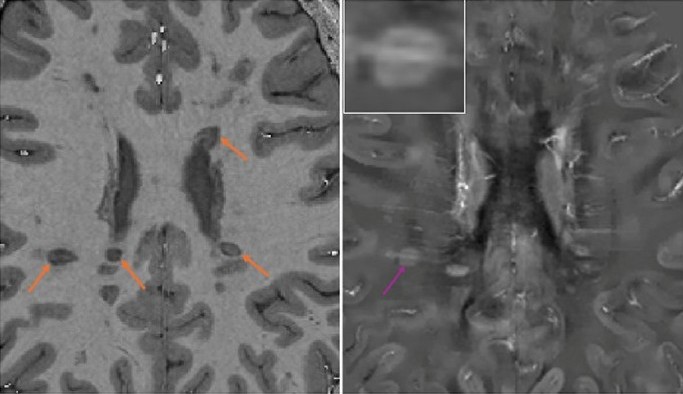
I’m so happy to share the results from our small but very exciting 7T study - my first paper as a senior author! 🤓 🧠 We explore the prevalence and dynamics of T1 dark rims in new and established lesions, including PRLs, and propose the origin of the dark signal on T1 MRI👇🏼
Our MS Frontiers conference is the UK's largest biennial conference for MS research professionals. 🧡
Ahead of this year’s conference, we’re inviting researchers to submit their abstracts before the deadline of Wednesday 4 February.
Find out more: https://t.co/lNnDBCoRjK
This initiative was created in response to the many colleagues who contacted us for advice and we hope it will make a real difference in clinical practice.
We welcome feedback and collaboration from the community. Please share this resource with colleagues who may benefit.
🔬 New Resource for MS Diagnosis: Central Vein Sign Website https://t.co/HpkHdcgpmm
We are excited to announce a new website dedicated to supporting neurologists, radiologists, and radiographers in the use of the CVS as a diagnostic marker in suspected multiple sclerosis
👉 What the website offers:
• Guidance on how you can easily access SWI sequences on all major MRI scanners (GE, Philips, Siemens)
• Step‑by‑step recommendations to simplify implementation
• A central hub for clinicians who have been asking how to obtain these sequences
10 years ago, I attended my 1st ECTRIMS in Barcelona presenting results on the central vein sign in MS! A decade later, the CVS is in the new MS diagnostic criteria and our team just presented results of a new proposed diagnostic marker: T1-dark rims! Love to see the progress!💪🏼
J Neuroimag: "T1-dark #rims were more common than QSM rims, w/ greater prev in newly formed #lesions. We propose they represent edema & inflammation assoc w/ early stages of chronic active lesion formation visible despite, not bcse of, #iron accumulation." https://t.co/O9tTMpspQ0
Can the central vein sign offer an alternative to lumbar punctures?#MS
Check out our latest results from a multi-centre, prospective study of 99 ppl presenting with typical CIS. We report not only sensitivity analyses but also discuss patient preferences.
https://t.co/h0kWwKorCF
The Spring 2025 issue of our Nottingham MS Research Group's newsletter is now available to read online. Discover more about some of our ongoing research studies in #MultipleSclerosis
🔗 https://t.co/ifQGchLmQR
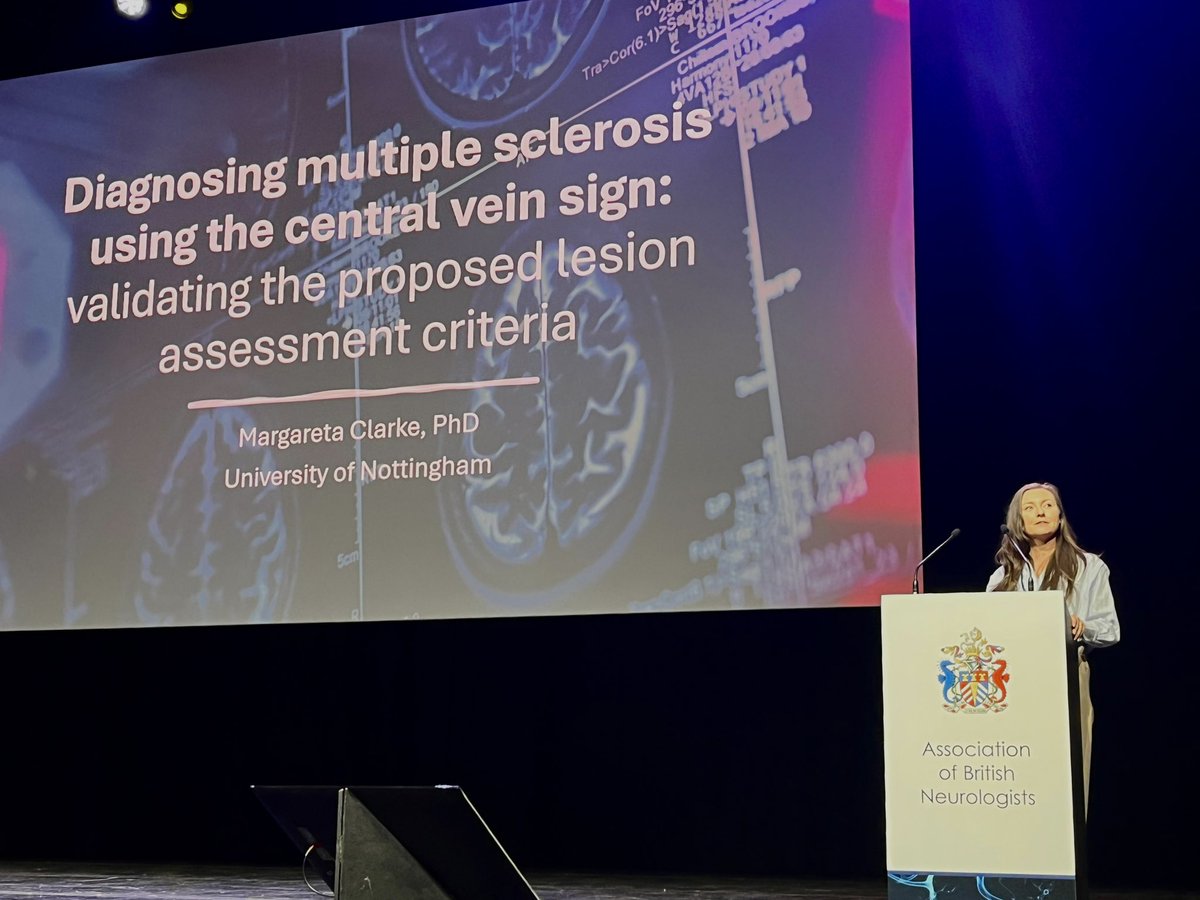
Proud to be presenting at #ABN2025 in Liverpool. We show that the NAIMS CVS assessment criteria are needed to maintain diagnostic performance of a simplified CVS rule (finding 6 CVS+ lesions). Finding more CVS+ lesions further increased specificity while maintaining sensitivity.
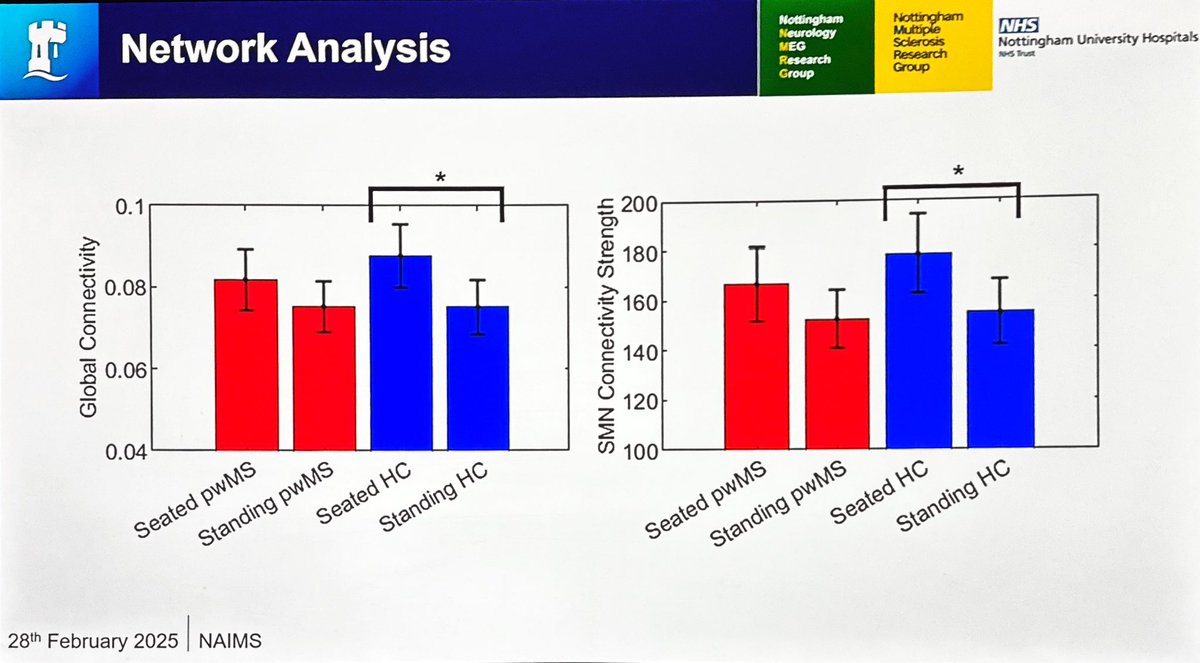
Gilmartin: Optically pumped magnetoencephalography (OPM-MEG) is a non-invasive, wearable technology that images brain activity in real time. Delayed response on tasks like moving a finger to a prompt in people with #MS. #ACTRIMS
Exciting opportunity for a postdoc with skills in neuroimaging and MS! I spent a year with this fantastic team in ☀️ Barcelona a few years ago and it was one of the highlights of my career so far! 🧠
Many thanks to @ECTRIMS for organising a fantastic workshop on the upcoming revisions to the McDonald diagnostic criteria for MS! It’s amazing to see how years of accumulating research evidence is now going to change clinical practice across the world!
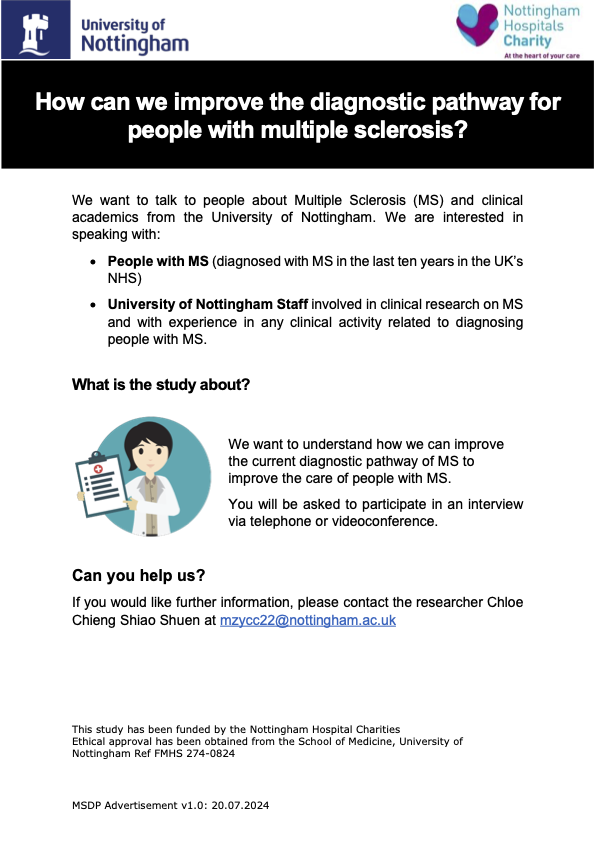
We want to improve how we diagnose people with MS! We're trying to avoid lumbar punctures. If you've been diagnosed with MS in the last 10 years, or know someone who has, get in touch! Let's improve care together! @BlancaDios@nikosevangelou3@MegiClarke@chloechiengg