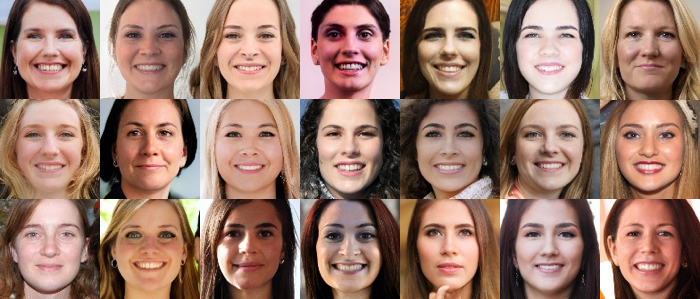
6y ago @polizeiberlin contacted me & together we developed beSure® - a bespoke tool for practitioners to find #SuperRecognizers.
Read our preprint comparing beSure® to lab-based procedures for SR identification - feedback welcome!
https://t.co/HD6O0ulPsA
I'll be hiring PhD and MSc students for Fall 2025 to do research on machine learning for science (details in 🧵)
I especially encourage applicants from under-represented groups and regions in conflict (Palestine, Ukraine, Sudan, Myanmar...)
See 🧵 for how to apply.
New PhD position with Tinashe Mutsvangwa and me (2 years @IMTAtlantique, 1 year @UniFAU )
Project Description: https://t.co/IU21j8Hv29
Application: https://t.co/41wrkOklC5
🌟 Seeking Postdoc collaborator from Berlin University Alliance ASAP 🌟
I’m working on a grant to promote (Open) Science for underrepresented groups, including foreigners in Berlin & diverse communities.
🤝 Interested or know someone who is? DM me!
Join us on Sept 11 with @MeikeRamon to explore how our brains recognize faces, distinguish real from artificial, and how machines learn too. Learn about face recognition, face-blindness, and deepfakes with the expert from the Applied Face Cognition Lab.
👉https://t.co/PbsbotZyXF
@markhenick@EikoFried “concerns of an increasing sportification of breaking, [] loss of self-determination, agency and spontaneity [] will have profound consequences for the way in which hip hop personhood is constantly ‘remade and renegotiated’”
https://t.co/iAJ3Z9VZvb
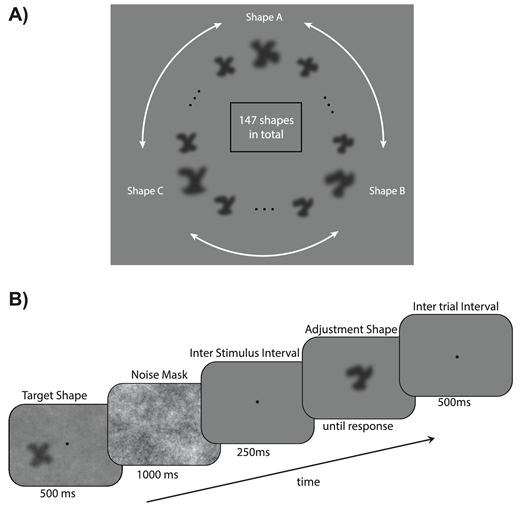
New in the Sequential Effects in Vision Issue https://t.co/T389RSSg6z, Mauro Manassi et al. @MauroManassi@abdnpsych report on Super recognizers: Increased sensitivity or reduced biases? Insights from serial dependence, https://t.co/k7lTuBAJYa.
Die St. Galler Polizeien setzen im Kampf gegen Kriminelle neu auf Menschen mit überdurchschnittlichen Fähigkeiten, Gesichter wiederzuerkennen. Super-Recognizer erfassen Gesichter teils zuverlässiger als eine Software. Sechs von ihnen arbeiten bei den... https://t.co/1Ugytx2Ibq