WATCH: Critics are pointing to China for causing an environmental disaster along the Mekong River. @Keirsimmons speaks to some of those living and working along the river.
Mekong Dam Monitor Weekly Update for May 12-June 1:
Spotlight:
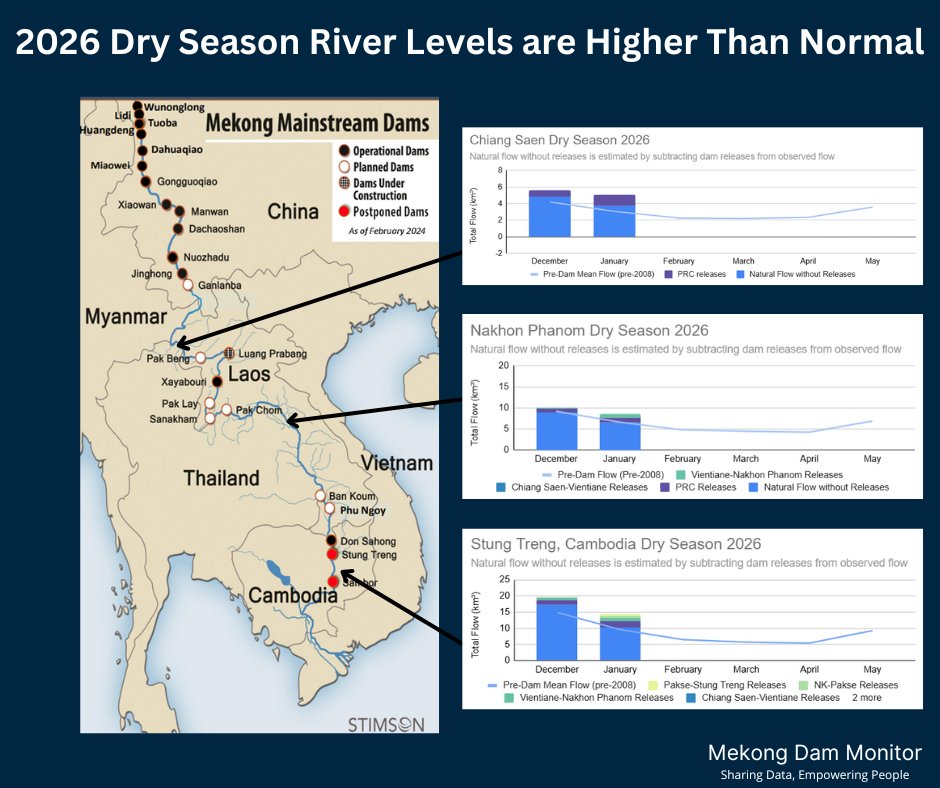
2026 Dry Season Flow Would Have Been Normal.
Dam releases from throughout the Mekong Basin prevented the Mekong from having a normal dry season flow pattern. From Chiang Saen, Thailand to Stung Treng Cambodia, the top of the blue bars show how monthly flow would have mostly matched the pre-dam flow conditions along the course of the Mekong for the entire dry season particularly for the critical months of March and April when the river should achieve its natural low point.
Instead, dam releases for hydropower production raised the river to unnaturally high levels. In March at Chiang Saen, dam release from China doubled natural flow—from February to May overall, these releases doubled natural flow. From March to May at Nakhon Phanom, dam releases from China and northern Laos nearly doubled natural flow.
These impacts carried through to Stung Treng, Cambodia where flow from March to May also doubled. Significantly higher water levels during the dry season are extremely harmful to local ecologies and natural resource provisions that rely on consistently low river levels during the dry season.
Image of the Week: Most of 2026 Dry Season Flow came from China.
The map shows that among the five sub-basins, China contributed 37% of dry season flow to Stung Treng, Cambodia from December 2025 through May 2026. Flow includes releases from dams and the natural flow of the river. This is slightly below average (38%) for the 2008-2026 time period when dams have significantly altered river flow. Prior to 2008, China contributed about 32% of flow to Stung Treng. Total dam releases for the dry season are estimated at 27.03 cubic kilometers. Natural flow for the dry season is estimated at 58.7 cubic kilometers— about 13% higher than pre-dam average flow of 51.3 cubic kilometers. Therefore, under natural conditions, the river would have been slightly higher than normal for the 2026 dry season, and dam releases raised the river by an additional 50%.
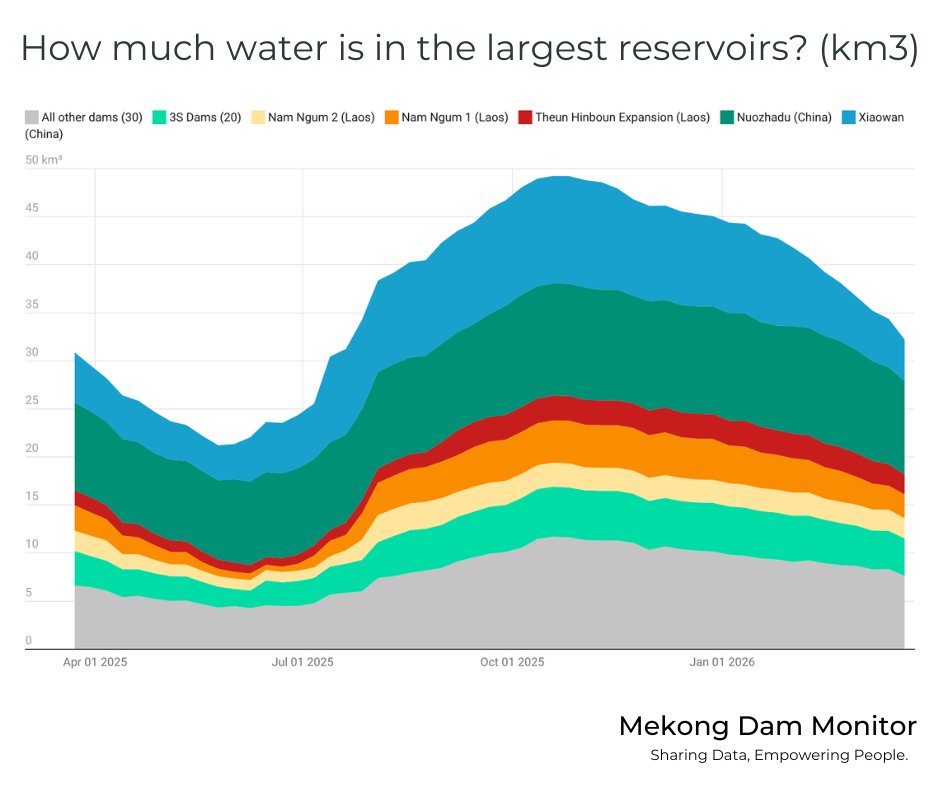
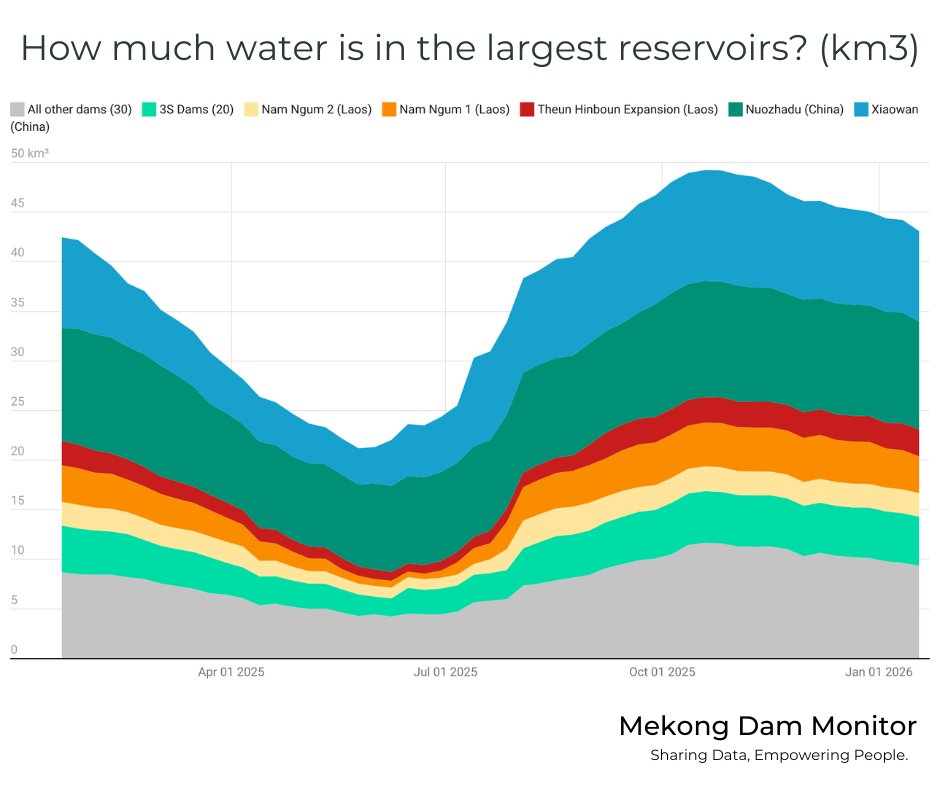
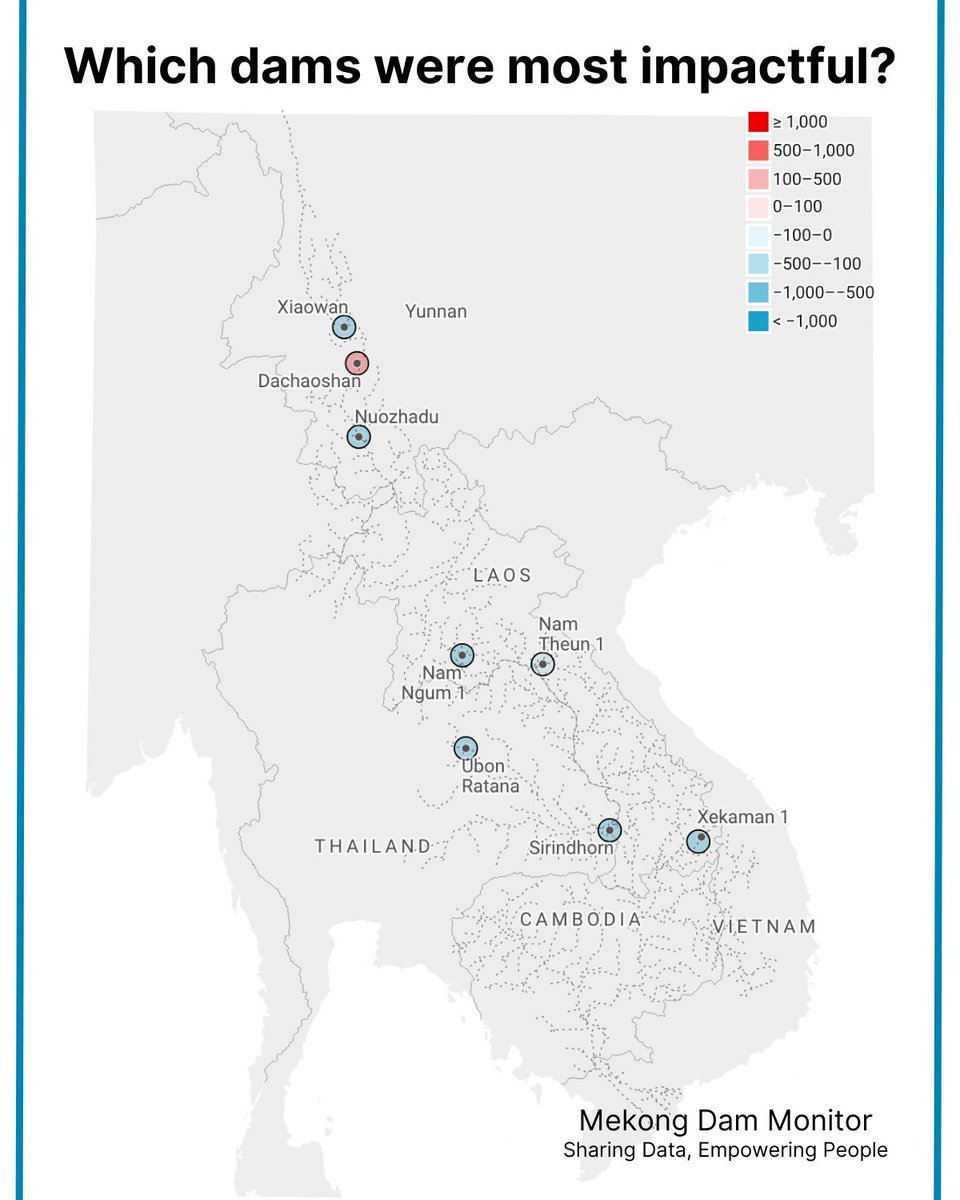
Where’s the Water: Last week saw a mix of releases and restrictions throughout the basin with a final net change of 300 million cubic meters of water added to the river system through dam releases. Nuozhadu (PRC) was the only dam to release a significant amount of water with 280 million cubic meters. This is the time of the year when dams begin to restrict flow and fill their reservoirs, so relatively low changes to the natural hydrological cycle are expected.
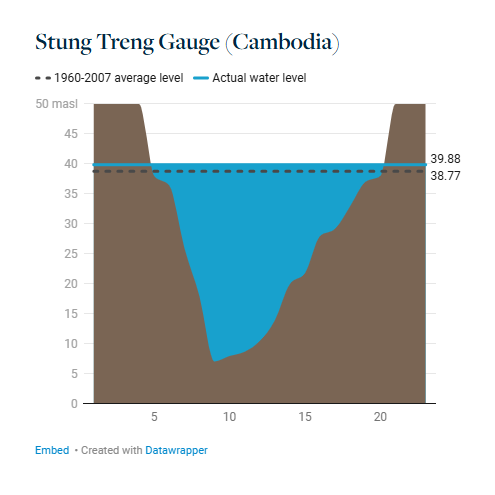
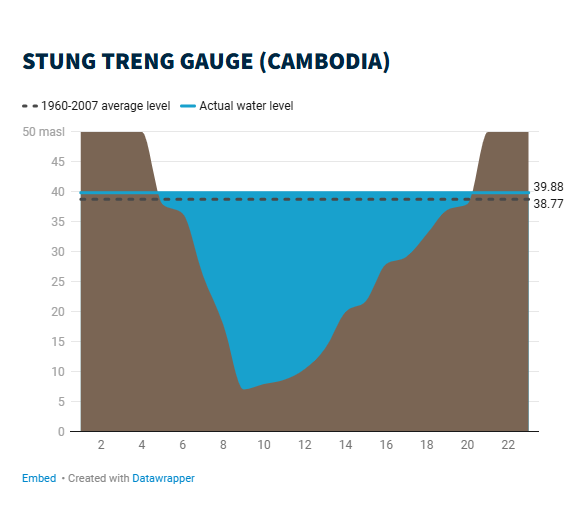
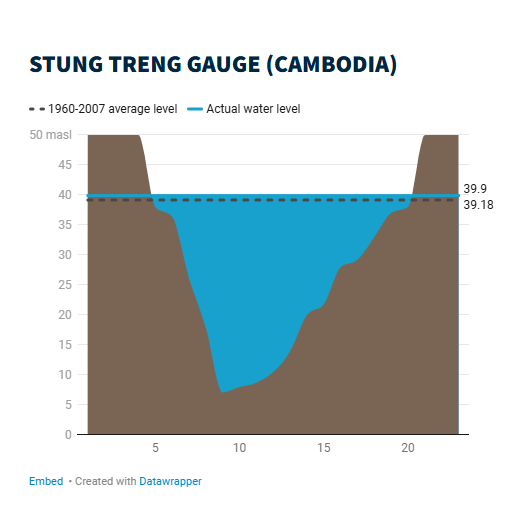
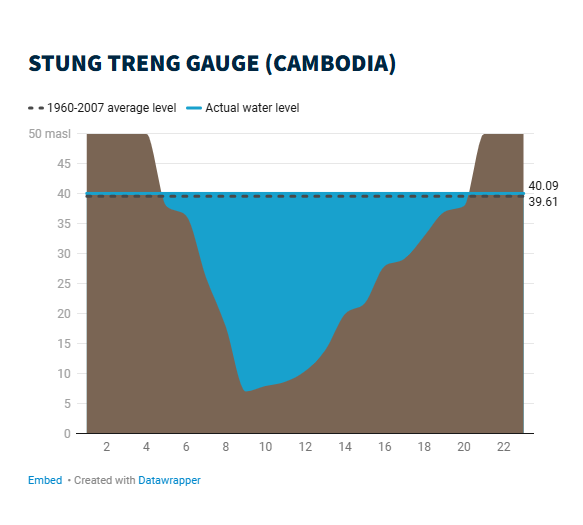
River Levels: Levels throughout the Mekong are between 1 and 1.5 meters higher than the long-term average mostly due to upstream dam releases still making their way through the basin.
Learn more at https://t.co/FbDbeqRQEr.
River Levels: Levels throughout the Mekong are between 1 and 1.5 meters higher due to upstream dam releases . Points in the lower reaches of the Mekong are particularly higher than normal due to higher-than-normal dam releases from Laos. Learn more at https://t.co/YcFIJZbBdb. 5/5
This week the MDM team is launching a new feature: A monthly Stung Treng Flooded Forest Tracker that measures higher than average dry season flow at Stung Treng. Higher than average dry season flow kills trees and erodes islands in the protected Stung Treng Ramsar site. Dam releases upstream for hydropower generation artificially raise the level of the river – a phenomenon the MDM has tracked for years. This new tracker shows the reader the time period in which flow has been above and outside the long term average and provides a current snapshot of how much higher flow is compared to the long-term average. See the new tracker and learn more at https://t.co/FbDbeqRQEr 1/5
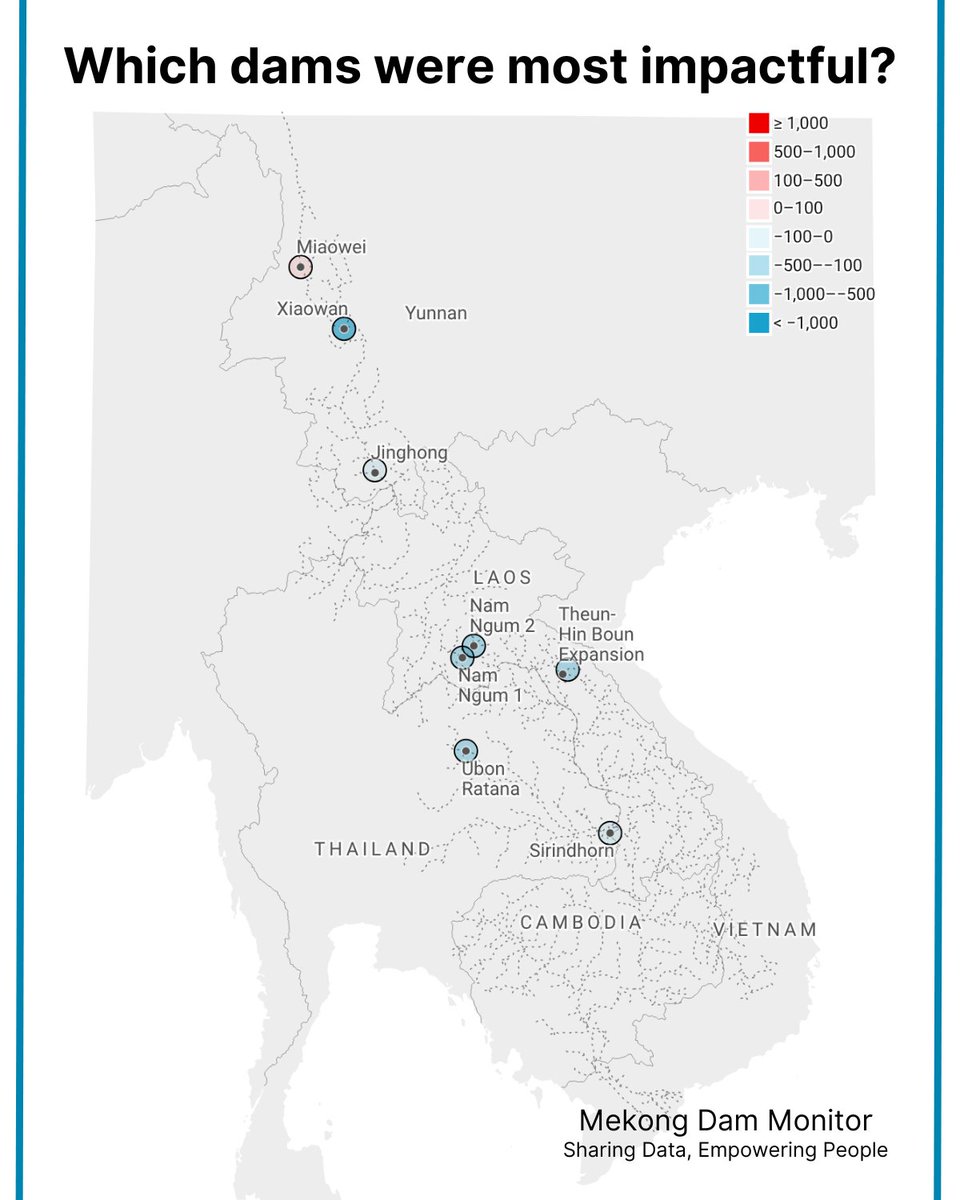
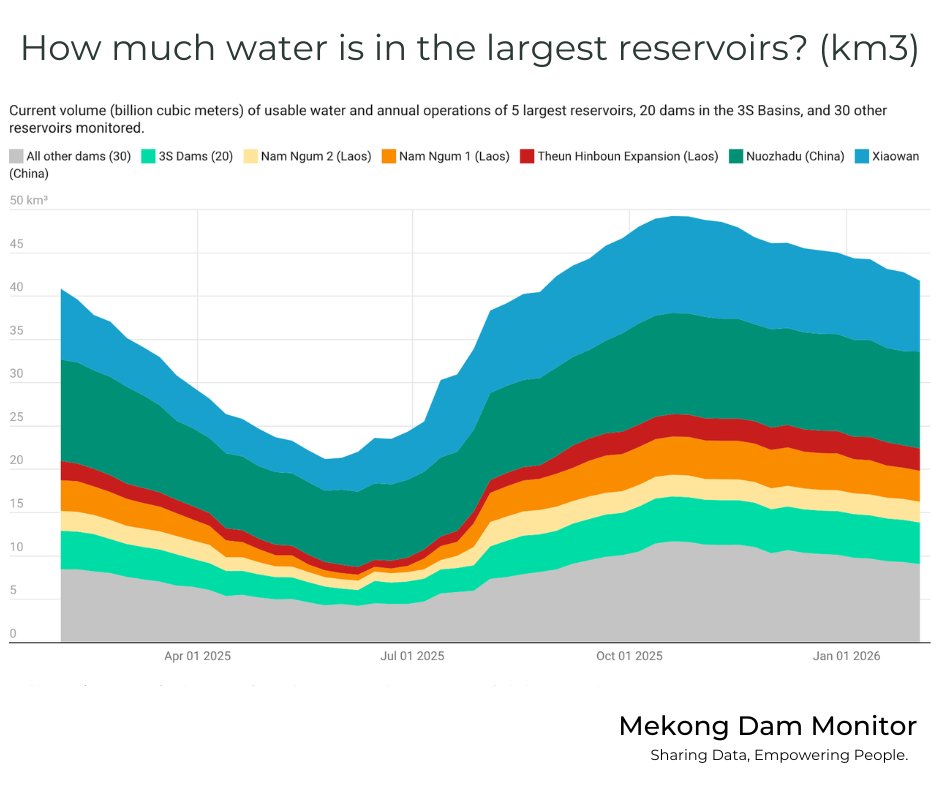
Collectively, dams throughout the basin recorded high releases over the last two weeks, totaling an estimated 1.6 billion cubic meters. Major releases last week came from Xiaowan (PRC, 1.1 billion cubic meters), Nuozhadu (PRC, 148 million cubic meters), Nam Ngum 1 (LAO, 101 million cubic meters), and Theun Hinboun Expansion (171 million cubic meters). 4/5
River Levels: Levels throughout the lower Mekong are several meters higher than normal for this time of year. Many points along the Mekong are at an all-time high for the end of March. Learn more at https://t.co/YcFIJZbBdb. 4/4
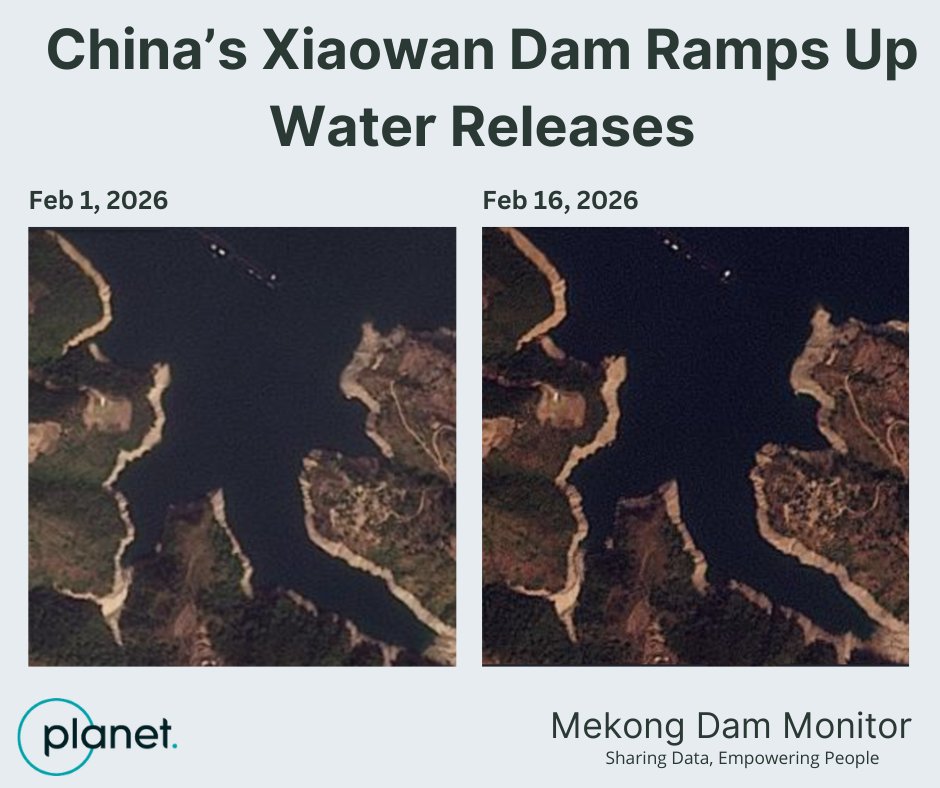
Between February 25 and March 23 China’s Xiaowan Dam, the 2nd largest in the basin, released almost 1.8 billion cubic meters of water for hydropower production. The comparative image shows the reservoir level dropping dramatically during this time. Throughout the entirety of the mainstream from Thailand to Vietnam, the releases caused river levels downstream to reach a near all-time high for this time of year. Artificially high river levels are dangerous for important ecological cycles in the Mekong. Learn more at https://t.co/FbDbeqSotZ. 1/4
Collectively, dams throughout the basin recorded exceptionally high releases last week, totaling an estimated 2.1 billion cubic meters. Major releases last week came from Xiaowan (PRC, 758 million cubic meters), Nuozhadu (PRC, 314 million cubic meters), Nam Ngum 2 (LAO, 143 million cubic meters), Theun Hinboun Expansion (LAO, 212 million cubic meters), and Sirindhorn (THA, 101 million cubic meters). 3/4
River Levels: Levels throughout the lower Mekong are more than one meter higher than normal for this time of year. Learn more at https://t.co/YcFIJZbBdb. 4/4
According to our estimates, over the past two weeks China’s Xiaowan Dam, the second largest in the Mekong Basin, released more than 1.5 billion cubic meters of water. The image shows much higher reservoir levels in early February compared to mid-February. While these releases generate large quantities of electricity, they significantly raise the river level downstream causing harm to local ecologies and the communities that rely on them. Learn more at https://t.co/FbDbeqRQEr. 1/4
Where’s the Water: Collectively, dams throughout the basin recorded exceptionally high releases last week, totaling an estimated 1.5 billion cubic meters. Major releases last week came from Xiaowan (PRC, 616 million cubic meters), Nam Ngum 2 (LAO, 193 million cubic meters), Nam Ngum 1 (LAO, 112 million cubic meters), Theun Hinboun Expansion (LAO, 113 million cubic meters), and Ubol Ratana (THA, 112 million cubic meters). 3/4
River Levels: Levels throughout the lower Mekong are about one meter higher than normal for this time of year. Learn more at https://t.co/YcFIJZbBdb. 4/4
Spotlight: 2026 Dry Season River Levels are Higher Than Normal. Throughout the Mekong, river levels are high, primarily due to dam releases for hydropower production. At Chiang Saen river levels in January were 66% higher than the long-term average. Without dam releases—most of which came from dam releases in China—natural flow would have been about 23% higher than normal. At Nakhon Phanom, dam releases from Laos and China are raising the river almost 30% above the long -term average. At Stung Treng, dam releases from China, Thailand, and Laos are raising the river level nearly 50% above its normal level. Without dam releases, river levels at Nakhon Phanom and Stung Treng, river levels would have been close to normal.
Over five years of monitoring, flow volumes this high in the early dry season have not previously been recorded. Ecosystems along the river, such as wetlands and flooded forests, rely on drying out during the dry season for their ecological sustainability—potentially putting these ecosystems at risk of dying. Additionally, certain fish migration patterns are triggered by low river levels. These higher-than-normal river levels not only threaten the mighty Mekong’s flora and fauna but also prevent dry season farming and food collection practices that support communities along riversides. Each of these threats is tied to the security of communities, food systems, and local economies upon which tens of millions of people rely. Learn more at https://t.co/FbDbeqSotZ. 1/4
Where’s the Water: Last week, dams throughout the basin released an estimated 1 billion cubic meters of water for hydropower production. Major releases last week came from Xiaowan (PRC, 960 million cubic meters) and Jinghong (PRC, 110 million cubic meters). 3/4
For the first time this dry season, dams throughout the basin are releasing water. Last week, dams released more than one billion cubic meters of water. These releases artificially raised the level of the river to more than one meter above the pre-dam average. The Where’s the Water section of this weekly update illustrates which dams released the most water. Higher than normal levels have adverse effects on local communities, such as flooding out local riverside gardens and preventing local people from collecting food in shallow parts of the river. Learn more at https://t.co/FbDbeqRQEr. 1/4
Last week, dams throughout the basin released an estimated 1.054 billion cubic meters of water for hydropower production. Major releases last week came from Xiaowan (PRC, 197 million cubic meters), Nam Ngum 1 (LAO, 244 million cubic meters), Ubol Ratana (THA, 133 million cubic meters), Sirindhorn (THA, 108 million cubic meters), Sekaman 1 (LAO, 102 million cubic meters). 3/4