@MelAl96 That's how I was raised. I suggest you raise some thick skinned kids as they will be on receiving end of colorism in a famously racialist society
@bvlldhist_ Emotional and psychological abuse is no way to raise any human. If that is how you were raised you should have consciously chosen to be a better parent than your own parents. The absolute garbage you chat on here now makes sense
@BarooahNabaarun So he's wasting tax payers money to remind the tax payers of the failures of the previous government? You lot are completely fucked in the head if this is literally your defense
Garbage take of someone that knows very little about Chinese state's ambitions. To think think tech innovation was a survival mechanism is extremely retarded
Whatever works in China today will work in India soon. Very much like Chinese VCs Indian VCs are focussed on brokering invoices and maximising outcomes of human capital. China never did deeptech. They did manufacturing and prototype to product building. RnD / Deeptech came as a survival mechanism. Similarly India did a lot of enterprise SaaS because we were good at delivering IT services and products. Deeptech that doesn't end up as usable products won't get funded. You don't have a deep manufacturing ecosystem to sustain innovation yet. Fortunately there's enough depth to consume innovation around speed of service delivery. Everything else will grow in silos and explode the day the market has enough net capital. But for now all capital is being spent in ensuring service and product delivery expectations and norms. (which will be used to fund innovation around it). This is my bull case for Pronto/ Snabbit too.
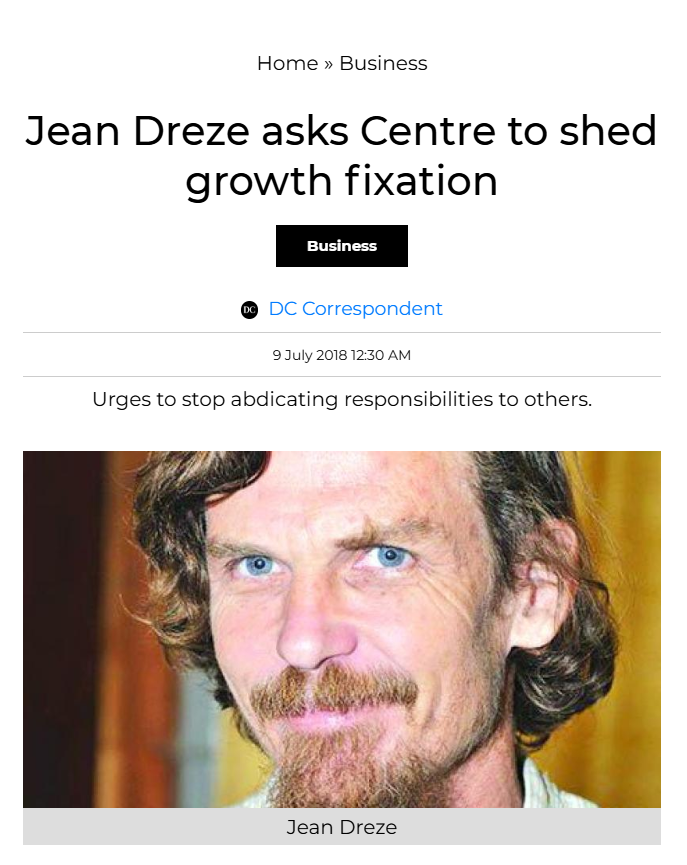
Sanyal, Dreze is worth 100 of you. A far far far better economist than you, with your supplicant mediocrity, would ever be. And an infinitely better human being who’s done more for India than you or ideological forefathers have ever done.
Our latest forex reserves stand at $726 billion, more than $50 billion below their September peak. Some of this reflects valuation changes, but capital outflows continue: foreign investors sold both debt and equity in September, with equity selling continuing into October.
Two groups benefit from the FCNR policy of borrowing with exchange-rate guarantees and using the proceeds to defend the currency: nonresident depositors earn attractive foreign-currency returns, while exiting foreign investors benefit from a rupee supported by borrowed reserves. The liabilities remain even after the reserves are spent.
Meanwhile, broad money is growing 16.9% year on year. My concern is that last year’s monetary expansion continues to support domestic demand even as foreign capital leaves.
Policymakers should stop chasing daily victories through successive unconventional measures. Their market distortions and long-term costs can exceed the short-term growth sacrifice from timely tightening. Further rate increases and tax reforms to attract capital may ultimately be unavoidable.
Our own COVID playbook offers lessons to follow, while 2011–12 offers lessons on what to avoid. Despite a once-in-a-century crisis, we maintained policy discipline and resisted calls for stimulus that could create substantial future risks. That restraint helped us emerge with macroeconomic stability largely intact. In 2011–12, we allowed discipline to slip even though India was not at the centre of the global financial crisis, and paid heavily for it. Accepting short-term pain to avoid greater long-term risk should guide policy again. https://t.co/12Y8rrL4MB
@karanrajan An organisation whose followers wear badly tailored daisy dukes refused to hoist the flag until the early 2000s. You lot are absolute clown jobs
YOU’D RATHER BE US
The cost of money has soared around the world through 2026, turning the screws on plenty of borrowers
That has put the blowtorch to the belly of the likes of France, and also caused plenty of chatter here in Australia too – including in the wake of a new report out from the IMF
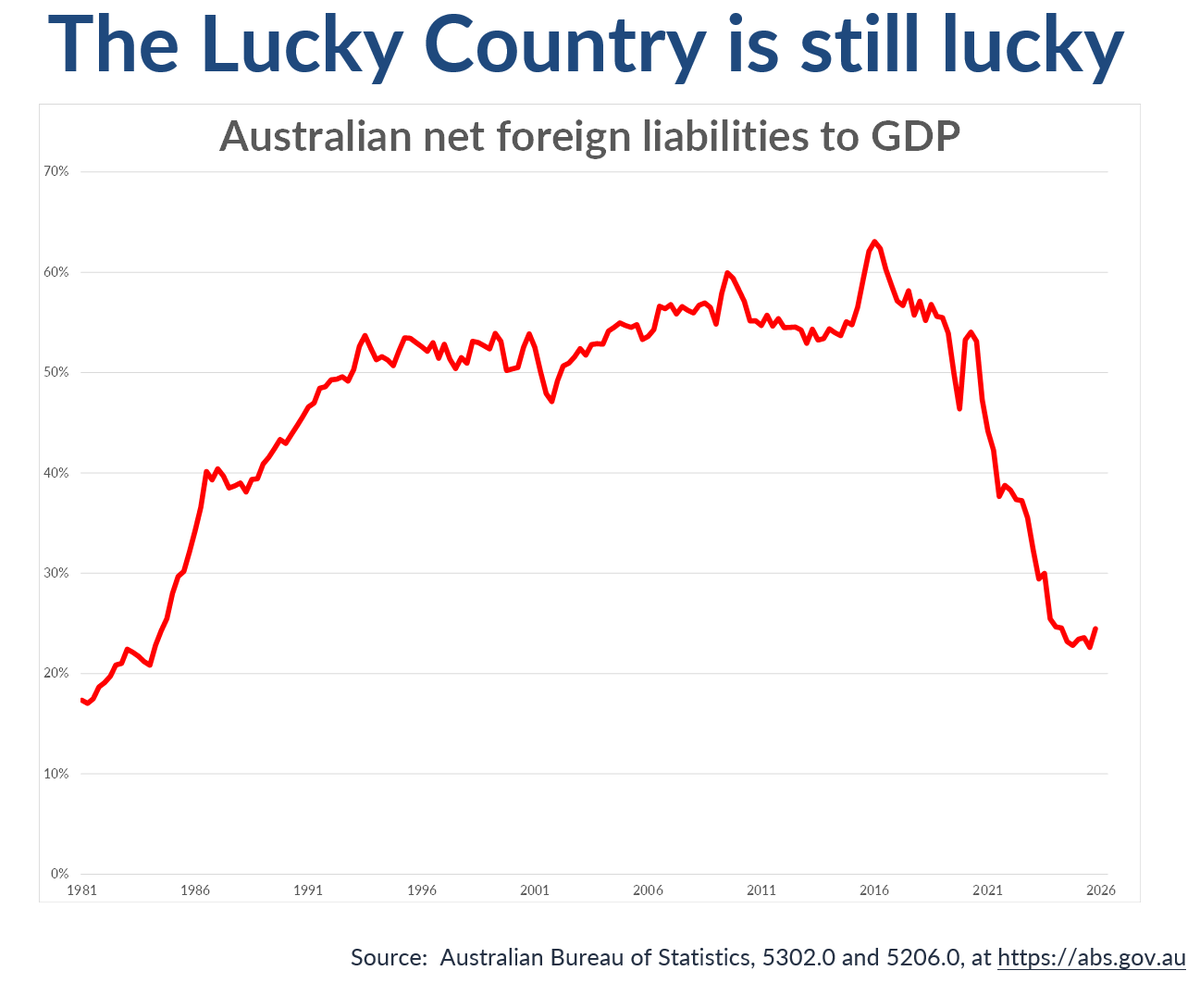
So it’s worth a reminder that the Lucky Country remains luckier than most realise
The chart shows what we owe the world less what they owe us
That’s actually not much more than a third of what it was a decade ago, back down to rates last seen in the mid-1980s
Add in the fact that most of our borrowing is in $A, and that’s a reminder that – as a nation – Australia is less exposed to pain than most others
No, that doesn’t stop Bathla-like events, but it does suggest much lower systemic risk
The sharp fall in our liabilities has been driven by both good and bad reasons
The good stuff includes the growing investment by super funds in the rest of the world, as well as the higher prices the world gave us for our red and black rocks over the past decade
The bad stuff includes the lack of investment in Australia. As we’ve become a less attractive place to invest, both the world’s money and our own has headed elsewhere …
Dear Fraands: India’s wholesale inflation in September was 11.39%, higher than any month of UPA-II. Yet crude oil, adjusted for inflation, is 30–40% cheaper today than it was then.
Good luck, bro.