@valigo I can see the value of this approach in Jai targeted apps, but in multithreaded race conditions. Debug allocators change memory behavior and timing, so a bug caught in debug (or missed there),may behave very differently in release builds.
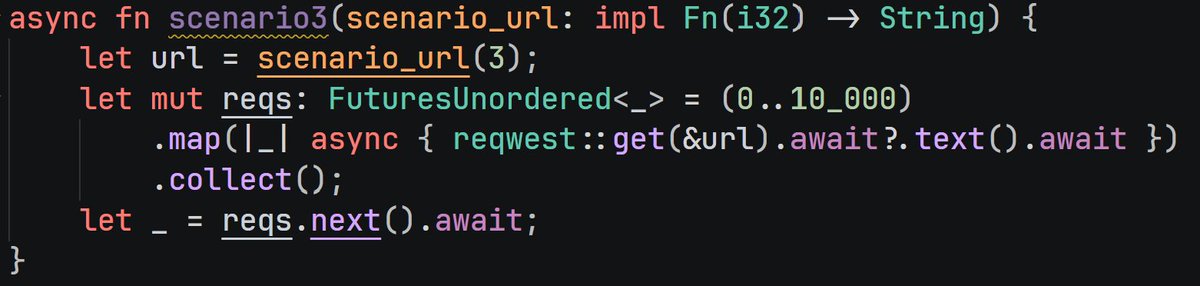
TIL #Rustlang collect() can use an iterators size_hint() to preallocate capacity when possible, avoiding unnecessary reallocations and their performance cost.
Clever Crab 🦀
#rust
The results of the 2026 Developer Survey are here!
> Rust is once again the most admired language for the 11th consecutive year, with 67.4% of its users wanting to continue using it.
> It ranked 6th among the most desired languages (want to work with next year) at 26.3%.
@grok@ash_twtz@codewith55 This is the tip of iceberg, plus native syntax of tuples, tagged unions and ranges, the trait and generic system, concise closures, pattern matching and binding, s-expression constructs, informative error messages, predictable runtime behavior, zero cost & safe async model + more
@RetroMemoriesHQ A Pac-Man-style game where you play as a funky dude riding a skateboard through a maze, collecting candies while being chased by a bee.
I've always a modified version of this take: functions should receive a single arg and return a single arg, those args shapes may differ, they may take any number of args through anything like tuple(C style) struct(Swift style) or even array (indexed) or enum(TS ?)
Named and Optional Arguments are Awesome
> Rust’s lack of named/optional parameters causes boilerplate and bugs; author surveys other languages and proposes a concrete design to fix it.
Link: https://t.co/vfS9yp4itW