SEI faculty Robert N. Weinreb, MD, (Corresponding Author) & SEI researcher Melika Hashemi, MD, MPH (First Author), collaborated with additional SEI faculty & researchers to study preperimetric glaucoma.
Explore the study & findings here: https://t.co/4RZvVDGb9P
👁️ Before VF loss, which preperimetric glaucoma eyes need closer follow-up?
Just out in AJO | Our study of 93 preperimetric glaucoma eyes with ~5 years of follow-up
📊 What caught our attention?
Baseline OCTA-detected microvasculature dropout (MvD) was linked to:
• Nearly 4× faster vessel density loss
• Much higher rate of developing glaucomatous VF damage (62.5% vs 26.2%)
• No significant difference in RNFL thinning rate
P=0.886
🔬 In short: the vascular signal appeared before measurable RNFL change.
OCTA does not replace OCT or VF, but MvD may help sharpen risk stratification in early glaucoma.
📄 Full article:
https://t.co/Yb7ZcybO6y
@ShileyEye
#Glaucoma #OCTA #Ophthalmology #GlaucomaResearch #ajo
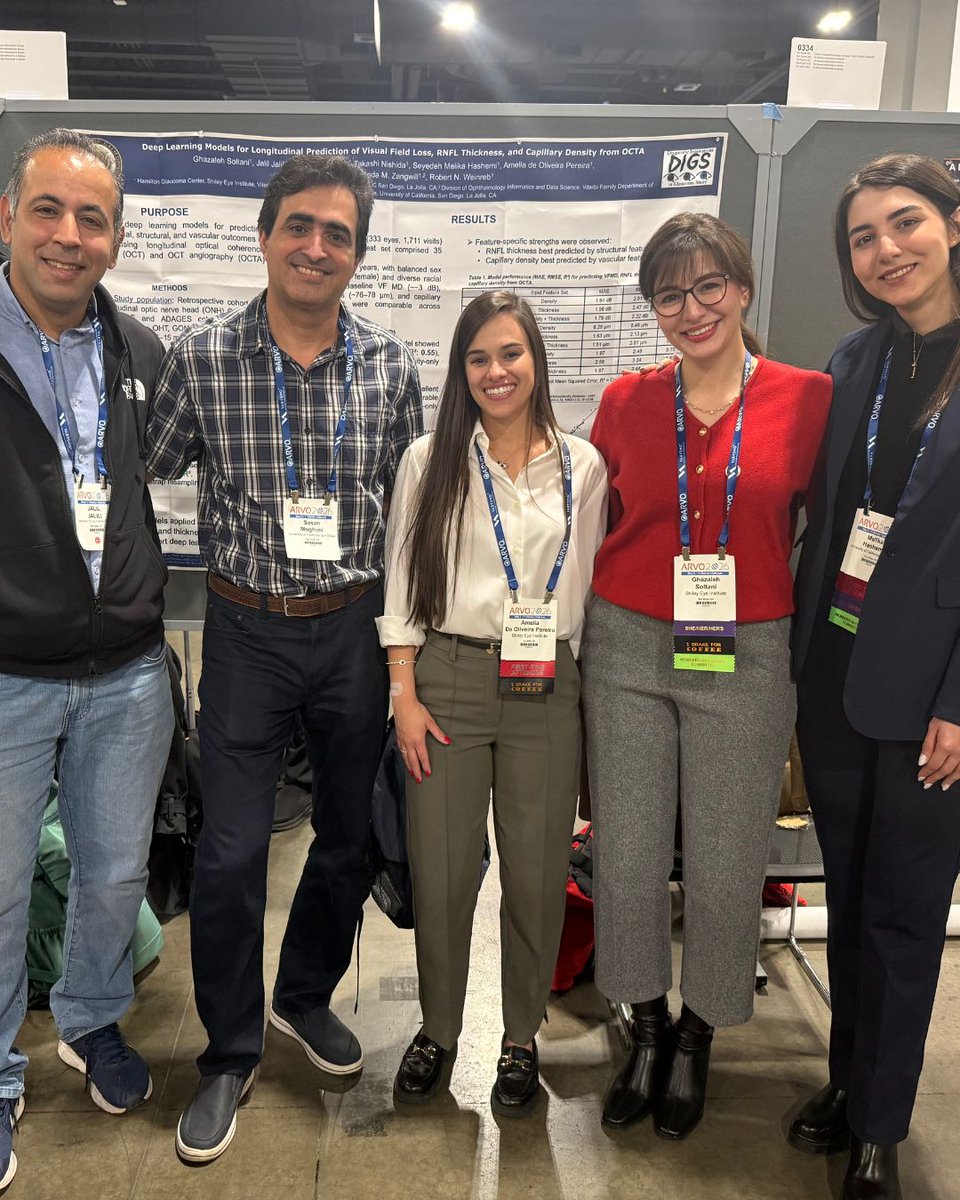
First ARVO and a truly memorable experience ✨
Pleased to present our work on 24-hour home tonometry in primary open-angle glaucoma and to connect with inspiring colleagues across the field.
Grateful to receive the ARVO Foundation Travel Grant, and especially thankful to Dr. Robert N. Weinreb and Dr. Sassan Moghimi for their ongoing mentorship and support.
@ARVOinfo@ShileyEye@shileyresidency
#ARVO2026 #Glaucoma #VisionResearch #Ophthalmologyw
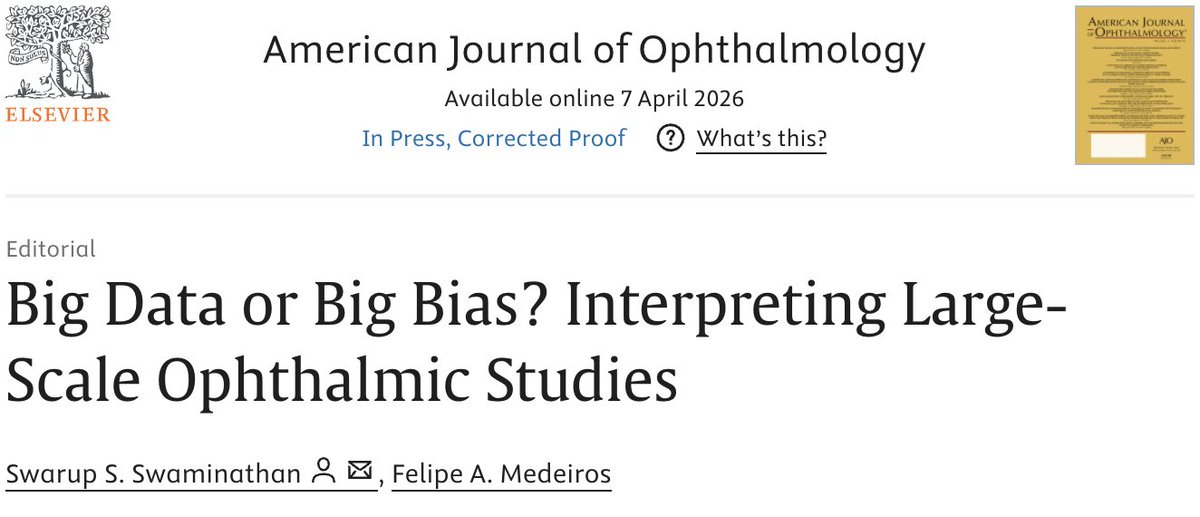
📊 Do bigger datasets really give us better answers, or can they also create bigger bias?
A thoughtful AJO editorial reminds us that large-scale ophthalmic datasets are powerful, but only when interpreted carefully.
Datasets like IRIS Registry, All of Us, UK Biobank, Epic Cosmos, and TriNetX allow us to study real-world evidence, rare outcomes, care patterns, safety, and health equity at a much larger scale.
But a bigger N does not automatically mean better evidence.
The key question is not just:
“How large is the dataset?”
It is:
“Is this the right dataset for this clinical question?”
⚠️ Important limitations remain:
• Missing OCT and visual field data
• Heavy reliance on ICD codes
• Variable documentation across clinics
• Non-random follow-up and testing frequency
• Incomplete capture of care outside the system
• Residual and unmeasured confounding
In very large datasets, even tiny differences can become “statistically significant.” But a very low P value does not always mean the finding is clinically meaningful.
Effect size, absolute risk, data quality, and clinical context still matter.
💡 Big data should help us ask better questions, not make bigger claims than the data can support.
@SSwaminathanMD
#Ophthalmology #BigData
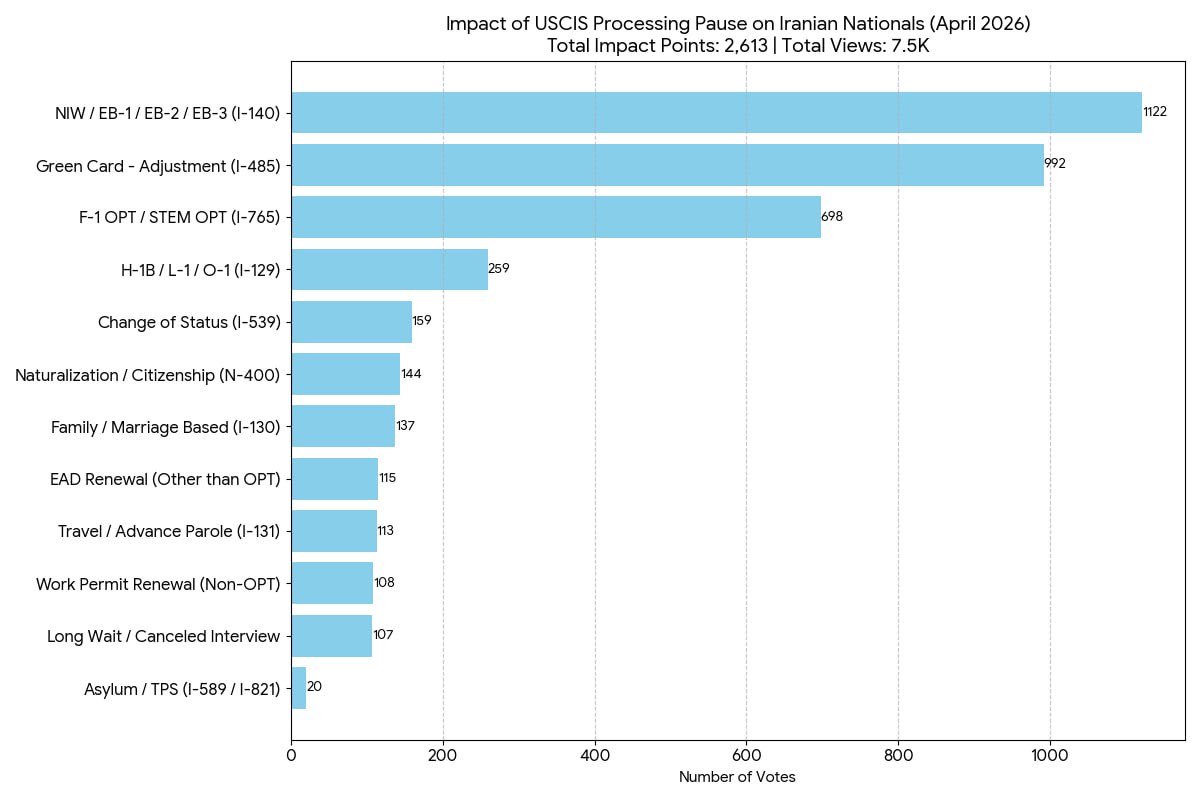
A self-reported dataset (2,613 cases) shows the USCIS pause is disproportionately affecting high-skill legal immigrants. At least 698 Iranian INSIDE U.S. are blocked from work (OPT pending)
Vetted professionals and talents are being forced out of stability and work @David_J_Bier
A month later, still reflecting on an unforgettable experience! 👁️✨
My first AGS! Had the honor of presenting, under the mentorship of @RobertWeinreb and @SasanMoghimi. Grateful for the connections, the science, and the journey ahead.
#AGS2025#Ophthalmology#MedTwitter