1st Editor's Choice Article for the April issue from the group of Prof. Jianhua Yang at Dalian University.
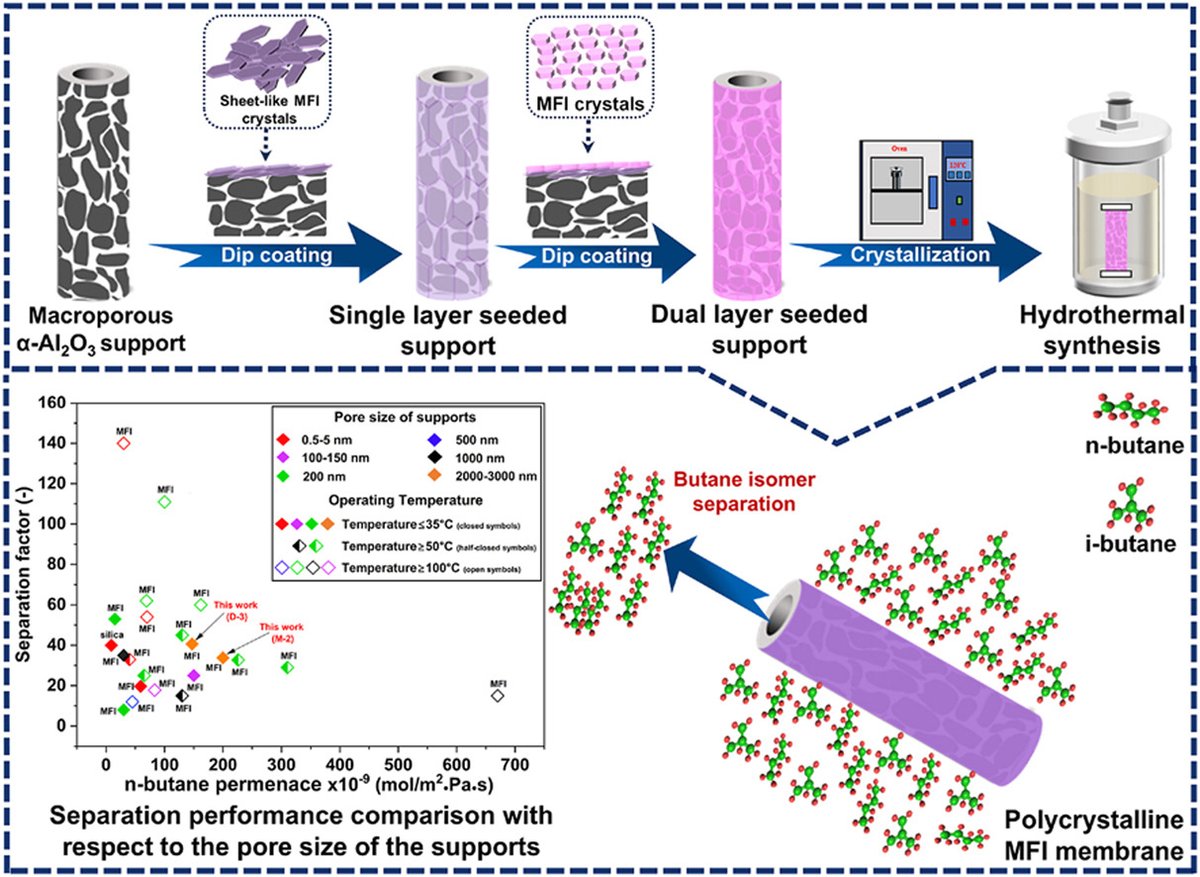
Fabrication and characterization of polycrystalline MFI membranes on coarse macroporous supports for the separation of butane isomers
https://t.co/pfwoeA1FEl
Reproducible synthesis of polycrystalline zeolite membranes is both challenging and critical for their scale-up. In this work, the authors synthesized MFI zeolite membranes on low-cost, coarse macroporous Al₂O₃ supports using two different seeding strategies: nanosheet seeds alone, and a combination of nanosheet seeds and MFI crystals. The resulting membranes were systematically characterized and show good separation performance. This novel work may pave the way for zeolite membrane scaleup on low cost supports.
@TobiasWesselius@Rong_SMTCLab@jerrylinwoods
🚨A Research Highlight from Mo Qiao covers a @NatureWaterJnl Article on modified PIM-based membranes that enhance the selective sieving of Li+ over Mg2+ in electrodialysis processes. @QileiSong
Original paper (🔓): https://t.co/K0xnBZ3ErZ
Highlight ($): https://t.co/FZKr9mEXIY
#materials#MOFs#membranes Physical stability is as crucial as chemical stability in MOF membranes. See our recent findings on a new microscopic, vapor-flow-driven mechanical amorphization in MAF-5 membranes during pervaporation @pfizer@J_A_C_S https://t.co/SLsUwslAU1
1st Editor's Choice Article for the March issue from the group of Prof. Yang Lei at Lanzhou Jiaotong University.
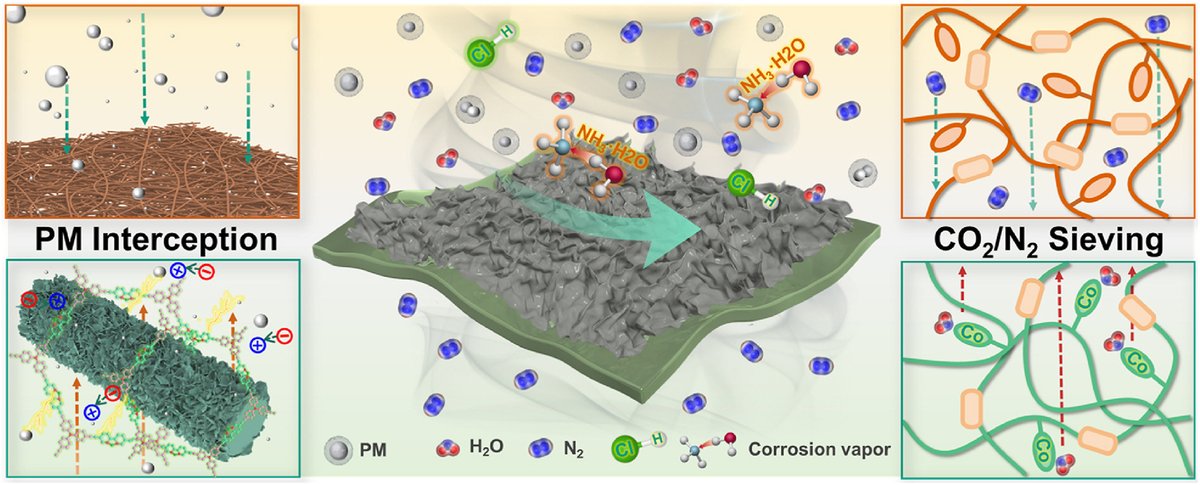
Directional anchoring of cobalt metal sites in mixed matrix membranes via interfacial covalent grafting for synchronous separation of particulate matter and CO2
This paper presents the synthesis of cobalt-coordinated conjugated microporous polymers within the active layers of solid-gas separation mixed matrix membranes for the simultaneous capture of particulate matter and CO₂. To address the common issue of phase incompatibility in mixed-matrix membrane, conjugated microporous polymers are grafted onto the surface of multi-walled carbon nanotubes, effectively reducing filler agglomeration and interfacial defects. The resulting membranes exhibit outstanding particulate capture efficiency and enhanced CO₂/N₂ selectivity, attributed to cobalt coordination and improved phase compatibility.
https://t.co/Z95YiREiSg
@TobiasWesselius@Rong_SMTCLab@jerrylinwoods
#ChemE#MOFs#sorption#separation We report the single-component adsorption and diffusion of CO₂, N₂, and H₂O in CALF-20, and those data have been applied to predict breakthrough results @ACSPublications https://t.co/xJVs5t1ykg
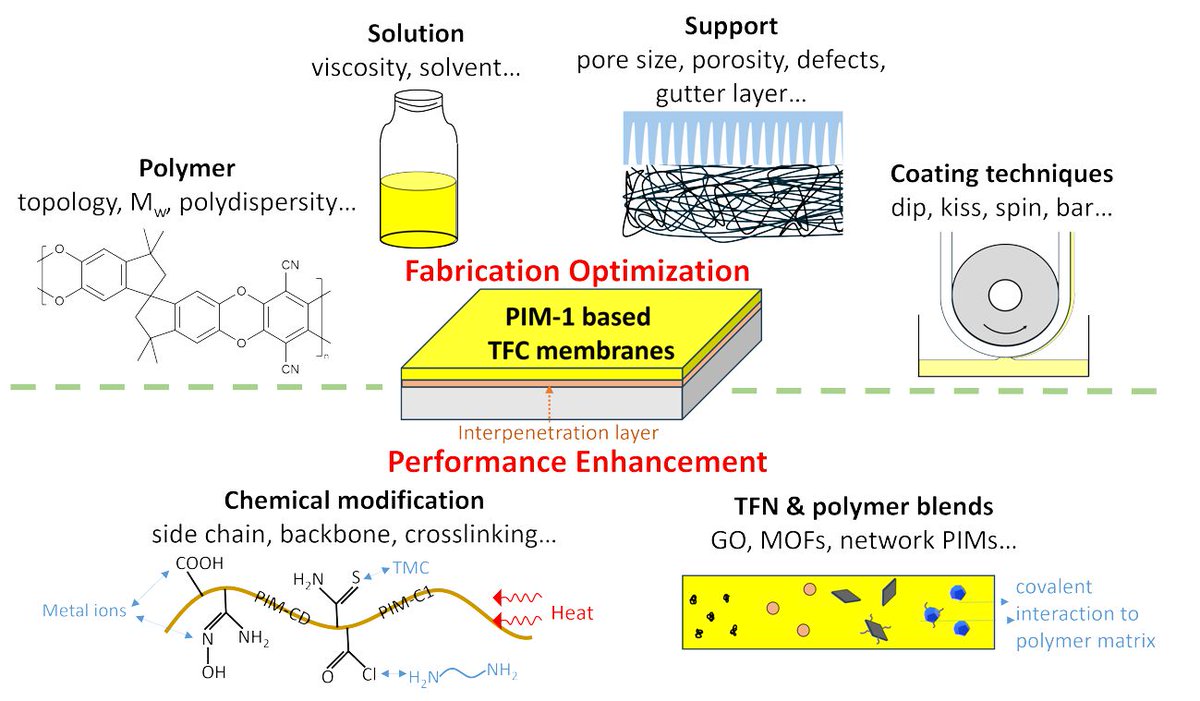
Impact of Polymer Topology on Physical Aging of Thin Film Composite Membranes Based on PIM-1, cPIM-1, and Associated Blends | Macromolecules https://t.co/Q6aKnGd2b1
#COFs#membranes We demonstrate that a COF membrane with ~4.5 Å pores can achieve high C6 alkane isomer separation via OSRO, boosting RON of a 5-component C6 mixture from 67.7 to 92.8 through continuous filtration @J_A_C_S https://t.co/H26aKU3EUd
Check out our most recent publication in @J_Membrane_Sci in collaboration with @YanXiaLab: “Investigation of competitive sorption and plasticization of hyperaged CANAL ladder polymers for acid gas purification" https://t.co/szql8b0gKM
Impact of Polymer Topology on Physical Aging of Thin Film Composite Membranes Based on PIM-1, cPIM-1, and Associated Blends | Macromolecules https://t.co/Q6aKnGd2b1
#MOFs#membranes#nanofiltration PCN-250 membranes obtained via secondary growth showed 97.2-99.2% OSN rejection, while tertiary growth ran 1600 h in PV with a separation factor of 591. Thickness matters! @pfizer@J_Membrane_Sci https://t.co/ZX4tNdkyHs
Enhancing the CO2 Separation Performance of Mixed Matrix Membranes Based on Block Copolymer via Nonsolvent-Induced Microstructure Rearrangement | Industrial & Engineering Chemistry Research https://t.co/ukJ1mtijhx
2nd Editor's Choice Article for the December issue from the group of Prof. Gongping Liu at Nanjing Tech
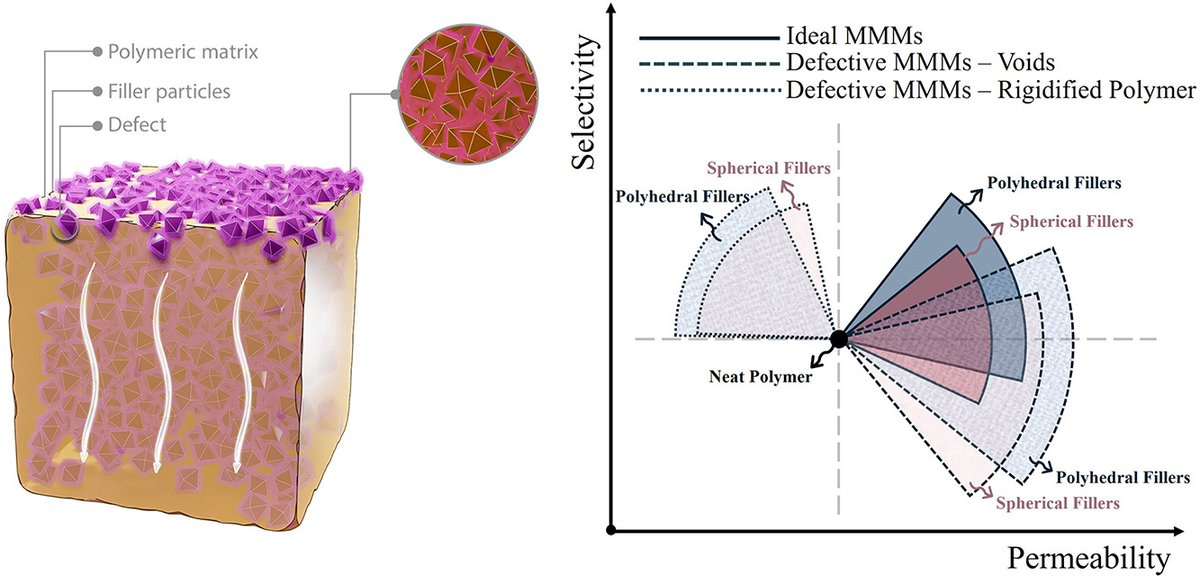
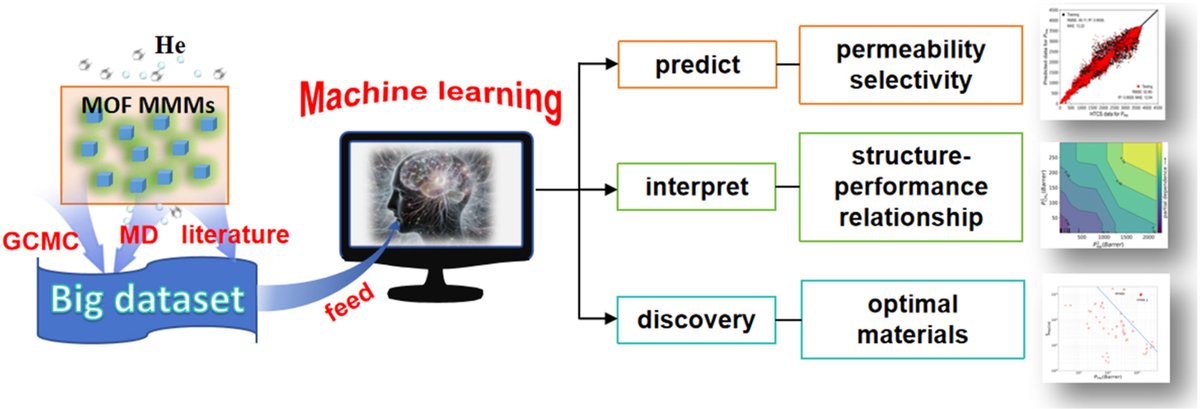
Machine learning accelerates high throughput design and screening of MOF mixed-matrix membranes towards He separation
https://t.co/VisbmPhoIo
This study employs machine learning and high-throughput simulations to design and screen MOF MMMs for helium separation, offering data-driven insights for novel MMM development. The authors constructed a dataset of half a million MOF MMMs for He/CH4 separation and developed four ML models to predict He and He/CH4 permeance and separation factors. This innovative strategy provides a theoretical foundation for sustainable helium separation membranes.
@LBandounas@Rong_SMTCLab@jerrylinwoods
3rd Editor's Choice Article for the November issue from the group of Prof. William (Bill) Koros at Georgia Tech.
Leveraging molecular scale free volume generation to improve performance of carbon molecular sieve membranes.
https://t.co/kK4bTWyPap
This paper reports on the fine-tuning of carbon molecular sieve (CMS) structures to enhance the performance of CMS membranes for a wide range of gas mixtures. The study demonstrates the targeted modification of a polyimide CMS precursor by substituting aliphatic methyl groups on the polymer backbone with free-volume-generating trifluoromethyl groups. This modification results in significant improvements in gas separation performance. The findings highlight the incorporation of free-volume-generating groups into polymeric precursors as a powerful strategy for developing advanced CMS membranes.
@LBandounas@Rong_SMTCLab@jerrylinwoods