The thing about the Brazilian payment system Pix is that it’s superior to US alternatives and Brazilians know it. Attacking it thus makes the US look like a bad loser. Pix succeeded because it’s better, not because of unfair trade practices.
São Paulo não está bem. Na segurança pública, por exemplo, precisa de integração: Polícia Federal, Ministério Público, Receita, COAF e secretarias estaduais trocando informações para vencer o crime organizado. Mas tudo que a gente quer avançar, o governo Tarcísio reage e vai contra. #HaddadNoUol
A primeira manifestação do Cristiano Ronaldo após a convocação para a seleção de Portugal foi compartilhar a lista dos convocados.
A primeira manifestação do Messi após a convocação para a Argentina foi postar a bandeira do país.
A primeira manifestação do Mbappé após a convocação para a França foi uma foto vestindo a camiseta da seleção.
A primeira manifestação do Neymar após a convocação foi divulgar uma casa de cassino online.
Fim.
🇧🇷 URGENTE: Flávio Bolsonaro visitou Daniel Vorcaro em casa logo após a primeira prisão do banqueiro, informa Metrópoles.
A aliados, Flávio teria admitido a visita e alegado que foi para informar que não faria mais negócios com o dono do Master. A assessoria do senador não comentou.
Em PRIMEIRA MÃO: FUNDO DE ALIADO DE EDUARDO BOLSONARO QUE ADMINISTROU DINHEIRO DE VORCARO PARA FILME COMPROU CASA NO ESTADO EM QUE EX- DEPUTADO VIVE NOS EUA: O TEXAS
https://t.co/DcxGWfpM5C
Pior que é verdade, a estratégia do @TheInterceptBr de pedir uma explicação do Flávio ao vivo quase ao mesmo tempo que soltou a matéria fodeu ele. Não sabia do vazamento, mentiu, chamou jornalista de militante e depois admitiu tudo.
e mais uma vez o trabalho de JORNALISMO INVESTIGATIVO foi feito pela mídia independente.
a mídia comercial não investiga mais, só recebe informação em off de "fontes" interessadas em dar apenas o seu lado da história. isso é lobby, não jornalismo.
parabéns ao @TheInterceptBr!
A produtora nega o recebimento da grana. O Flávio diz que a grana foi paga. O destino: empresa no Texas que pertence ao advogado do Bananinha. Os caras passaram a perna no banqueiro. Esse país é sensacional.
O clã Bolsonaro é tão baixo, que conseguiu formar uma nova “frente única”. Tanto que, pela primeira vez, Guilherme Boulos, Otoni de Paula, Randolfe Rodrigues, Romeu Zema, Leandro Demori e Rodrigo Constantino estão concordando em gênero e número.
O vereador @NabilBondukiSP é, aparentemente, o único que trabalha na câmara dos vereadores de São Paulo
Ele denuncia AirBnb em HIS? Prefeitura vai lá ver
Ele denuncia estacionamento moda à caralho em local público? Prefeitura cancela o “convênio”
E agora até mesmo o tal patrocínio de kits de vinho de um evento do Arnold foi denunciado
Caso raro de vereador brasileiro hoje que tá cuidando do que deveria e não enchendo o saco com “vídeo viral” em rede social
Trump thinks he can solve a clash of ancient civilisations that started more than 2500 years ago.
The Israelis are Mesopotamians, and the Iranians are Indo-Europeans.
Abraham is explicitly from Ur of the Chaldees, which is in southern Iraq, near modern Basra. There is no meaningful genetic discontinuity between the people of ancient Mesopotamia and the people who became Canaanites who became Israelites.
Hebrew is a Semitic language. The Semitic language family originated in Mesopotamia and the Arabian Peninsula. Hebrew, Aramaic, Akkadian, Arabic, Babylonian — all branches of the same tree. Hebrew and Babylonian Akkadian are cousin languages the way Spanish and Italian are cousins. They share root words, grammatical structures, and conceptual vocabulary going back thousands of years before the Bible was written.
The foundational myths of Judaism — creation, the flood, paradise, the first man, the tower — all have direct Mesopotamian predecessors that are older. The ethical and legal framework — the covenant structure, the law codes — mirrors Mesopotamian forms. The calendar is Babylonian. The alphabet is Aramaic-Mesopotamian. The very concept of recording sacred history in written texts is a Mesopotamian invention.
El — the chief god of the early Israelites and the root of the word Elohim, one of the Hebrew names for God — was a Canaanite/Mesopotamian deity. The word Israel itself contains El. The angels, the cosmic hierarchy, the idea of a divine council — all have deep Mesopotamian roots. Early Israelite religion before the exile looks very much like a local variant of broader Mesopotamian religious culture, with Yahweh gradually absorbing the attributes of El, Baal and others into a single deity.
"Iran" comes directly from "Aryana" — land of the Aryans. The Iranians were Indo-European, not Semitic. This is the foundational distinction. Where the Semitic world — Sumerians absorbed by Akkadians, Babylonians, Canaanites, Jews, Arabs — emerged from the Fertile Crescent and Arabian Peninsula, the Iranians came from somewhere completely different.
The Iranian peoples were part of the great Indo-European migration — a population that originated on the Pontic Steppe, the grasslands north of the Black Sea and Caspian Sea, in what is now Ukraine, southern Russia and Kazakhstan. Around 2000–1500 BC these steppe peoples began expanding in all directions on horseback, carrying their languages with them. One branch went west and became the Greeks, Romans, Celts, Germans, Slavs. Another branch went south and east and split into two streams — one into India becoming the Vedic civilization, one into Iran becoming the Persians and Medes.
Old Persian, Sanskrit, Greek, Latin and all their descendants are branches of the same tree. The word for father in Persian is "pedar," in Latin "pater," in Greek "patér," in Sanskrit "pitár," in English "father." The word for god in Persian is related to the Sanskrit "deva." The Iranian god Mithra appears in Roman religion as Mithras and possibly echoes in the Vedic Mitra. These are not coincidences — they reflect a common origin perhaps 5,000 years ago on the Eurasian steppe.
The two main Iranian tribes that entered history were the Medes in the northwest and the Persians in the south. The Medes formed the first Iranian empire around 700 BC, destroying the Assyrian Empire — the superpower of its day — in alliance with the Babylonians. Then the Persians under Cyrus the Great overthrew the Medes in 550 BC and built the Achaemenid Empire.
In 651 AD the Sassanid Persian Empire — the last great pre-Islamic Persian dynasty — was destroyed by the Arab Muslim armies in one of the fastest conquests in history. Iran was Islamicized. Arabic became the language of religion and high culture. Yet something remarkable happened — unlike Egypt, like North Africa, like the Levant, which gradually became Arabized in language and identity, Iran kept its language. Persian survived. Within two centuries Iranians were writing sophisticated poetry, philosophy and science in Persian — using the Arabic script but their own language. The Persian cultural identity proved resilient enough to absorb Islam without being dissolved by it.
The Persian literary renaissance of the 9th-10th centuries produced figures like Ferdowsi, whose Shahnameh — Book of Kings — deliberately reconstructed pre-Islamic Persian identity and mythology. It was a conscious act of cultural preservation remarkably similar to what the Jewish scribes did with the Torah in Babylon. A conquered people writing their way back into existence.
So you have two civilizational streams that met in the Middle East:
The Semitic stream — out of Arabia and the Fertile Crescent, producing Sumerians, Akkadians, Babylonians, Canaanites, Jews, Arabs. Urban, agricultural, text-centered from very early, building civilization in river valleys.
The Indo-European Iranian stream — out of the Eurasian steppe, mounted, pastoral, bringing a completely different cosmology, a dualistic theology, a warrior aristocratic culture that then learned to govern sedentary civilizations from the Semitic world.
Modern Iranians are the descendants of that Indo-European Iranian stream, heavily mixed with the pre-existing Elamite and Semitic populations of the region, then further shaped by Arab Islamic conquest. Genetically they are distinct from Arabs — closer to South Asians and Europeans than to Semitic Arabs in certain markers, reflecting that ancient steppe origin. Linguistically Persian is closer to English than it is to Arabic — both are Indo-European, while Arabic is Semitic.
Which makes the current conflict between Iran and Israel — between the heirs of the Indo-European Iranian world and the heirs of the Semitic Mesopotamian-Canaanite world — in some sense a resumption of the oldest cultural fault line in the Middle East. The same two civilizational streams that first encountered each other when Cyrus walked into Babylon in 539 BC, when he freed the Jews and sent them home. Except then they were allies. And the Iranian was the liberator of the Semite.
History has a very dark sense of humor.
Equipe de imprensa da Rússia escapa por pouco de míssil disparado por Israel contra o Líbano. O repórter Steve Sweeney, da Russia Today, estava ao vivo quando o projétil atingiu a região. Ele e o cinegrafista tiveram ferimentos leves.
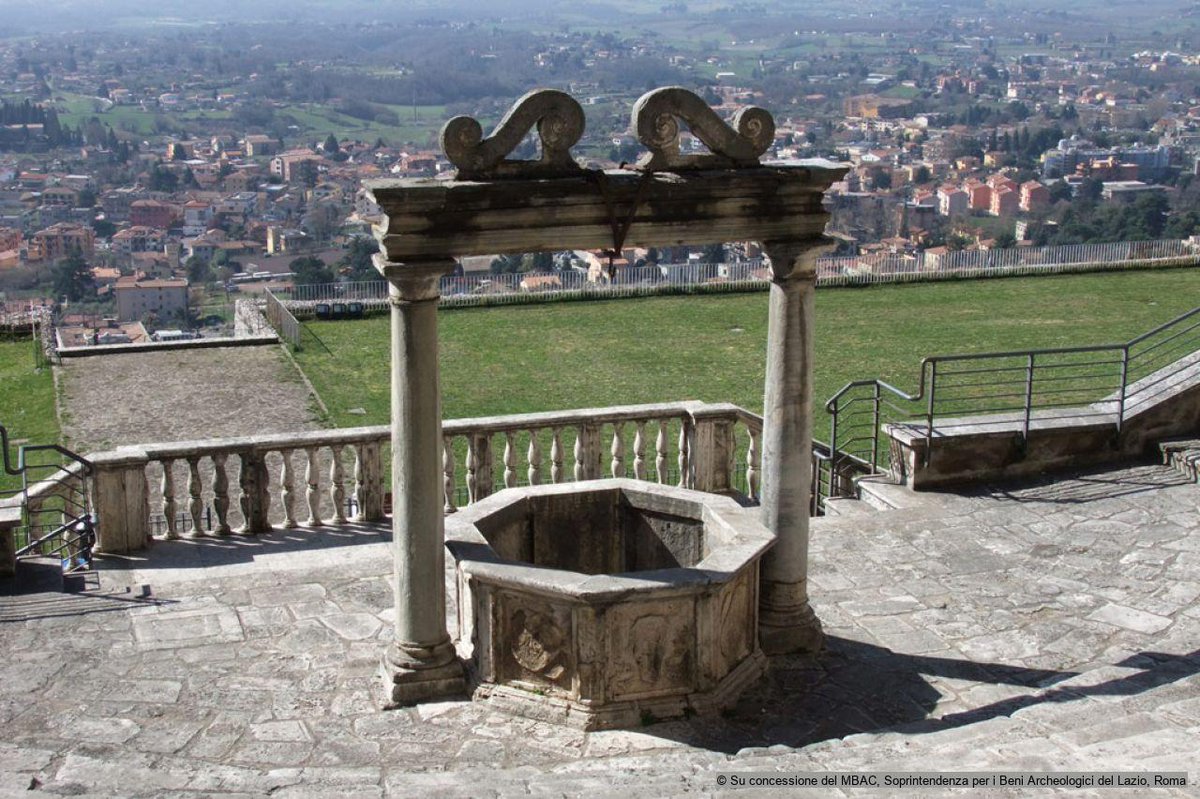
XVIe siècle, Italie, à 30 km en amont de Rome. Une somptueuse mosaïque dépeignant l'Égypte grecque est redécouverte par hasard dans les caves du palais épiscopal. Votre fil du week-end à dérouler et à partager.🧶
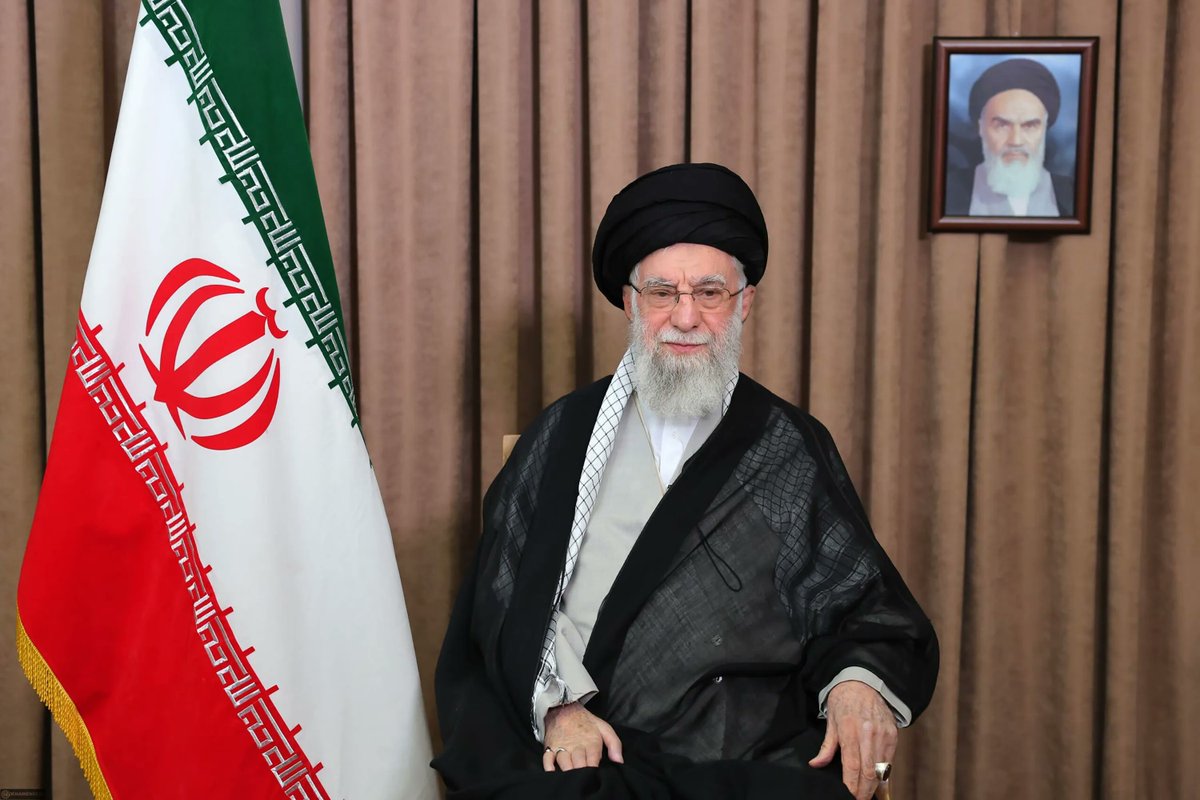
Agora pouco houve a confirmação de que Ali Khamenei, Supremo Líder do Irã, foi morto nos ataques aéreos realizados por Israel e EUA
Vou fazer uma breve thread em complemento ao mais recente podcast Xadrez Verbal (que, até agora, não está obsoleto)
Por favor, compartilhe
O vídeo compartilhado por Trump com a versão de fraude na eleição de 2020 e o casal Obama retratado como macacos é resultado de uma técnica para provocar reações agressivas e tornar uma mentira menos ofensiva ao lado de uma mensagem ainda mais obscena. Minha análise na @CNNBrasil com @MarcioGreporter