Warning missile and drone shots by Iran's Navy against aggressive US destroyers
Public Relations of the Iranian Army:
🔹Continuing operations to counter maritime mischief and harassment, as well as the hijacking of commercial vessels and oil tankers by the terrorist US Navy, after warning shots fired by the Ghadir missile and new Shahid Dana attack drones of the Islamic Republic of Iran's Navy, the aggressive destroyers DDG-103 and DDG-87 left the Gulf of Oman heading toward the Indian Ocean.
🔹As a result of this operation and previous operations, in addition to the American-Zionist enemy destroyers—which were part of the USS George W. Bush carrier strike group and the command center of this country's terrorist navy, acting as agents of harassment and disruption to trade and maritime security in the region—the amphibious assault helicopter carrier USS Tripoli has also been forced to leave the Gulf of Oman.
The Navy's Operations Command and Control Center, while emphasizing the necessity for the American-Zionist enemy to cease its maritime piracy and mischief, stressed:
🔹Despite the enemy vessels expanding distance and moving out of range of the missiles used, if necessary, the force's longer-range missiles will be employed.
European gas prices are disappointed by the lack of the U.S. deal with Iran
🔹Bloomberg writes: European gas is poised for a weekly increase because the US-Iran agreement remains elusive.
🔹Gas futures in Europe rose by up to 1.3%. This gain has reached nearly 7% since last Friday, marking the first weekly increase in three weeks.
🔹According to the chart, in the first week of the Ramadan War, gas prices had jumped by about 70%.
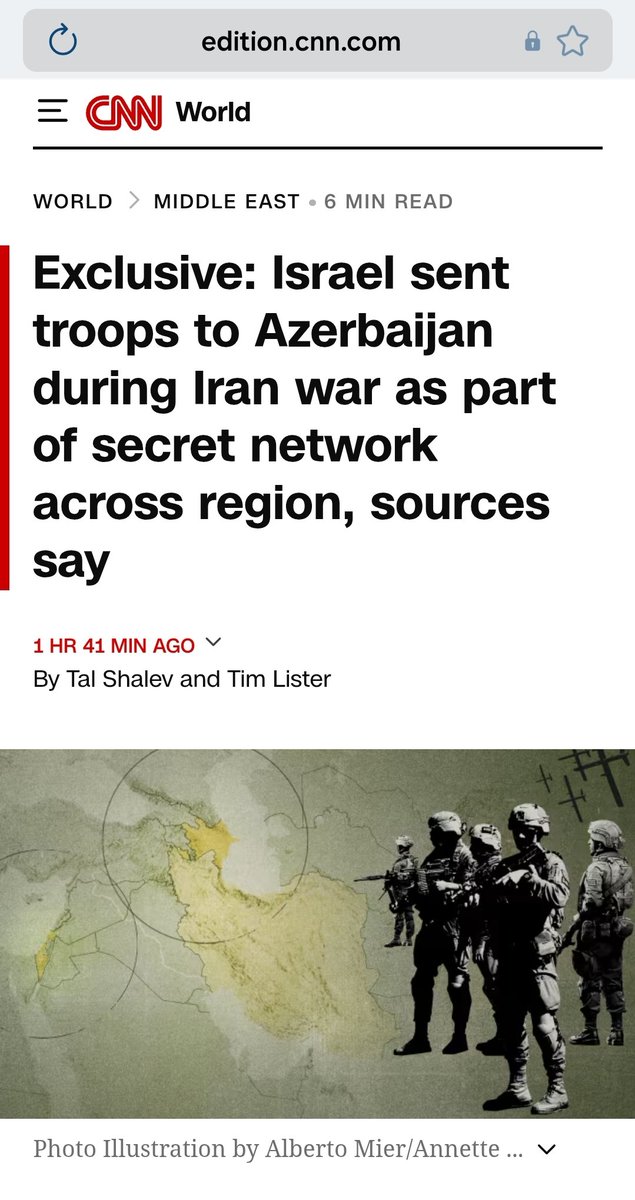
CNN: Israel sent troops to Azerbaijan during the U.S. and Israel war against Iran as part of secret network across region. The forces operated out of several locations in southern Azerbaijan, two of the sources said, adjacent to Iran’s northern border and, at its closest point, only about 60 miles from the Iranian city of Tabriz, which Israel struck during the war.
Special commando units were also deployed to the location and carried out intelligence-gathering missions and drone operations, the other two sources said, giving Israel a valuable perch from which to see into northern Iran during the war.
The Azerbaijan operation consisted of several dozen troops, including members of Israel’s special operations forces, its elite heliborne combat and rescue force, and Mossad personnel, one of the sources said.
The military presence in Azerbaijan gave Israel another base from which to conduct aerial rescue missions in case of downed pilots as well as positions from which to spy on Iran.
Israel has long viewed Azerbaijan as a strategic partner in its fight against Iran, and the preparations began weeks before the opening strikes of the war. In mid-January, as Iran crushed wide-scale protests, Israel prepared a covert mission along the Azerbaijan-Iran border, two of the sources familiar with the plans told CNN. The sources described it as a preliminary operation laying the groundwork for additional steps by installing listening devices and intelligence equipment in the area.
Israel was planning to execute the operation under cover of what were to be the opening strikes of the war in mid-January. But US President Donald Trump called off the strikes at the last minute.
Israel proceeded on its own.
The Israeli Air Force used stealth jets and special forces as part of the operation to install the devices, as Israel’s political leadership believed negotiations between the US and Iran were doomed to fail. The intelligence-gathering site became another means by which Israel could collect information on Iranian military movements and facilities, as well as potentially providing early warning of missile launches.
Less than two weeks later, Israeli Foreign Minister Gideon Saar visited Baku, meeting with the Azerbaijani president and other top officials. In May 2025, Azerbaijan also secretly hosted rare direct talks between Israel and Syria.
One of the key operations launched from Azerbaijan, one of the sources said, was the killing on March 4 of Rahman Moghaddam, who led the Islamic Revolutionary Guard Corps’ (IRGC) intelligence division.
يا أيها الإماراتي الكذاب! كذِبُك فاضح ولا تستطيع أن تخفي الحقيقة. القواعد العسكرية الأمريكية موجودة على أرض الإمارات منذ سنوات (قاعدة الظفرة وجبل علي)، والتحالف الإماراتي الإسرائيلي علني أمام العالم كله. ادعاءاتك الباطلة لا تخدع أحداً إلا جاهلاً مثلك. أنت تكرر الأكاذيب لتبرر عدوانك الخبيث وتضليل شعوب المنطقة. أعمى الله بصيرتك كما أعمى قلبك عن الحق. عار عليك!
يا أيها الإماراتي الكذاب! كذِبُك فاضح ولا تستطيع أن تخفي الحقيقة. القواعد العسكرية الأمريكية موجودة على أرض الإمارات منذ سنوات (قاعدة الظفرة وجبل علي)، والتحالف الإماراتي الإسرائيلي علني أمام العالم كله. ادعاءاتك الباطلة لا تخدع أحداً إلا جاهلاً مثلك. أنت تكرر الأكاذيب لتبرر عدوانك الخبيث وتضليل شعوب المنطقة. أعمى الله بصيرتك كما أعمى قلبك عن الحق. عار عليك!
لا توجد قواعد عسكرية أمريكية على ارض الإمارات ولا وجود لحلف اماراتي اسرائيلي مع او صد احد. هذه أكاذيب وادعاءات باطلة والبعض يرددها كأسطوانة مملة عن جهل شنيع ليبرر عدوانه وتحريضه ضد امن واستقرار الإمارات. هؤلاء أعمى الله بصائرهم قبل أبصارهم.
US oil inventory drop breaks a 22-year record
🔹 Financial Times: The Epstein War reduced US crude oil and petroleum product inventories to 1.58 billion barrels, the lowest level since 2004.
Three weeks until $160 oil / What does the oil price chart censor?
🔹 Swiss researcher Jack Perrendly: On the surface, the oil shock from the Iran war is over, and Brent crude prices have fallen from $130 to below $100 with the ceasefire.
🔹 But one should not trust the current oil price chart, because the buffers that prevented an oil price surge are coming to an end, and the chart does not show them.
🔹 Global oil inventories are at "really, really low" levels, and physical Brent crude will reach $150–160 within the next 2 to 3 weeks.
🔹 There is still 14 million barrels of inactive oil production left, but the oil market is now pricing based on the assumption of an Iran-US agreement before inventories run out — a pricing that is not aligned with reality.
How much damage did Iran's petrochemical industry suffer in the war?
Seyyed Rouhollah Vahid Kiani: Iran's petrochemical industry has not faced a serious problem, and the main part of the production chain—especially polyethylene products and the plastics industry—remains active and export-oriented.
🔹 Damage has been inflicted on utilities and a few production units, including two nitric acid units.
🔹 The lost capacity is one million tons—a negligible figure compared to Iran's total petrochemical industry capacity of 100 million tons.
The Islamic Revolutionary Guard Corps (IRGC) in response to the recent events in Lebanon: Iran's primary condition for accepting a ceasefire in a regional war has been a ceasefire on all fronts, including Lebanon.
The Lebanese nation is the pride of the Islamic Ummah and a symbol of the honor of the region's peoples, and we will support them with all our might. No calm will be established in the region without a withdrawal from the occupied territories of Lebanon.
2.He concluded by emphasizing: We are preparing ourselves for the moment when there is no agreement. This is an important principle that everyone must remember. Of course, this does not contradict diplomacy. In fact, the requirement of the new model of diplomacy and political work is that you are ready at any moment to set aside diplomacy and enter war. One example of this difference is the increased targeting of Americans’ secret equipment and facilities in the region with unidentified means, especially unidentified drones, which has become a new concern for CENTCOM.
1. Advisor to the Parliament Speaker on Strategic Affairs Explains:
Iran’s New Operational Doctrine – From Targeting Drones to Countering Violating Vessels / New Air Defense Systems Enter Iran’s Order of Battle
The advisor to the Speaker of the Islamic Consultative Assembly (Majlis) on strategic affairs, while explaining the field and operational conditions in the region, announced a change in the Islamic Republic of Iran’s operational strategy against new threats and said: Since about ten days ago, the Islamic Republic of Iran has been pursuing a new operational strategy that consists of several important and notable components.
Mehdi Mohammadi, elaborating on the pillars of Iran’s new operational strategies, identified one component as shooting down enemy drones and aircraft. He said: Based on this new strategy, the hit rate against drones has recently increased significantly. As you know, the enemy’s reconnaissance drones form the backbone of its order of battle. So far, a significant number of drones have been shot down, and this trend will continue.
Referring to the leap in Iran’s air defense capability, he added: On one hand, this indicates a tangible leap in Iran’s air defense domain; on the other hand, it shows that the enemy’s reliance on drones – the kind that existed over the past year, where enemy drones were flying over our heads and we were living under such conditions – is gradually coming to an end.
New Air Defense Systems Enter Iran’s Order of Battle
In this regard, he emphasized: This is one of the important features of the process that began about ten days ago. The meaning of this development is that some of the programs Iran has been pursuing in the air defense domain have now reached maturity – to the extent that new air defense systems have entered the country’s order of battle in a completely professional manner, and we are using them operationally.
Mehdi Mohammadi described another new operational strategy as attacking the enemy’s offensive combat forces, stating: In every instance where the enemy has harassed our vessels, Iran has initiated attacks on enemy vessels.
The advisor to the Parliament Speaker on strategic affairs added: The enemy now knows that any vessel that creates hindrance or harassment for Iran, or fires toward Iran, will be directly targeted and struck. This, too, has become a completely operational matter over the past week to ten days. If you follow the news carefully – especially if you read CENTCOM’s statements – you will see that what I am saying has turned into a new operational concern for the enemy.
Mohammadi identified the third component of the new strategy as countering violating vessels, saying: These vessels try to circumvent the standard route that Iran has designated in the Strait of Hormuz through various paths – whether from the middle of the Strait or from the Sea of Oman side. In cases where this has happened – that is, when these vessels have tried to exit the Strait of Hormuz via a route other than the one designated by the IRGC Navy (and such cases have been very few) – Iran has either warned those vessels and forced them to return, or fired warning shots, and those warning shots have caused the vessels to turn back into the Persian Gulf.
He noted: In some instances, the IRGC has officially announced these cases; in other instances, if you refer to foreign sources, you will see the details. The reason not all these cases are announced by the Iranian side is that, for operational reasons, it may not be intended to release all the details.
Stating that both sides are preparing themselves for the moment hostilities begin, he asserted: It can be said with certainty that our level of readiness is higher. The Americans’ readiness is weaker; their forces have been worn down, and they have been forced to withdraw some of their forces from the region.
Kourosh Ahmadi, Iranian diplomat: "It seems Trump is seeking a deal with Iran that is slightly better than Obama's deal with Iran. The previous agreement had two pillars: continued uranium enrichment in Iran and the reduction of sanctions. Trump is seeking zero enrichment in Iran.
With the outbreak of war and America's failure to pursue this policy, the only solution is flexibility on both sides to reach an agreement acceptable to both Iran and the United States. The current problems have no military solution. The belligerent actor in this is Israel. They seek the destruction of Iran. An agreement would prevent American belligerence."
What a deep and unparalleled analysis from Mr. Rubio! According to him, any government that controls its citizens' communication is totalitarian.
Now let's take a quick look at the US government's own track record:
· The FBI and CIA have been wiretapping citizens' internet and phone communications without warrants for years (projects like PRISM).
· Major American platforms censor dissenting content, ban accounts, and form coalitions against "fake news."
· They restrict visas and travel for citizens of certain countries (even allies) under security pretexts.
So by Rubio's own definition, the US government is also completely totalitarian. Unless we admit that "the rules of totalitarianism only apply to other countries, not to democratic America!"
In short, Mr. Rubio has either sacrificed logic for politics, or offered a new definition of "totalitarian" that only includes geopolitical rivals. What bitter irony...
SECRETARY RUBIO: "One of the things you'll find pretty consistently in every totalitarian system is that they want to control the ability of their citizens to communicate with one another."
What a deep and unparalleled analysis from Mr. Rubio! According to him, any government that controls its citizens' communication is totalitarian.
Now let's take a quick look at the US government's own track record:
· The FBI and CIA have been wiretapping citizens' internet and phone communications without warrants for years (projects like PRISM).
· Major American platforms censor dissenting content, ban accounts, and form coalitions against "fake news."
· They restrict visas and travel for citizens of certain countries (even allies) under security pretexts.
So by Rubio's own definition, the US government is also completely totalitarian. Unless we admit that "the rules of totalitarianism only apply to other countries, not to democratic America!"
In short, Mr. Rubio has either sacrificed logic for politics, or offered a new definition of "totalitarian" that only includes geopolitical rivals. What bitter irony...
The Danger of Turkey's Railway Route to Arab Countries for Iran's National Security
Hakan Fidan, Turkish Foreign Minister: "We have initiated talks with Saudi Arabia to revive the railway route from Turkey to Syria, from Syria to Jordan, Saudi Arabia, and the rest of the Gulf."
Turkey's plan to establish a rail connection to Syria, Jordan, Saudi Arabia, and the Gulf is more than a simple infrastructure project; it is a strategic initiative aimed at weakening Iran's geo-economic position. By bypassing the Strait of Hormuz and Bab el-Mandeb, this route seeks to create a secure corridor independent of Iranian influence. The consequence of such a move would be a gradual reduction of Iran's role as the region's transit crossroads and the neglect of its strategic advantage in controlling the vital southern waterways.
The coordination of this project with rival corridors such as the IMEC (backed by Israel), and the overlap of its interests with Turkic-speaking countries to the north, paints a picture of an intelligent economic siege. Turkey, as a NATO member and with Saudi financial support, is redefining post-crisis Syria's role. In this equation, Iran faces the risk of gradual elimination from the regional supply chain and a reduction of its leverage against the West.
Proposed Solutions
In the face of this threat, Iran must adopt an active and aggressive approach:
1. Reviving the North-South Corridor: Accelerate the completion of the Rasht-Astara railway to connect to Russia and India. This corridor would drastically reduce the time and cost of transporting goods from South Asia to Europe, creating a competitive advantage over Turkey's plan.
2. Offering Transit Discounts and Bundled Security: Iran can encourage regional countries to transit through its territory through competitive pricing and guaranteed security along its routes.
3. Connecting to Iraq as a Penetration Route: Transforming Iraq into a transit hub connected to Iran (via Shalamcheh and Mehran) could provide a shorter and cheaper route for goods from Saudi Arabia and the Gulf to Turkey and Europe, without needing to traverse the entire lengthy Turkey-Gulf route.
4. Active Railway Diplomacy: Proposing Iran's inclusion in rival projects as a "transit partner" and using it as a bargaining chip with Saudi Arabia on other political issues.
Iran's success in this competition hinges on turning threats into opportunities through cost and time competitiveness, rather than passive confrontation.
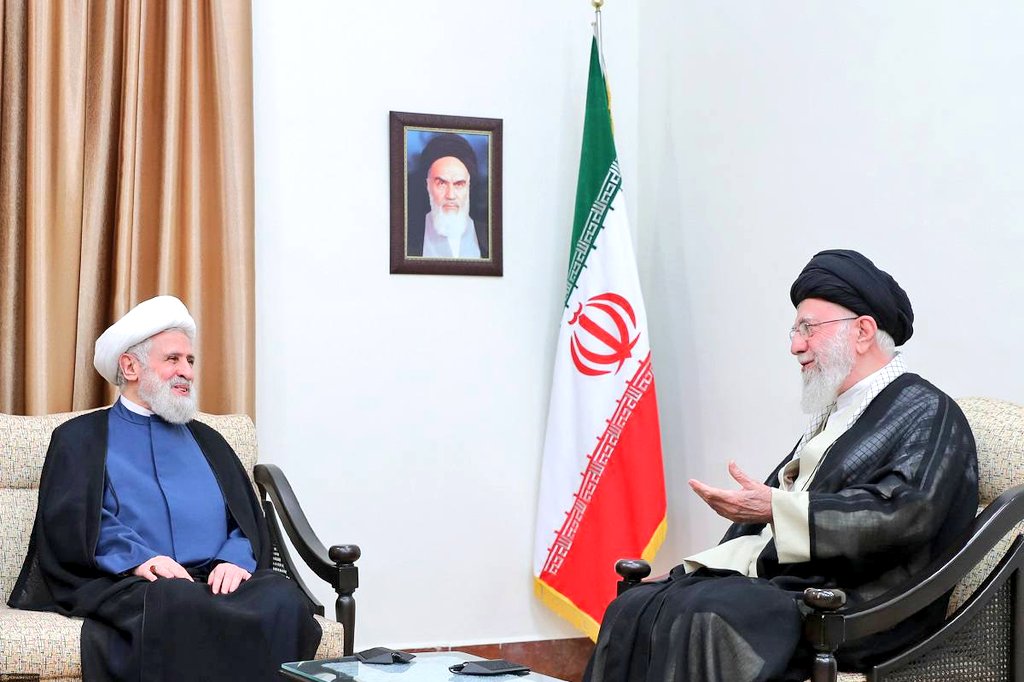
The Iranian Supreme Leader, Ayatollah Mojtaba Khamenei: The enemy has focused its hybrid war on two points: the people's resilience and causing errors in the officials' calculative apparatus. Any action that breeds pessimism and frustration among the people is considered helping the enemy.
Why does military air superiority fail to guarantee victory? Political scientist and military strategy expert Robert Pape dives into the complex reality of why knocking out surface-level targets isn’t enough to neutralize a nation like Iran.
According to Pape, the strategic pivot isn't just about firepower—it’s about what remains hidden underground. While satellites and sensors can easily target visible launchers, ships, and industrial facilities, Iran’s deeply buried arsenals of drones and missiles remain largely protected from current air campaigns. Despite the US possessing overwhelming technical superiority, this tactical deep-burial strategy creates a stalemate where the most critical threats remain untouchable, challenging traditional assumptions about modern warfare and the limitations of aerial bombardment.