🇰🇿 A 3-year-old dangled from an 8th-floor window in Kazakhstan.
A stranger leaned out the 7th floor window below and caught her mid-fall.
The hero, Shontakbaev Sabit, got a national medal for it. Well deserved.
Tariki 21-23/4 buri mwaka ni mbi cyane mu mateka yanjye! Murambi na Cyanika le 21-23/4 hiciwe benshi mu muryango wanjye. 23/4/1994 nyogokuru wanjye yanze kwihisha kuko abana n'abuzukuru be bashize, abicanyi bamuta mu musarani. Yari afite imyaka 84! @Ibuka_Rwanda@RwandaParliamnt
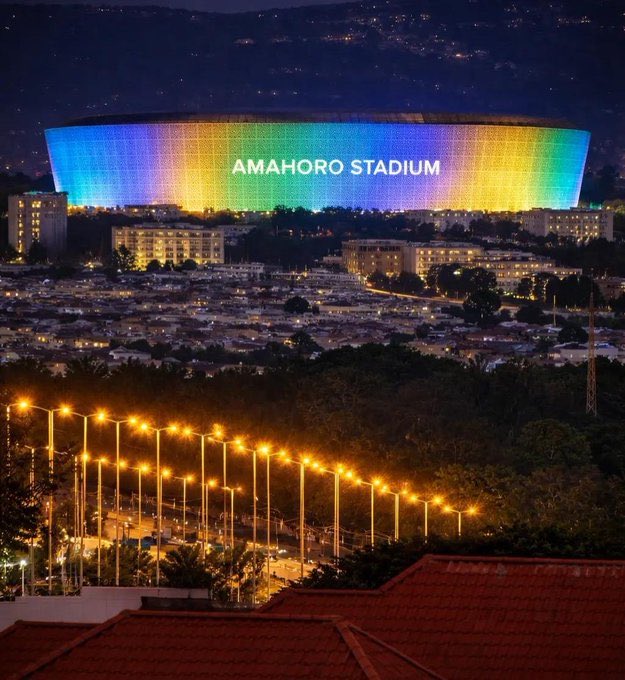
🇷🇼 Amahoro Stadium. Truly iconic! 🏟️✨
Even from the outside, the view is breathtaking.
A symbol of Rwanda’s love for football and national pride.
Congratulations to all Rwandans for such a historic moment! 🙌🏾
#VisitRwanda#AfricanFootball#FIFASeries2026
It was during the night of 11 to 12 December 1997 that the ex-FAR and Interahamwe (FDLR) carried out the second deadly attack on the Mudende Refugee Camp, which was hosting Congolese Tutsi refugees in Rwanda. This followed the earlier attack of 22 August the same year. Both attacks claimed more than 1,000 lives, with some testimonies estimating over 2,000 victims, many of whom were burned alive in their tents.
These Congolese Tutsi had already been attacked by ex-FAR and Interahamwe when they arrived in Zaire in 1994. They fled to Rwanda and were placed in transit camps in Mudende and Nkamira.
After the December attack, the U.S. State Department urged Rwanda’s national army at the time (RPA) to strengthen protection measures for the refugees. The Government of Rwanda then relocated the refugees to Gicumbi, far from the Congolese border.
Today, they are settled at Mahama Refugee Camp, near the Tanzanian border.
Many of the M23 soldiers today were children who survived those massacres in Rwanda or were born shortly afterward. Now, 28 years later, they are pushing the FDLR out of Kivu. There is renewed hope of returning home, especially after plans for their relocation—previously halted under the Trump administration—have been reconsidered.
U.S. Secretary of State Madeleine Albright requested that the U.S. War Crimes Office visit the camp. Here is the video.
Kuri twe muri @bbkigalifm SI imbugankoranyambaga! Ni ihuriro ry'abanywanyi bacu, batugize! Ni igihango kitava ku kuba turi ibitangaza, ahubwo muri UMUGISHA IMANA yaduhaye! MURAKOZE cyane, muryango mwiza! NTITUZABATENGUHA HAKI YA MUNGU!
Ce 7 avril 2025 marque la 31ᵉ commémoration du génocide perpétré contre les Tutsi au Rwanda.
La France, fidèle à son engagement pour la mémoire, la vérité et la justice, s’associe pleinement à cette journée internationale de commémoration.
Aujourd’hui, la France adresse aux Rwandais ses pensées et son soutien le plus profond.
Elle salue la résilience remarquable du peuple rwandais, qui a su se relever et bâtir un avenir fondé sur la réconciliation et l’unité.
En cette journée de recueillement, je réaffirme mon engagement à faire vivre la mémoire de cet événement tragique, face aux défis que constituent le révisionnisme et l’intolérance. Les témoignages bouleversants des rescapés rappellent l’urgence de lutter contre toutes les formes de haine.
Depuis 2019, le 7 avril est une journée officielle de commémoration en France, témoignant de la volonté de transmettre aux générations futures les leçons d’un passé douloureux par l’éducation, la recherche historique, mais aussi par la justice.
Conformément à l’engagement que j’avais pris, la justice continue de progresser pour poursuivre et juger les auteurs présumés du génocide résidant en France. Plusieurs procès importants se sont tenus et justice a pu être rendue.
Ces efforts témoignent de la détermination de notre pays à combattre sans relâche l’impunité et l’oubli.
A Belgian cycling team withdrew from the Tour du Rwanda, citing security concerns over the Rubavu route due to the DRC conflict. This isn’t the first time Belgium has misjudged situation in Rwanda or spread misinformation about Rwanda.