That is why I am here today.
My great-grandmother Halyna was an orphan and worked as a naymychka (a poor, landless peasant woman hired to perform domestic or agricultural labor on a wealthy farmstead) in Chernihiv Oblast, in northern Ukraine. The family she worked for had a daughter, and they were about the same age.
When the russian-engineered Holodomor began, obviously, no one took care of my great-grandmother. She was left alone, at the mercy of fate. She ate grass whenever she could find it, or anything else she managed to find.
The daughter of the wealthy family, meanwhile, was taken care of by many people. They brought her whatever food they were able to find. But unfortunately, she did not survive. My great-grandmother, though, managed to survive the Holodomor on her own.
That is why I am here today.
Today, Ukraine is commemorating the victims of the Holodomor, an artificial famine created by russians to punish Ukrainians who resisted Soviet collectivization, a forced agricultural policy that replaced individual peasant farms with large, state-controlled collective farms (kolkhozes) and state farms (sovkhozes).
In 1932–1933, Soviet authorities deliberately confiscated Ukrainians’ grain and food supplies, brutally repressed resistance, and blocked peasants from leaving in search of food, all while the Kremlin concealed the famine, denied its existence, and rejected international aid.
VIDEO: MFA Ukraine
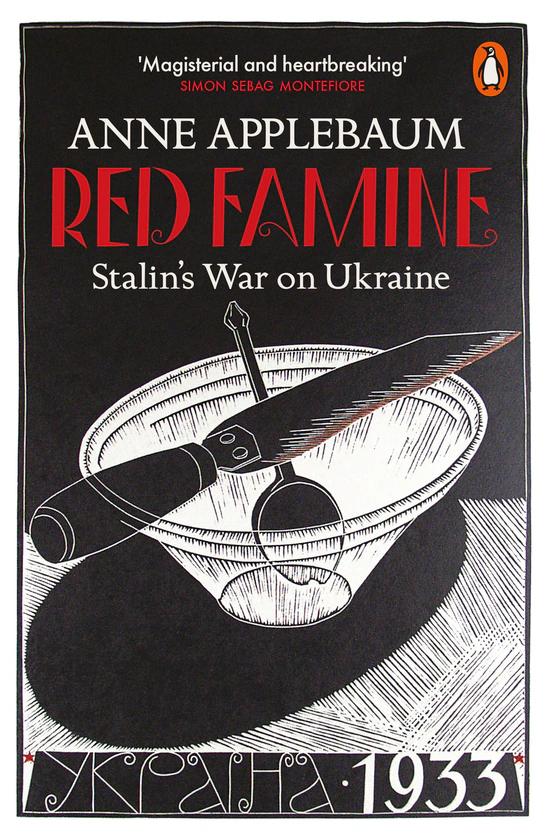
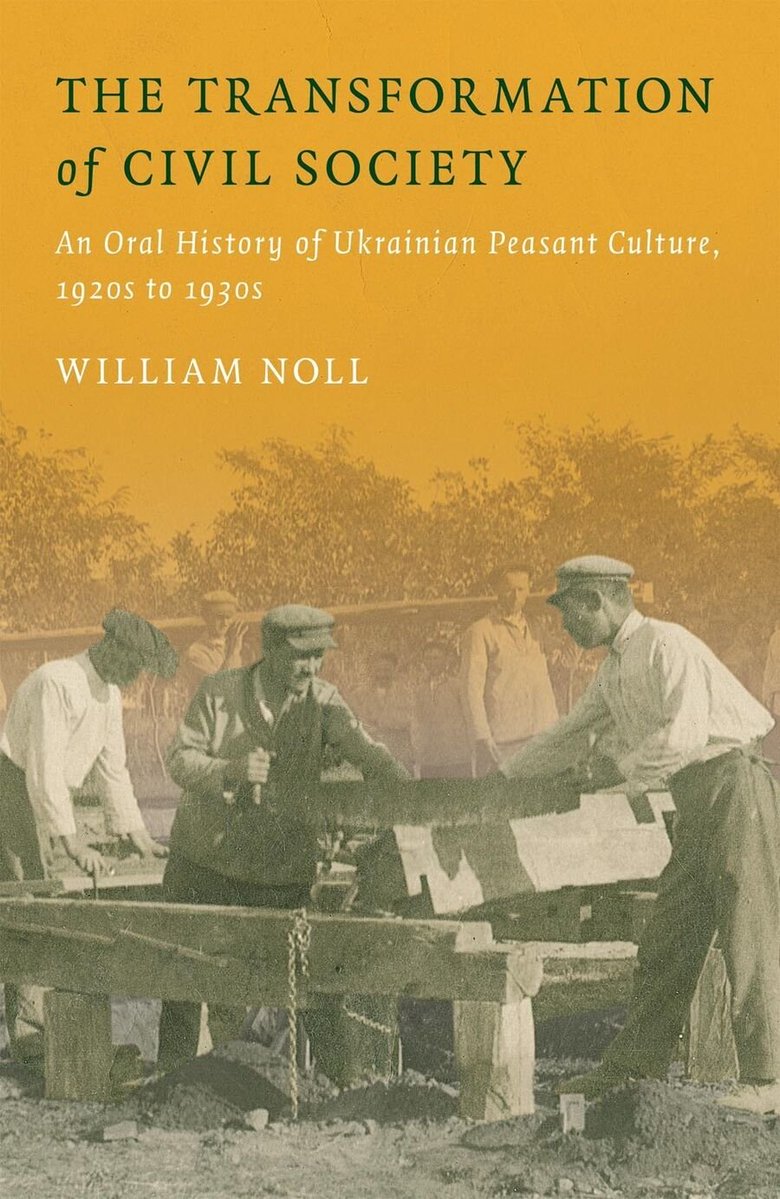
Two must-read books if you want to understand Holodomor. "Red Famine" by @anneapplebaum. I recognise many of my family's stories and understand them better. The second book, by William Noll, is about the impact on social and village cultural life. It made me ask more questions.
Jared Kushner’s interview lends considerable weight to the argument I have been making for nearly two years: Putin’s so-called peace negotiations are a KGB special operation.
Putin’s lies have penetrated the thinking of President Trump’s son-in-law so deeply that he has come to accept the Kremlin’s version of reality as reality itself.
In a column for NV (@tweetsNV), I cited ten bullet points illustrating how Putin substitutes lies for truth and exploits the negotiating process to advance his own interests.
https://t.co/uFJiQjmz7A
Моя прабабуся з Гостомеля була швачкою. У 1932 вона ходила по селах з машинкою (верх знімається і вона стає ручною) та малою дитиною. Тоді мільйони українців помирали від голоду, який штучно створили росіяни. Вона шила за їжу, так прогодувала себе і дитину. Так вони вижили.
У другу світову її дочка, моя бабуся, закопала машинку в землю на подвір'ї, аби зберегти. Після війни шила на ній плаття і постільну білизну своїй родині.
Зараз на ній шиє моя мама. Дві нові електричні машинки на моїй пам'яті зламались, а ця працює. Певно, колись на ній шитиму і я. Якщо виживу.
Моя подруга Інна чекала на свого чоловіка з російського полону і шила сину одяг, щоби не зійти з глузду. Він повернувся худим, як на фотографіях часів голодомору. Але головне - він повернувся.
Моя однокурсниця Наталка потрапила в полон в 2018-му, при перетині блокпосту в донецькій області. Тоді її донці було два роки. Зараз її донці 9 років і вона не памʼятає маму, бо Наталка досі в полоні.
Я дуже хочу щоби всі наші люди повернулись. Щоби всі наші люди - вижили. Дякую всім, хто ходить на мітинги, щоби нагадувати про них. Дякую тим, хто допомагає документувати воєнні злочини. Нехай кожен із нас робитиме те, що зможе для того, щоби світ став кращим місцем принаймні для наших дітей.
“Grandpa, get out of here, or we’ll kill you!”
russian occupiers killed the last remaining resident of Tyahynka, a village in Ukraine’s Kherson region, during the so-called Oleshky ceasefire.
Everyone else had fled the constant shelling. One elderly man refused to abandon his home. Threatened with death, he briefly evacuated but returned just two days later. He simply couldn't leave his home behind.
On October 30, during the ceasefire trumpeted by Trump and Melania, his remains were found near his destroyed house.
He was the last resident of Tyahynka. Now no one is left.
This is the reality of life in Ukraine. While some take credit for imaginary peace, innocent Ukrainians are still being murdered by russia.
Мама мовчала про голод.
Про те, як хліба хотіла.
Про той нестерпний холод.
Про те, як в "скрині" сиділа.
( В скрині лежала макуха.
Мама шукала поїсти).
Січень, зима, завірюха.
Обшуки, комуністи.
Мама мовчала, мовчала.
Мала лиш шість годочків,
Коли усе забрали,
Крім штанів і сорочки.
Коли дід Пилип захололи,
Сидячи прямо на лавці.
Коли корінці мололи.
Коли відморозила пальці.
Мама весну любила,
Бо розквітала акація -
Сік через губи цідила...
Гинула ціла нація.
Мертві лежали покотом
І серця кам'яніли.
Голод душив чоботом
І скидав у могили.
З голоду мама виросла.
Шкіру мала аж синю.
Я її часто просила
Розповісти "про скриню,
Про гнилу бараболю,
Про запах цвілі на деці.
Про свою гіркую долю
І корінці на ряденці".
Мама так хліб любила.
Жито сіяла й жала.
Вона в кишені ховала
Крихти, коли й вмирала...
Білу хлібину і чорну
Їй покладу на могилу...
Мелють історію жорна...
Боже, дай сили...
On Holodomor Memorial Day, Russia attacked a grain warehouse in the Odesa region, destroying most of the grain.
They knew exactly what they were doing then and now.
The algorithm here seems to have become more aggressive against pro-Ukraine accounts. Numbers are way down. Are they throttled by the owner like Starlink? As dangerous to Russia as Ukrainian drones?
Hello, my amazing fellas! I really need your boost. Please share my page with your friends and encourage them to subscribe and follow all the Ukraine-U.S. updates.
I’ve been working a lot lately, so my views and follower count have dropped drastically. Let’s fix it together!
Also, there will be a lot of very interesting news coming from me as soon as next week. 👀 You’re gonna like it! It’ll be good news.
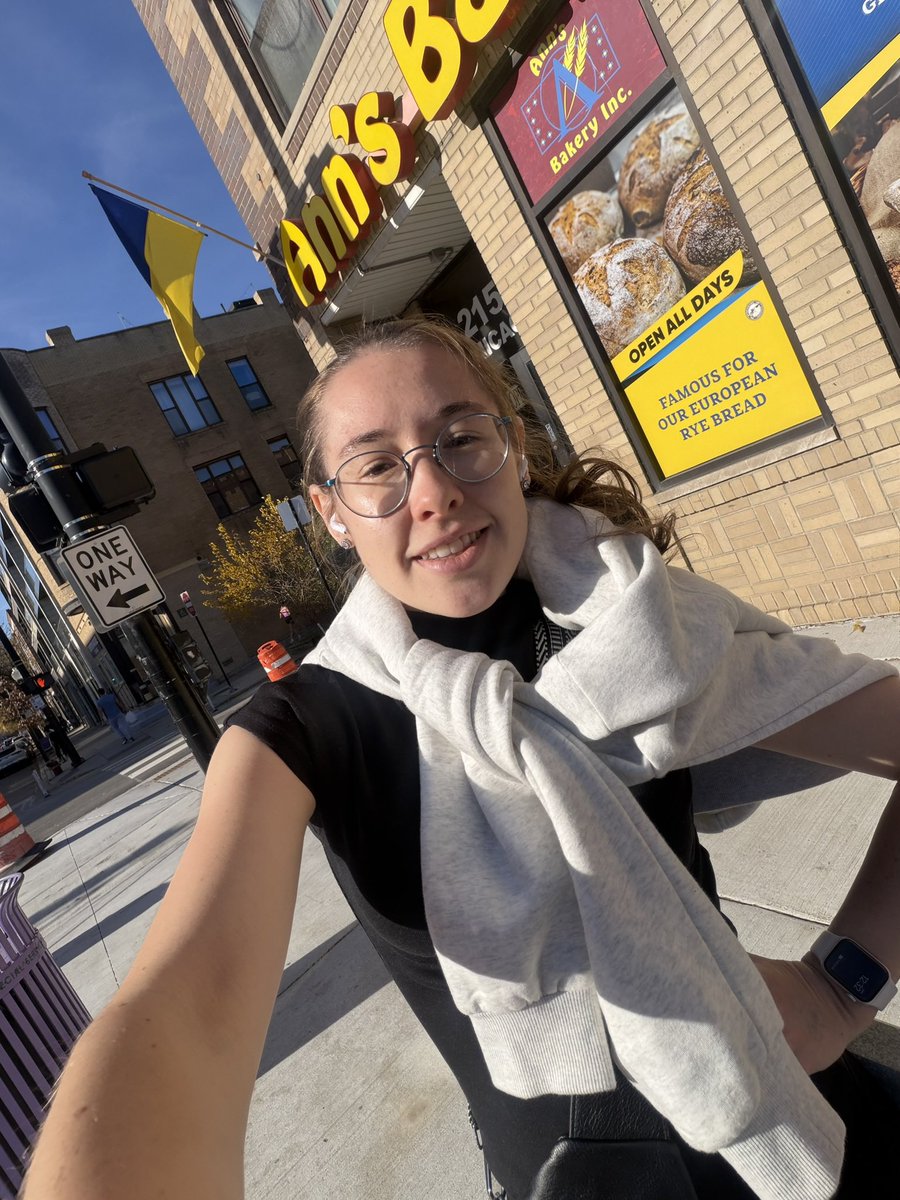
Photo from Ukrainian Village in Chicago last week.
„Moskau hat den Hass und den Willen, das ukrainische Volk zu vernichten, geerbt und erneut zu seiner Politik gemacht.
Wieder sehen wir denselben Versuch, die Ukraine und ihre Menschen auszulöschen – mit brutalsten Methoden.“
– Präsident @ZelenskyyUa zum Holodomor-Gedenktag.
My grandmother only ever raised her voice at us over bread. If we left a piece we’d already bitten into, or worse, dropped it on the floor, there was always panic and anger in her voice.
Her mother was one of the few in her family to survive the Holodomor. When Soviet brigades searched Ukrainian homes, they took everything from grain to bedsheets, she told us. Nearly four million Ukrainians died in the famine the Soviet regime engineered.That memory was still there in my grandmother’s voice when a piece of bread fell to the floor. And when Russia launched its latest full-scale invasion, it was part of why so many Ukrainians understood what was at stake. We knew what it meant for Russians to try to erase Ukraine. We had heard it in our own kitchens.
Remembering is painful.
To forgive is impossible.
And there are simply no words that could ever capture the tragedy of the pain and tribulation Ukrainians were forced to endure: first, in 1921, 1922, and 1923. Then, in the darkest years of all, 1932–1933, during the Holodomor genocide. And finally, in 1946–1947, during the famine, when it seemed that after the horrors of World War II, such crimes must surely never happen again.
All of this affected children, women, and men alike, with equal cruelty. Millions of innocent people, tortured and condemned by a totalitarian system to death by starvation. Mercilessly and deliberately. For being Ukrainian.
The hatred and the desire to destroy the Ukrainian people – all of this was inherited by Moscow and once again made part of its policy. Once again, we see the same Russian intent to erase Ukraine and Ukrainians, and to do so by the most brutal methods, which the Kremlin has cold-bloodedly honed over the years since the Holodomors, testing them on our people and other nations. And everywhere on Ukrainian soil that Russia has come to, there is now no life. And once again, we are standing up to the Kremlin's inhumane monsters, once again defending ourselves against Russia, which has not changed one bit and is bringing death, devastation, utter hatred, and danger to Ukraine and Europe, to all free peoples.
We must stand united in this struggle.
And today, at 4 p.m., candles of remembrance will burn in our windows in Ukraine and everywhere around the world where Ukrainians live. Their light will be a tribute to all the innocent victims of the Holodomors.
As long as we keep this flame alight, their memory will never fade. As long as we do this, we know: they wanted to destroy us, torture us, and subjugate us. They failed.
They wanted to hide the truth from us and silence horrific crimes forever. They failed. They wanted to confuse us, mislead us, make us doubt, forget, or forgive them.
They failed. And they always will.
Eternal memory to all the innocent victims!
❗️„Es ist bedauerlich, dass Alice Weidel russische Propagandanarrative Wort für Wort wiederholt und im Gleichklang mit Putin nicht Russland, sondern der Ukraine die Schuld am Krieg gibt.
Das ist keine Alternative für Deutschland, sondern eine Alternative zur Realität.“ /1
In 1932–1933, Soviet authorities deliberately confiscated Ukrainians’ grain and food supplies, brutally repressed resistance, and blocked peasants from leaving in search of food – all while the Kremlin concealed the famine, denied its existence, and rejected international aid.
The Holodomor was intended to destroy Ukrainians as a people and crush their resistance to Soviet rule, and claimed millions of Ukrainian lives and left generations with lasting trauma. We remember every victim of this horrible genocide.
Repost! Share! Read and comment!
Here are the examples of what people were forced to eat in their desperate struggle for survival.
Travianyky (grass flatbread) — flatbread made from ground grass mixed with hot water and flaxseeds.
Palianychky (small flatbreads) — baked, crushed potato scraps mixed with leftover grains and hot water.
Beetroot — baked beetroot with its leaves.
Weed soup — a boiled corn cob with weeds.
Tovchenyky (fish patties) — small fish ground with salt and baked.
Zaterukha — baked dough made from ground birch bark and water.
Bread — dough made from ground tree bark, a handful of bran and goosefoot leaves.
Bread cakes — chopped straw, millet chaff and hempseed oilcake, pounded in a mortar and baked.
Korzhyk (flat cake) — oak bark ground into flour, mixed with crushed reed and goosefoot roots.
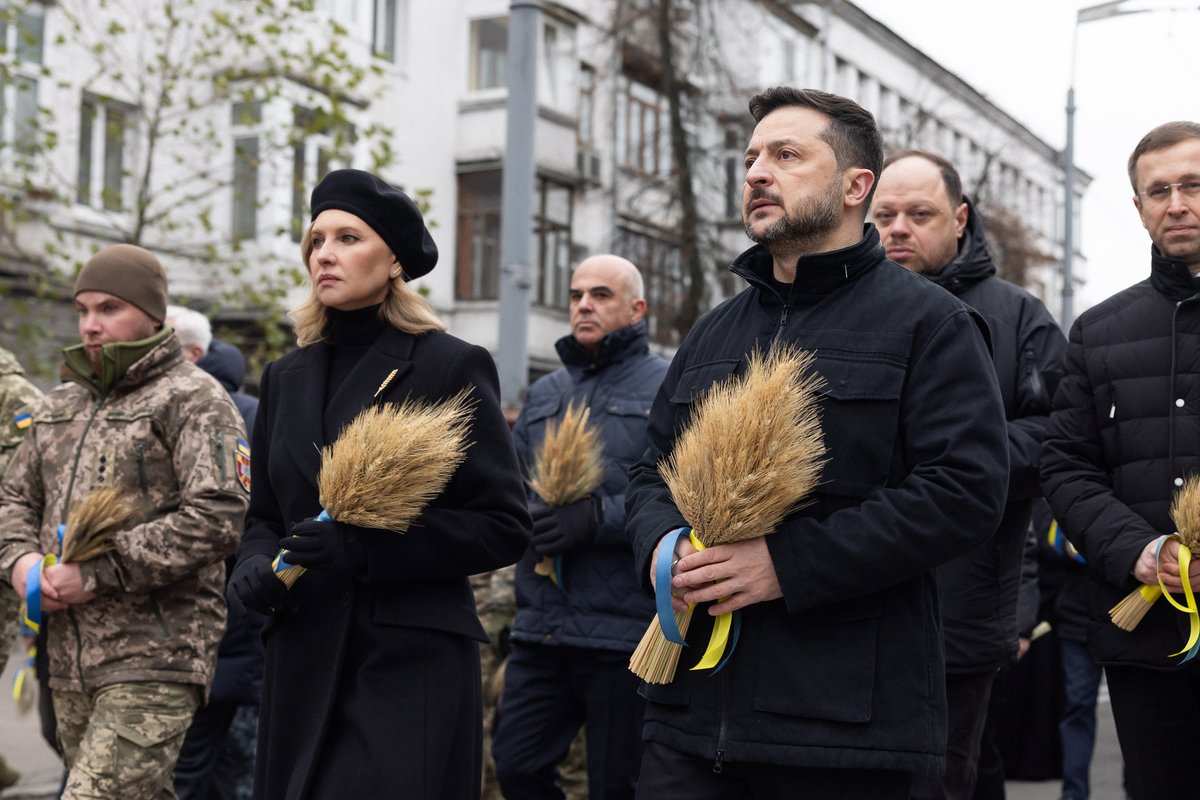
Today, at 4 PM Kyiv time, Ukrainians traditionally light candles in memory of the victims of the Holodomor. Wherever you are, you can join this act of remembrance.
Remember the victims.
Preserve the truth. Never forget.
Message from Kharkiv, Ukraine.
20km from the Russian front.
I heard firsthand from Ukraine’s frontline generals who are holding the line and retaking territory.
Allied support is making a real difference - not just practical support, but hope.
🇬🇧🇺🇦