Spun out of its co-founders’ consulting work with a major sportswear manufacturer, @active_impact-backed @Metafold3D aims to help address the bottleneck at the design side of 3D printing. #CDNtech https://t.co/XakENWaajr
@keenanisalive Yep. Also, you often want to get the deformed input mesh back out with the same combinatorics. MPM is not well set up for that. And adding vertex positions as particles to the sim can cause irregular spacing, which the MPM solver doesn't like.
@keenanisalive Other than that, there are very few downsides. I think it can be substantially slower that mesh-based methods if you don't have contacts.
@keenanisalive Yep, just the MPM solver. One big downside is tracking the original input shape. MPM method wants you to generate a regular spacing of particles wrt the grid. This is always at odds with the vertices that define the input mesh.
@keenanisalive I was running simulations of sandstone compression, with forces in the GPa and deflection in MM, with 1000s of different objects (sand grains). All mesh-based solvers would bail on the contact generation.
@keenanisalive I've used Uintah and GPUMPM (very experimental) a lot. For me, the big problem they solve is contacts. That is, they guarantee that two phases will not interpenetrate AND this comes for free with the MPM method.
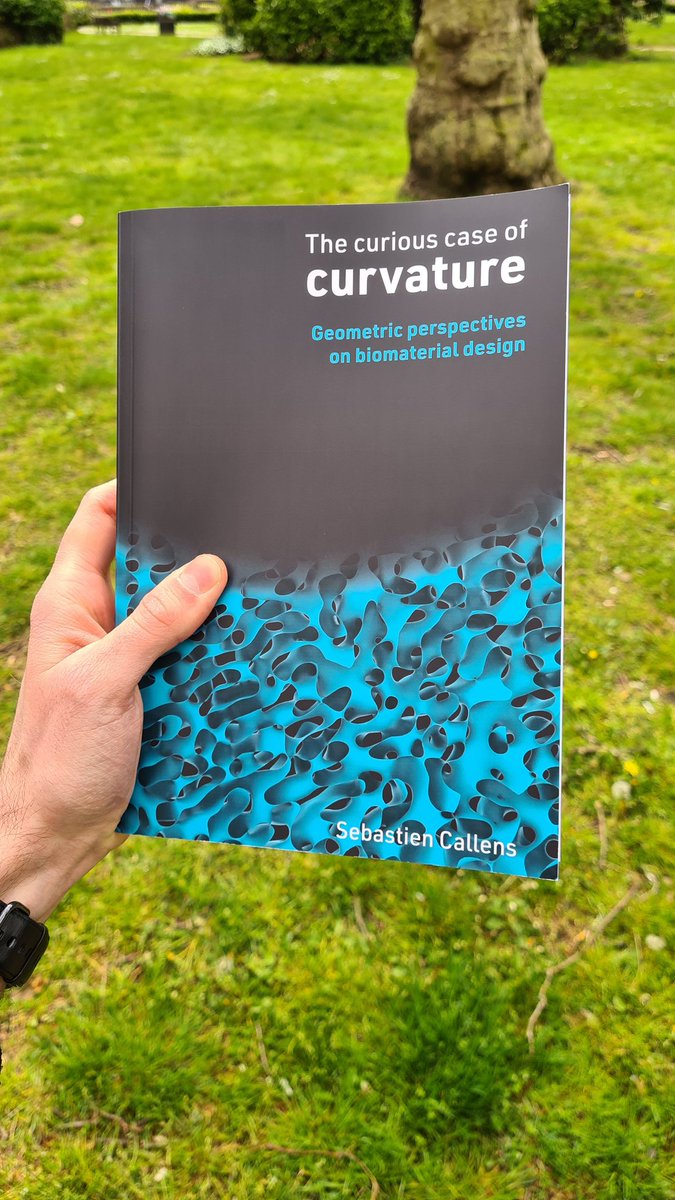
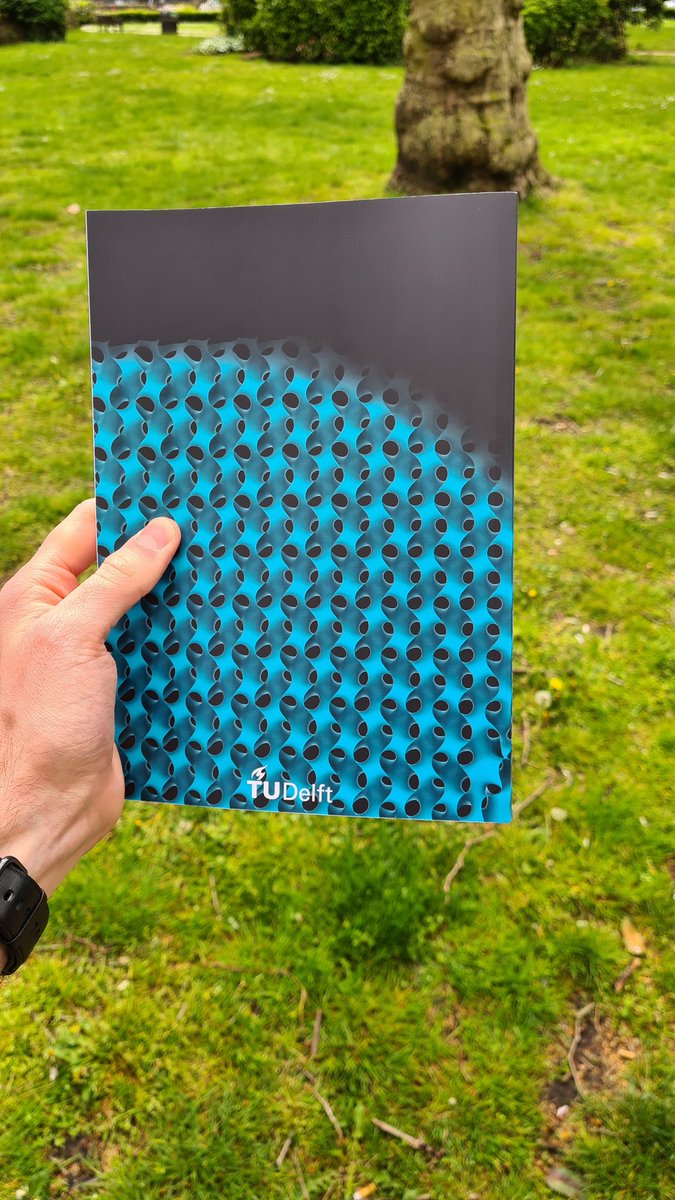
When science meets art!😍Lovely to see our recent work on multi-material #TPMS metamaterials with decoupled properties on the inside front cover of Advanced Functional Materials. Work by the talented @Ella_Maru! @AdvSciNews @amir_zadpoor https://t.co/eMc5oFn3NQ
@_AlecJacobson Is it multithreaded? Does it support triangle mesh collisions as first class citizens? Does it use real units? Can it handle sims of different scales (I.e. force of Mpa, range of size from mm to 10m)?
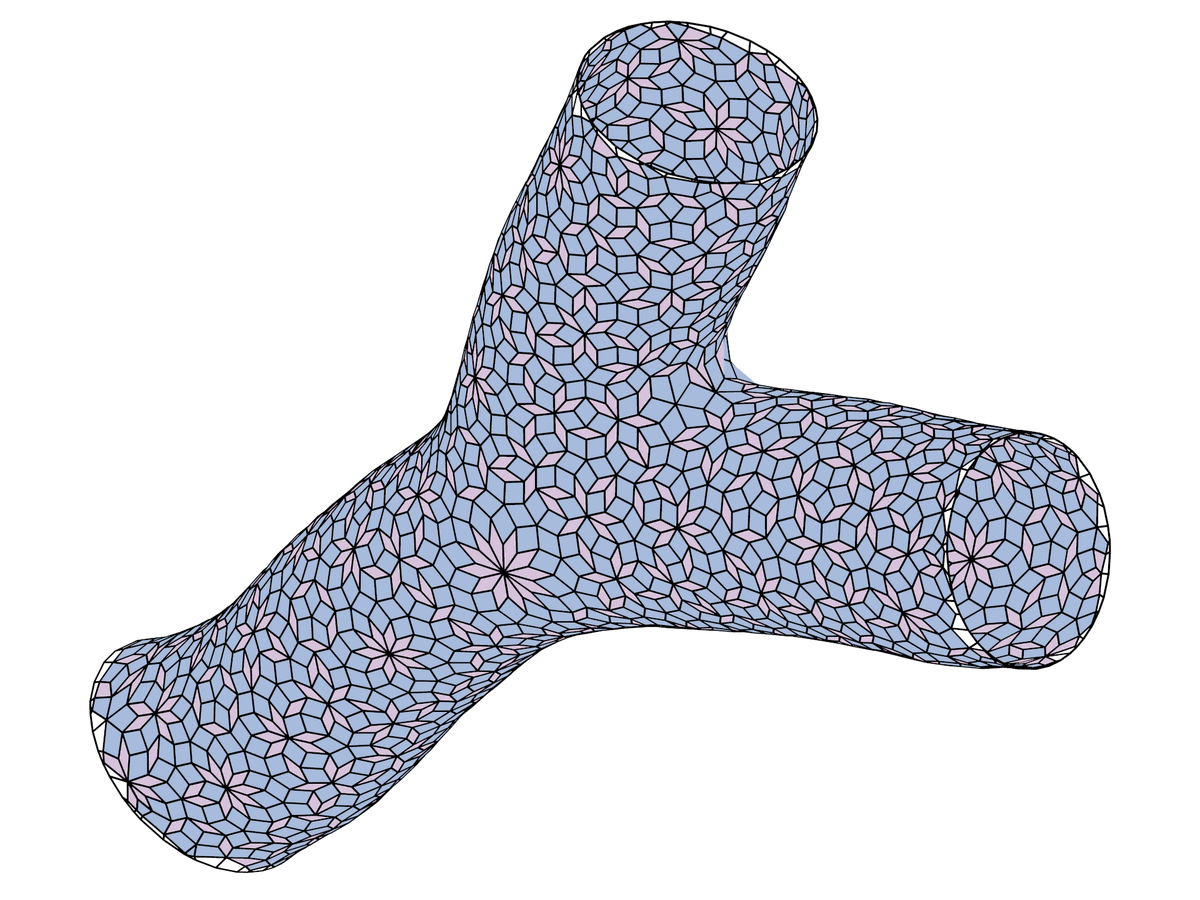
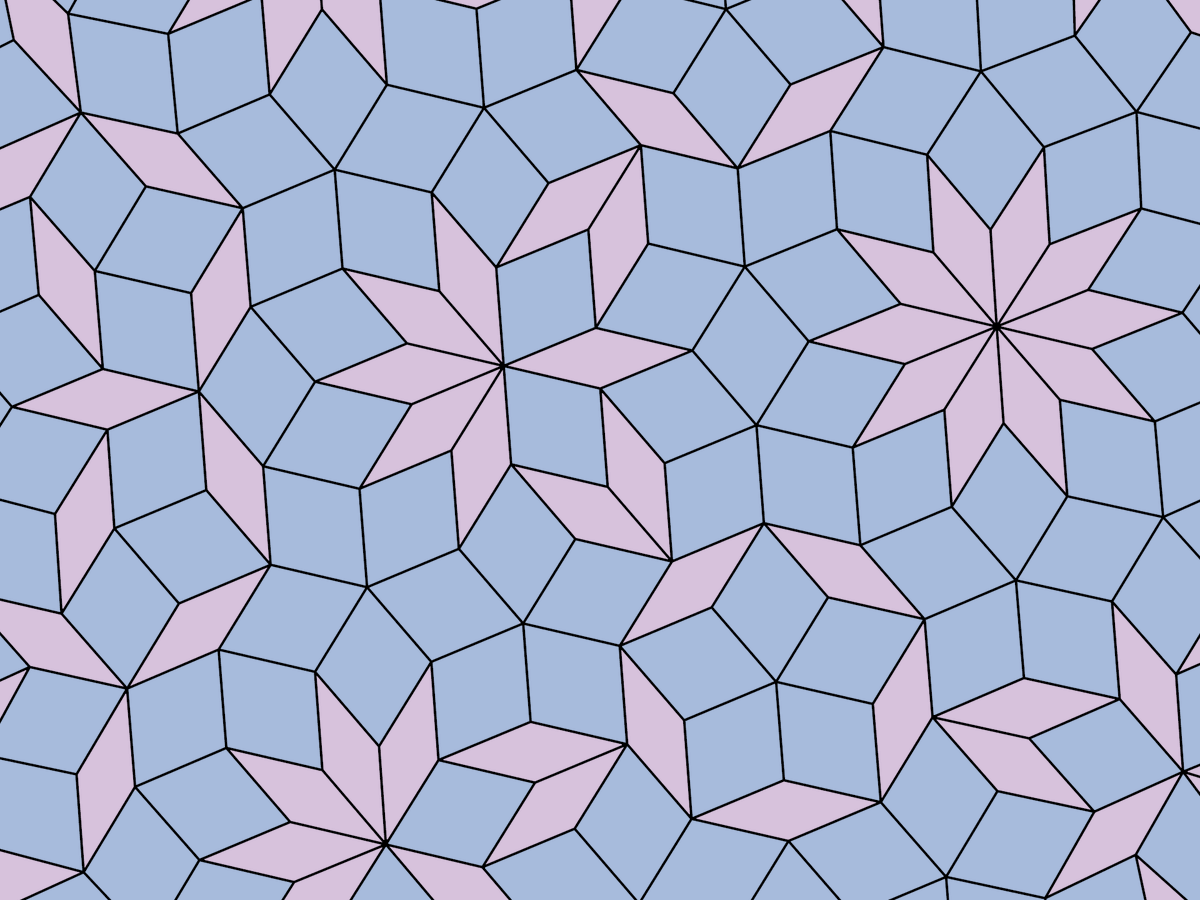
Penrose tilings are a beautiful combination of art and math, which is what initially attracted Dr. @wheelissa to geometry! Now she's an expert and professional doing this every day at, not one, but TWO different geometry-based startups. Interview conducted and edited by @egotman
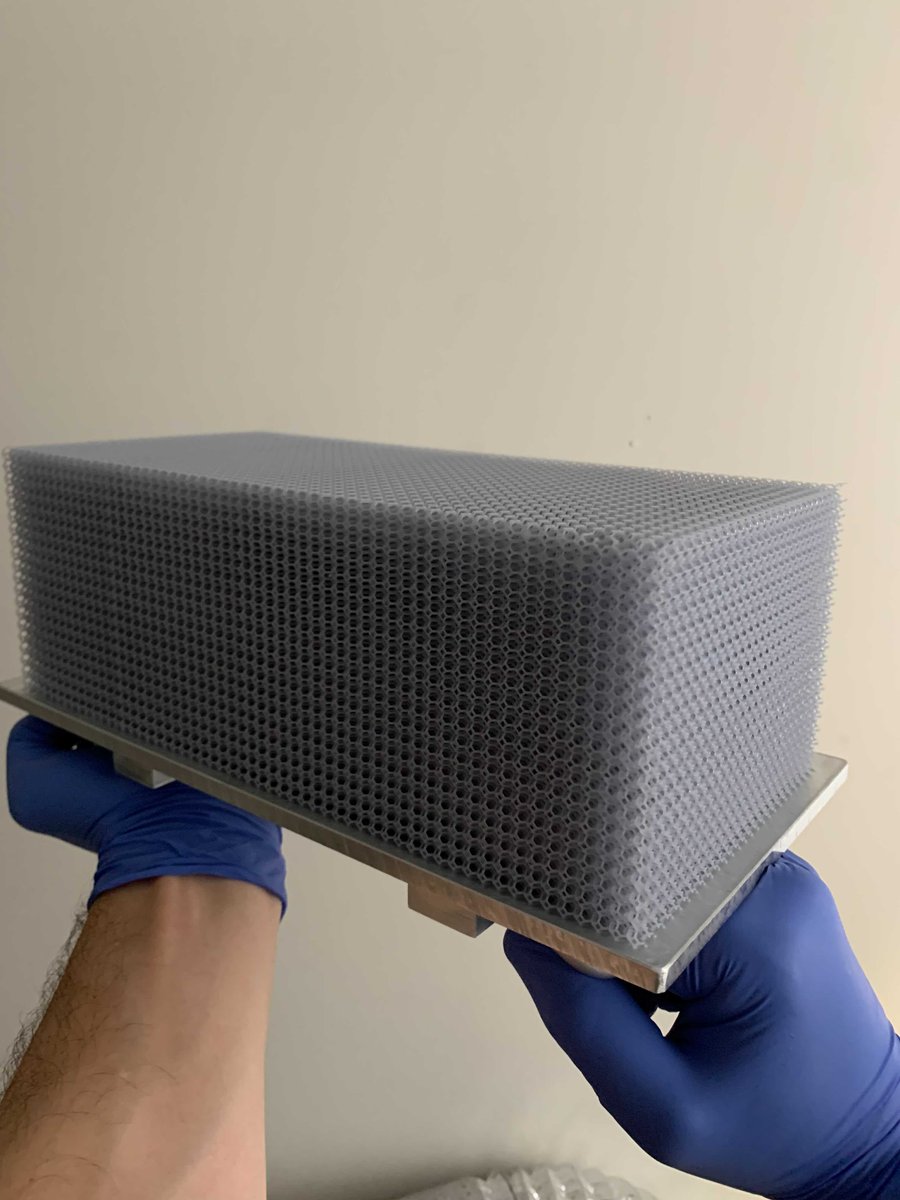
We printed this #Lattice sample with over 10K unit cells and more than half a million beams. Just getting warmed up for our big prints! Stay tuned! #3Dprinting#metamaterials
Our original challenge was: we know how to do tri, quad, and hex patterns on surfaces by parameterization. Can we do Penrose patterns? A Penrose pattern is (2-)aperiodic: it does not admit translational similarities in the plane. So seamless UV parameterization is not possible.
While this year's conference is online and not in Toronto, there's no keeping the Toronto out of SGP 🍁 Thanks to Mesh Inc, our local Geometry consultation group @Mesh_Geometry for being a silver level sponsor!
https://t.co/0KA1LSDyAd
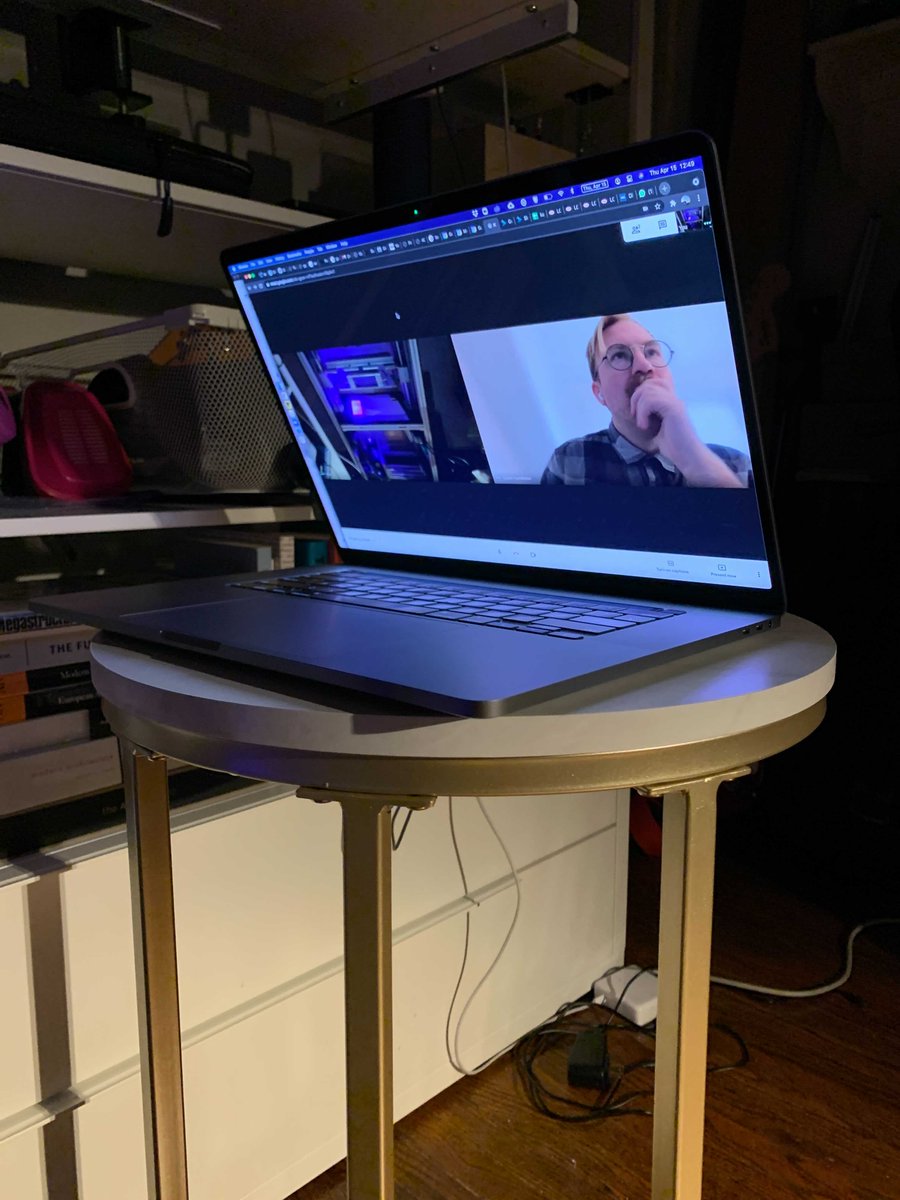
Doing hardware development during COVID lockdowns has presented some challenges. Also: opportunities! Here is Metafold 3D CTO @Mesh_Geometry deep in video conference with.... our 3D printer.