Suspected plague death in Russia: what we know and what we don't.
KNOWN:
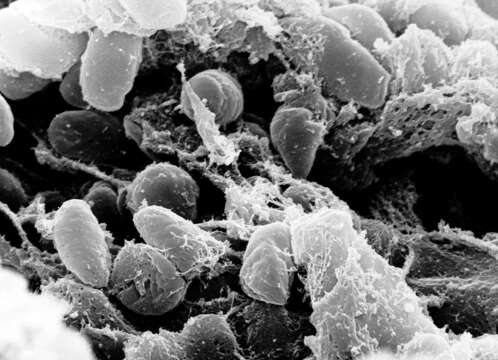
A 28-year-old lab technician at the Anti-Plague Institute in Irkutsk, Siberia, has died. About 200 people are under medical observation, and the clinic that treated her has been quarantined.
NOT CONFIRMED:
Russian health authorities list the cause of death as "pneumonia of unknown origin" and call the situation stable. Plague has not been officially confirmed.
CONTRADICTORY:
Some reports say she was infected by a broken test tube in the lab, others say she fell ill after a work trip to Buryatia. Buryatia's governor says she "possibly" died of plague, yet also says there are no plague outbreaks in his region.
CONTEXT:
Pneumonic plague can spread between people, but it is treatable with common antibiotics if caught early. The US State Department is monitoring the case and urging Moscow to share accurate information.
Expect wild claims about bioweapons and pandemics in the coming days. So far, the facts don't support them. Stick to confirmed information.
https://t.co/5HEYfUUyYQ
MYTH: The Great Wall of China is visible from space with the naked eye.
FACT: It isn't, and certainly not from the Moon.
The wall is very long, but mostly only a few meters wide and nearly the same color as the surrounding terrain. Spotting it from low Earth orbit, about 400 km up, is like spotting a single hair from several kilometers away.
China's first astronaut, Yang Liwei, said after his 2003 flight that he couldn't see it. Highways, airports and city lights are far easier to spot from orbit.
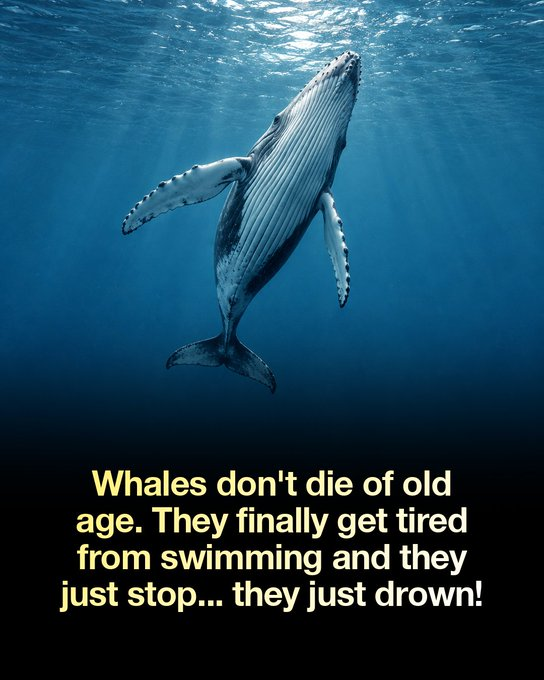
MYTH: Whales don't die of old age. They get tired of swimming, stop, and drown.
FACT: Whales are mammals that breathe consciously and rest regularly. They don't swim until exhaustion.
They float at the surface to rest, and sperm whales even sleep hanging vertically just below it, surfacing when they need air.
Old whales die like other old animals: from disease, infections, parasites, starvation when they can no longer feed well, or predators like orcas picking off weakened individuals.
Whales can drown, but mostly when something stops them from reaching the surface, such as entanglement in fishing gear. Not from "getting tired."
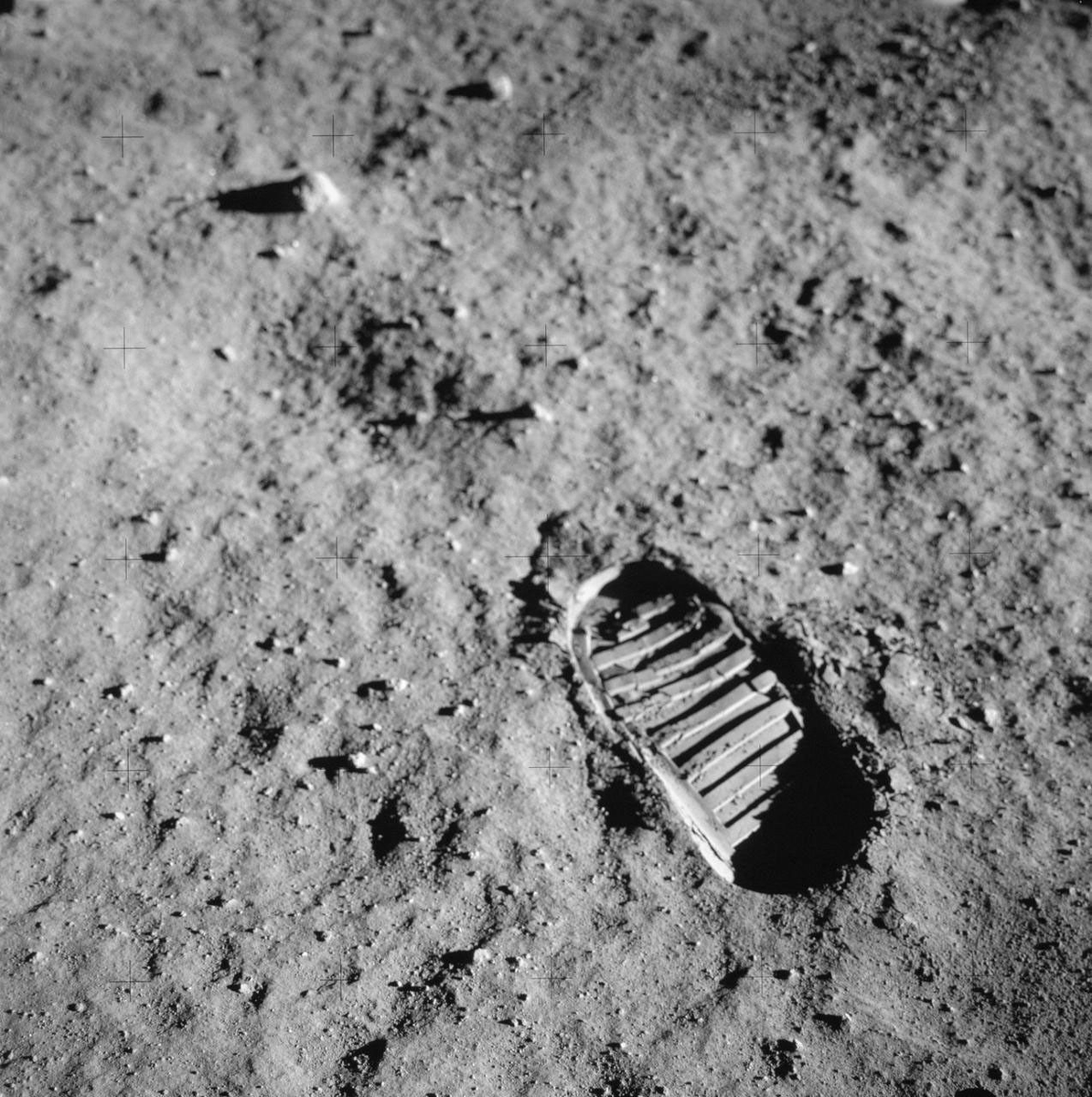
MYTH: This is Neil Armstrong's first footprint on the Moon.
FACT: It's Buzz Aldrin's bootprint, photographed by Aldrin himself.
The photo (NASA AS11-40-5878) was part of a soil-mechanics experiment: Aldrin photographed the same patch of ground before and after stepping on it, to study how lunar dust compacts under pressure.
Armstrong's actual first steps were never photographed up close. As mission commander, he carried the camera for most of the moonwalk, which is why nearly all famous Apollo 11 surface photos show Aldrin, not Armstrong.
Source: NASA Space Science Data Coordinated Archive, image AS11-40-5878.
As for the claim that the samples came from Earth:
Earth rock can't pass as lunar rock. Apollo samples contain no water, unrusted metallic iron, gases implanted by the solar wind, and grains covered in tiny micrometeorite craters. Earth's atmosphere and magnetic field prevent the last two, and Earth's water makes the first two nearly impossible.
To fake that in 1969, you'd need to bombard 382 kg of rock with solar wind and micrometeorites for millions of years. The Moon was the easier source.
The good news: you don't have to believe. You can check.
The 382 kg: Apollo samples have been studied by thousands of scientists in dozens of countries for over 50 years. The Soviets even traded some of their own Luna samples for Apollo samples in the 1970s, and they would have loved to call out a fake. The rocks show micrometeorite pits, solar wind gases and zero water, things no Earth rock has. And lunar meteorites weren't even identified until 1982, so they couldn't have been the source in 1969.
Luna 15: fair, it didn't photograph Apollo. But the radio signals came from the Moon's surface and were tracked by independent observatories like Jodrell Bank in Britain. A dish can tell where a signal is coming from.
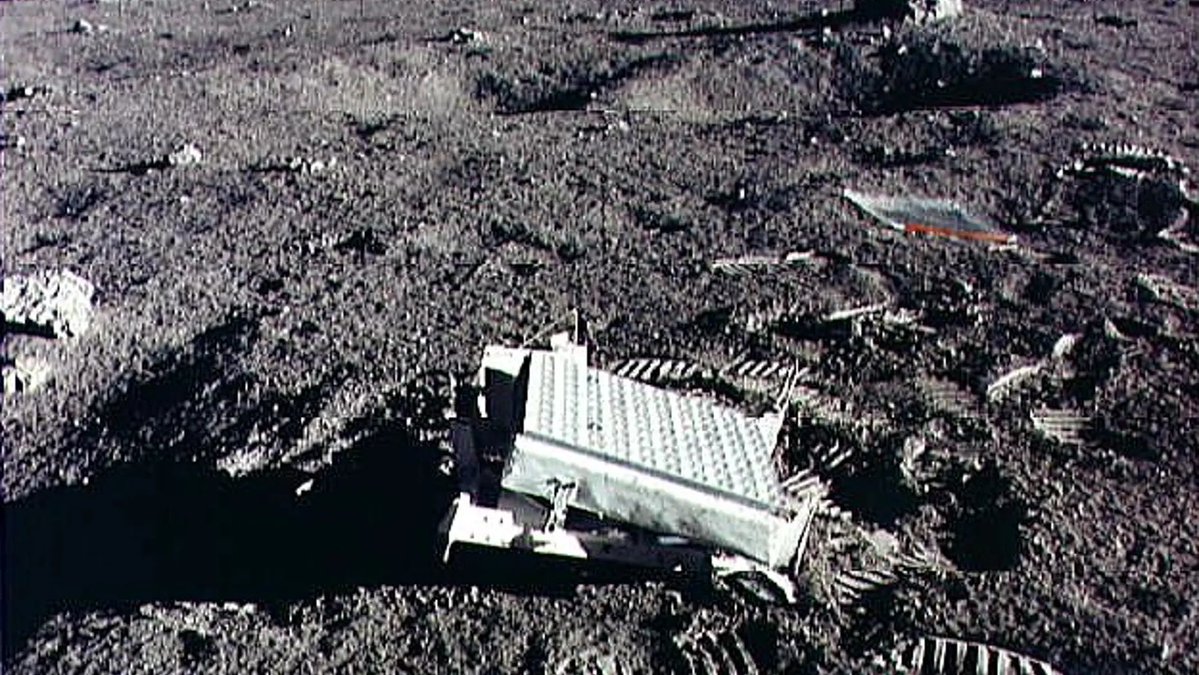
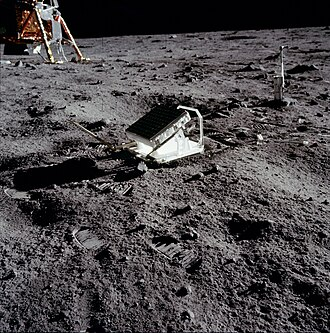
Footprints: LRO shows footpaths hundreds of meters long, leading from the landers to the experiments and craters. A probe faking that in 1969 would have been more advanced than the actual landing.
Every "might" needs another secret technology. At some point, the simplest explanation is that they went.
Fair point that no single item proves it on its own. Robots can place reflectors: the Soviet Lunokhod rovers carried French-built ones. But the evidence is cumulative, and points 2 and 4 hold up better than you think.
Samples: The Soviet robotic Luna missions brought back about 0.3 kg in total. Apollo returned 382 kg, including fist-sized rocks and drill cores more than 2 m deep, selected on site. Even China's Chang'e 5 in 2020, with 50 years of better technology, returned only about 1.7 kg. Faking 382 kg robotically in 1969 would have been a bigger achievement than actually landing humans.
USSR assets: They were literally there. The Soviet probe Luna 15 was orbiting the Moon during Apollo 11 and crashed on July 21, 1969, while Armstrong and Aldrin were on the surface. It was controlled from Soviet deep-space stations, so their dishes were pointed exactly where Apollo's signals were coming from.
Footpaths: LRO and Chandrayaan-2 show the astronauts' tracks between the lander and the experiments. Probes don't leave footprints.
Each point alone can be argued. All of them together can't.
https://t.co/Zkqfuny4Rh
"This AI data center in Utah produces the thermal energy of 23 atomic bombs EVERY DAY and covers 40,000+ acres."
True? The math checks out, but the claim is misleading.
1. It doesn't exist yet.
This is Kevin O'Leary's "Stratos Project" in Box Elder County, Utah: up to 9 GW of power on roughly 40,000 acres. The county approved it in May, but that's only phase one of a multi-stage process, and operation is likely about ten years away. So it doesn't "produce" anything every day. It could, once fully built out.
2. The 40,000 acres aren't the data center.
The data center itself would cover about 10,000 - 13,000 acres. It sits inside a larger 40,000 - acre development area that also includes its own natural gas power plant. On top of that, Utah's Senate President called for a 75% cut to about 10,000 acres, and O'Leary said he's willing to scale it down.
3. Where the "23 atomic bombs" come from.
The figure comes from Utah State University physicist Robert Davies. The on-site gas plant is only about 57% efficient, so generating the electricity alone produces 7–8 GW of waste heat. Add the heat from the servers, and you get roughly 16 GW of thermal load released into Hansel Valley.
The arithmetic holds: 16 GW × 24 hours ≈ 1.4 petajoules. The Hiroshima bomb released about 63 terajoules. That's roughly 22-23 bombs per day. ✅
4. Why the comparison is still skewed.
A bomb releases its energy in an instant. The data center would spread the same amount over 24 hours. The same comparison applies to any large power plant.
For scale, my own back-of-the-envelope estimate: Utah averages roughly 200 W/m² of sunlight over a full day. On 40,000 acres (about 160 km²), that's over 30 GW, about twice the project's 16 GW.
5. The legitimate concern behind it.
Normally, waste heat from power generation and electricity use is spread across many locations. Here, it would all be concentrated in one valley. Davies projects local warming of about 5°F (3°C) during the day and up to 28°F (15°C) at night. That's one expert's estimate, not a peer-reviewed climate model, but the risk of a local heat island is physically plausible.
Bottom line: The energy figure is correctly calculated, but "atomic bombs" is a dramatized comparison. The data center doesn't exist yet, and the 40,000 acres describe the overall development area, not the data center itself. That area will likely shrink.
@xiaomaolfzy@FreedomMemesIRL@grok In your opinion, what could be objective proof of a Moon landing that would convince even the most skeptical conspiracy theorist?
During the Apollo 11 mission, astronauts did not bring back over 300 kg, but rather exactly 21.55 kg (47.5 lbs) of lunar rock and soil samples (regolith). The figure of over 300 kg - specifically 382 kg (842 lbs) - refers to the cumulative total collected across all six successful Apollo moon landings (Apollo 11, 12, 14, 15, 16, and 17).
I have two cats, both 9 years old. I've been feeding them a Canadian brand since they were 6 months old. They get annual checkups - sometimes twice a year - including ultrasounds, comprehensive blood panels, etc., and everything has always been normal, with only minor deviations from standard values. I think the article is just fearmongering.
This silly atheist argument (which Grok is just parroting) self-destructs as usual: if the universe can just spring into existence out of nowhere, then an omnipotent God could just as easily appear out of nothing without needing a prior God to create Him before He created the universe.