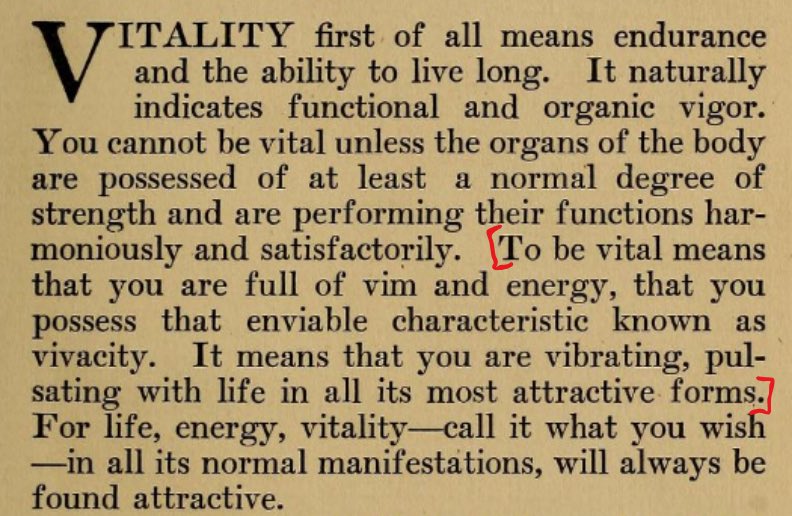
"All men dream: but not equally. Those who dream by night in the dusty recesses of their minds wake in the day to find that it was vanity: but the dreamers of the day are dangerous men, for they may act their dream with open eyes, to make it possible."
— Lawrence of Arabia
Speech. The one thing that will literally 10x your life, that you do everyday, and you never consciously improve it.
You hit a 9th grade speaking level and stay there until you pass away.
Spending time listening to yourself speak, recording yourself, improving your vocabulary, removing filler words, and practicing tone is one skill that can improve so many areas of your life.
The easier you can communicate your ideas and feelings the more you can improve your success and relationships.
Start with recording yourself and removing filler words.
Elon on Speed
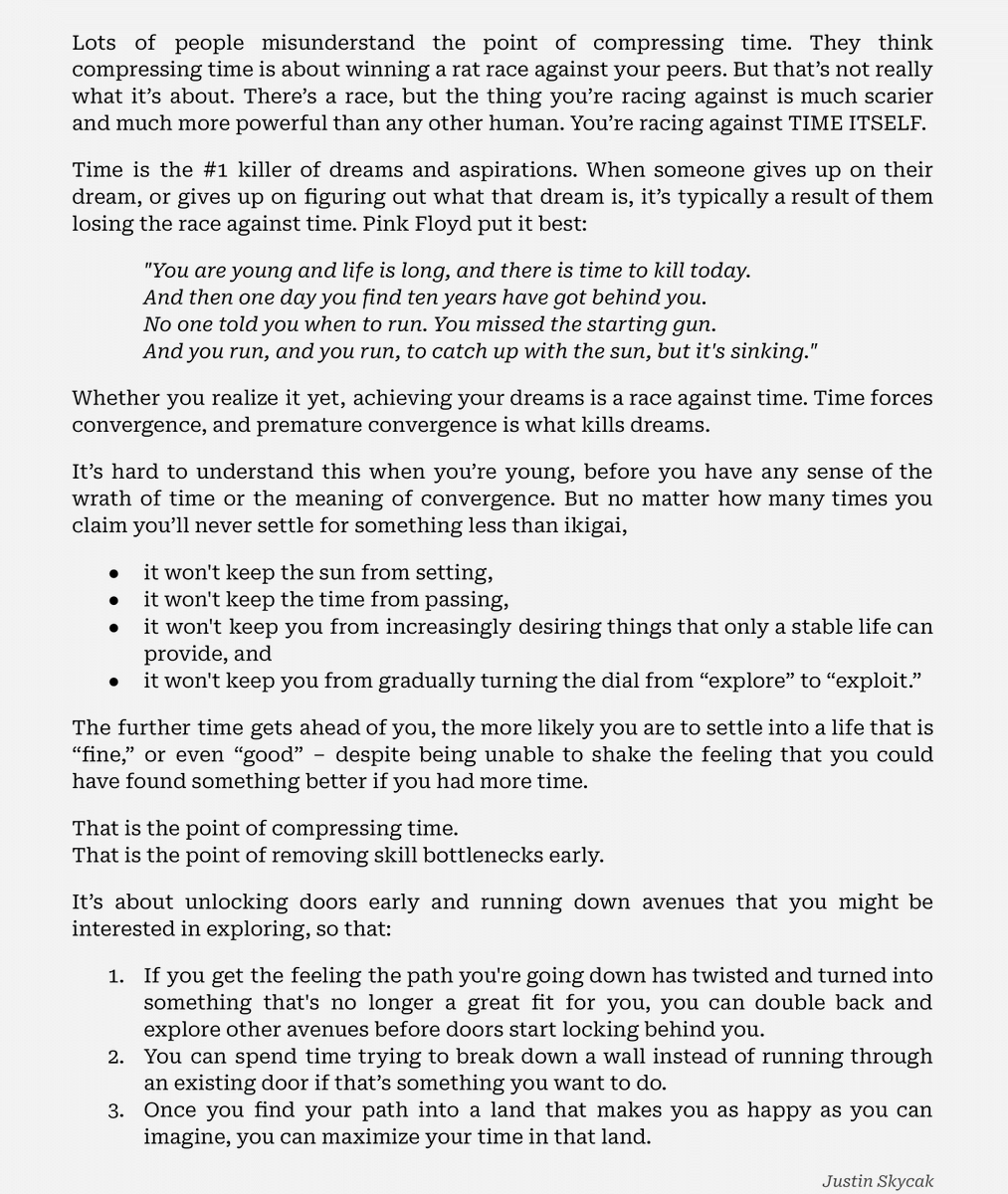
“I always tell the teams: compress the timeline. Take a 10 year plan and try to do it in 6 months. You’ll probably fail, but you’ll be so far ahead of everyone else that it doesn’t matter. Most companies move at a glacial pace. We try to move at the speed of light.”
Your lack of urgency is destroying the comeback of your lifetime. Not because you are not ambitious, but because you are not obsessed with actually changing. You are still the same miserable you and comfort is the reason why
Lenin stopped playing chess because “it hinders work”, and stopped listening to music because it “affects nerves and makes you want to say stupid things”.
Was Lenin secretly a Sharia follower? 🤔😮
"You cannot lose what you never put at risk, you cannot be betrayed by someone you never trusted, you cannot be disappointed by someone you never believed in, and you certainly cannot be mad at someone you never took seriously in the first place."
These are the big four that have governed my games, investments, and relationships all these years because in truth, the more you expect, the more you risk being angry. And the less you expect, the less anger you owe.
There's a physicist at Stanford named Safi Bahcall who modeled this exact principle and the math is wild.
He calls it "phase transitions in human networks." When you're stationary, your probability of a lucky event is limited to your existing surface area: the people you already know, the places you already go, the ideas you've already been exposed to. Your opportunity window is fixed.
When you move, your collision rate with new nodes in a network increases nonlinearly. Double your movement (new conversations, new cities, new projects) and your probability of a serendipitous encounter doesn't double. It roughly quadruples. Because each new node connects you to their entire network, not just to them.
Richard Wiseman ran a 10-year study at the University of Hertfordshire tracking self-described "lucky" and "unlucky" people. The single biggest differentiator wasn't IQ, education, or family money. Lucky people scored significantly higher on one trait: openness to experience. They talked to strangers more, varied their routines more, and said yes to invitations at nearly twice the rate.
The "unlucky" group followed the same routes, ate at the same restaurants, and talked to the same 5 people. Their networks were closed loops. No new inputs, no new collisions.
Luck isn't random. Luck is surface area. And surface area is a function of movement.
The lobster emoji is doing more work than most people realize. Lobsters grow by shedding their shell when it gets too tight. The growth requires a period of total vulnerability. No protection, no armor, soft body exposed to the ocean.
That's the cost of movement nobody posts about. You have to be uncomfortable first. The new shell only hardens after you've already moved.