Author @RyanHoliday has read over 3,000+ books.
Here are 38 reading rules that changed his life:
1) Do it all the time. Bring a book with you everywhere. I’ve read at the Grammy’s and in the moments before going under for a surgery. I’ve read on planes and beaches, in cars and in cars while I waited for a tow truck. You take the pockets of time you can get.
2) Physical books only.
3) It’s not that I have a problem with audiobooks–if it gets you reading, I’m all for it. I just think there’s something very special about the physical form. I just read a great book about this actually called Proust and the Squid by Maryanne Wolf.
4) Hardcover over paperback.
5) Bring a pen with you too. Reading is better if you’re taking notes.
6) Keep a commonplace book. As Seneca wrote: “We should hunt out the helpful pieces of teaching and the spirited and noble-minded sayings which are capable of immediate practical application—not far far-fetched or archaic expressions or extravagant metaphors and figures of speech—and learn them so well that words become works.” (Here’s a video on my commonplace book method).
7) Err on the side of age. Classics are classics for a reason.
8) Beat them up. Books are not precious things. As an author, I love it when people hand me a book to sign that has had real miles put on it. When people hand me a pristine copy and tell me it’s their favorite, I assume they are just flattering me. It’s obvious what my favorite books are…because they’re falling apart (here’s my copy of Meditations for instance).
9) In every book you read, try to find your next one in its footnotes or bibliography. This is how you build a knowledge base in a subject—it’s how you trace a subject back to its core.
10) Same goes when you find an author you love, read them ALL. I read Cecil Woodham-Smith’s book on the charge of the Light Brigade…only to find she had also written a biography of Florence Nightingale. It was that discovery that shaped a full third of my book Courage is Calling.
11) That comment from (the disgraced and indicted FTX founder) Sam Bankman Fried about how every book could be a 900 word blog post is preposterously stupid. The whole point of reading is to really understand something. So if all you’re after is the ‘gist,’ skip books and stick with blog posts.
12) If you see a book you want, just buy it. Don’t worry about the price. Reading is not a luxury. It’s not something you splurge on. It’s a necessity. Even if all you get is one life-changing idea from a book, that’s still a pretty good ROI.
13) That might sound privileged, but Warren Buffett considers the foundation of his multi-billion dollar empire to be a book. At 19-years-old, he bought a copy of The Intelligent Investor by Benjamin Graham. We don’t know exactly what he paid for it, but in the early 1950s, a hardcover typically went for $1.30–the best investment he ever made, he’s said. Today, Buffett’s worth $108.7 billion, having given away some $37 billion to charitable causes. Not a bad ROI!
14) Some people might recoil at categorizing a book that way, but as a lover of literature, I have no problem with it. I myself wouldn’t be writing this to you today if I hadn’t bought a paperback of Meditations in 2006 for $8.25 on Amazon. That book of philosophy taught me not just about life, but also schooled me in the art of writing, in working with and managing people, and gave me the speciality which I now write my own books about. Again, not a bad ROI.
15) Don’t just read books, re-read books. There’s a great line the Stoics loved—that we never step in the same river twice. The books don’t change, but you do.
16) As I said, speed reading is a scam. You just have to spend a lot of time reading.
17) If a book sucks, stop reading it. The best readers actually quit a lot of books. Life is too short to read books you don’t enjoy reading.
18) The rule I like is ‘one hundred pages minus your age.’ Say you’re 30 years old—if a book hasn’t captivated you by page 70, stop reading it. So as you age, you have less time to endure crap.
19) Embrace serendipity. So many of my favorite books are just random things I grabbed at bookstores (this is why I say don’t sweat buying a book–just roll the dice). That’s what bookstores are for, what I’ve tried to build mine around. It’s a discovery engine better than any algorithm.
20) Don’t just build a library, build an anti-library—a stack of unread books that humbles you and reminds you just how much there is still to learn. It’s a sign of what you don’t yet know. It’s also a resource there whenever you might need to do a deep dive into that topic.
21) Emerson’s line was, “If we encounter a man of rare intellect, we should ask him what books he reads.” When I was a teenager, I got in the habit of doing this. Every time I would meet a successful or important person I admire, I would ask them: What’s a book that changed your life? And then I would read that book (in college, for instance, I was lucky enough to meet Dr. Drew, who was the one who turned me on to Stoicism).
22) Speaking of Emerson…in his essay “Reading,” he put down his three rules: “1. Never read a book that is not a year old [because only good books survive]. 2. Never read any but famed books [same reason]. 3. Never read any but what you like.”
23) Whenever I’m in a reading funk/dry spell (most commonly, around book launches), I find I’m able to get back into a groove by re-reading some of my favorite novels. What Makes Sammy Run? The Great Gatsby. Ask the Dust. The Moviegoer.
24) Speaking of Ask the Dust, I read that because my friend Neil Strauss said in an interview it was his all-time favorite novel. He also turned me onto Knut Hamsun’s Hunger, which he had also raved about. When people rave about something, don’t dismiss it. If someone says a book changed their life? Consider it seriously. They’re talking about something powerful.
25) I find myself sometimes reluctant to read something that’s super popular. That snobbishness never serves me well. More often than not, when I get around to those bestsellers I kick myself–they were bestsellers for a reason! They’re great! Don’t be a book snob.
26) You say you don’t have time to read but what does the screen time app on your phone say? What does your calendar say?
27) If you want to understand current events, don’t rely on breaking news. Find a book about a similar event in the past. Read history. Read psychology. Read biographies. Go for information that has a long half-life, not something that’s going to be contradicted in the next bulletin.
28) Examples: Read The Great Influenza to understand COVID. Read It Can’t Happen Here to understand modern threats to democracy. Read First Principles to understand American politics.
29) Ruin the ending. I almost always go straight to Wikipedia and figure out the plot–especially if I am reading something tough like Shakespeare or Aeschylus. Who cares about spoilers? Your aim as a reader is to understand WHY something happened, the what is secondary.
30) One of the things that people in publishing know is that readers tend to skip prefaces and forewords. This is crazy! Those things are there for a reason. They often have a ton of helpful and interesting stuff about the context around when the person was writing, who the work ended up influencing, and other tidbits that sometimes stick with you longer than even the work itself.
31) ”Don’t be satisfied just getting the ‘gist’ of things,” is what Marcus Aurelius learned from his philosophy teacher Rusticus. One of the reasons I try to spoil the plot, make my way through the intro and the preface, read reviews and articles about the books I’m reading, watch videos about them, and read other books on the topic is because I want to really understand what I’m dealing with. If I don’t, if I only want a surface take, why read a book at all?
32) When intelligent people read, they ask themselves a simple question: What do I plan to do with this information?
33) My favorite line from Harry Truman is, “not all readers are leaders, but all leaders are readers.” When we read, we aren’t learning to impress people, to win some game of mental gymnastics. It’s to get better, to find things you can use in your real life. If you’re looking to expand what you do with the books you’re reading, I highly recommend our Read to Lead course. It’s been taken by over 10,000 people, and is our most popular for a reason.
34) Read widely and from people you disagree with. The Stoics believed that we should actively engage with anyone who can be a source of wisdom to us, regardless of their origin. If there is wisdom out there to be had, we’d be wise to avail ourselves of it.
35) Pretentiousness is bullshit. Epictetus once heard a student talking proudly about having made their way through the dense works of Chryssipus. You know, Epictetus told him, if Chryssipus had been a better writer, you’d have less to brag about.
36) Look for wisdom, not facts. We’re not reading to just find random pieces of information. What’s the point of that? We’re reading to accumulate a mass of true wisdom—that you can turn to and apply in your actual life.
37) Another line from Seneca is about how people get too caught up in the facts and figures and they miss the message. I totally agree. On the literary snobs who speculate for hours about whether The Iliad or The Odyssey was written first, or who the real author was (a debate that rages on today), he said, “Far too many good brains have been afflicted by the pointless enthusiasm for useless knowledge.”
38) If a book is good, recommend it and pass it along to other people.
Navigating "corporate speak" isn't easy.
Here's a helpful guide I put together:
"Let me check with my team" = No
"Possibly" = No
"On my roadmap" = Not happening
"This will be done in Q4" = This will be done in Q2 next year
"Disagree and commit" = I hate you
"Per my last email" = Try reading, for once in your life
"Challenging landscape" = We're going out of business, quickly
"Digital transformation" = We're going out of business, slowly
"Let's circle back" = We'll never speak of this again
"Take it offline" = We'll never speak of this again
"30,000 foot view" = I don't know what I'm saying
"Low hanging fruit" = Easy promotion
"Open up the kimono" = HR violation
"We use AI" = We don't use AI
"We use machine learning" = We don't use machine learning
"All hands on deck" = Let's actually try for once, please
After his second year at Michigan, Tom Brady wanted to transfer.
He wasn't playing in games, and he was so low on the depth chart that he only got 2 reps in practice.
Brady met with his coach to express his frustration, “The other quarterbacks get all the reps.”
Coach replied,
“Brady, I want you to stop worrying about what all the other players on our team are doing. All you do is worry about what the starter is doing, what the second guy is doing, what everyone else is doing. You don't worry about what you're doing.”
Coach reminded him, “You came here to be the best. If you're going to be the best, you have to beat out the best.”
And then he recommended that Brady start meeting with Greg Harden, a sports psychologist who worked in Michigan's athletic department.
Brady went to Harden's office and whined, “I'm never going to get my chance. They're only giving me 2 reps.”
Harden simply replied, “Just go out there and focus on doing the best you can with those 2 reps. Make them as perfect as you possibly can.”
“So that's what I did,” Brady said. “They'd put me in for those 2 reps, man, I'd sprint out there like it was Super Bowl 39. 'Let's go boys! Here we go! What play we got?'”
“And I started to do really well with those 2 reps. Because I brought enthusiasm, I brought energy.”
Soon, it went from getting 2 reps to getting 4 reps. Then from 4 to 10, “and before you knew it,” Brady said, with this new mindset that Greg instilled in me—to focus on what you can control, to focus on what you're getting, not what anyone else is getting, to treat every rep like it's the Super Bowl—eventually, I became the starter.”
Takeaway 1:
Greg Harden telling Brady to just focus on being great during his 2 reps reminded me of a piece of advice from the entrepreneur Mark Cuban.
“People come to me all the time and tell me they're stuck,” Cuban explained. “They're stuck in a job they don't like. They're stuck working for a boss they don't like. They're stuck on a team they don't like.”
“I just tell them, 'Be great.'”
“The reality of life is that you can't just always quit your job. You can't just always go to your boss and say, 'Give me the promotion, or I'm out of here.'” You can't just always go to your coach and say, 'Give me more reps, or I'm transferring.'
“So when you're stuck, you've gotta find it within yourself to say, 'Ok, this is where I am. And if I'm going to be here, I'm going to be great.'
Because if you're great at your job, typically other people and companies find out, so it creates opportunities.”
Takeaway 2:
I've written before about “lead measures”—the actions and behaviors that predictably drive success.
The core characteristic of a lead measure, the authors of The 4 Disciplines of Execution (4DX) write, is that “a lead measure is influenceable; it can be directly influenced by you.”
To achieve your goals, they recommend (echoing what the Michigan Coach told Brady), apply a disproportionate energy to the things that are in your control.
Starting at Michigan and for the rest of his career, that’s what Brady did, that’s what drove his success.
In his first media call after he was selected by the New England Patriots with the 199th pick in the 2000 draft, Brady was asked: “Are you aware that [along with starting quarterback, Drew Bledsoe] there’s another quarterback here that they drafted last year?”
Brady said he was aware of that. “And I know he’s a heck of a player,” Brady said. “But I’ve always really concerned myself just with the things I can control. I don’t put a lot of thinking into the other guys because I know I’m not at my best when I’m not just thinking about playing as well as I possibly can.”
- - -
“I never once in my life ever said I wanted to be the best of all time. Ever. I wanted to be the best I could be, period. I learned that in college. It didn’t matter what the other guys were doing. It mattered what I was doing.” — Tom Brady
Follow @bpoppenheimer for more content like this!
Six years ago we were in a a MISERABLE marriage.
Our house wasn’t a HOME,
it was a WAR ZONE.
We didn’t speak days at a time.
•We walked on eggshells.
•All we have almost wasn’t.
•My kids could’ve not had a dad.
Recently my wife told me,
It’s BETTER THAN THE HONEYMOON!
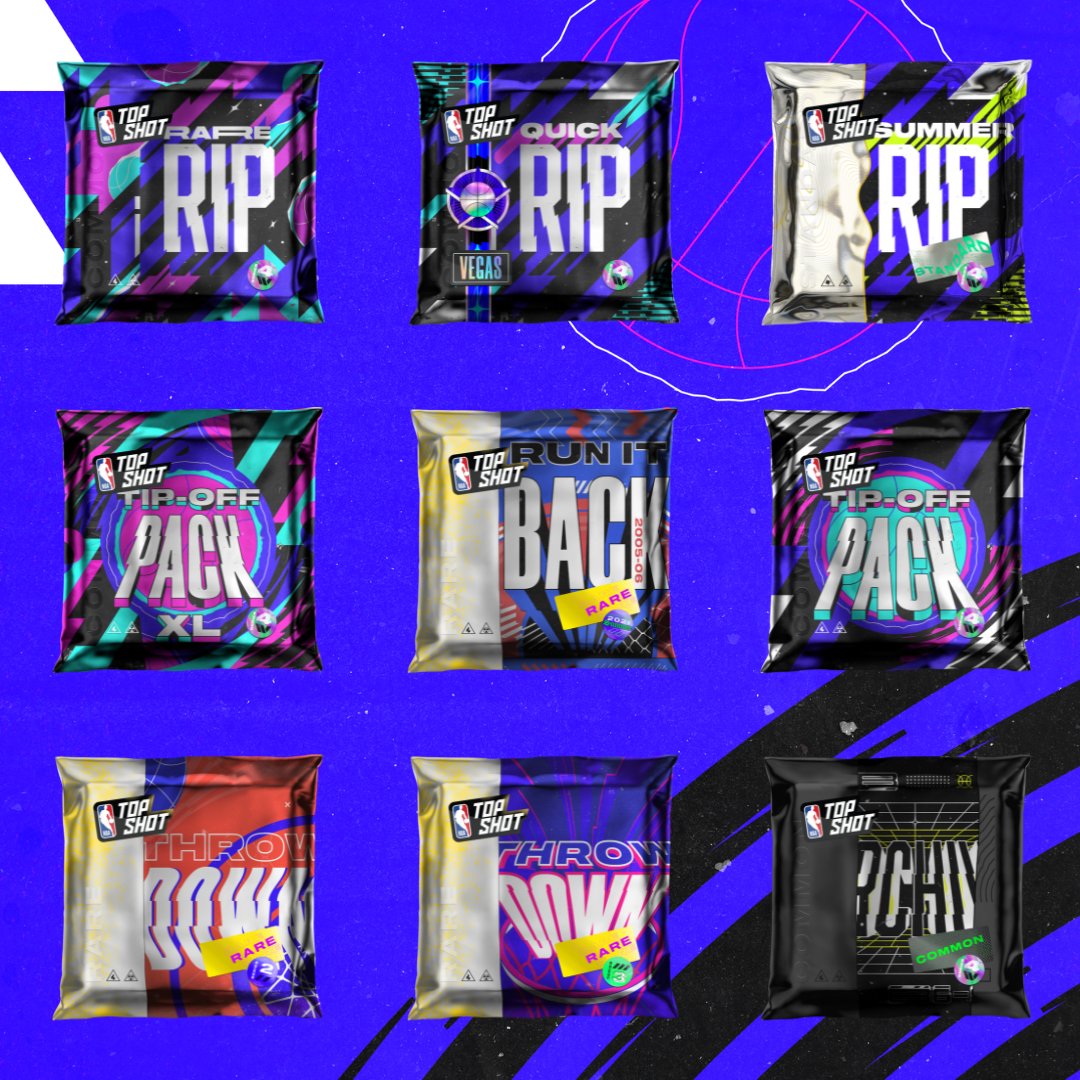
🎁 31 Days of Pack Giveaways
❤️ and retweet to be entered to win a free Pack of exclusive and authentic NBA collectibles every day of August!
📱 Love the NBA? Download Top Shot's App to own the best Moments of each NBA season: https://t.co/UzgYKum0Us
Age at first $1 Billion:
• 23 Mark Zuckerberg
• 31 Bill Gates
• 33 Tiger Woods
• 34 Rihanna
• 35 Jeff Bezos
• 40 Mark Cuban
• 41 Elon Musk
• 49 Oprah
• 50 Jay-Z
• 51 Michael Jordan
• 56 Warren Buffett
1 important lesson from each:
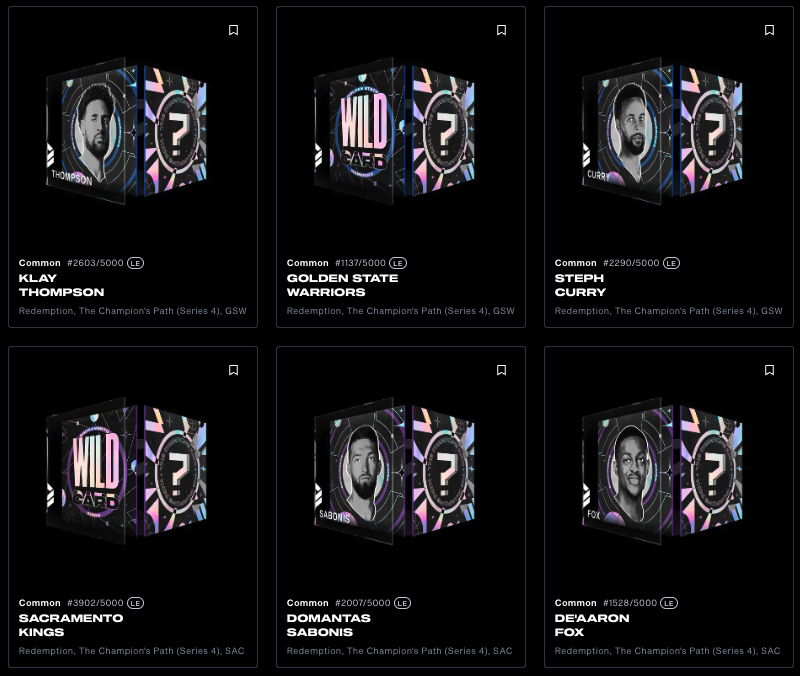
🏀 Warriors vs. Kings: Game 2 Giveaway
🎉 You can win these 6 Redemptions + a Klay Thompson jersey (if Warriors win) or a autographed Harrison Barnes jersey (if Kings win)
🏆 RT + reply w/ #NBATopShotThis to enter!
🛍 Shop Playoffs Packs: https://t.co/iL428kYS1P
🗓️ Monday @ 1 PM ET
🏆 The NBA Playoffs Pack Drop
🏀 Get ready for Redemptions, the new collectible that puts you in control of NBA history: https://t.co/i63xfqAIEq
🎉 RT this for a chance at a free Dropping Dimes + Three Pointer Pack!





![AlexAndBooks_'s tweet photo. Author @RyanHoliday has read over 3,000+ books.
Here are 38 reading rules that changed his life:
1) Do it all the time. Bring a book with you everywhere. I’ve read at the Grammy’s and in the moments before going under for a surgery. I’ve read on planes and beaches, in cars and in cars while I waited for a tow truck. You take the pockets of time you can get.
2) Physical books only.
3) It’s not that I have a problem with audiobooks–if it gets you reading, I’m all for it. I just think there’s something very special about the physical form. I just read a great book about this actually called Proust and the Squid by Maryanne Wolf.
4) Hardcover over paperback.
5) Bring a pen with you too. Reading is better if you’re taking notes.
6) Keep a commonplace book. As Seneca wrote: “We should hunt out the helpful pieces of teaching and the spirited and noble-minded sayings which are capable of immediate practical application—not far far-fetched or archaic expressions or extravagant metaphors and figures of speech—and learn them so well that words become works.” (Here’s a video on my commonplace book method).
7) Err on the side of age. Classics are classics for a reason.
8) Beat them up. Books are not precious things. As an author, I love it when people hand me a book to sign that has had real miles put on it. When people hand me a pristine copy and tell me it’s their favorite, I assume they are just flattering me. It’s obvious what my favorite books are…because they’re falling apart (here’s my copy of Meditations for instance).
9) In every book you read, try to find your next one in its footnotes or bibliography. This is how you build a knowledge base in a subject—it’s how you trace a subject back to its core.
10) Same goes when you find an author you love, read them ALL. I read Cecil Woodham-Smith’s book on the charge of the Light Brigade…only to find she had also written a biography of Florence Nightingale. It was that discovery that shaped a full third of my book Courage is Calling.
11) That comment from (the disgraced and indicted FTX founder) Sam Bankman Fried about how every book could be a 900 word blog post is preposterously stupid. The whole point of reading is to really understand something. So if all you’re after is the ‘gist,’ skip books and stick with blog posts.
12) If you see a book you want, just buy it. Don’t worry about the price. Reading is not a luxury. It’s not something you splurge on. It’s a necessity. Even if all you get is one life-changing idea from a book, that’s still a pretty good ROI.
13) That might sound privileged, but Warren Buffett considers the foundation of his multi-billion dollar empire to be a book. At 19-years-old, he bought a copy of The Intelligent Investor by Benjamin Graham. We don’t know exactly what he paid for it, but in the early 1950s, a hardcover typically went for $1.30–the best investment he ever made, he’s said. Today, Buffett’s worth $108.7 billion, having given away some $37 billion to charitable causes. Not a bad ROI!
14) Some people might recoil at categorizing a book that way, but as a lover of literature, I have no problem with it. I myself wouldn’t be writing this to you today if I hadn’t bought a paperback of Meditations in 2006 for $8.25 on Amazon. That book of philosophy taught me not just about life, but also schooled me in the art of writing, in working with and managing people, and gave me the speciality which I now write my own books about. Again, not a bad ROI.
15) Don’t just read books, re-read books. There’s a great line the Stoics loved—that we never step in the same river twice. The books don’t change, but you do.
16) As I said, speed reading is a scam. You just have to spend a lot of time reading.
17) If a book sucks, stop reading it. The best readers actually quit a lot of books. Life is too short to read books you don’t enjoy reading.
18) The rule I like is ‘one hundred pages minus your age.’ Say you’re 30 years old—if a book hasn’t captivated you by page 70, stop reading it. So as you age, you have less time to endure crap.
19) Embrace serendipity. So many of my favorite books are just random things I grabbed at bookstores (this is why I say don’t sweat buying a book–just roll the dice). That’s what bookstores are for, what I’ve tried to build mine around. It’s a discovery engine better than any algorithm.
20) Don’t just build a library, build an anti-library—a stack of unread books that humbles you and reminds you just how much there is still to learn. It’s a sign of what you don’t yet know. It’s also a resource there whenever you might need to do a deep dive into that topic.
21) Emerson’s line was, “If we encounter a man of rare intellect, we should ask him what books he reads.” When I was a teenager, I got in the habit of doing this. Every time I would meet a successful or important person I admire, I would ask them: What’s a book that changed your life? And then I would read that book (in college, for instance, I was lucky enough to meet Dr. Drew, who was the one who turned me on to Stoicism).
22) Speaking of Emerson…in his essay “Reading,” he put down his three rules: “1. Never read a book that is not a year old [because only good books survive]. 2. Never read any but famed books [same reason]. 3. Never read any but what you like.”
23) Whenever I’m in a reading funk/dry spell (most commonly, around book launches), I find I’m able to get back into a groove by re-reading some of my favorite novels. What Makes Sammy Run? The Great Gatsby. Ask the Dust. The Moviegoer.
24) Speaking of Ask the Dust, I read that because my friend Neil Strauss said in an interview it was his all-time favorite novel. He also turned me onto Knut Hamsun’s Hunger, which he had also raved about. When people rave about something, don’t dismiss it. If someone says a book changed their life? Consider it seriously. They’re talking about something powerful.
25) I find myself sometimes reluctant to read something that’s super popular. That snobbishness never serves me well. More often than not, when I get around to those bestsellers I kick myself–they were bestsellers for a reason! They’re great! Don’t be a book snob.
26) You say you don’t have time to read but what does the screen time app on your phone say? What does your calendar say?
27) If you want to understand current events, don’t rely on breaking news. Find a book about a similar event in the past. Read history. Read psychology. Read biographies. Go for information that has a long half-life, not something that’s going to be contradicted in the next bulletin.
28) Examples: Read The Great Influenza to understand COVID. Read It Can’t Happen Here to understand modern threats to democracy. Read First Principles to understand American politics.
29) Ruin the ending. I almost always go straight to Wikipedia and figure out the plot–especially if I am reading something tough like Shakespeare or Aeschylus. Who cares about spoilers? Your aim as a reader is to understand WHY something happened, the what is secondary.
30) One of the things that people in publishing know is that readers tend to skip prefaces and forewords. This is crazy! Those things are there for a reason. They often have a ton of helpful and interesting stuff about the context around when the person was writing, who the work ended up influencing, and other tidbits that sometimes stick with you longer than even the work itself.
31) ”Don’t be satisfied just getting the ‘gist’ of things,” is what Marcus Aurelius learned from his philosophy teacher Rusticus. One of the reasons I try to spoil the plot, make my way through the intro and the preface, read reviews and articles about the books I’m reading, watch videos about them, and read other books on the topic is because I want to really understand what I’m dealing with. If I don’t, if I only want a surface take, why read a book at all?
32) When intelligent people read, they ask themselves a simple question: What do I plan to do with this information?
33) My favorite line from Harry Truman is, “not all readers are leaders, but all leaders are readers.” When we read, we aren’t learning to impress people, to win some game of mental gymnastics. It’s to get better, to find things you can use in your real life. If you’re looking to expand what you do with the books you’re reading, I highly recommend our Read to Lead course. It’s been taken by over 10,000 people, and is our most popular for a reason.
34) Read widely and from people you disagree with. The Stoics believed that we should actively engage with anyone who can be a source of wisdom to us, regardless of their origin. If there is wisdom out there to be had, we’d be wise to avail ourselves of it.
35) Pretentiousness is bullshit. Epictetus once heard a student talking proudly about having made their way through the dense works of Chryssipus. You know, Epictetus told him, if Chryssipus had been a better writer, you’d have less to brag about.
36) Look for wisdom, not facts. We’re not reading to just find random pieces of information. What’s the point of that? We’re reading to accumulate a mass of true wisdom—that you can turn to and apply in your actual life.
37) Another line from Seneca is about how people get too caught up in the facts and figures and they miss the message. I totally agree. On the literary snobs who speculate for hours about whether The Iliad or The Odyssey was written first, or who the real author was (a debate that rages on today), he said, “Far too many good brains have been afflicted by the pointless enthusiasm for useless knowledge.”
38) If a book is good, recommend it and pass it along to other people.](https://pbs.twimg.com/media/GAgicnwXMAEvjMj.jpg)
![bpoppenheimer's tweet photo. After his second year at Michigan, Tom Brady wanted to transfer.
He wasn't playing in games, and he was so low on the depth chart that he only got 2 reps in practice.
Brady met with his coach to express his frustration, “The other quarterbacks get all the reps.”
Coach replied,
“Brady, I want you to stop worrying about what all the other players on our team are doing. All you do is worry about what the starter is doing, what the second guy is doing, what everyone else is doing. You don't worry about what you're doing.”
Coach reminded him, “You came here to be the best. If you're going to be the best, you have to beat out the best.”
And then he recommended that Brady start meeting with Greg Harden, a sports psychologist who worked in Michigan's athletic department.
Brady went to Harden's office and whined, “I'm never going to get my chance. They're only giving me 2 reps.”
Harden simply replied, “Just go out there and focus on doing the best you can with those 2 reps. Make them as perfect as you possibly can.”
“So that's what I did,” Brady said. “They'd put me in for those 2 reps, man, I'd sprint out there like it was Super Bowl 39. 'Let's go boys! Here we go! What play we got?'”
“And I started to do really well with those 2 reps. Because I brought enthusiasm, I brought energy.”
Soon, it went from getting 2 reps to getting 4 reps. Then from 4 to 10, “and before you knew it,” Brady said, with this new mindset that Greg instilled in me—to focus on what you can control, to focus on what you're getting, not what anyone else is getting, to treat every rep like it's the Super Bowl—eventually, I became the starter.”
Takeaway 1:
Greg Harden telling Brady to just focus on being great during his 2 reps reminded me of a piece of advice from the entrepreneur Mark Cuban.
“People come to me all the time and tell me they're stuck,” Cuban explained. “They're stuck in a job they don't like. They're stuck working for a boss they don't like. They're stuck on a team they don't like.”
“I just tell them, 'Be great.'”
“The reality of life is that you can't just always quit your job. You can't just always go to your boss and say, 'Give me the promotion, or I'm out of here.'” You can't just always go to your coach and say, 'Give me more reps, or I'm transferring.'
“So when you're stuck, you've gotta find it within yourself to say, 'Ok, this is where I am. And if I'm going to be here, I'm going to be great.'
Because if you're great at your job, typically other people and companies find out, so it creates opportunities.”
Takeaway 2:
I've written before about “lead measures”—the actions and behaviors that predictably drive success.
The core characteristic of a lead measure, the authors of The 4 Disciplines of Execution (4DX) write, is that “a lead measure is influenceable; it can be directly influenced by you.”
To achieve your goals, they recommend (echoing what the Michigan Coach told Brady), apply a disproportionate energy to the things that are in your control.
Starting at Michigan and for the rest of his career, that’s what Brady did, that’s what drove his success.
In his first media call after he was selected by the New England Patriots with the 199th pick in the 2000 draft, Brady was asked: “Are you aware that [along with starting quarterback, Drew Bledsoe] there’s another quarterback here that they drafted last year?”
Brady said he was aware of that. “And I know he’s a heck of a player,” Brady said. “But I’ve always really concerned myself just with the things I can control. I don’t put a lot of thinking into the other guys because I know I’m not at my best when I’m not just thinking about playing as well as I possibly can.”
- - -
“I never once in my life ever said I wanted to be the best of all time. Ever. I wanted to be the best I could be, period. I learned that in college. It didn’t matter what the other guys were doing. It mattered what I was doing.” — Tom Brady
Follow @bpoppenheimer for more content like this!](https://pbs.twimg.com/media/F85l1KpWUAAeAcO.jpg)